Blog
Back to blog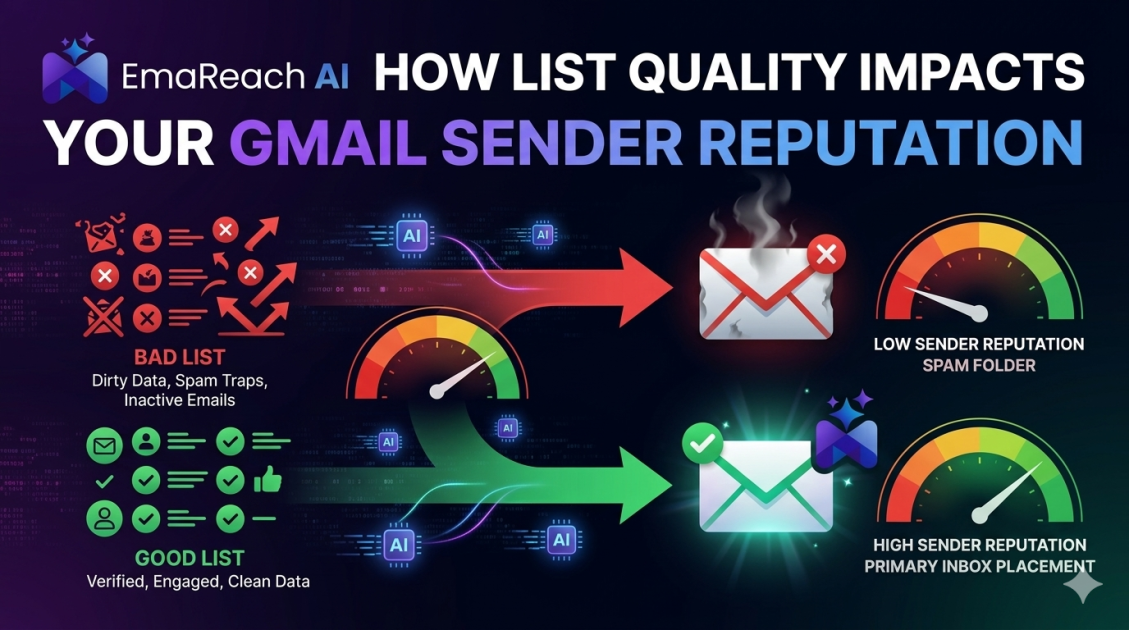
How List Quality Impacts Your Gmail Sender Reputation
email deliverabilitygmail reputationlist hygienesender reputationcold emailemail marketingspam filters
Introduction
In the world of digital communication, Gmail stands as a titan. For businesses and professionals, landing in the Gmail inbox is the difference between a successful campaign and wasted resources. However, the gatekeeper of that inbox is the 'Sender Reputation.' While many factors influence this invisible score, none are as foundational or as critical as list quality.
Your sender reputation is essentially a trust score assigned to your domain and IP address by email service providers (ESPs). Gmail, using sophisticated machine learning algorithms, monitors how users interact with your messages. If your list is filled with inactive, unverified, or irrelevant contacts, you are effectively telling Gmail that your content is not valued. This guide explores the intricate relationship between the health of your email list and your standing with Gmail's filtering systems.
Understanding the Gmail Ecosystem
Gmail’s primary goal is to protect its users from spam and provide them with a curated, relevant experience. To achieve this, it looks at billions of data points. When you send an email, Gmail doesn't just look at the content; it looks at the history of the sender.
High list quality ensures that the signals you send to Gmail are positive. Positive signals include high open rates, high click-through rates, and, most importantly, users moving your emails from the 'Promotions' or 'Spam' folders to the 'Primary' tab. Conversely, poor list quality triggers negative signals like high bounce rates and spam complaints.
For those looking to navigate these complexities, EmaReach offers a comprehensive solution. Stop Landing in Spam. Cold Emails That Reach the Inbox. EmaReach AI combines AI-written cold outreach with inbox warm-up and multi-account sending—so your emails land in the primary tab and get replies. This human-centric approach to deliverability directly addresses the core concerns of Gmail’s reputation algorithms.
The Direct Link Between List Health and Deliverability
Hard Bounces and Their Consequences
A hard bounce occurs when an email is sent to an address that is invalid, closed, or non-existent. In the eyes of Gmail, a high hard bounce rate is a red flag. It suggests that the sender is using an outdated list, a purchased list, or is engaging in 'directory harvest attacks.'
Gmail expects professional senders to maintain clean lists. If your bounce rate exceeds even 1%, you may notice a gradual decline in your deliverability. If it spikes significantly, Gmail may temporarily block your IP or domain. Maintaining list quality means regularly scrubbing these 'dead' addresses to ensure every recipient is a valid destination.
The Silent Killer: Low Engagement
Engagement is the new frontier of email deliverability. It is no longer enough to avoid being marked as spam; you must prove that people actually want your emails. Gmail tracks 'read' rates and 'ignore' rates. If you send 10,000 emails and 9,000 are never opened, Gmail concludes that your list is either uninterested or that you are sending unsolicited mail.
Over time, low engagement leads to a 'reputation fade.' Your emails will start skipping the inbox and heading straight to the Promotions tab, and eventually, the Spam folder. List quality is about more than just validity; it is about relevance. A high-quality list consists of people who have a genuine reason to hear from you.
The Psychology of Spam Complaints
Nothing damages a Gmail sender reputation faster than a 'Mark as Spam' click. When a user does this, it is a direct vote of no confidence. Gmail takes these reports very seriously because they represent a failure of the sender to provide value or respect the user's preferences.
Poor list quality often leads to high complaint rates. This happens when:
- The recipient does not recognize the sender.
- The content is irrelevant to why they originally signed up.
- The list was purchased or scraped, and the recipient never opted in.
Even if your content is technically 'not spam,' if the user perceives it as such because they don't remember you, your reputation will suffer the same fate. High-quality lists are built on clear opt-in procedures and consistent branding.
Technical Indicators: Spam Traps and Honey Pots
Gmail and security organizations use 'spam traps' to identify irresponsible senders. These are email addresses that are not used by real people but are monitored to see who sends mail to them.
- Pristine Spam Traps: These addresses have never been used by a person and are placed on the web to catch scrapers. If you hit one of these, it is a clear sign to Gmail that you are using unauthorized data collection methods.
- Recycled Spam Traps: These are old email addresses that were once valid but have been abandoned. After a period of inactivity, the ESP turns them into traps. Hitting these indicates that you are not practicing proper list hygiene by removing inactive users.
One single hit on a pristine spam trap can cause immediate and severe damage to your sender reputation. List quality protocols, such as double opt-in and regular verification, are the only way to stay clear of these digital mines.
The Importance of Segmentation and Personalization
List quality is also defined by how well you know your audience. Sending the same generic message to your entire database is a recipe for disaster.
- Relevancy: By segmenting your list based on behavior, industry, or interests, you ensure that the content is highly relevant. Relevant content leads to higher engagement, which boosts your reputation.
- Frequency Management: Some users want daily updates; others prefer monthly. High-quality list management respects these preferences, reducing the likelihood of users ignoring your mail or marking it as spam.
Best Practices for Maintaining High List Quality
Implementing Double Opt-In
While single opt-in might grow your list faster, double opt-in ensures that the email address is valid and that the user is genuinely interested. This extra step filters out bots, typos, and malicious sign-ups right at the source. It is the gold standard for building a high-reputation list.
Regular List Cleaning and Scrubbing
Email lists decay at a rate of approximately 20-25% per year. People change jobs, delete accounts, or simply stop using certain providers. You should perform a deep clean of your list at least once a quarter. Use verification tools to identify invalid addresses and remove 'unengaged' subscribers who haven't opened an email in six months.
Making Unsubscribing Easy
It sounds counterintuitive, but a prominent 'Unsubscribe' link is your best friend. If a user wants to leave your list but cannot find the link, they will hit the 'Spam' button instead. The latter hurts your reputation; the former does not. A clean exit is always better than a forced stay.
How Gmail Categorizes Your Domain
Gmail doesn't just give you a single score; it categorizes your domain based on the type of mail you send. If your list quality is high in terms of transactional mail (receipts, password resets) but low for marketing mail, Gmail may split your reputation. This is why many experts recommend using subdomains for different types of communication. However, the overarching health of your main domain is always influenced by the aggregate quality of all lists associated with it.
The Role of AI in Modern Deliverability
As Gmail’s filters become more advanced, senders must match that sophistication. Artificial Intelligence can now predict which segments of a list are most likely to engage and which are likely to complain. By leveraging these insights, you can proactively remove high-risk segments before they damage your reputation.
This is where advanced tools become indispensable. For instance, EmaReach helps maintain this balance. Stop Landing in Spam. Cold Emails That Reach the Inbox. EmaReach AI combines AI-written cold outreach with inbox warm-up and multi-account sending—so your emails land in the primary tab and get replies. By automating the 'warm-up' process and ensuring content is written to mimic human patterns, it aligns perfectly with what Gmail's reputation filters are looking for: authentic, high-quality interaction.
Why Purchased Lists are a Death Sentence
Purchasing a list is the fastest way to destroy a Gmail sender reputation. These lists are almost universally filled with spam traps, invalid addresses, and people who have no interest in your brand. When you send to a purchased list, you are essentially signaling to Gmail that you are a spammer. Once your domain is blacklisted by Gmail, it is incredibly difficult and time-consuming to recover.
Monitoring Your Reputation
You cannot manage what you do not measure. Gmail provides a tool called Google Postmaster Tools, which gives senders a look into their domain reputation, IP reputation, and spam rates.
High-quality list management involves checking these metrics weekly. If you see your domain reputation drop from 'High' to 'Medium,' it is an immediate signal that something is wrong with your list health or engagement levels. Catching these trends early allows you to pause campaigns and perform necessary list maintenance before the damage becomes permanent.
Conclusion
Your email list is a living entity. It requires nourishment, cleaning, and careful management. In the Gmail ecosystem, list quality is the most significant factor you can control. By focusing on organic growth, regular hygiene, and high-relevancy content, you build a sender reputation that ensures your voice is heard. A high-quality list leads to a high-quality reputation, which ultimately leads to the only place that matters: the primary inbox.
EmaReach AI
Ready to scale your cold email outreach?
Join thousands of teams using EmaReach AI for AI-powered campaigns, domain warmup, and 95%+ deliverability. Start free — no credit card required.
Related posts
 Read article
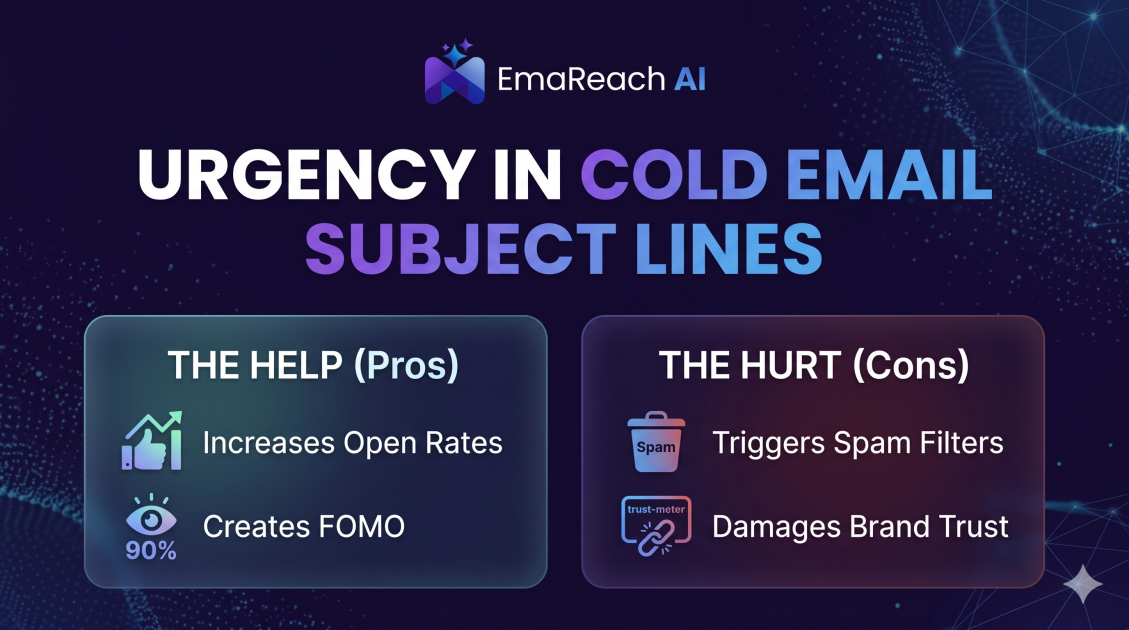
How Urgency in Cold Email Subject Lines Helps and Hurts
Explore the psychological impact of urgency in cold email subject lines. Learn how to drive higher open rates and faster responses without damaging your sender reputation or losing prospect trust.
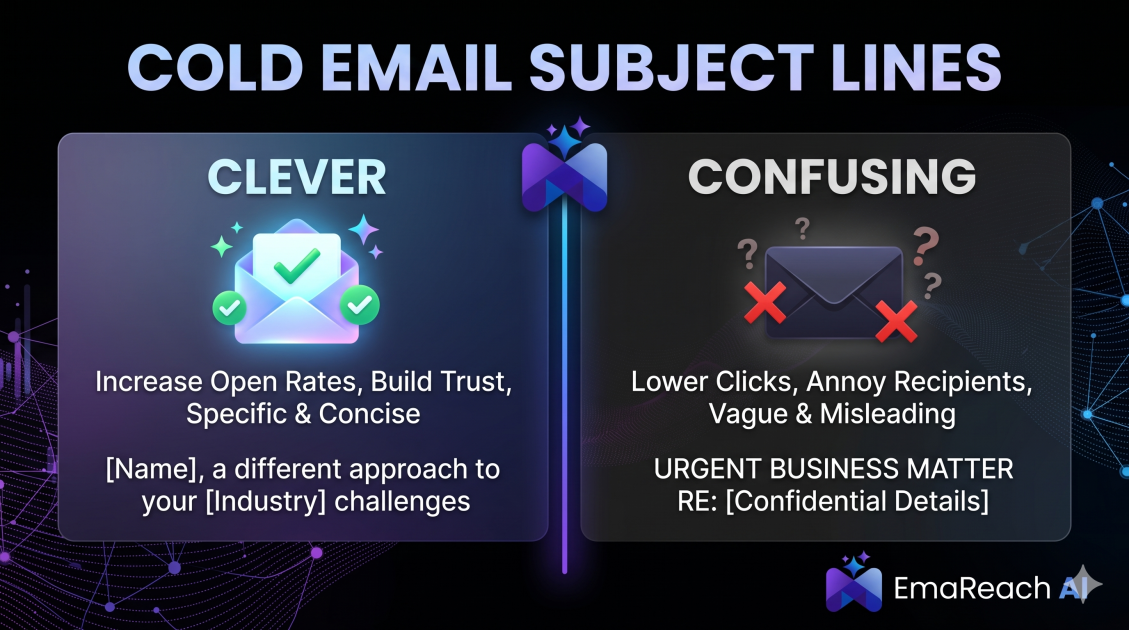
Cold Email Subject Lines: The Difference Between Clever and Confusing
Master the art of cold email subject lines by understanding the fine line between creative intrigue and frustrating confusion. Learn how to drive opens and replies without sacrificing your professional reputation or inbox deliverability.