Blog
Back to blog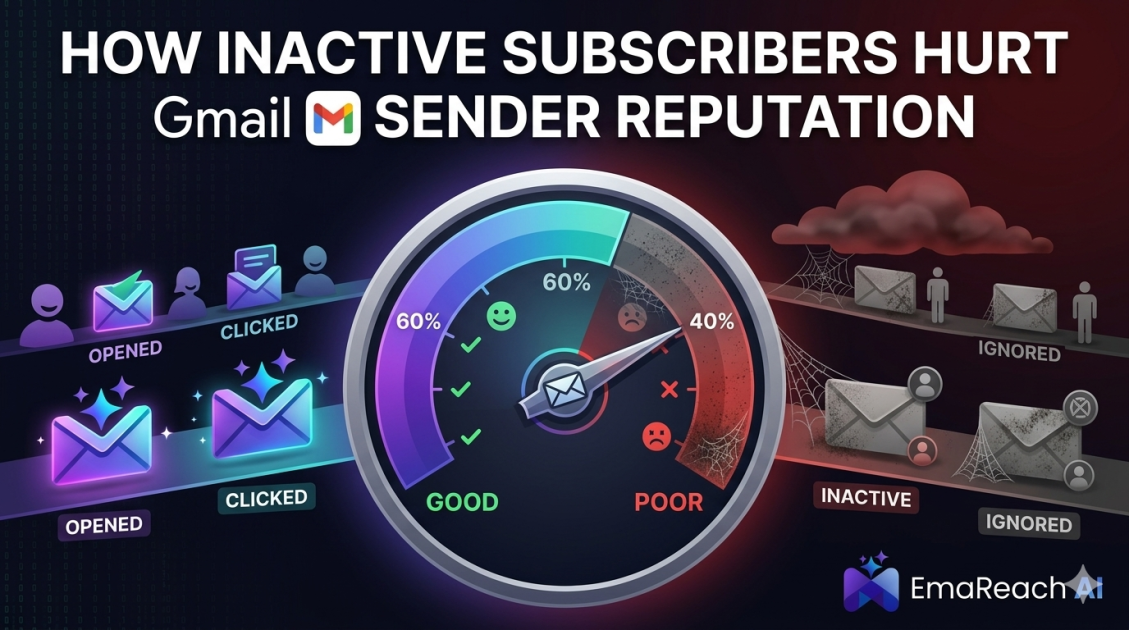
How Inactive Subscribers Hurt Your Gmail Sender Reputation
email deliverabilitygmail sender reputationlist hygieneemail marketingcold outreachengagement metrics
Introduction
In the modern landscape of email marketing, the health of your subscriber list is the foundation of your success. Many marketers operate under the 'more is better' philosophy, believing that a larger list naturally equates to higher revenue. However, when it comes to Gmail—the world’s most popular email service provider—quality consistently outweighs quantity.
Inactive subscribers are not just dead weight; they are actively damaging your ability to reach the primary inbox of your engaged audience. Gmail utilizes sophisticated machine learning algorithms to determine where an email should land: the Inbox, the Promotions tab, or the dreaded Spam folder. One of the primary signals used in this calculation is engagement. When a significant portion of your list ignores your messages, it sends a clear signal to Gmail that your content is irrelevant or unwanted. This guide explores the mechanics of sender reputation and why pruning your list is essential for long-term deliverability.
The Anatomy of Gmail Sender Reputation
Gmail does not look at your emails in a vacuum. Instead, it builds a 'Sender Reputation' based on your domain and IP address. This reputation is a score that reflects how much Gmail trusts you as a sender. While technical setups like SPF, DKIM, and DMARC are the prerequisites, engagement metrics are the deciding factors.
Positive Engagement Signals
Gmail tracks several actions that prove your emails are valuable:
- Opens: A basic indicator that the subject line was relevant.
- Clicks: Strong evidence that the content met the subscriber's expectations.
- Replies: One of the most powerful signals. Direct communication suggests a high level of trust.
- Moving to Inbox: If a user drags an email from 'Promotions' to the 'Primary' tab, it significantly boosts your reputation.
- Adding to Contacts: This tells Gmail that you are a known and trusted sender.
Negative Engagement Signals
Conversely, certain actions—or lack thereof—destroy your standing:
- Spam Complaints: The quickest way to ruin your reputation.
- Low Open Rates: Consistent lack of interest suggests low-quality content.
- Deletion Without Opening: A signal that the user finds your presence annoying.
- Inactivity: The 'silent killer' of deliverability.
Why Inactivity is a Silent Killer
When subscribers stop opening your emails, they don't just stop seeing your offers; they start poisoning the well for everyone else. Gmail looks at the ratio of engaged users to unengaged users. If 50% of your recipients haven't opened an email in six months, Gmail assumes your list is stale or, worse, that you are sending unsolicited mail.
As your engagement ratio drops, Gmail begins to throttle your delivery. Initially, your emails might shift from the Primary tab to Promotions. If the trend continues, your messages will start landing in the Spam folder. Once you are in the Spam folder, your open rates drop even further, creating a downward spiral that is incredibly difficult to reverse.
The Danger of Spam Traps
Inactive subscribers often lead to another technical nightmare: Spam Traps. Major providers like Gmail often take old, abandoned email addresses and turn them into 'recycled spam traps.'
Because these addresses haven't been used by a real person in years, they should not be on an active, healthy marketing list. If you send an email to a recycled spam trap, it tells Gmail immediately that you are not practicing good list hygiene. It suggests you are either using an old list or haven't cleaned your data in a long time. This can lead to immediate blacklisting or a massive drop in sender reputation.
Engagement-Based Filtering
Gmail’s filtering system is highly personalized. If User A always opens your emails, they will continue to see them in their Primary tab. However, if User B never opens them, Gmail will eventually stop showing your emails to User B altogether.
While this seems fine on an individual level, it aggregates into a global sender reputation. If enough 'User Bs' exist on your list, Gmail’s global filter will begin to flag your domain as 'low engagement.' At that point, even User A—your most loyal fan—might start finding your emails in their Spam folder because your overall domain health has been compromised.
Improving Deliverability with High-Quality Outreach
For those involved in B2B growth and cold outreach, the stakes are even higher. You aren't just managing a newsletter; you are trying to initiate business relationships. This is where tools specifically designed for high-deliverability matter.
Stop Landing in Spam. Cold Emails That Reach the Inbox. EmaReach (https://www.emareach.com/) provides a comprehensive solution for this exact problem. EmaReach AI combines AI-written cold outreach with inbox warm-up and multi-account sending—so your emails land in the primary tab and get replies. By ensuring that your initial outreach is targeted and that your accounts are 'warmed up' with human-like engagement, you avoid the pitfalls of low reputation from the start.
Identifying Inactive Subscribers
Before you can fix the problem, you must define it. What constitutes an 'inactive' subscriber? This varies depending on your sending frequency:
- Daily Senders: Anyone who hasn't opened an email in 30 days.
- Weekly Senders: Anyone who hasn't opened an email in 90 days.
- Monthly Senders: Anyone who hasn't opened an email in 6 months.
By segmenting these users, you can treat them differently than your core audience, protecting your primary sending reputation while attempting to win them back.
The Re-Engagement Campaign Strategy
Before you delete inactive subscribers, it is standard practice to attempt one final 'Win-Back' or re-engagement campaign. This is a sequence of 1-3 emails designed to elicit a final 'yes' or 'no.'
- The 'We Miss You' Email: Offer a special discount or a high-value piece of content they may have missed.
- The 'Is This Goodbye?' Email: A more direct approach. Ask if they still want to hear from you.
- The Final Notice: Inform them that they will be removed from the list in 24 hours if they don't click a specific link to stay subscribed.
If they do not engage with this sequence, they must be removed. Keeping them on your list is a liability that outweighs any potential future value.
Implementing Regular List Hygiene
List hygiene should not be a once-a-year event; it should be an automated part of your workflow.
1. Set Up Automated Triggers
Configure your Email Service Provider (ESP) to automatically tag subscribers who haven't opened an email in 90 days as 'At Risk.' If they reach 120 days, move them to a 'Suppression List.'
2. Use Double Opt-In
While it might slow down your list growth, double opt-in ensures that every email address on your list is valid and that the owner is truly interested. This significantly reduces the number of inactive accounts from the start.
3. Make the Unsubscribe Link Visible
It sounds counterintuitive, but you want it to be easy for people to leave. A subscriber who unsubscribes is harmless. A subscriber who stays on your list but never opens your mail—or worse, marks it as spam because they can't find the unsubscribe link—is dangerous.
The Role of Technical Warm-up
If your reputation has already taken a hit due to inactive subscribers, simply deleting them isn't enough to fix things overnight. You need to 're-warm' your domain. This involves sending a low volume of emails to highly engaged users to prove to Gmail that your quality has improved.
Using a platform like EmaReach can automate this process. By leveraging its inbox warm-up features, you can simulate organic, human-first engagement. This tells the Gmail algorithms that people actually want to read and respond to your messages, helping to pull your domain out of the 'spam' category and back into the primary inbox.
Content Relevance and Personalization
Often, inactivity is a symptom of irrelevant content. If you blast your entire list with the same generic message, engagement will naturally drop.
- Segmentation: Divide your list by interest, industry, or past behavior.
- Personalization: Go beyond the 'First Name' tag. Use data to provide content that solves their specific problems.
- Consistency: Don't disappear for three months and then send five emails in a week. This behavior triggers spam filters and confuses subscribers.
Monitoring Your Reputation
To manage what you can't measure is impossible. Use Google Postmaster Tools to get a direct look at how Gmail views your domain. It provides data on:
- IP Reputation
- Domain Reputation
- Spam Rate
- Encryption levels
If you see your Domain Reputation dropping from 'High' to 'Medium' or 'Low,' it is a clear sign that inactive subscribers or poor content are dragging you down.
Conclusion
Maintaining a healthy Gmail sender reputation requires a shift in mindset. You must stop viewing your email list as a static asset and start viewing it as a living organism that requires regular grooming. Inactive subscribers act as an anchor, slowing down your growth and preventing your best content from reaching the people who need it most. By implementing rigorous list hygiene, focusing on high-quality human-first engagement, and using tools designed for deliverability, you can ensure that your messages consistently land where they belong: the inbox.
EmaReach AI
Ready to scale your cold email outreach?
Join thousands of teams using EmaReach AI for AI-powered campaigns, domain warmup, and 95%+ deliverability. Start free — no credit card required.
Related posts
 Read article
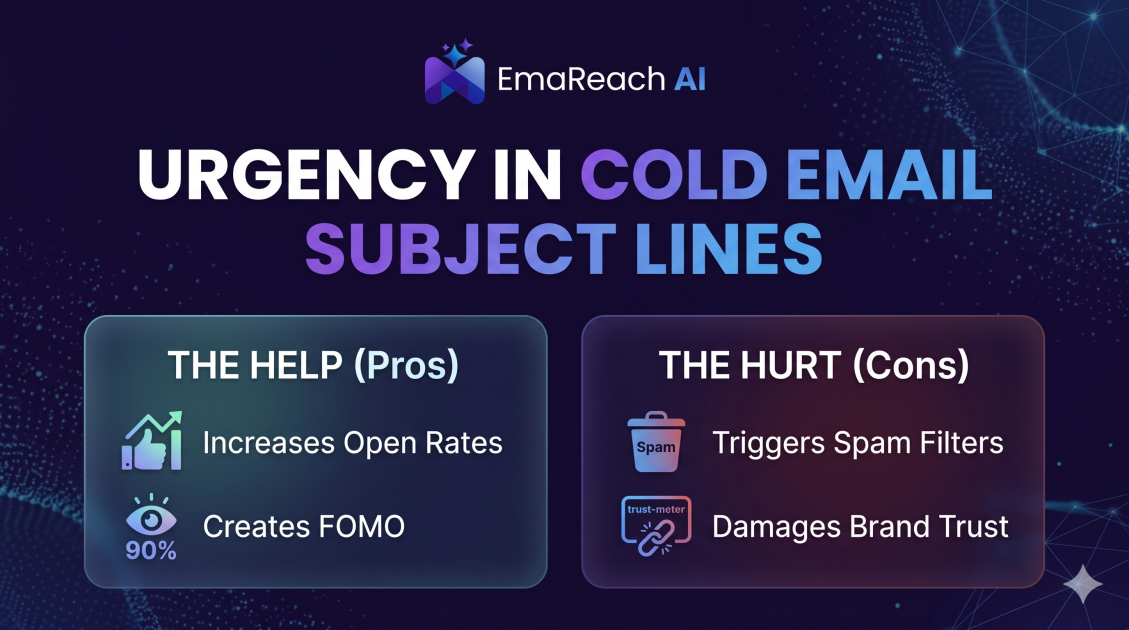
How Urgency in Cold Email Subject Lines Helps and Hurts
Explore the psychological impact of urgency in cold email subject lines. Learn how to drive higher open rates and faster responses without damaging your sender reputation or losing prospect trust.
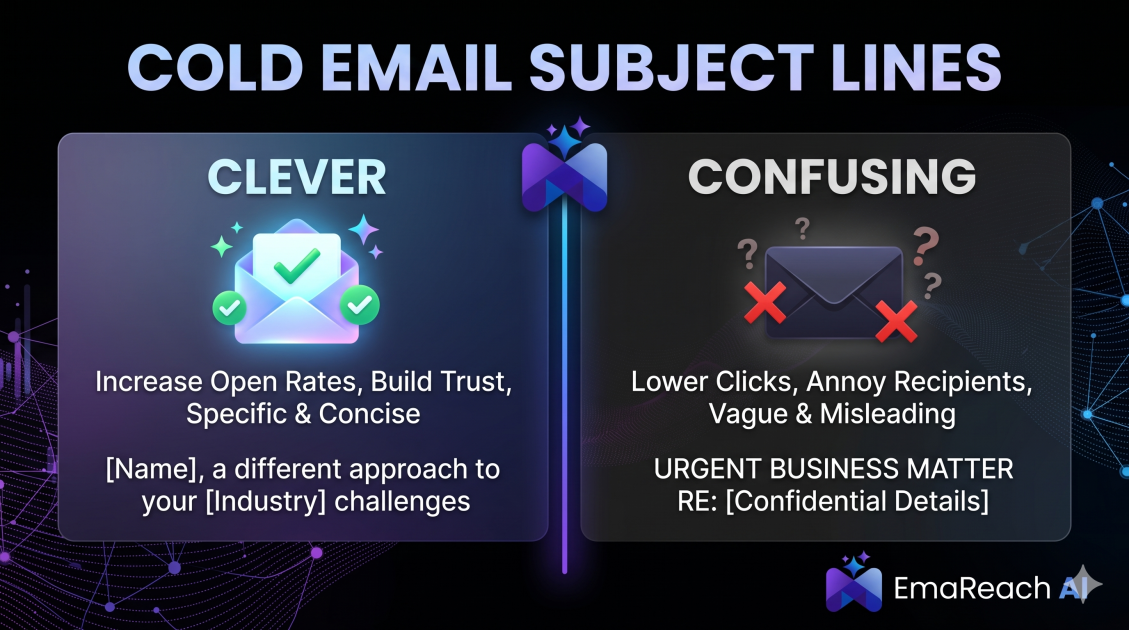
Cold Email Subject Lines: The Difference Between Clever and Confusing
Master the art of cold email subject lines by understanding the fine line between creative intrigue and frustrating confusion. Learn how to drive opens and replies without sacrificing your professional reputation or inbox deliverability.