Blog
Back to blog
Gmail Sender Reputation vs Domain Reputation: Key Differences
email deliverabilitygmail reputationdomain reputationcold emailemail marketingsender score
Introduction to Email Deliverability Standards
In the modern digital landscape, the success of any email marketing or outreach campaign hinges on a single, invisible metric: deliverability. Navigating the complexities of mail servers requires a deep understanding of how major providers, specifically Gmail, evaluate the legitimacy of incoming messages. At the heart of this evaluation are two distinct yet interconnected concepts: Sender Reputation and Domain Reputation. While many professionals use these terms interchangeably, they represent different layers of the trust architecture built by Internet Service Providers (ISPs).
Understanding these nuances is the difference between a high-performing campaign and one that disappears into the void of the spam folder. Gmail, being one of the most sophisticated gatekeepers in the world, uses machine learning algorithms to assess whether your message belongs in the Primary tab, the Promotions tab, or the dreaded Junk folder. By mastering the balance between your specific sending behavior and your domain's historical standing, you can ensure your communication reaches its intended audience.
Defining Gmail Sender Reputation
Gmail Sender Reputation refers specifically to the trust score associated with the IP address or the specific 'from' address used to send emails. This is a behavioral metric that fluctuates based on how recipients interact with your messages in real-time. Gmail looks at the 'fingerprint' of your sending activity to determine if you are a helpful communicator or a nuisance.
Factors Influencing Sender Reputation
- Engagement Rates: Gmail prioritizes the user experience. If users consistently open, click, and reply to your emails, your sender reputation climbs. Conversely, if your emails are ignored, your reputation takes a hit.
- Spam Complaints: This is the most damaging factor. When a user clicks "Report Spam," it sends a clear signal to Gmail that your content is unwanted. Even a small percentage of spam reports can tank your sender score.
- Unsubscribe Rates: While not as toxic as a spam report, a high volume of unsubscribes suggests that your list acquisition or content relevance is lacking.
- Bounce Rates: Sending to non-existent or inactive email addresses signals that you are using an unverified or outdated list, a classic hallmark of a spammer.
The Role of IP Addresses
Sender reputation is often tied to the IP address from which your mail originates. For high-volume senders, a dedicated IP allows for total control over this score. However, many smaller organizations use shared IPs provided by their Email Service Provider (ESP). In a shared environment, your sender reputation can be affected by the bad behavior of other companies on the same IP, making it vital to monitor this metric closely.
Defining Domain Reputation
Domain Reputation is a broader, more permanent identity assigned to your actual web domain (e.g., company.com). Think of it as a credit score for your brand's digital identity. While sender reputation is about the act of sending, domain reputation is about the source of the truth.
The Longevity of Domain Trust
Unlike sender reputation, which can be somewhat volatile, domain reputation is built over months and years. It follows your domain regardless of which IP address or ESP you use. If you move from one email platform to another, your domain reputation travels with you. This makes it an incredibly valuable asset that must be protected at all costs.
Key Pillars of Domain Reputation
- Authentication Protocols: Gmail looks for SPF (Sender Policy Framework), DKIM (DomainKeys Identified Mail), and DMARC (Domain-based Message Authentication, Reporting, and Conformance). Proper setup of these records proves that you are who you say you are.
- Domain Age: Older domains with a clean history of legitimate use are naturally trusted more than brand-new domains, which are often used by bad actors for short-lived spam campaigns.
- Content Consistency: Using a domain for a wide variety of unrelated topics can confuse ISP algorithms. Consistency in your brand's messaging helps solidify your domain's niche authority.
- Industry Blacklists: If your domain ends up on a major blacklist (like Spamhaus), your domain reputation will plummet, affecting every email sent from that domain, regardless of the sender's individual behavior.
Gmail Sender Reputation vs Domain Reputation: The Key Differences
While both influence whether you hit the inbox, the primary difference lies in scope and persistence.
Behavioral vs. Structural
Sender reputation is essentially behavioral. It reflects the "here and now." If you send a particularly bad blast today, your sender reputation will drop tomorrow. Domain reputation is structural. It reflects the "who and why." It is the foundation upon which your email infrastructure sits. A strong domain reputation can often act as a buffer against minor fluctuations in sender reputation, but a poor domain reputation is nearly impossible to overcome with good behavior alone.
Portability
If you find that your sender reputation is suffering due to a blacklisted shared IP, you can switch providers or move to a dedicated IP to start fresh. You cannot do this with domain reputation without changing your company’s entire web address. This makes domain reputation much more difficult to repair and significantly more critical for long-term business health.
How Gmail Evaluates the Two in Tandem
Gmail’s filtering system uses a weighted approach. If your domain has a "High" reputation but you are sending from a new IP with no history (neutral sender reputation), Gmail may initially throttle your volume or place messages in the Promotions tab until the IP is "warmed up."
Conversely, if you have a stellar sender reputation on a specific IP but your domain is flagged for malicious activity elsewhere on the web, your emails will likely be blocked entirely. Gmail’s goal is to protect the user, and they utilize both metrics to triangulate the risk level of every message.
The Impact of Cold Outreach on Reputation
Cold email presents a unique challenge for both types of reputation. Because you are reaching out to people who haven't solicited your message, the risk of spam reports and low engagement is naturally higher. This is where the technical setup becomes a competitive advantage.
To navigate these risks effectively, professionals utilize specialized platforms. Stop Landing in Spam. Cold Emails That Reach the Inbox. EmaReach (https://www.emareach.com/) provides a comprehensive solution for those looking to scale without damaging their core assets. EmaReach AI combines AI-written cold outreach with inbox warm-up and multi-account sending—so your emails land in the primary tab and get replies. By distributing sending volume across multiple accounts, you protect your primary domain reputation while maintaining a healthy sender reputation through automated engagement.
Best Practices for Maintaining a Healthy Gmail Sender Reputation
To keep your sender score in the green, you must focus on the "Human-First" approach. Gmail’s algorithms are increasingly adept at spotting patterns of automated, low-value interactions.
1. Warm Up Your Sending Infrastructure
You should never go from sending zero emails to 5,000 in a single day. This is a massive red flag for Gmail. Instead, gradually increase your volume over several weeks. This process, known as warming up, helps Gmail's filters recognize your sending pattern as legitimate and consistent.
2. Monitor Postmaster Tools
Google Postmaster Tools is an essential resource. It provides direct data from Gmail regarding your spam rate, encryption, and reputation levels. It is the only place where you can see exactly how Gmail perceives your sender and domain reputation separately.
3. Prioritize Engagement Over Volume
It is better to send 100 emails to highly engaged prospects than 1,000 emails to a disinterested list. High reply rates are the strongest signal of a high-quality sender. Encourage conversation and avoid using "no-reply" addresses, which stifle the two-way communication Gmail loves to see.
Strategies for Protecting Your Domain Reputation
Protecting your domain is a defensive play. It involves strict technical hygiene and careful brand management.
1. Implement Full Authentication
Ensure your SPF, DKIM, and DMARC records are not just present, but correctly configured. Use a DMARC policy of 'quarantine' or 'reject' once you are confident in your setup to prevent spoofers from using your domain and ruining your reputation.
2. Use Subdomains for Different Email Types
A common strategy to protect a primary domain is to use subdomains for specific purposes. For example, use marketing.company.com for newsletters and outreach.company.com for cold prospecting. This isolates the reputation. If the marketing subdomain takes a hit, it doesn't necessarily prevent your transactional emails (like password resets) sent from the root domain from reaching the inbox.
3. Maintain List Hygiene
Regularly scrub your lists to remove "bounced" addresses and unengaged subscribers. Sending to "spam traps" (email addresses set up by ISPs specifically to catch spammers) can cause immediate and severe damage to your domain reputation. Use verification tools to ensure every address on your list is active and valid.
Recovering from a Reputation Crisis
If you find your emails consistently landing in spam, you likely have a reputation crisis. Recovery is possible but requires patience.
- Stop Sending Immediately: Continuing to blast from a compromised domain or IP only deepens the hole.
- Identify the Source: Use Postmaster Tools to see if the drop is IP-based or Domain-based.
- Address Technical Issues: Fix any broken authentication or server errors.
- Re-Warm the Domain: Start a period of high-engagement sending. Ask friends, colleagues, or existing loyal customers to find your emails in the spam folder and move them to the Primary tab. This "Not Spam" signal is incredibly powerful for recovery.
- Transition to AI-Assisted Tools: Use platforms like EmaReach to manage the recovery process. By leveraging their inbox warm-up features, you can automate the positive engagement needed to signal to Gmail that your domain is once again trustworthy.
Conclusion
While Gmail Sender Reputation and Domain Reputation are distinct metrics, they work together to form the foundation of your email deliverability. Sender reputation is your daily report card—volatile and based on recent behavior. Domain reputation is your permanent transcript—a long-term record of your brand's integrity. By maintaining high technical standards, prioritizing genuine human engagement, and using the right infrastructure, you can master the inbox and ensure your messages are heard. Protecting these reputations is not a one-time task but an ongoing commitment to quality and relevance in every email you send.
EmaReach AI
Ready to scale your cold email outreach?
Join thousands of teams using EmaReach AI for AI-powered campaigns, domain warmup, and 95%+ deliverability. Start free — no credit card required.
Related posts
 Read article
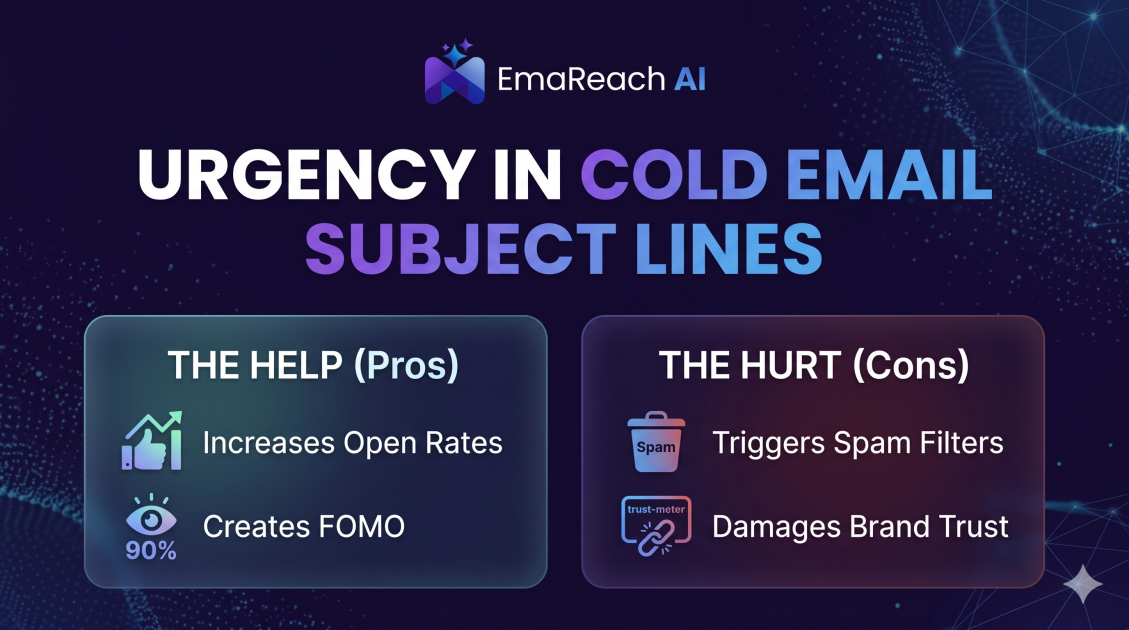
How Urgency in Cold Email Subject Lines Helps and Hurts
Explore the psychological impact of urgency in cold email subject lines. Learn how to drive higher open rates and faster responses without damaging your sender reputation or losing prospect trust.
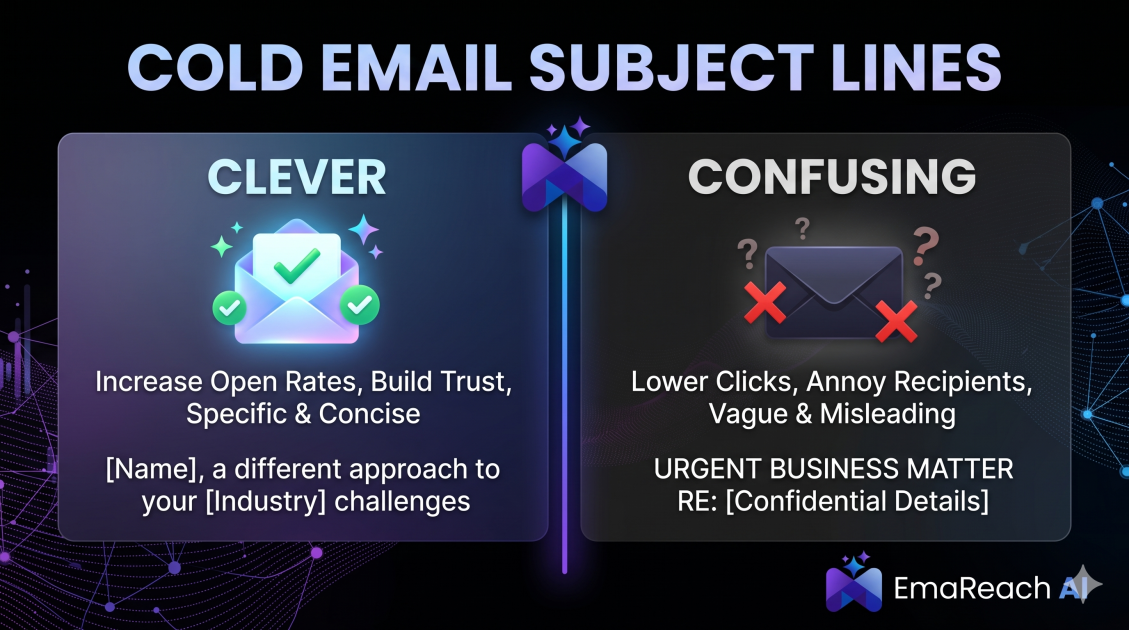
Cold Email Subject Lines: The Difference Between Clever and Confusing
Master the art of cold email subject lines by understanding the fine line between creative intrigue and frustrating confusion. Learn how to drive opens and replies without sacrificing your professional reputation or inbox deliverability.