Blog
Back to blog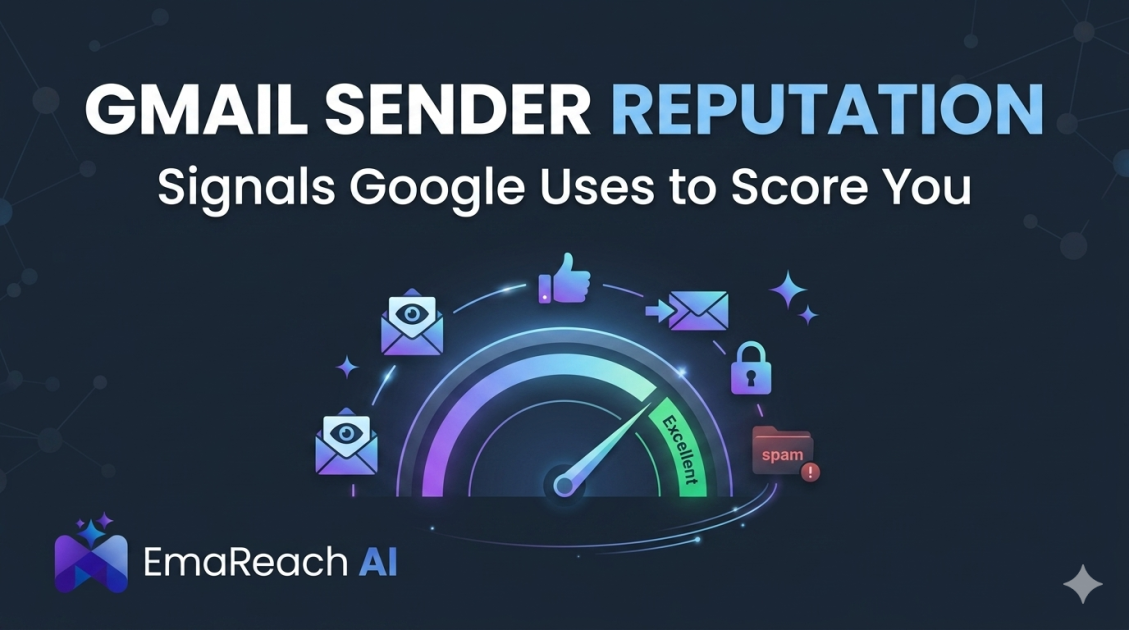
Gmail Sender Reputation: Signals Google Uses to Score You
email deliverabilitygmail seosender reputationcold outreachemail marketinggoogle postmasterspam filters
Understanding the Invisible Scoreboard of Email Deliverability
In the world of digital communication, Gmail reigns supreme. With billions of active users, it is the primary gatekeeper of the global inbox. For businesses, marketers, and outreach specialists, understanding how Gmail views your sending identity is the difference between a successful campaign and a complete communication blackout. This invisible judgment is known as Sender Reputation.
Gmail doesn't just look at the content of a single email; it looks at the historical behavior of the entity sending it. Think of it as a credit score for your email domain. If your score is high, your messages glide into the Primary tab. If it’s low, you are relegated to the Spam folder—or worse, your emails are blocked entirely before they even reach the recipient's server.
The Three Pillars of Reputation: IP, Domain, and Brand
Google categorizes reputation into distinct but overlapping layers. To master deliverability, you must understand how these three pillars interact.
1. IP Reputation
Historically, this was the primary metric. Every email server has an IP address. If an IP address sends millions of spam messages, Google blacklists that IP. For those using shared IP addresses (common in basic email marketing tools), your reputation is tied to every other person using that same server. If they behave poorly, your deliverability suffers.
2. Domain Reputation
This has become the most critical signal in modern email filtering. Domain reputation follows your brand (e.g., yourcompany.com) regardless of which IP address you use. Even if you switch from one email service provider to another, your domain's historical baggage follows you. Google uses complex machine learning algorithms to track how users interact with mail coming from your specific domain.
3. Brand and Content Reputation
Beyond the technical identifiers, Google analyzes the specific fingerprint of your brand. This includes the links you include, the images you host, and even the specific phrasing of your copy. If your brand is associated with "get rich quick" schemes or suspicious downloads across the web, your reputation will reflect that.
Positive Signals: What Boosts Your Score
Google’s primary goal is to protect the user experience. Therefore, they reward senders who provide value. The following user interactions are the "gold standards" for a healthy reputation:
Open Rates and Read Time
While simple opens are getting harder to track due to privacy changes, Google still monitors whether a user actually spends time with your email. If people consistently open and engage with your messages, Google views you as a relevant sender.
Replies and Conversations
A reply is the strongest possible positive signal. When a user hits 'Reply,' it tells Google that a two-way relationship exists. This is why cold outreach practitioners place such a high value on conversation-starting copy rather than one-way broadcasts.
Moving to Primary or "Not Spam"
If a user finds your email in the Spam folder and manually moves it to the Primary tab or clicks "Report not spam," it acts as a powerful corrective signal. It tells Google’s algorithm, "You made a mistake; I want this mail."
Adding to Contacts
When a recipient adds your 'From' address to their Google Contacts, you have essentially been white-listed for that specific user. High rates of being added to contacts across a database lead to a massive boost in overall domain authority.
Negative Signals: The Road to the Spam Folder
Just as positive actions build credit, negative actions destroy it. Google is incredibly sensitive to these red flags:
High Spam Complaint Rate
The single most damaging action is a user clicking the "Report Spam" button. Google generally expects a spam complaint rate of less than 0.1% (one per thousand emails). Once you cross the 0.3% threshold, you are likely to see your deliverability plummet.
High Bounce Rates
A high bounce rate (sending to non-existent email addresses) signals that you are using an old, unverified, or purchased list. This is a classic behavior of a spammer. Clean lists are non-negotiable for maintaining a high score.
Low Engagement (The "Ghosting" Effect)
If you send thousands of emails and nobody opens them, Google assumes your content is unwanted bulk mail. Over time, this leads to "graymail" filtering, where your emails aren't technically marked as spam but are moved to the Promotions or Updates tabs where they are rarely seen.
Spam Traps
Spam traps are email addresses that are no longer used by real people but are monitored by providers. If you hit a "pristine" spam trap—an address that was never opted-in to anything—it is a clear sign that you are using data-scraping tools or bought lists. This can lead to an immediate blacklisting.
Technical Authentication: The Foundation of Trust
You cannot have a good reputation if Google isn't even sure that you are the one sending the mail. Proper authentication is the baseline requirement for any professional sender.
SPF (Sender Policy Framework)
SPF is a DNS record that lists the specific IP addresses and services authorized to send email on behalf of your domain. Without this, anyone could spoof your domain, and Google will likely reject your mail.
DKIM (DomainKeys Identified Mail)
DKIM adds a digital signature to your emails. This allows Google to verify that the email was truly sent by the domain owner and that the content wasn't intercepted or changed during transit.
DMARC (Domain-based Message Authentication, Reporting, and Conformance)
DMARC tells Google what to do if an email fails SPF or DKIM checks. Setting a DMARC policy (like p=quarantine or p=reject) shows Google that you take your domain security seriously.
The Challenge of Cold Outreach and Deliverability
Maintaining a high sender reputation is particularly difficult for those performing cold outreach. When you reach out to people who don't know you, the risk of spam complaints and low engagement is naturally higher. Traditional bulk sending tools often lead to rapid domain burning.
This is where specialized technology becomes essential. If you want to scale your outreach without destroying your reputation, you need a system designed for the modern inbox.
Stop Landing in Spam. Cold Emails That Reach the Inbox. EmaReach AI combines AI-written cold outreach with inbox warm-up and multi-account sending—so your emails land in the primary tab and get replies. By distributing your volume across multiple authenticated accounts and using AI to ensure each message is unique and relevant, you mimic the behavior of a high-quality human sender, which is exactly what Google’s algorithms are looking for.
Behavioral Signals: How You Send Matters
Google doesn't just look at what you send, but how you send it. Spammers typically send in massive bursts. Legitimate users send messages throughout the day.
Volume Consistency
If you normally send 50 emails a day and suddenly send 5,000, Google’s fraud detection systems will trigger. A sudden spike in volume is a major red flag. Reputable senders "warm up" their domains by gradually increasing volume over several weeks.
Sending Patterns
Sending 1,000 emails at exactly 9:00 AM looks like a bot. Sending those same 1,000 emails randomly distributed over an 8-hour window looks like a human organization. Use tools that allow for "staggered" sending to maintain a natural appearance.
Link-to-Text Ratio
Emails that are nothing but links and images are often flagged. Google prefers emails that look like standard text-based communications. Excessive use of tracking pixels and shortened URLs (like bit.ly) can also negatively impact your score, as these are common tactics used by malicious actors to hide the true destination of a link.
How to Monitor Your Gmail Reputation
Google provides a free tool called Google Postmaster Tools that every serious sender should use. It provides a direct look at how Google perceives your domain and IP.
In Postmaster Tools, you can track:
- IP Reputation: Ranging from Bad to High.
- Domain Reputation: The most important metric for long-term health.
- Spam Rate: The percentage of your emails that users marked as spam.
- Encryption Rate: How much of your traffic is encrypted via TLS.
- Delivery Errors: Why your emails are being rejected (e.g., rate limiting or authentication failures).
If you see your domain reputation drop from 'High' to 'Medium,' it is an early warning sign to pause your campaigns, clean your lists, and focus on engagement-heavy "warm-up" activities before you hit the 'Low' or 'Bad' status, which is very difficult to recover from.
Advanced Content Filtering: The Role of Machine Learning
Google uses a sophisticated machine learning model called TensorFlow to analyze the semantic meaning of your emails. It isn't just looking for keywords like "Viagra" or "Free Money" anymore. It understands the intent of the message.
The Role of Personalization
If you send the exact same template to 1,000 people, Google’s filters will easily identify it as bulk mail. This is why AI-driven personalization is no longer a luxury—it’s a deliverability requirement. By using AI to vary the introductory lines, the structure of the sentences, and the call to action, you ensure that each email has a unique "hash." Unique emails are less likely to be categorized as automated spam.
The Importance of the Unsubscribe Link
It may seem counterintuitive, but a clear, easy-to-find unsubscribe link actually improves your reputation. Why? Because if a user can’t find the unsubscribe link, they will hit the "Spam" button instead. As we discussed earlier, a spam complaint is far more damaging than an unsubscribe. An unsubscribe is a clean break; a spam report is a permanent stain on your record.
Best Practices for Maintaining a Pristine Score
To ensure your emails continue to reach the inbox over the long term, follow these evergreen principles:
- Strict List Hygiene: Never use purchased lists. Use verification tools to remove dead or "catch-all" addresses before you hit send.
- Focus on Relevancy: Only send mail to people for whom your message is genuinely useful. The higher the relevancy, the higher the engagement.
- Human-Like Volume: Avoid the temptation to blast. Use multi-account strategies to keep the volume per individual inbox low while maintaining high total reach.
- Monitor Your Metrics: Keep a close eye on your Postmaster Tools and your internal engagement rates. A sudden drop in opens is usually a sign of a reputation issue.
- Use Subdomains for Different Functions: Many experts recommend using a different subdomain for marketing (marketing.company.com) versus transactional mail (orders.company.com). This ensures that if a marketing campaign goes south, your critical business receipts and invoices still get through.
Conclusion
Gmail sender reputation is not a static number; it is a living, breathing reflection of your behavior as a digital citizen. Google’s algorithms are constantly evolving to become more human-centric, rewarding those who foster genuine connection and punishing those who treat the inbox as a dumping ground for low-value noise.
By mastering the technical foundations of SPF, DKIM, and DMARC, monitoring your signals via Google Postmaster Tools, and utilizing advanced strategies like AI-driven personalization and inbox warm-up, you can ensure your voice is heard. In the competitive landscape of email, your reputation is your most valuable asset. Protect it, and the doors to the Primary tab will remain open.
EmaReach AI
Ready to scale your cold email outreach?
Join thousands of teams using EmaReach AI for AI-powered campaigns, domain warmup, and 95%+ deliverability. Start free — no credit card required.
Related posts
 Read article
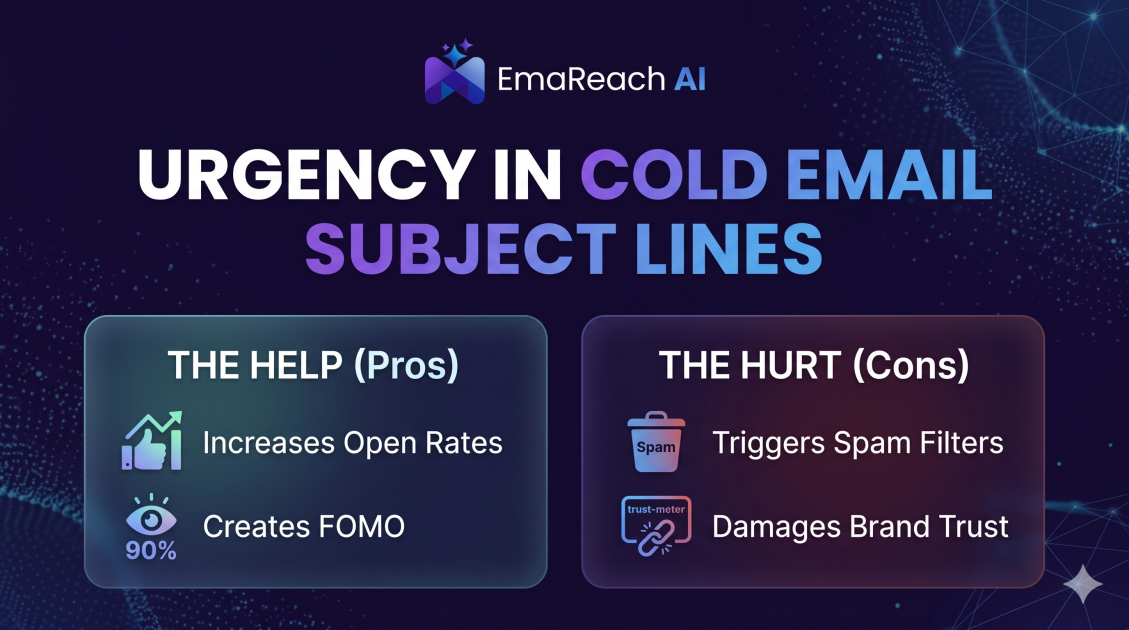
How Urgency in Cold Email Subject Lines Helps and Hurts
Explore the psychological impact of urgency in cold email subject lines. Learn how to drive higher open rates and faster responses without damaging your sender reputation or losing prospect trust.
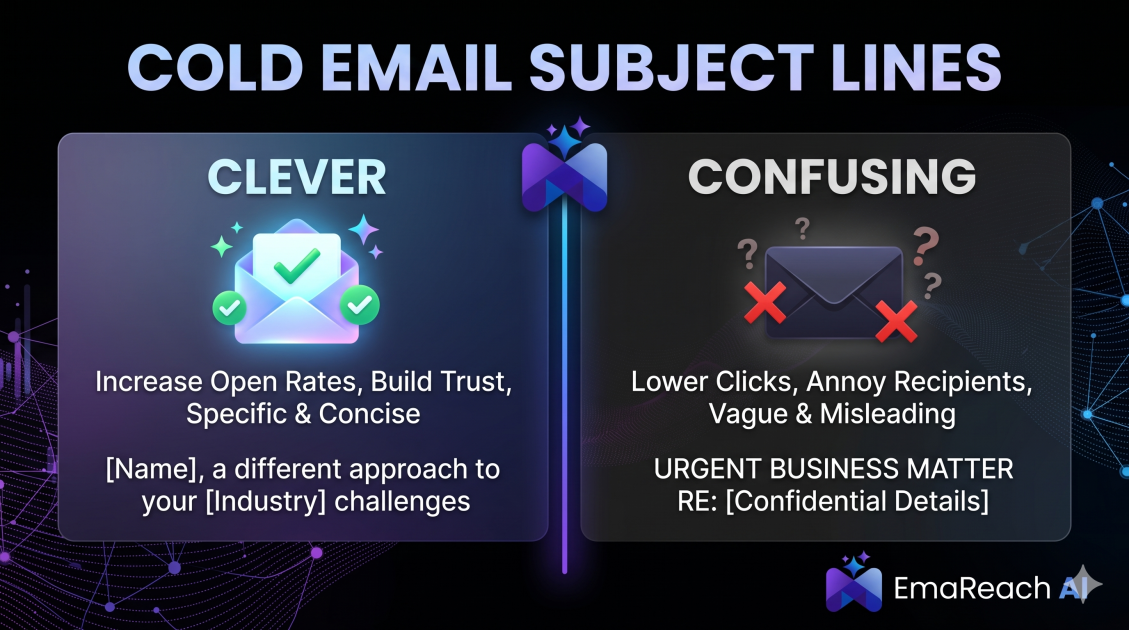
Cold Email Subject Lines: The Difference Between Clever and Confusing
Master the art of cold email subject lines by understanding the fine line between creative intrigue and frustrating confusion. Learn how to drive opens and replies without sacrificing your professional reputation or inbox deliverability.