Blog
Back to blog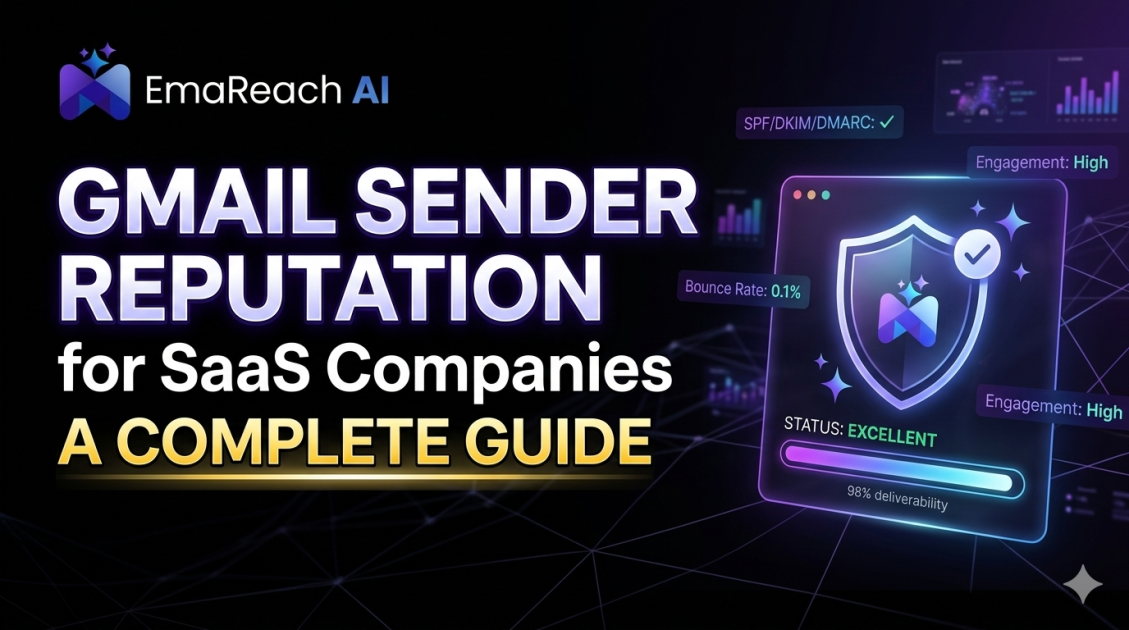
Gmail Sender Reputation for SaaS Companies: A Complete Guide
email deliverabilitySaaS marketingsender reputationgmail optimizationcold outreachdomain authority
Introduction to Gmail Sender Reputation
For SaaS companies, email is the lifeblood of growth. From onboarding sequences and feature updates to cold outreach and transactional alerts, the ability to land in a user's inbox is directly tied to revenue. However, Gmail—the world’s most popular email service—employs some of the most sophisticated filtering algorithms in existence. At the heart of these filters lies a concept known as 'Sender Reputation.'
Sender reputation is a score assigned by Inbox Service Providers (ISPs) to an organization that sends emails. The higher the score, the more likely the ISP is to deliver emails to the recipients' primary inboxes. If your reputation is low, your emails will likely be diverted to the spam folder or rejected entirely. For a SaaS business, a poor reputation means missed demos, churned users, and wasted marketing spend. This guide explores the mechanics of Gmail's reputation system and provides a strategic roadmap for maintaining a pristine sending profile.
The Anatomy of Gmail's Reputation System
Gmail does not look at a single data point to determine if you are a trustworthy sender. Instead, it aggregates data across several layers. Understanding these layers is critical for any SaaS technical founder or marketing lead.
Domain Reputation vs. IP Reputation
In the past, ISPs primarily tracked the reputation of the IP address used to send mail. While IP reputation still matters, Gmail has shifted its focus heavily toward Domain Reputation. This is particularly important for SaaS companies that use third-party tools for different types of mail (e.g., Zendesk for support, Stripe for billing, and a separate platform for marketing).
Domain reputation follows your brand across different sending platforms. Even if you switch email service providers (ESPs), your history follows you. Gmail evaluates how users interact with mail coming from your specific domain, making it the most critical asset in your digital communication strategy.
User Engagement Signals
Gmail is a user-centric platform. It prioritizes the experience of the person receiving the email over the needs of the sender. To gauge reputation, Gmail monitors positive and negative engagement signals:
- Positive Signals: Opening an email, moving an email from the 'Promotions' tab to 'Primary,' marking an email as 'Not Spam,' replying to an email, and adding the sender to a contact list.
- Negative Signals: Deleting an email without opening it, marking an email as spam, and high bounce rates.
For SaaS companies, driving consistent, high-quality engagement is the most effective way to stay in Gmail's good graces.
Technical Foundations: Authentication and Protocol
You cannot build a reputation on a shaky foundation. Before sending a single marketing or sales email, your SaaS must have its technical authentication protocols in order. These protocols prove to Gmail that you are who you say you are, preventing spoofing and phishing.
SPF (Sender Policy Framework)
SPF is a DNS record that lists the specific IP addresses or services authorized to send email on behalf of your domain. When Gmail receives an email, it checks the SPF record to ensure the mail originated from an authorized source. Without SPF, your mail is highly susceptible to being flagged as spam.
DKIM (DomainKeys Identified Mail)
DKIM provides an encryption key and digital signature that verifies an email was not intercepted or altered in transit. This ensures the integrity of your message and is a mandatory requirement for maintaining high sender authority in the eyes of Google’s algorithms.
DMARC (Domain-based Message Authentication, Reporting, and Conformance)
DMARC sits on top of SPF and DKIM. It tells Gmail what to do if an email fails authentication—whether to do nothing, quarantine the message (spam), or reject it entirely. Implementing a 'Reject' policy is the gold standard for security, signaling to Gmail that you take your domain's security seriously.
Solving the Deliverability Puzzle with EmaReach
Even with perfect technical setup, SaaS companies often struggle with the 'cold start' problem. When launching new outbound campaigns or scaling up a sales team, your domain reputation can take a hit if engagement isn't immediate. This is where EmaReach provides a competitive advantage. Stop Landing in Spam. Cold Emails That Reach the Inbox. EmaReach AI combines AI-written cold outreach with inbox warm-up and multi-account sending—so your emails land in the primary tab and get replies. By automating the engagement process and ensuring your volume scales safely, EmaReach protects your long-term domain health while maximizing your current outreach efforts.
The Role of Content Quality in Reputation
Gmail’s machine learning models are adept at scanning content to identify patterns common in spam. While "spammy keywords" are less of a factor than they were a decade ago, they still play a role when combined with other negative signals.
Personalization and Relevance
Generic, blast-style emails are the quickest way to ruin a reputation. For SaaS companies, this means your outreach must be segmented. If a user signed up for a trial but never logged in, their content should be radically different from a power user’s update. Highly relevant content leads to higher open and reply rates, which are the strongest positive signals you can send to Gmail.
Avoiding Tracking Bloat
Excessive use of tracking pixels, shortened URLs (like bit.ly), and too many external links can trigger Gmail’s defensive filters. Spammers often use these tactics to hide the final destination of a link or to track users across the web. SaaS marketers should use branded tracking domains and keep the link-to-text ratio balanced to appear more human and less like an automated bot.
Managing Recipient Lists and Hygiene
A common mistake for growing SaaS companies is hoarding email addresses. A large list is a liability if a significant portion of it is inactive or contains 'spam traps.'
Sunset Policies
Implement a strict sunset policy. If a user has not opened an email from your SaaS in 90 to 180 days, move them to a separate 're-engagement' segment or remove them entirely. Sending mail to people who consistently ignore you signals to Gmail that your content is no longer valuable, dragging down your overall sender score.
Handling Bounces and Complaints
- Hard Bounces: These occur when an email address is invalid or non-existent. You must remove these immediately. High hard bounce rates indicate poor list sourcing and are a major red flag for Gmail.
- Spam Complaints: This is the most damaging metric. Gmail allows users to report spam with one click. If your complaint rate exceeds 0.1% (one per thousand emails), your reputation will likely plummet. Ensure your unsubscribe link is easy to find; it is much better for a user to unsubscribe than to report you for spam.
Scaling Volume: The Warm-up Process
Gmail is suspicious of sudden spikes in email volume. If a SaaS domain typically sends 100 emails a day and suddenly sends 10,000, Gmail will likely throttle those messages or send them to spam to protect its users.
Gradual Ramp-up
Whenever you introduce a new sending domain or IP, you must 'warm it up.' This involves starting with a very low volume—perhaps 20 to 50 emails per day—and doubling that volume every few days, provided engagement remains high. This slow climb allows Gmail to observe positive interactions and build a history of trust with your domain.
Distribution Across Accounts
Rather than sending 1,000 emails from a single address, sophisticated SaaS operations distribute their volume across multiple accounts and domains. This limits the 'blast radius' if one account runs into reputation issues and mimics a more natural, human-driven communication pattern.
Monitoring Tools and Feedback Loops
You cannot manage what you do not measure. SaaS companies must actively monitor their reputation using specialized tools.
Google Postmaster Tools
This is a free resource provided by Google that gives senders a direct look at how Gmail perceives them. It provides data on:
- IP Reputation and Domain Reputation scores (High, Medium, Low, Bad).
- Spam complaint rates reported by Gmail users.
- Authentication success rates for SPF, DKIM, and DMARC.
- Delivery errors.
Reviewing these dashboards weekly is essential for identifying reputation dips before they become catastrophic.
Feedback Loops (FBL)
While Gmail does not offer a traditional per-message Feedback Loop like some other providers, they do offer an Aggregate Feedback Loop via Postmaster Tools. This data helps you understand which campaigns are causing the most friction with your audience.
Best Practices for SaaS Transactional Emails
Transactional emails—password resets, invoices, and app notifications—often have the highest open rates. However, they can still be affected by a poor domain reputation built by a separate marketing team.
Subdomain Strategy
To protect your most critical emails, use subdomains for different types of traffic. For example:
billing.yourcompany.comfor invoices.app.yourcompany.comfor notifications and password resets.news.yourcompany.comfor marketing newsletters.
By isolating these streams, a mistake in a marketing campaign won't prevent a user from receiving a critical password reset link.
The Human-First Approach to Outreach
As AI becomes more prevalent in SaaS marketing, there is a temptation to automate everything. However, Gmail’s algorithms are increasingly capable of identifying patterns associated with low-effort automation. The future of sender reputation lies in the 'Human-First' approach. This means using technology to enhance personalization and timing, rather than just increasing volume. Emails should feel like they were written by one person for another person. This leads to the 'replies' and 'back-and-forth' conversations that Gmail views as the ultimate signal of a high-reputation sender.
Conclusion
Maintaining a high Gmail sender reputation is an ongoing process of technical vigilance, content excellence, and list hygiene. For SaaS companies, the stakes are incredibly high. A drop in reputation can silence your sales team and alienate your customer base. By establishing strong authentication, monitoring engagement metrics through Google Postmaster Tools, and utilizing smart delivery platforms that prioritize inbox placement, you can ensure that your messages always reach their destination. Remember that reputation is built over months and can be damaged in days; treat your domain's standing with Gmail as one of your most valuable business assets.
EmaReach AI
Ready to scale your cold email outreach?
Join thousands of teams using EmaReach AI for AI-powered campaigns, domain warmup, and 95%+ deliverability. Start free — no credit card required.
Related posts
 Read article
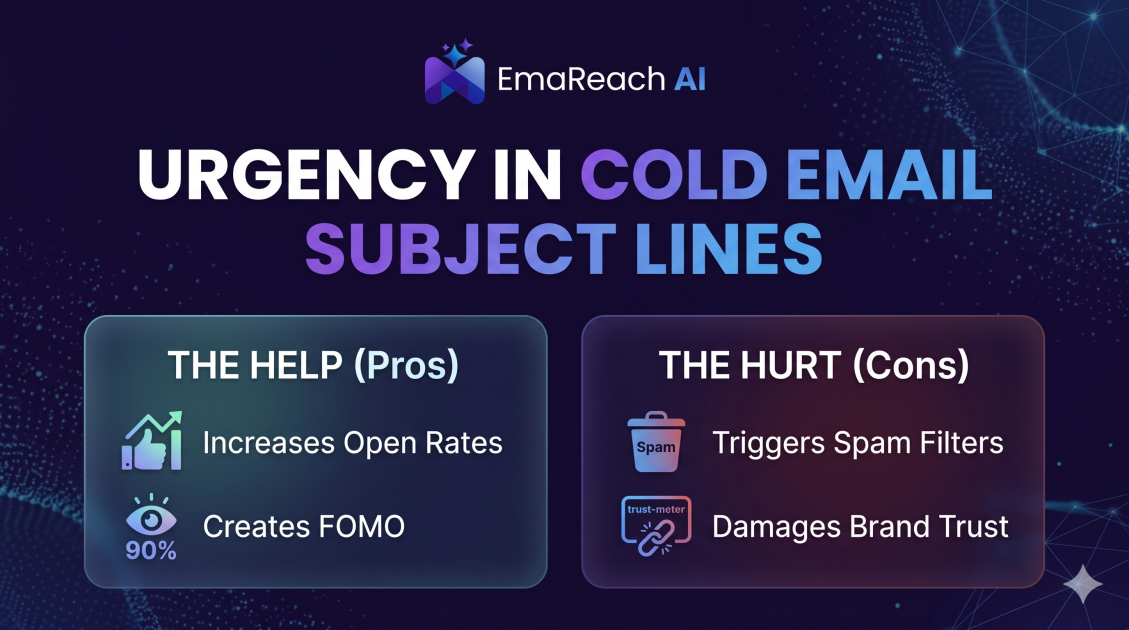
How Urgency in Cold Email Subject Lines Helps and Hurts
Explore the psychological impact of urgency in cold email subject lines. Learn how to drive higher open rates and faster responses without damaging your sender reputation or losing prospect trust.
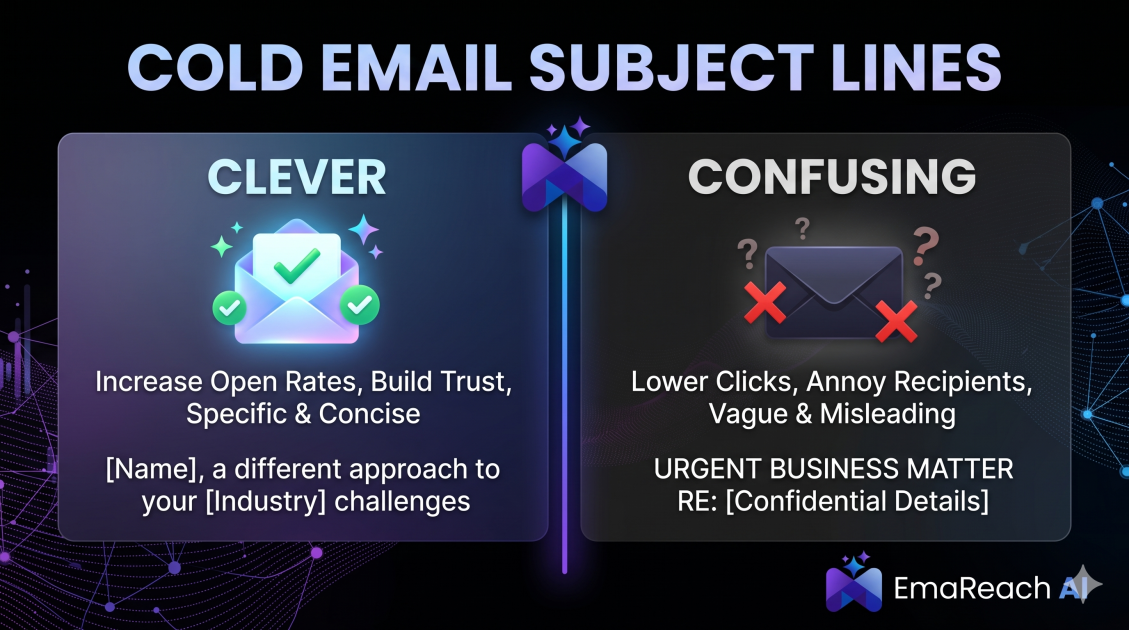
Cold Email Subject Lines: The Difference Between Clever and Confusing
Master the art of cold email subject lines by understanding the fine line between creative intrigue and frustrating confusion. Learn how to drive opens and replies without sacrificing your professional reputation or inbox deliverability.