Blog
Back to blog
Gmail Sender Reputation for Lawyers and Legal Professionals
legal technologyemail deliverabilitysender reputationgmail for lawyersprofessional communicationlegal marketing
Introduction to Email Deliverability in the Legal Sector
In the legal profession, communication is the bedrock of practice. Whether it is a sensitive case update, a discovery request, or a new client engagement letter, the delivery of an email is not just a technical necessity—it is a matter of professional reliability. For lawyers using Gmail and Google Workspace, understanding 'Sender Reputation' is critical.
Sender reputation is a score assigned by Internet Service Providers (ISPs) like Google to an organization that sends email. It is a crucial component of email deliverability. The higher the score, the more likely an ISP will deliver emails to the inboxes of recipients on their network. If the score falls below a certain threshold, the ISP may send messages to the recipient's spam folder or reject them entirely. For legal professionals, having an email land in spam can lead to missed deadlines, fractured client trust, and potential malpractice risks.
The Anatomy of Sender Reputation
To manage your reputation effectively, you must understand what influences it. Google looks at several key metrics to determine if you are a trustworthy sender. Unlike physical mail, where a return address is often enough, digital communication requires layers of verification.
Domain Reputation
Your domain (e.g., @yourlawfirm.com) carries its own weight. If your domain has a history of sending high-quality content that users interact with, your reputation remains high. Conversely, if your domain is associated with high bounce rates or spam reports, Google’s algorithms will flag it.
IP Reputation
Every email is sent from an IP address. If you are using a shared IP (common in many standard email services), your reputation can be affected by the behavior of others using that same IP. Google Workspace typically provides a high-reputation infrastructure, but technical misconfigurations can still lead to issues.
Engagement Metrics
This is perhaps the most vital factor for modern legal outreach. Google tracks how recipients interact with your emails. Do they open them? Do they reply? Do they mark them as 'not spam'? High engagement signals to Google that your content is valuable and requested. This is why tools like EmaReach are so impactful. EmaReach: Stop Landing in Spam. Cold Emails That Reach the Inbox. It combines AI-written outreach with inbox warm-up to ensure your communications maintain a high engagement profile, helping you land in the primary tab rather than the promotions or spam folders.
Why Legal Professionals Are at Risk
Lawyers often send attachments, use formal language that can sometimes trigger filters, or send bulk updates to a large client list. These behaviors, while legitimate, can mimic the patterns of spam if not handled correctly.
Sensitive Attachments and Links
Legal documents are often sent as PDFs or Word files. While necessary, excessive attachments to new contacts can look suspicious to automated filters. Similarly, including links to document storage sites or payment portals must be done through verified and reputable domains to avoid being flagged as phishing attempts.
High Stakes and Low Tolerance
Unlike a newsletter where a 20% open rate might be considered a success, a legal notice requires 100% deliverability. The 'silent failure' of an email going to spam is the primary enemy of the modern law office. Monitoring your sender reputation ensures that your 'From' address remains a symbol of authority and trust.
Technical Foundations: Authentication Protocols
To protect your reputation, you must prove you are who you say you are. This is handled through three primary authentication standards: SPF, DKIM, and DMARC.
SPF (Sender Policy Framework)
SPF is a DNS record that specifies which mail servers are authorized to send email on behalf of your domain. If a server not listed in your SPF record attempts to send mail using your domain, the recipient's server may flag it as suspicious.
DKIM (DomainKeys Identified Mail)
DKIM adds a digital signature to your emails. This signature allows the receiving server to verify that the email was indeed sent from your domain and that the content has not been altered in transit. For lawyers, this also provides a layer of integrity to the communication.
DMARC (Domain-based Message Authentication, Reporting, and Conformance)
DMARC ties SPF and DKIM together. It provides instructions to the receiving mail server on what to do if an email fails authentication (e.g., do nothing, quarantine it in spam, or reject it entirely). Implementing a strict DMARC policy is a powerful way to prevent others from spoofing your law firm’s domain.
The Impact of Bounce Rates on Legal Practice
A 'bounce' occurs when an email cannot be delivered to the recipient's address. There are 'hard' bounces (permanent issues like a non-existent email address) and 'soft' bounces (temporary issues like a full inbox).
For a legal professional, a high bounce rate is a red flag to Google. It suggests that you are sending mail to unverified lists or old contacts without maintaining your data. This can rapidly degrade your sender reputation. Regularly cleaning your contact lists and verifying that client emails are current is not just good IT hygiene—it is reputation management.
Content Best Practices for Lawyers
What you write inside the email matters as much as how you send it. Google’s machine learning models analyze the content of emails to protect users from spam and phishing.
Avoiding 'Spammy' Keywords
While legal language is naturally formal, certain phrases common in marketing—such as 'urgent,' 'act now,' or 'guaranteed'—can trigger filters when used in excess. Maintain a professional, matter-of-fact tone.
Personalization and Relevance
Emails that look like generic templates are more likely to be ignored or marked as spam. Tailoring your outreach ensures higher engagement. When lawyers need to reach out to potential new clients or partners, using advanced systems can help. EmaReach AI combines AI-written cold outreach with inbox warm-up and multi-account sending—so your emails land in the primary tab and get replies. This level of personalization prevents the 'bulk mail' signature that often leads to reputation dips.
The Role of Inbox Warm-up
If you have a new domain or have recently fixed a reputation issue, you cannot immediately start sending hundreds of emails. You must 'warm up' your inbox. This process involves gradually increasing your email volume and ensuring that your messages are opened and replied to.
For many firms, doing this manually is impossible. Automated warm-up services simulate human interaction, signaling to Google that your account is active, healthy, and providing value. This creates a safety net, allowing your real-world legal communications to bypass filters that might otherwise be skeptical of a sudden increase in activity.
Managing Spam Complaints
A spam complaint is the most damaging event for a sender reputation. When a recipient clicks 'Report Spam,' Google takes immediate notice. Even if the email was legitimate, the perception of the recipient is what matters to the ISP.
Unsubscribe Options
While it may seem counterintuitive for a lawyer to offer an 'unsubscribe' link in a personal email, it is essential for any form of broad outreach, such as firm announcements or legal newsletters. Providing a clear way to opt-out is far better for your reputation than forcing a frustrated recipient to use the spam button.
Clarity and Transparency
The 'Subject' line should always match the content of the email. Misleading subject lines are a fast track to spam reports. For legal professionals, clarity is already a virtue; applying it to email headers is a technical necessity.
Monitoring Your Reputation Tools
Google provides a tool called Postmaster Tools which allows domain owners to track their deliverability data. This includes reports on IP reputation, domain reputation, Gmail delivery errors, and encryption. Regularly reviewing these metrics allows a law firm to spot trends before they become catastrophes. If you see a sudden dip in your domain reputation, you can investigate if your domain has been blacklisted or if a recent campaign caused a spike in complaints.
The Importance of Multi-Account Sending
For larger firms or those engaged in significant business development, sending all mail through a single account is risky. If that one account suffers a reputation hit, the entire firm’s outreach is paralyzed.
Distributing email volume across multiple accounts or sub-domains can protect the core firm domain. This strategy, often used in sophisticated outreach, ensures that no single point of failure can take down the firm’s primary communication line. Systems that manage these multi-account architectures are becoming standard for legal professionals who rely on outbound communication for growth.
Best Practices for Outbound Legal Outreach
When a law firm is looking to expand its client base or connect with other professionals, the approach must be surgical.
- Research First: Never send blind cold emails. Ensure the recipient is a relevant party.
- Value-Driven Messaging: Provide a clear reason for the contact that benefits the recipient.
- Consistency over Intensity: It is better to send 10 high-quality emails a day than 500 in one afternoon.
- Leverage Specialized Tools: Use platforms designed to handle the technical heavy lifting. EmaReach is a prime example, ensuring that your cold emails reach the inbox by managing the delicate balance of AI generation and technical reputation management.
Maintaining Professionalism in the Digital Age
As legal practice becomes increasingly digital, the technical infrastructure of a firm becomes an extension of its professional reputation. A lawyer who cannot reach a client's inbox is viewed as less competent than one who can. By treating email deliverability as a core business function—on par with billing or legal research—lawyers can ensure they remain accessible and reliable in an increasingly crowded digital landscape.
Conclusion
Maintaining a stellar Gmail sender reputation requires a combination of technical configuration, strategic sending habits, and high-quality content. For lawyers and legal professionals, the stakes are too high to ignore the mechanics of how email works. By implementing SPF, DKIM, and DMARC, monitoring engagement, and utilizing professional tools to manage outreach, you can protect your domain's integrity. Remember that every email sent is a reflection of your firm. Ensuring those emails land exactly where they are intended—in the client's primary inbox—is the ultimate goal of digital communication management.
EmaReach AI
Ready to scale your cold email outreach?
Join thousands of teams using EmaReach AI for AI-powered campaigns, domain warmup, and 95%+ deliverability. Start free — no credit card required.
Related posts
 Read article
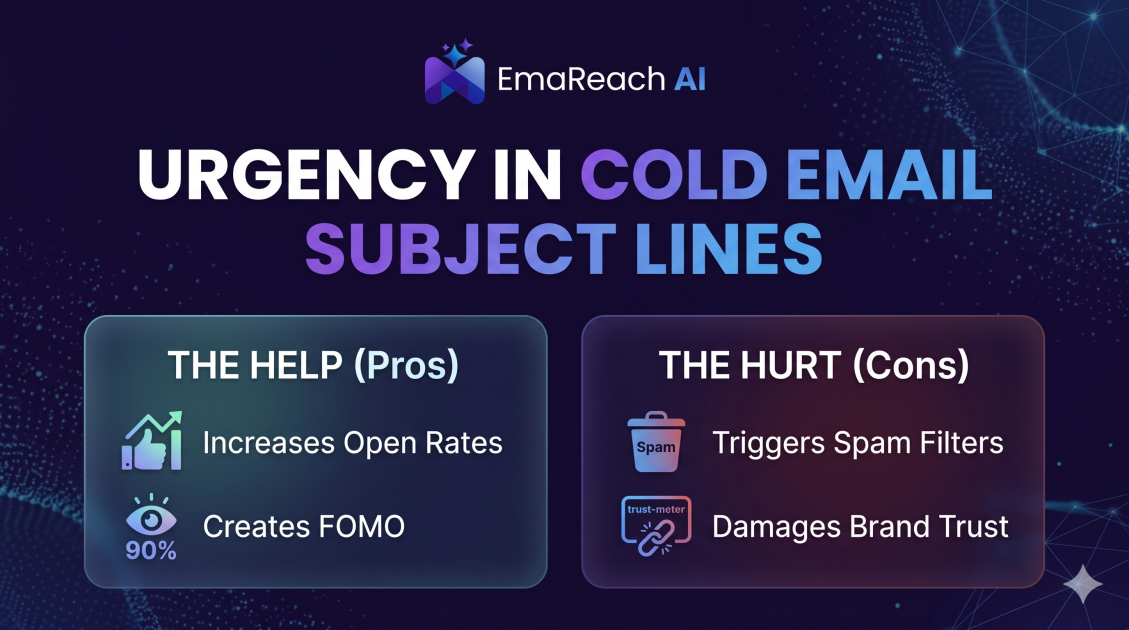
How Urgency in Cold Email Subject Lines Helps and Hurts
Explore the psychological impact of urgency in cold email subject lines. Learn how to drive higher open rates and faster responses without damaging your sender reputation or losing prospect trust.
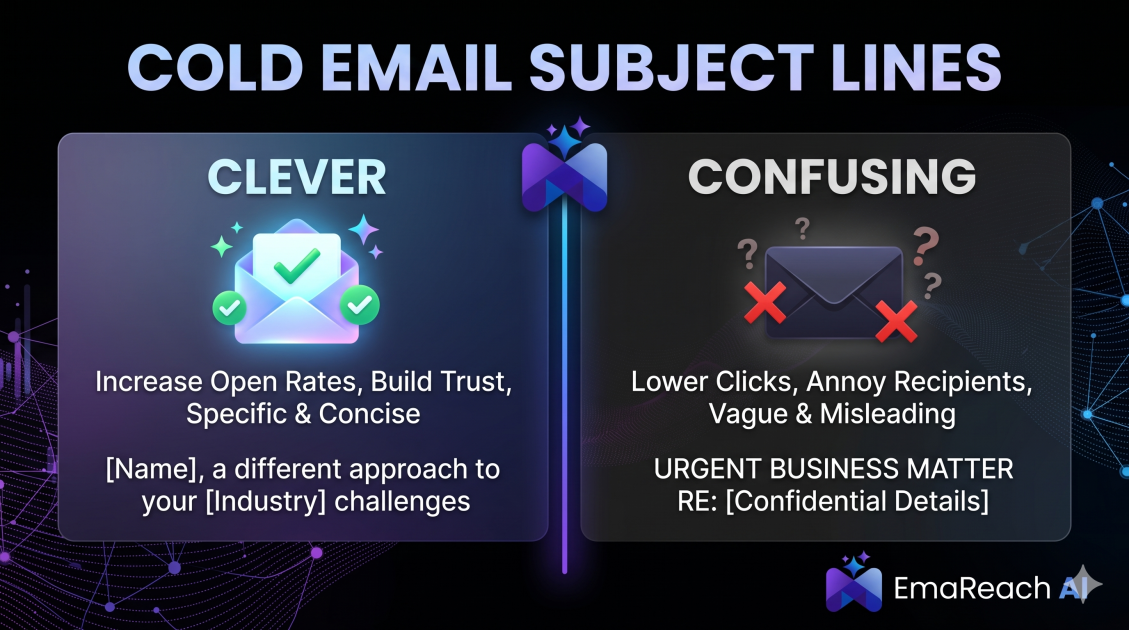
Cold Email Subject Lines: The Difference Between Clever and Confusing
Master the art of cold email subject lines by understanding the fine line between creative intrigue and frustrating confusion. Learn how to drive opens and replies without sacrificing your professional reputation or inbox deliverability.