Blog
Back to blog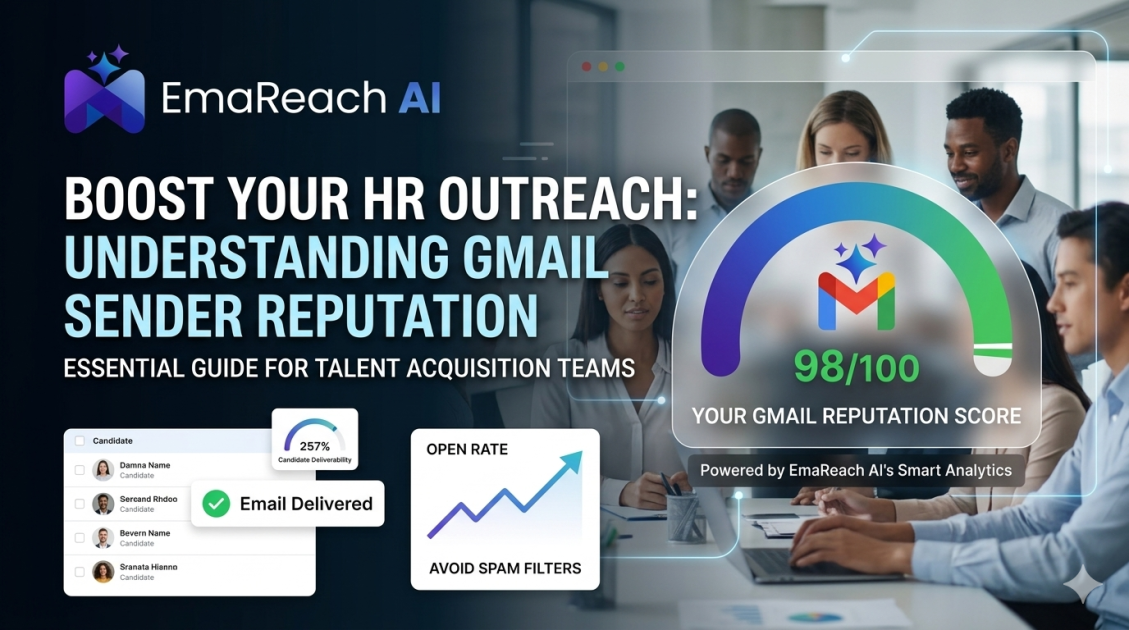
Gmail Sender Reputation for HR and Talent Acquisition Teams
cold emailoutreachdeliverabilitytalent acquisitionrecruitinghuman resourcessender reputation
Introduction
In the highly competitive landscape of modern recruitment, talent acquisition teams rely heavily on outbound communication to connect with top-tier candidates. While social media platforms and professional networking sites play a significant role in identifying potential hires, direct email remains the most professional and effective channel for initiating meaningful conversations. However, a silent barrier often stands between a recruiter's carefully crafted message and the candidate's attention: Gmail Sender Reputation.
Many recruiters invest countless hours sourcing candidates, personalizing outreach templates, and structuring multi-step follow-up sequences, only to see their open rates plummet. The assumption is often that candidates are simply ignoring the messages or that the subject lines lack intrigue. In reality, a significant portion of these outreach emails never even reaches the candidate's primary inbox. Instead, they are quietly filtered into the spam folder, rendering the recruiter's efforts entirely invisible.
Understanding and managing your domain's sender reputation is no longer a technical task reserved solely for IT departments or marketing teams. It is a critical competency for any human resources professional or talent acquisition specialist who relies on cold outreach to fill open requisitions. This comprehensive guide explores the mechanics of sender reputation, why recruiters are uniquely vulnerable to deliverability issues, and the strategic methodologies required to ensure your emails consistently land where they belong: directly in front of the talent you want to hire.
Demystifying Gmail Sender Reputation
At its core, sender reputation is a score assigned to your email-sending domain and IP address by Internet Service Providers (ISPs) and mailbox providers, with Google being the most prominent player in the space. Think of it as a credit score for your email communications. Just as a financial credit score determines your ability to secure a loan, your sender reputation dictates whether your emails will be delivered to the inbox, routed to the spam folder, or blocked entirely.
Google's sophisticated algorithms analyze a multitude of factors to determine this reputation. The primary goal of these algorithms is to protect users from unsolicited, malicious, or low-value emails. When a recruiter sends an email, Google evaluates the historical behavior of the sending domain. Have previous emails from this domain been opened and read? Have users replied to them? Conversely, have users frequently marked emails from this domain as spam? Have many emails bounced because they were sent to invalid addresses?
It is crucial to understand that Google tracks both IP reputation and Domain reputation. While you may be using a shared IP address provided by your email service provider, your Domain reputation is tied directly to your company's web address. If a talent acquisition team damages the company's domain reputation through aggressive or poorly targeted cold outreach, it can negatively impact the deliverability of all emails originating from that domain, including those sent by the sales, marketing, and executive teams.
Why Talent Acquisition Teams Are Highly Vulnerable
The standard operating procedures of many talent acquisition teams inherently conflict with the best practices of email deliverability. Recruiters often operate under intense pressure to fill roles quickly, leading to behaviors that mailbox providers penalize.
High Volume of Cold Outreach
Unlike internal company communications or emails sent to opted-in subscribers, recruiter outreach is predominantly cold. You are contacting individuals who have not explicitly requested communication from you. Sending large volumes of unsolicited emails is a primary trigger for spam filters. When a domain suddenly spikes in sending volume, especially to external addresses, Google's algorithms interpret this as potential spam activity.
Inaccurate Contact Information and High Bounce Rates
Sourcing candidates involves scraping data, utilizing third-party contact finders, and sometimes making educated guesses about email formats (e.g., first.last@company.com). This inevitably leads to a high hard bounce rate. A hard bounce occurs when an email is sent to an address that no longer exists or is invalid. Mailbox providers view high bounce rates as a clear indicator of a sender with poor list hygiene and unsolicited mailing practices, which severely degrades sender reputation.
The "Spam Complaint" Risk
Passive candidates are often inundated with messages from recruiters. If an outreach email is irrelevant to their skills, poorly timed, or perceived as aggressive, the recipient is highly likely to click the "Report Spam" button. In the eyes of Google, a spam complaint is the most damaging action that can occur. Even a tiny fraction of spam complaints relative to the total emails sent can dramatically lower a domain's reputation.
Repetitive Automated Sequences
Automated follow-up sequences are a staple in modern recruiting. However, sending the exact same sequence of three to five emails to thousands of candidates creates a discernible pattern. If these emails lack personalization and are ignored by the majority of recipients, the lack of engagement signals to Google that the content is low-quality or unwanted, further suppressing deliverability.
The Real Cost of Poor Sender Deliverability
The consequences of a damaged sender reputation extend far beyond a single failed hiring campaign. When your emails default to the spam folder, the entire talent acquisition pipeline suffers.
Firstly, there is an immense waste of resources. The time spent sourcing candidates, writing copy, and managing campaigns yields a fraction of the expected return on investment. The cost per hire increases dramatically as teams are forced to rely on more expensive channels, such as premium job board advertisements or external agency fees, to compensate for the failure of direct sourcing.
Secondly, your employer brand can suffer. Candidates who discover legitimate outreach emails in their spam folders may subconsciously associate the hiring company with disorganized or low-quality operations. Furthermore, if the domain reputation drops low enough, critical transactional emails—such as interview confirmations, assessment links, or offer letters—may also be routed to candidate spam folders, leading to missed interviews and lost hires at the final stages of the process.
Technical Foundations: Authentication Protocols
Before addressing the content and strategy of your outreach, you must ensure that your email infrastructure is technically sound. Mailbox providers need to verify that you are who you claim to be. This is achieved through three essential authentication protocols: SPF, DKIM, and DMARC.
Sender Policy Framework (SPF)
SPF is a DNS record that acts as a public registry of authorized sending IP addresses for your domain. When you send an email, the receiving server checks your domain's SPF record to confirm that the IP address sending the email is permitted to do so. If the IP is not listed, the email is likely to be marked as spam or rejected. Talent acquisition teams must ensure that any third-party outreach tools they use are properly added to their company's SPF record.
DomainKeys Identified Mail (DKIM)
DKIM adds a digital signature to every email sent from your domain. This cryptographic signature is verified by the receiving server using a public key published in your DNS records. DKIM ensures that the email content has not been tampered with or altered in transit. It provides a strong signal of authenticity to Google and other mailbox providers.
Domain-based Message Authentication, Reporting, and Conformance (DMARC)
DMARC is a policy that utilizes both SPF and DKIM to provide clear instructions to receiving servers on how to handle emails that fail authentication. A strict DMARC policy prevents spoofing and phishing attacks by ensuring that unauthorized emails claiming to be from your domain are rejected. Establishing a strong DMARC policy is a crucial step in building and protecting a high-tier sender reputation.
Strategic Best Practices for Talent Acquisition Outreach
With the technical foundation secured, HR teams must adopt strategies that prioritize positive engagement and minimize negative signals.
Hyper-Targeted Sourcing Over Mass Blasting
The era of the "spray and pray" approach is over. Instead of sending generic emails to thousands of loosely matched profiles, recruiters must focus on hyper-targeted sourcing. By narrowing the pool to highly qualified candidates and understanding their specific backgrounds, you can craft highly relevant messages. A smaller volume of highly targeted emails will yield higher open and reply rates, generating the positive engagement metrics that Google rewards.
Leveraging Advanced AI for Inbox Placement
To manage the complexity of cold outreach while maintaining perfect deliverability, modern teams need intelligent infrastructure. EmaReach is an essential tool in this ecosystem. Stop Landing in Spam. Cold Emails That Reach the Inbox. EmaReach AI combines AI-written cold outreach with inbox warm-up and multi-account sending—so your emails land in the primary tab and get replies. By distributing volume across multiple accounts and ensuring a baseline of positive engagement through automated warm-up, recruiters can scale their efforts without putting their primary corporate domain at risk.
Rigorous List Hygiene and Verification
Never send emails to unverified addresses. Talent acquisition teams must integrate email verification tools into their workflow. These tools check the validity of an email address in real-time, identifying catch-all domains, syntax errors, and non-existent accounts before you hit send. Maintaining a bounce rate below one percent is a critical benchmark for preserving a positive sender reputation.
The Importance of Personalization
Personalization goes beyond merely inserting a candidate's first name and current company. True personalization involves referencing a specific detail from their professional background, a recent project they worked on, or a mutual connection. When an email feels uniquely written for the recipient, they are far more likely to reply. Replies are the strongest positive signal you can send to Google's algorithms, demonstrating that your communication is welcomed and valuable.
Eliminating Spam Trigger Words
Recruiters must be mindful of the language used in subject lines and email body copy. Phrases that create false urgency or sound overly promotional can trigger automated spam filters. Avoid using excessive capitalization, multiple exclamation points, and phrases like "Urgent hiring," "Immediate start," "Lucrative opportunity," or "Guarantee." Instead, use professional, conversational, and transparent language that clearly states the purpose of the email.
Managing Sending Volume and Velocity
Avoid sudden spikes in your sending volume. If you typically send fifty emails a day and suddenly launch a campaign of one thousand emails, Google will immediately flag the activity as suspicious. If you need to increase volume, do so gradually over a period of weeks. Furthermore, stagger the delivery of your emails throughout the day rather than sending them all in a single batch. This mimics the natural behavior of human communication.
Monitoring and Recovering Your Reputation
Sender reputation is not static; it fluctuates based on your ongoing activity. Talent acquisition teams must proactively monitor their domain health to catch issues before they escalate.
Google Postmaster Tools is an indispensable resource for this purpose. By registering your domain with Postmaster Tools, you gain access to vital dashboards that display your domain reputation, IP reputation, spam rate, and authentication success rates. A sudden drop in your domain reputation from "High" to "Medium" or "Low" is a clear warning sign that your outreach practices need immediate adjustment.
If you find your emails consistently landing in spam, immediate action is required. The first step is to pause all cold outreach campaigns immediately to stop the accumulation of negative signals. Next, audit your bounce rates and spam complaints to identify the root cause. You may need to clean your candidate database, revise your email copy, or adjust your targeting criteria.
Recovery involves generating a sustained period of highly positive engagement. This often requires shifting focus exclusively to warm outreach, communicating only with candidates who have previously interacted with you, and encouraging direct replies. Utilizing warm-up networks to generate artificial but positive engagement can also assist in rebuilding a damaged reputation, though this must be paired with fundamental changes to your actual sending practices.
Conclusion
Mastering Gmail sender reputation is a fundamental requirement for the modern talent acquisition professional. By understanding the technical parameters, prioritizing list hygiene, and focusing on personalized, highly targeted outreach, HR teams can ensure their messages bypass the spam folder and command the attention of top-tier candidates. Adopting a quality-over-quantity approach not only protects the company's domain health but ultimately leads to higher conversion rates, stronger candidate relationships, and a more efficient hiring pipeline.
EmaReach AI
Ready to scale your cold email outreach?
Join thousands of teams using EmaReach AI for AI-powered campaigns, domain warmup, and 95%+ deliverability. Start free — no credit card required.
Related posts
 Read article
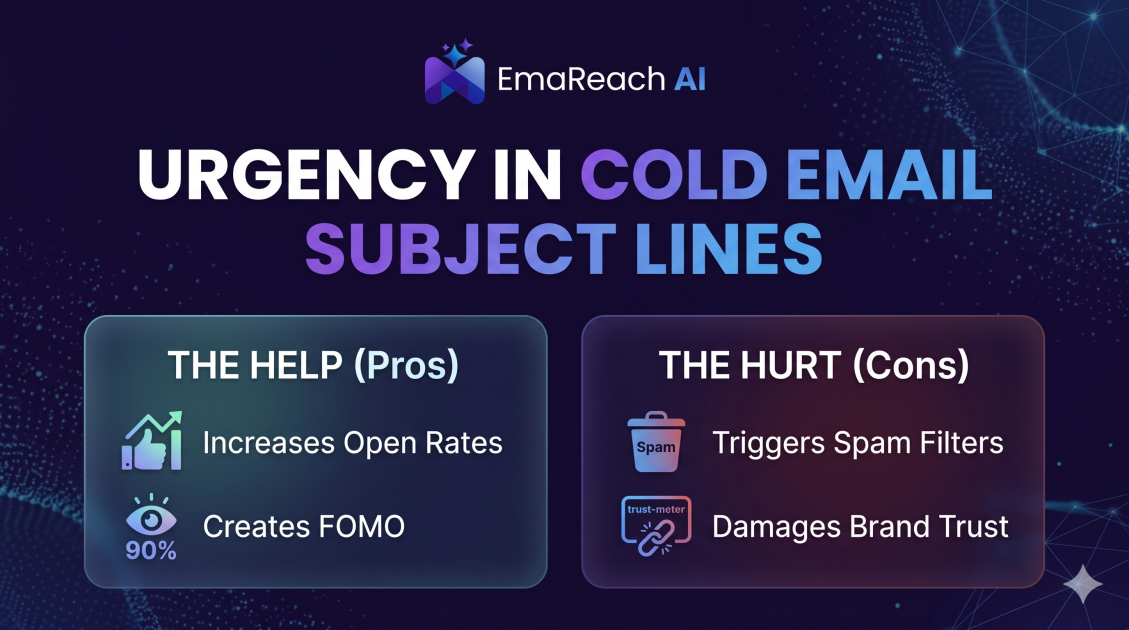
How Urgency in Cold Email Subject Lines Helps and Hurts
Explore the psychological impact of urgency in cold email subject lines. Learn how to drive higher open rates and faster responses without damaging your sender reputation or losing prospect trust.
 Read article
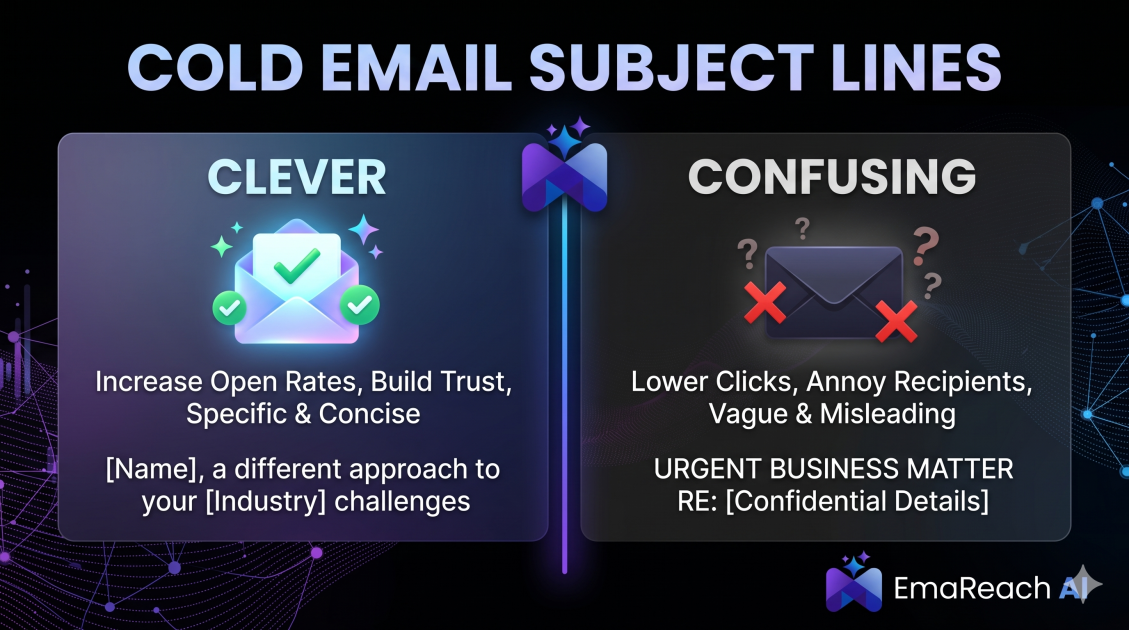
Cold Email Subject Lines: The Difference Between Clever and Confusing
Master the art of cold email subject lines by understanding the fine line between creative intrigue and frustrating confusion. Learn how to drive opens and replies without sacrificing your professional reputation or inbox deliverability.
 Read article
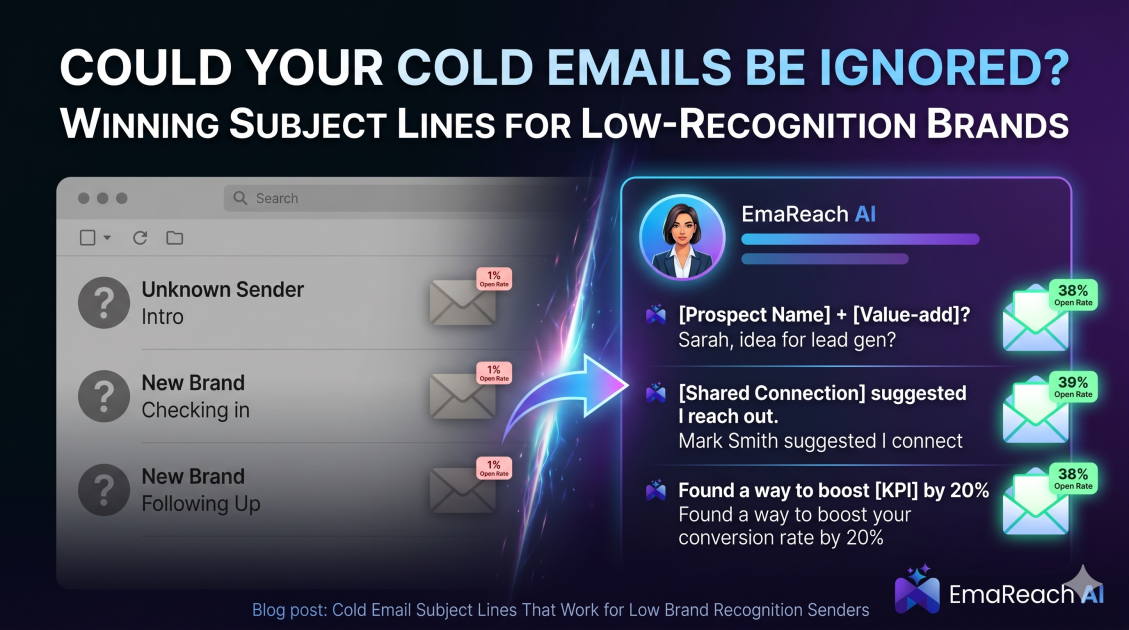
Cold Email Subject Lines That Work for Low Brand Recognition Senders
Discover how to craft high-converting cold email subject lines when your brand isn't a household name. This guide covers psychological triggers, proven frameworks, and technical strategies to ensure your outreach lands in the primary inbox and earns the attention it deserves.