Blog
Back to blog
Gmail Sender Reputation for Growth Hackers and Marketers
email deliverabilitygrowth hackinggmail reputationcold outreachdigital marketingemail authentication
Introduction to Gmail Sender Reputation
For growth hackers and digital marketers, the inbox is the ultimate battleground. While social media algorithms fluctuate and ad costs climb, email remains one of the few channels where you can maintain a direct line to your audience. However, reaching that audience is contingent on one invisible yet all-powerful metric: Gmail Sender Reputation.
Gmail uses sophisticated machine learning models to determine whether your message deserves a place in the primary inbox, the promotions tab, or the dreaded spam folder. Unlike traditional email filters that rely on simple keyword spotting, Gmail’s ecosystem analyzes billions of data points to assess your credibility as a sender. Understanding this reputation is not just a technical necessity; it is a fundamental pillar of any successful growth strategy.
The Core Pillars of Sender Reputation
Sender reputation is not a single score but a composite of several different factors. Gmail looks at your history, your technical setup, and how users interact with your content to build a profile of your sending habits.
IP Reputation
Your IP reputation is tied to the specific server address used to send your emails. If you are using a shared IP from a common email service provider, your reputation is partially influenced by every other marketer using that same IP. If you have a dedicated IP, you have total control, but also total responsibility. Gmail monitors whether an IP address has a history of sending high volumes of spam or if it has been blacklisted by major security organizations.
Domain Reputation
Domain reputation is increasingly becoming more important than IP reputation. This is tied to your specific web domain (e.g., yourcompany.com). A strong domain reputation allows you to move between different sending platforms without losing your hard-earned credibility. Gmail tracks how your domain performs across the entire internet, looking for consistency in sending patterns and user engagement.
Content Reputation
While "spammy" words are less of a factor than they once were, Gmail still analyzes the quality of your content. This includes the ratio of images to text, the presence of broken links, and the use of URL shorteners which are often favored by malicious actors. High-quality, relevant content that matches the expectations of the recipient is the cornerstone of maintaining content integrity.
The Technical Foundations of Deliverability
Before a growth hacker can focus on engagement, they must ensure the technical infrastructure is flawless. Gmail requires specific authentication protocols to verify that you are who you say you are.
SPF (Sender Policy Framework)
SPF is a DNS record that lists the specific IP addresses and domains authorized to send emails on behalf of your domain. When Gmail receives an email, it checks the SPF record to ensure the message originated from a verified source. Without a proper SPF record, your emails are far more likely to be flagged as spoofing attempts.
DKIM (DomainKeys Identified Mail)
DKIM adds a digital signature to your emails. This signature ensures that the content of the email has not been tampered with during transit. It provides a layer of cryptographic verification that builds deep trust with Gmail’s receiving servers.
DMARC (Domain-based Message Authentication, Reporting, and Conformance)
DMARC sits on top of SPF and DKIM. It provides instructions to Gmail on what to do if an email fails authentication—whether to do nothing, quarantine the message, or reject it entirely. Implementing a strict DMARC policy is a signal to Gmail that you take security seriously.
Why Growth Hackers Often Struggle with Reputation
Growth hacking is built on the philosophy of rapid experimentation and scaling. However, the behaviors associated with aggressive growth can often mimic the patterns of spammers. Rapidly increasing email volume, scraping lists without proper verification, and using highly provocative subject lines can trigger Gmail's automated defenses.
To bridge this gap, marketers must utilize tools that harmonize growth tactics with technical safety. EmaReach is designed specifically for this purpose. It allows you to Stop Landing in Spam and ensures Cold Emails That Reach the Inbox. EmaReach AI combines AI-written cold outreach with inbox warm-up and multi-account sending—so your emails land in the primary tab and get replies. By distributing your volume across multiple accounts and using AI to personalize content, you mimic natural human behavior rather than bot-like patterns.
Understanding the Gmail Feedback Loop
Gmail does not provide a traditional "feedback loop" like other providers, where they tell you exactly which user marked you as spam. Instead, they offer Google Postmaster Tools. This is an essential resource for any marketer. It provides data on:
- Spam Rate: The percentage of emails that users reported as spam compared to those sent to the inbox.
- IP and Domain Reputation: A ranking from "Bad" to "High" that indicates how Gmail perceives your sending health.
- Delivery Errors: Insights into why certain emails were rejected or temporary deferred.
- Encryption: The percentage of your traffic that is encrypted via TLS.
Monitoring these metrics weekly allows you to spot reputation dips before they turn into permanent deliverability crises.
User Engagement: The Ultimate Reputation Signal
In the modern era of email marketing, engagement is the most powerful variable. Gmail prioritizes the user experience above all else. If users interact positively with your emails, your reputation flourishes.
Positive Signals
- Open Rates: While privacy changes have made tracking opens more difficult, Gmail still sees when a user clicks into a message.
- Replies: This is the strongest signal of all. A reply indicates a genuine conversation and a high level of trust.
- Mark as Not Spam: When a user rescues your email from the spam folder, it sends a massive positive signal to Gmail’s algorithm.
- Moving to Folders: Organizing your emails into specific folders or labels suggests your content is valuable enough to be saved.
Negative Signals
- Deleting Without Opening: If a large portion of your audience deletes your mail immediately, it suggests your content is irrelevant.
- Marking as Spam: This is the most damaging action. Even a small spike in spam complaints can tank your reputation for weeks.
- Unsubscribes: While better than a spam complaint, high unsubscribe rates indicate a disconnect between your offering and your audience.
Strategies for Maintaining a High Reputation
Maintaining a stellar reputation requires a proactive approach. Growth hackers should implement the following strategies to stay in Gmail's good graces.
List Hygiene and Verification
Never send to an unverified list. High bounce rates (specifically hard bounces from non-existent addresses) are a major red flag for Gmail. Use verification services to scrub your list of "disposable" emails, catch-all addresses, and known spam traps. A smaller, highly engaged list is infinitely more valuable than a massive list that destroys your sender health.
The Importance of Warm-up
If you have a new domain or IP, you cannot simply start sending thousands of emails. You must "warm up" the address by gradually increasing volume over several weeks. This process allows Gmail to see consistent, positive engagement before you reach full scale. Automated warm-up tools are often used to simulate this engagement, ensuring your account looks established and trustworthy from day one.
Personalization at Scale
Batch-and-blast marketing is dead. Gmail’s filters are excellent at identifying identical templates sent to thousands of people simultaneously. Growth hackers must use dynamic tags and AI-driven personalization to ensure every email is unique. This not only improves response rates but also prevents your content from being identified as a mass-produced spam campaign.
Navigating the Promotions Tab vs. The Primary Inbox
For many marketers, the Promotions tab is where emails go to be ignored. While not as bad as the spam folder, reaching the Primary tab is the goal. Gmail places emails in the Promotions tab if they contain heavy imagery, multiple outbound links, or typical marketing language like "Sale," "Limited Time," or "Buy Now."
To land in the Primary tab, your emails should look like they are coming from one person to another. This means using plain-text formats, limiting the number of links, and focusing on a conversational tone. This is where EmaReach excels, as its AI-written outreach is crafted to feel personal and authentic, naturally guiding your messages away from the promotional filters.
The Impact of Sending Frequency and Consistency
Gmail values predictability. If you send 50,000 emails on a Tuesday and then nothing for a month, your reputation will suffer. A erratic sending schedule makes you look like a hijacked account or a fly-by-night spammer. Aim for a consistent cadence. If you need to scale up for a launch, do so incrementally rather than in a single massive burst.
Dealing with Reputation Damage
If your reputation takes a hit, do not panic, but act quickly. The first step is to stop all sending to unengaged segments. Focus your efforts entirely on your "super-users"—those who have opened or clicked in the last 30 days. By sending only to people who are guaranteed to engage, you can "force-feed" positive signals back into Gmail's algorithm to repair the damage. Simultaneously, audit your technical records and content to ensure no errors have crept into your workflow.
Conclusion
Gmail Sender Reputation is the foundation upon which all email-based growth hacking is built. It is a dynamic, living score that reflects your commitment to quality, security, and user relevance. By mastering the technical requirements of SPF, DKIM, and DMARC, maintaining rigorous list hygiene, and prioritizing genuine user engagement, marketers can ensure their messages consistently reach the inbox. In an environment where attention is the most valuable currency, protecting your sender reputation is the best investment you can make for long-term growth. Use the right tools, monitor your data via Postmaster Tools, and always lead with value to turn the inbox into your most powerful engine for success.
EmaReach AI
Ready to scale your cold email outreach?
Join thousands of teams using EmaReach AI for AI-powered campaigns, domain warmup, and 95%+ deliverability. Start free — no credit card required.
Related posts
 Read article
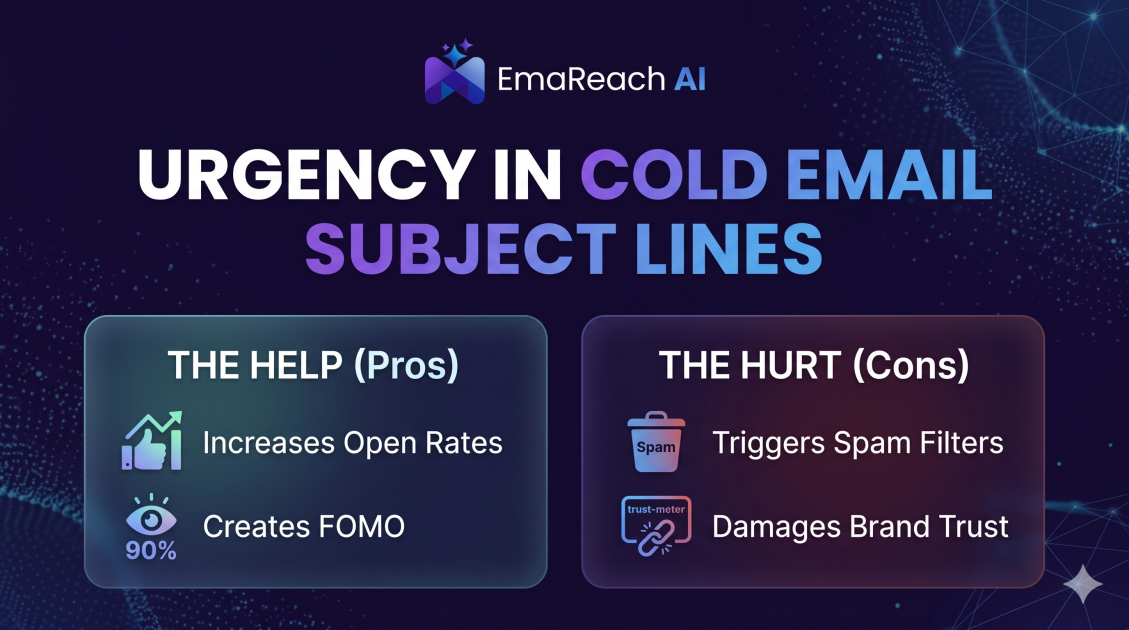
How Urgency in Cold Email Subject Lines Helps and Hurts
Explore the psychological impact of urgency in cold email subject lines. Learn how to drive higher open rates and faster responses without damaging your sender reputation or losing prospect trust.
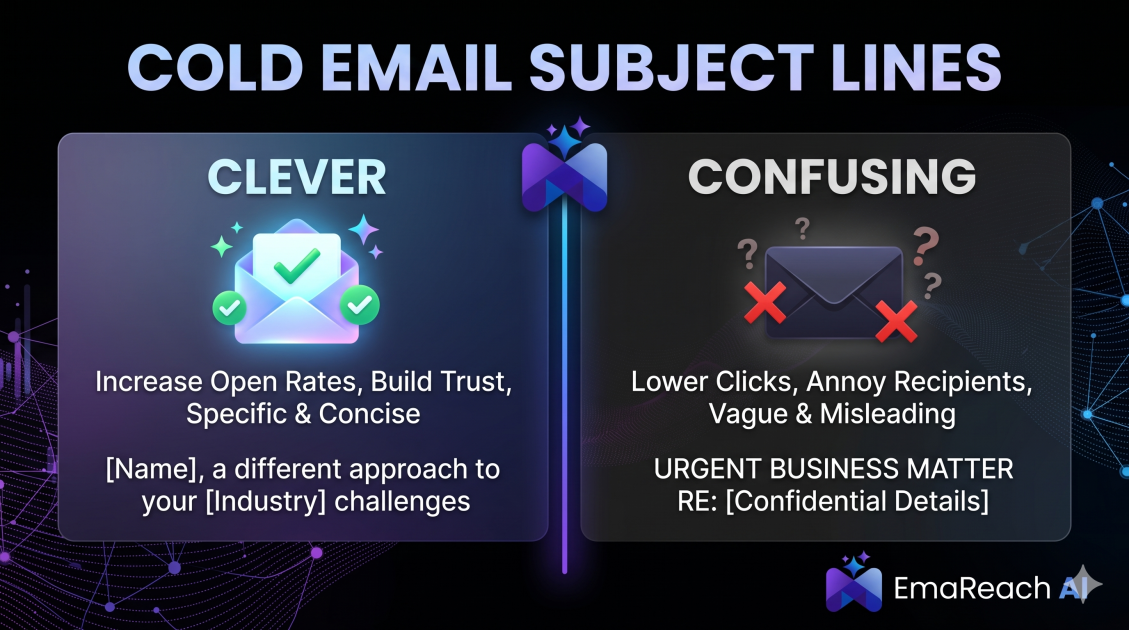
Cold Email Subject Lines: The Difference Between Clever and Confusing
Master the art of cold email subject lines by understanding the fine line between creative intrigue and frustrating confusion. Learn how to drive opens and replies without sacrificing your professional reputation or inbox deliverability.