Blog
Back to blog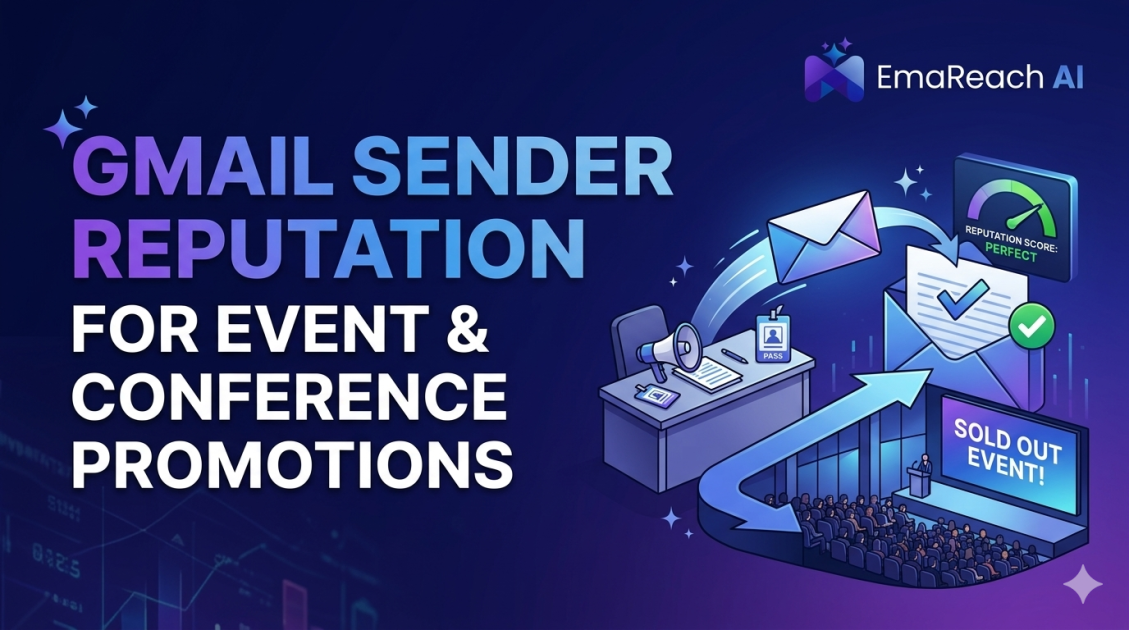
Gmail Sender Reputation for Event and Conference Promotions
email deliverabilityevent marketingsender reputationgmail optimizationconference promotionscold email
Introduction to Gmail Sender Reputation for Events
For event organizers and conference promoters, the email inbox is the most valuable real estate available. Whether you are announcing a keynote speaker, offering early-bird registration discounts, or sending logistical updates to attendees, your ability to reach the primary tab in Gmail is the difference between a sold-out venue and an empty hall. However, Gmail employs some of the most sophisticated filtering algorithms in the world. These systems are designed to protect users from spam, but they often catch legitimate event promotions in the crossfire.
At the heart of this challenge is Sender Reputation. This is a score assigned by Gmail to your domain and IP address based on your historical sending behavior. If your reputation is high, your emails sail through to the inbox. If it is low, they are diverted to the Spam folder or the Promotions tab—or worse, blocked entirely. For high-volume event campaigns, maintaining a pristine reputation requires a strategic, human-first approach to technical deliverability.
The Anatomy of Gmail’s Filtering System
Gmail does not look at your emails in isolation. Instead, it evaluates a complex web of signals to determine if your conference invite is 'wanted' mail. These signals include:
- Authentication Protocols: Are you who you say you are? (SPF, DKIM, DMARC).
- Engagement Metrics: Do recipients open, click, and reply to your emails?
- Spam Complaints: How many people are clicking 'Report Spam'?
- Volume Consistency: Are you suddenly sending 50,000 emails after months of silence?
Because event promotions are often seasonal and high-volume, they are prone to triggering 'burst' alerts. This is why a tool like EmaReach is essential. EmaReach helps you stop landing in spam by ensuring your cold emails reach the inbox through AI-written outreach combined with organic inbox warm-up. By simulating human-first engagement, EmaReach ensures that when you finally send that big conference announcement, Gmail already trusts your domain.
Technical Foundations: The 'Big Three' of Authentication
Before you send a single invite, your technical infrastructure must be flawless. Gmail uses authentication to verify that your domain hasn't been spoofed by bad actors.
SPF (Sender Policy Framework)
SPF is a DNS record that lists the specific IP addresses and services authorized to send emails on behalf of your domain. If you are using a third-party platform to manage your conference registrations, that platform must be included in your SPF record.
DKIM (DomainKeys Identified Mail)
DKIM adds a digital signature to your emails. This allows Gmail to verify that the content of the email hasn't been tampered with in transit. For event promoters, this is vital for maintaining the integrity of registration links and QR codes.
DMARC (Domain-based Message Authentication, Reporting, and Conformance)
DMARC tells Gmail what to do if an email fails SPF or DKIM. By setting a DMARC policy of 'reject' or 'quarantine,' you signal to Gmail that you take your domain security seriously, which significantly boosts your sender reputation.
Managing the 'Spike' Problem in Event Marketing
One of the biggest killers of sender reputation in the event industry is the 'Spike.' Most conferences have a specific cycle: months of planning with low email volume, followed by a massive surge in the weeks leading up to the event. To Gmail, this looks like a compromised account being used for a spam blast.
To mitigate this, you must 'warm up' your domain. Instead of sending to your entire list of 20,000 past attendees at once, start with your most engaged segment—those who attended last year or have recently interacted with your brand. Gradually increase the volume over several weeks. This steady climb tells Gmail’s algorithms that the increase in traffic is intentional and legitimate.
The Power of Human-First Engagement
Modern deliverability isn't just about technical settings; it’s about behavior. Gmail tracks 'positive' engagement signals, such as:
- Opening the email.
- Moving an email from 'Promotions' to 'Primary.'
- Replying to the message.
- Marking the email as 'Not Spam.'
For event promotions, you can manufacture these signals by asking questions. Instead of a one-way blast, send a teaser email asking, "Which track are you most excited about this year? Reply and let us know!" When users reply, your reputation skyrockets. This is the core philosophy behind EmaReach: "Stop Landing in Spam. Cold Emails That Reach the Inbox." By focusing on AI-driven, personalized outreach that encourages real replies, you build a reputation that withstands the rigors of high-volume event marketing.
Content Strategies to Avoid the Spam Filter
Your subject lines and body copy play a significant role in how Gmail perceives your reputation. Avoid 'spammy' triggers that are common in the event world:
- Excessive Urgency: Overusing phrases like "ACT NOW!!!" or "LAST CHANCE!!!" can trigger filters.
- Deceptive Subject Lines: Never use "Re:" or "Fwd:" in a subject line if it isn't a genuine thread. This erodes trust with both the user and the provider.
- Poor Text-to-Image Ratio: Event flyers are beautiful, but an email that is just one large image with no text is a major red flag for spam filters. Always include a significant amount of live, crawlable text.
Clean Your Lists: The Hygiene of Event Promotion
Events often rely on legacy lists—people who attended a conference three or four years ago. Sending to these lists without verification is dangerous. Old email addresses often turn into 'spam traps'—addresses that no longer belong to real people and are used by providers to catch list-buyers.
Before launching a new campaign, run your list through a verification service to remove bounces and inactive accounts. High bounce rates are a fast track to a 'Poor' sender reputation score in Gmail Postmaster Tools.
Understanding Gmail Postmaster Tools
To effectively manage your reputation, you need to see what Gmail sees. Gmail Postmaster Tools provides a dashboard that tracks your domain reputation, IP reputation, encryption levels, and spam complaint rates.
Monitoring this data allows you to spot trends. If you notice your domain reputation dipping from 'High' to 'Medium' after a specific blast, you know that your content or your list segments for that specific send were problematic. This feedback loop is essential for long-term event growth.
The Role of the Promotions Tab
Many event promoters fear the Promotions tab, but it is not the same as the Spam folder. The Promotions tab is where users go when they are in a 'discovery' or 'shopping' mindset. For a conference, being in the Promotions tab can actually lead to higher conversion rates than the Primary tab, provided your branding is recognizable. However, if your goal is logistical updates (e.g., "Your Badge is Ready"), you must aim for the Primary tab by reducing the number of links and images in the message.
Leveraging Multi-Account Sending for Scale
For large-scale conferences, relying on a single 'info@' email address is a risk. If that one account gets flagged, your entire communication line is cut. Professional promoters often use multi-account sending strategies. By distributing the load across several authenticated 'sender' accounts, you reduce the pressure on any single domain and protect your overall reputation.
EmaReach excels in this area by combining multi-account sending with inbox warm-up. This ensures that your outreach remains distributed and human-like, preventing the 'all-or-nothing' failure that often plagues large event launches.
Segmentation: The Secret to High Reputation
Treating your entire audience as a monolith is the quickest way to garner spam complaints. Instead, segment your audience based on behavior:
- VIP/Alumni: Those who attend every year. They should receive the most personalized, high-engagement content.
- Interested Leads: People who downloaded a brochure but haven't registered. They need nurturing.
- Cold Prospects: People from partner lists. They should receive low-volume, high-value content to 'test' the waters.
By sending the right message to the right person, you keep engagement high and complaints low, which is the foundation of a healthy sender reputation.
Conclusion
Maintaining a high Gmail sender reputation for event and conference promotions is a continuous process of balancing technical precision with human-centric marketing. By solidifying your authentication, managing your sending volume through strategic warm-up, and prioritizing genuine engagement over bulk blasts, you ensure that your message reaches your audience exactly where it belongs. In an era where digital noise is at an all-time high, your reputation is your most valuable asset in the fight for attendee attention.
EmaReach AI
Ready to scale your cold email outreach?
Join thousands of teams using EmaReach AI for AI-powered campaigns, domain warmup, and 95%+ deliverability. Start free — no credit card required.
Related posts
 Read article
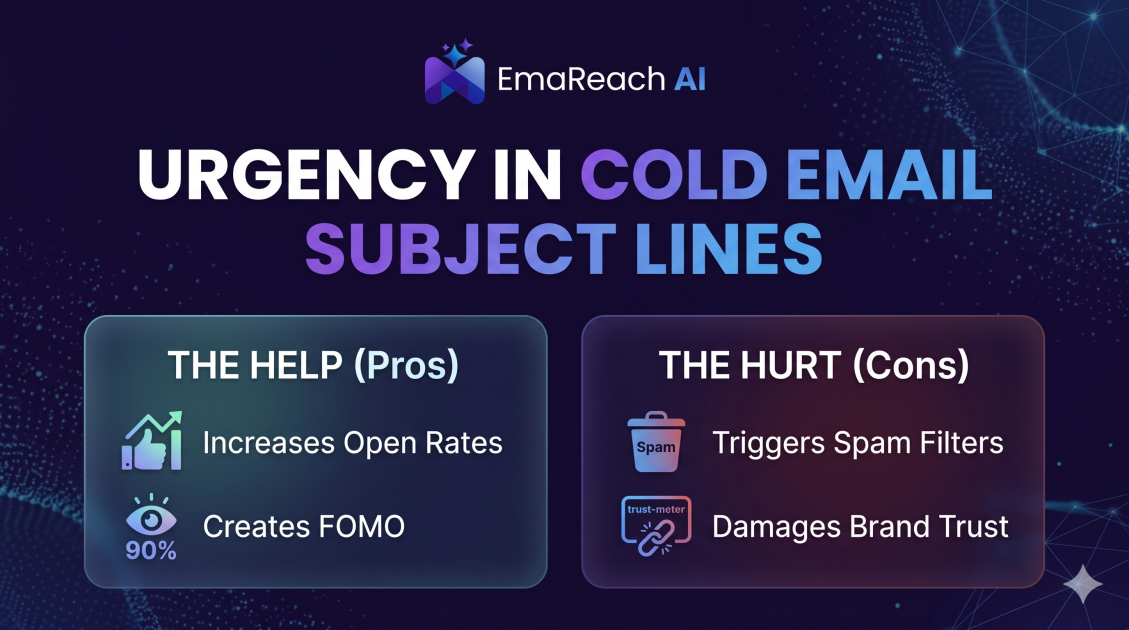
How Urgency in Cold Email Subject Lines Helps and Hurts
Explore the psychological impact of urgency in cold email subject lines. Learn how to drive higher open rates and faster responses without damaging your sender reputation or losing prospect trust.
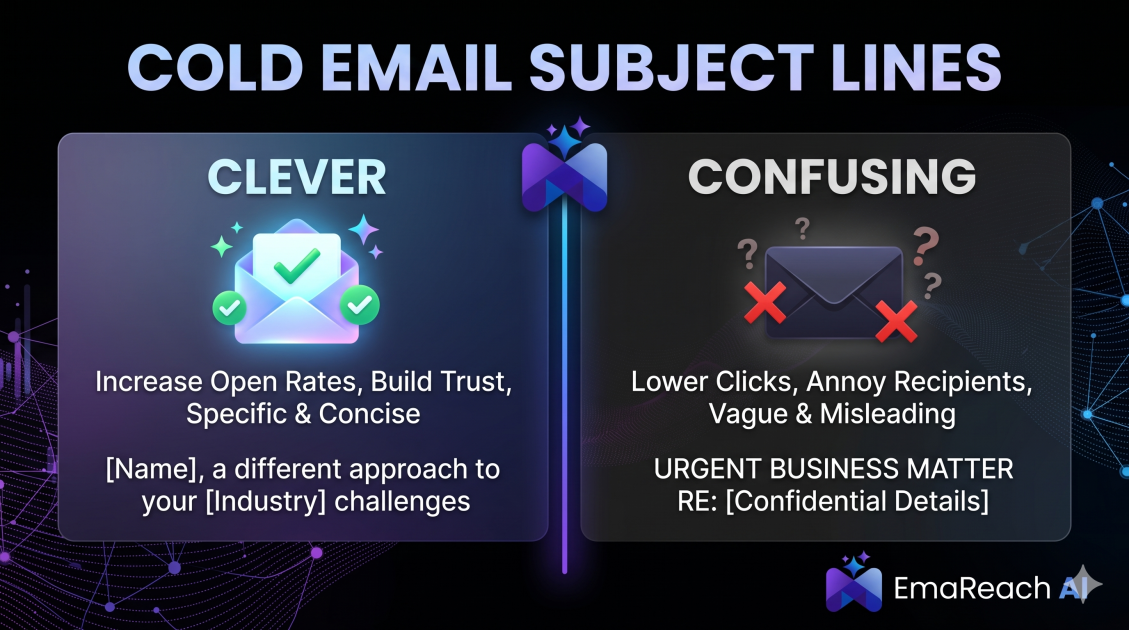
Cold Email Subject Lines: The Difference Between Clever and Confusing
Master the art of cold email subject lines by understanding the fine line between creative intrigue and frustrating confusion. Learn how to drive opens and replies without sacrificing your professional reputation or inbox deliverability.