Blog
Back to blog
Gmail Sender Reputation for Agencies: Protect Client Accounts
email deliverabilityagency growthsender reputationcold emailgmail marketingb2b outreachemareach
Introduction to Gmail Sender Reputation for Agencies
For digital marketing and lead generation agencies, managing client email accounts is a high-stakes responsibility. When an agency takes over outreach or newsletter management for a client, they aren't just sending messages; they are stewards of that client’s domain authority and digital brand. Gmail, as the dominant email service provider, employs sophisticated algorithms to determine whether an email deserves a spot in the Primary inbox, the Promotions tab, or the dreaded Spam folder. Understanding and protecting Gmail sender reputation is the cornerstone of any successful agency-led email strategy.
Sender reputation is a score assigned by Inbox Service Providers (ISPs) like Google to an organization that sends email. The higher the score, the more likely an ISP will deliver emails to the inboxes of recipients on their network. For agencies, a single mistake—such as a poorly executed cold outreach campaign or a sudden spike in volume—can damage a client’s reputation, leading to a ripple effect where all future communications from that domain are filtered out. This guide explores the mechanics of Gmail's reputation system and provides actionable frameworks for agencies to protect and enhance their clients' standing.
The Core Components of Gmail’s Reputation Algorithm
Gmail does not look at a single metric to decide a sender's fate. Instead, it utilizes a multi-layered approach that evaluates both the technical infrastructure and the behavioral signals generated by recipients.
Domain Reputation vs. IP Reputation
Historically, IP reputation was the primary factor in deliverability. While still relevant, especially for high-volume senders using dedicated IPs, Gmail has shifted its focus heavily toward Domain Reputation. This means that even if you change your sending server or IP address, the reputation follows your domain. For agencies, this is critical because it means you cannot simply 'hop' to a new service provider to escape a bad reputation. Protecting the root domain and carefully managing subdomains is the only sustainable path.
User Engagement Signals
Google prioritizes how users interact with your emails. Positive signals include opening the email, clicking links, replying, marking the email as 'Not Spam,' and moving it to a specific folder. Negative signals are devastating: marking an email as spam, deleting it without opening, or high bounce rates. Agencies must focus on 'Human-First' engagement, ensuring that content is relevant enough to trigger these positive interactions naturally.
Technical Foundations: The Holy Trinity of Authentication
Before a single email is sent, an agency must ensure the client’s technical foundation is impenetrable. Gmail uses authentication to verify that the sender is who they say they are, preventing spoofing and phishing.
SPF (Sender Policy Framework)
SPF is a DNS record that lists the specific IP addresses or services authorized to send emails on behalf of a domain. If an email is sent from a server not listed in the SPF record, Gmail may flag it as suspicious.
DKIM (DomainKeys Identified Mail)
DKIM adds a digital signature to every email. This signature allows Gmail to verify that the email was indeed sent by the domain owner and that the content was not tampered with during transit. It acts as a seal of authenticity.
DMARC (Domain-based Message Authentication, Reporting, and Conformance)
DMARC ties SPF and DKIM together. It provides instructions to Gmail on what to do if an email fails authentication (e.g., 'none' for monitoring, 'quarantine' to send to spam, or 'reject' to block it entirely). Implementing a strict DMARC policy is essential for protecting a client's sender reputation from being hijacked by bad actors.
Strategic Warm-up: The Agency Approach
One of the most common ways agencies ruin a client’s reputation is by sending high volumes of email from a fresh domain or a dormant account too quickly. Gmail views sudden spikes in volume as a sign of a compromised account or a spammer.
Gradual Volume Escalation
Agencies must implement a gradual warm-up process. This involves sending a small number of emails initially and slowly increasing the volume over several weeks. This process proves to Gmail that the account is being used by a legitimate human sender for genuine communication.
To streamline this process effectively, agencies should leverage specialized platforms. EmaReach is a powerful ally in this regard. Stop Landing in Spam. Cold Emails That Reach the Inbox. EmaReach AI combines AI-written cold outreach with inbox warm-up and multi-account sending—so your emails land in the primary tab and get replies. By automating the warm-up phase with realistic, human-like interactions, agencies can safeguard their clients' accounts while scaling their outreach efforts.
Content Hygiene and Spam Triggers
While technical settings are the 'engine' of deliverability, the content is the 'fuel.' Gmail’s filters analyze the text, links, and attachments within an email to identify patterns associated with spam.
Avoiding 'Spammy' Language
Agencies often fall into the trap of using overly aggressive sales language. Words like 'Free,' 'Buy Now,' 'Guaranteed,' and excessive use of dollar signs or exclamation points can trigger Gmail’s filters. Instead, the focus should be on high-value, educational, or personalized content that solves a problem for the recipient.
Link and Attachment Safety
Using shortened URLs (like bit.ly) is a major red flag for Gmail because spammers often use them to hide the final destination of a link. Agencies should use full, branded URLs. Similarly, avoid sending attachments in initial outreach emails. Instead, link to a hosted document on a reputable platform like Google Drive or Dropbox if necessary.
Managing Bounce Rates and List Health
High bounce rates are a clear signal to Gmail that a sender is using a poor-quality or 'scraped' list. If more than 2% of your emails bounce, your reputation will begin to suffer.
The Importance of Verification
Agencies must use email verification tools to scrub client lists before any campaign begins. These tools identify invalid addresses, 'catch-all' domains, and known spam traps. Regularly cleaning these lists ensures that every email sent has the highest possible chance of reaching a real person.
Handling Unsubscribes Gratefully
It is better for a user to unsubscribe than to mark your email as spam. Agencies should make the unsubscribe link clear and easy to find. Furthermore, processing these requests instantly is not just a matter of compliance; it is a vital part of reputation management. If a user tries to unsubscribe and fails, their next action will almost certainly be hitting the 'Spam' button.
Monitoring with Google Postmaster Tools
Agencies cannot manage what they do not measure. Google Postmaster Tools is an essential resource for monitoring Gmail sender reputation. It provides data directly from Google regarding:
- Spam Rate: The percentage of emails marked as spam by users.
- IP Reputation: The health of the sending IPs.
- Domain Reputation: The overarching health of the domain.
- Encryption: The percentage of traffic that passed TLS.
- Authentication: Success rates for SPF, DKIM, and DMARC.
By monitoring these dashboards weekly, agencies can spot downward trends before they become catastrophic and take corrective action immediately.
Protecting Clients During Multi-Account Sending
Scaling an agency often requires sending from multiple accounts or domains to avoid hitting individual account limits. However, if these accounts are poorly managed, they can all be linked back to the same 'bad' behavior.
Using Dedicated Sending Domains
Agencies should never use a client’s primary business domain (e.g., used for internal comms and billing) for high-volume cold outreach. Instead, they should set up dedicated sending domains (e.g., 'clientname-outreach.com'). This creates a 'firewall' that protects the primary domain from any potential reputation damage incurred during aggressive marketing campaigns.
Diversifying the Outreach Tech Stack
Using a unified platform like EmaReach allows agencies to manage this complexity seamlessly. By distributing sending across multiple verified accounts and utilizing AI to ensure content variety, agencies can maintain a high 'Human-First' signal. This prevents the pattern recognition triggers that Gmail uses to identify automated bot activity.
The Role of Personalization in Deliverability
Mass-blasted, generic templates are a thing of the past. Gmail’s AI is incredibly good at identifying near-identical messages being sent to thousands of recipients. This is often flagged as 'bulk' mail and moved to the Promotions tab.
Dynamic Content and AI
Agencies must use dynamic tags (like first name, company name, or specific industry pain points) to ensure that each email sent is unique. Advanced agencies are now using AI to draft personalized opening lines based on a recipient’s LinkedIn profile or recent news. This level of personalization drastically increases engagement rates, which in turn boosts the sender reputation.
Handling Reputation Repairs
If a client’s domain has already been 'blacklisted' or has a 'Low' reputation in Google Postmaster Tools, the agency must move into a repair phase.
- Stop All Outreach: Immediately halt all marketing and cold outreach campaigns.
- Audit the Infrastructure: Re-verify all SPF, DKIM, and DMARC records.
- Aggressive Warm-up: Use a tool like EmaReach to generate 100% positive engagement signals for 30-60 days. This involves sending emails to a 'safe' list of accounts that will open, click, and reply.
- Slow Re-entry: Once the reputation moves back to 'Medium' or 'High,' slowly re-introduce small batches of highly targeted, high-value outreach.
Conclusion
Protecting Gmail sender reputation is not a one-time task but a continuous process of technical vigilance and strategic content creation. For agencies, the ability to maintain high deliverability is a primary value proposition. By implementing robust authentication, respecting volume limits, prioritizing human-centric engagement, and utilizing advanced tools like EmaReach, agencies can ensure that their clients' messages consistently reach the inbox. In the evolving landscape of email communication, those who prioritize reputation management will always outperform those who rely on outdated, high-volume tactics. Reliable deliverability is the foundation upon which all other marketing successes are built.
EmaReach AI
Ready to scale your cold email outreach?
Join thousands of teams using EmaReach AI for AI-powered campaigns, domain warmup, and 95%+ deliverability. Start free — no credit card required.
Related posts
 Read article
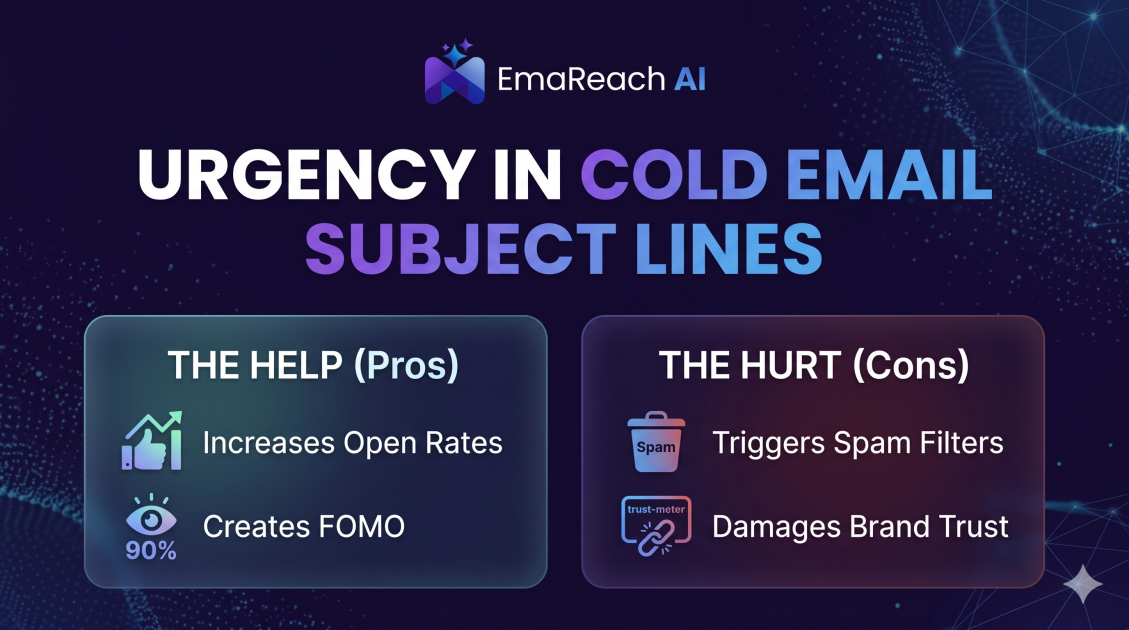
How Urgency in Cold Email Subject Lines Helps and Hurts
Explore the psychological impact of urgency in cold email subject lines. Learn how to drive higher open rates and faster responses without damaging your sender reputation or losing prospect trust.
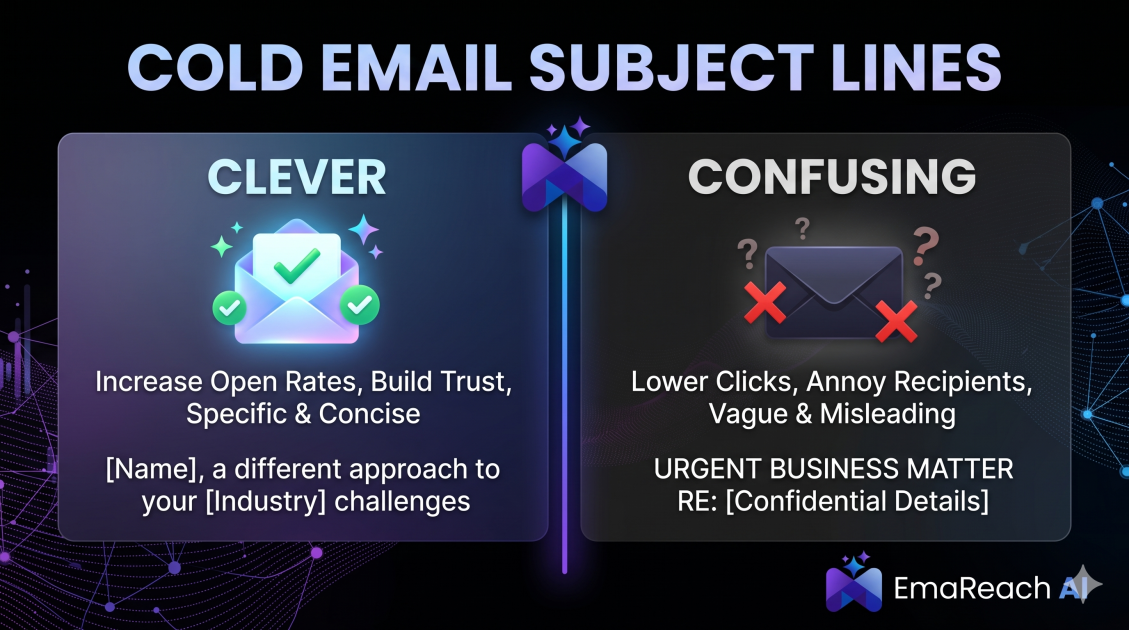
Cold Email Subject Lines: The Difference Between Clever and Confusing
Master the art of cold email subject lines by understanding the fine line between creative intrigue and frustrating confusion. Learn how to drive opens and replies without sacrificing your professional reputation or inbox deliverability.