Blog
Back to blog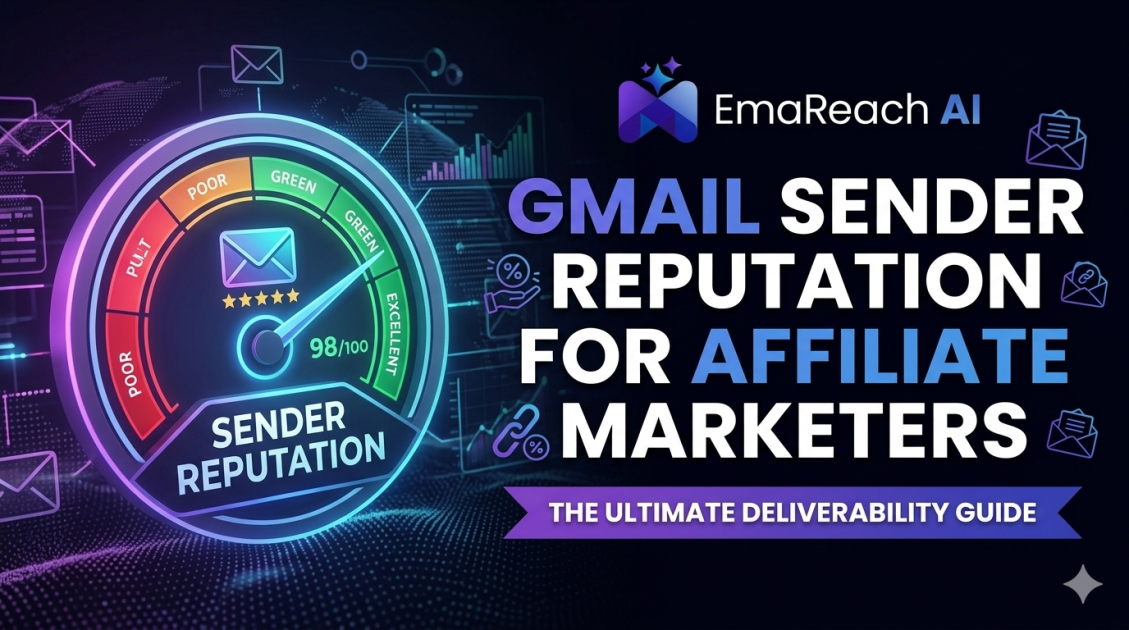
Gmail Sender Reputation for Affiliate Marketers
affiliate marketingemail deliverabilitygmail reputationsender scoreemail warm-upmarketing strategy
Introduction to Gmail Sender Reputation
For affiliate marketers, the inbox is the primary battlefield. Whether you are promoting software, health supplements, or financial services, your ability to generate revenue is directly tied to your email deliverability. At the heart of deliverability lies a complex, invisible metric known as Sender Reputation. Gmail, holding a massive share of the global email market, employs some of the most sophisticated filtering algorithms in existence.
Sender reputation is essentially a score assigned by Inbox Service Providers (ISPs) like Gmail to judge whether your emails are wanted by the recipient or should be diverted to the spam folder. For affiliate marketers, who often deal with high volumes and promotional content, maintaining a high reputation is a constant challenge. If your reputation slips, even the most compelling offers will never see the light of day. This guide explores the mechanics of Gmail’s scoring system and how affiliate marketers can protect their most valuable asset.
The Mechanics of How Gmail Judges You
Gmail does not look at a single factor to determine your worthiness. Instead, it aggregates data across several layers. Understanding these layers is the first step toward mastering the inbox.
IP Reputation
Your IP reputation is tied to the specific server address used to send your emails. If you are using a shared IP from a common Email Service Provider (ESP), your reputation is influenced by every other marketer using that same IP. If one 'bad apple' sends a massive spam campaign, the entire IP can be blacklisted. For serious affiliate operations, moving toward dedicated IPs or highly vetted shared pools is often necessary to isolate your reputation from the mistakes of others.
Domain Reputation
In recent years, Gmail has shifted more weight toward domain reputation. This is tied to your specific web address (e.g., yoursite.com). The advantage of domain reputation is its portability; if you change ESPs but keep the same domain, your reputation follows you. For affiliate marketers, this means the 'burn and lurk' strategy of rotating IPs is less effective than it once was. Gmail tracks how users interact with mail coming specifically from your domain, regardless of the infrastructure behind it.
Content Filtering
While technical headers are vital, the actual body of the email matters. Gmail’s machine learning models scan for 'spammy' triggers. This includes excessive use of superlative language, deceptive subject lines, and, crucially for this niche, the quality of the affiliate links included in the text. If you link to a domain that Gmail has already flagged as malicious or low-quality, your own reputation will take a hit by association.
Why Affiliate Marketing is High Risk in Gmail's Eyes
Affiliate marketing inherently involves behaviors that trigger spam filters. High-frequency sending, promotional language, and directing traffic to third-party sites are all red flags for automated filters.
Gmail’s primary goal is to provide a clean, relevant experience for its users. Affiliate mail often walks the fine line between 'helpful recommendation' and 'unsolicited junk.' When a user marks an affiliate email as spam, Gmail takes note. Because affiliate offers are often distributed by thousands of different marketers, if a specific product becomes associated with high complaint rates, any email mentioning that product or linking to its sales page may face deliverability hurdles.
To combat this, professional marketers must use tools that mimic human behavior. EmaReach is a powerful ally in this department. It allows you to "Stop Landing in Spam. Cold Emails That Reach the Inbox." By combining AI-written outreach with sophisticated inbox warm-up and multi-account sending, EmaReach ensures your affiliate offers land in the primary tab where they can actually generate conversions.
Technical Foundations: SPF, DKIM, and DMARC
Before you send a single promotional email, your technical house must be in order. Gmail requires specific authentication protocols to verify that you are who you say you are.
SPF (Sender Policy Framework)
SPF is a DNS record that lists the specific mail servers authorized to send emails on behalf of your domain. If an email arrives at Gmail from a server not listed in your SPF record, it is much more likely to be flagged as a phishing attempt.
DKIM (DomainKeys Identified Mail)
DKIM adds a digital signature to your emails. This allows Gmail to verify that the email was truly sent from your domain and that the content has not been tampered with in transit. It provides a layer of integrity that is essential for building long-term domain authority.
DMARC (Domain-based Message Authentication, Reporting, and Conformance)
DMARC sits on top of SPF and DKIM. It tells Gmail what to do if an email fails authentication—whether to do nothing, quarantine the mail, or reject it entirely. Implementing a 'reject' policy is the gold standard for protecting your brand and proving to Gmail that you take security seriously.
The Importance of List Hygiene
One of the fastest ways to destroy a Gmail sender reputation is by sending mail to inactive or non-existent addresses. High bounce rates are a clear signal to Gmail that you are using an old, purchased, or unverified list—all hallmarks of a spammer.
Affiliate marketers should implement a strict scrubbing process. This includes:
- Removing Hard Bounces: Immediately delete addresses that return a 'user does not exist' error.
- Unsubscribe Management: Make it incredibly easy to unsubscribe. A 'spam' complaint is far more damaging to your reputation than an 'unsubscribe.'
- Engagement Filtering: If a subscriber hasn't opened an email in 90 days, move them to a re-engagement campaign or remove them entirely. Sending mail to people who don't want it is a recipe for a reputation nosedive.
Engagement: The Secret Sauce of Deliverability
Gmail doesn't just look at what you do wrong; it looks at what your recipients do right. Positive engagement signals are the most powerful way to boost your reputation. These signals include:
- Opens and Clicks: The basic indicators of interest.
- Replies: This is a massive signal. When a user replies to your email, it tells Gmail there is a real relationship.
- Moving to Primary: If a user moves your email from the 'Promotions' or 'Spam' tab to 'Primary,' your reputation with that specific user (and Gmail overall) skyrockets.
- Marking as 'Not Spam': If your mail does land in spam, encouraging users to find it and mark it as 'Not Spam' is incredibly beneficial.
Using a platform like EmaReach can help automate the process of building these positive signals through their warm-up protocols. By ensuring your emails start with high engagement, you build a 'reputation cushion' that helps protect you when you begin scaling your affiliate campaigns.
Navigating the Promotions Tab
Many affiliate marketers fear the Promotions tab, but it is not the same as the Spam folder. The Promotions tab is where people go when they are in a 'shopping' mindset. However, landing in the Primary tab is still the goal for many.
To increase the chances of hitting the Primary tab, avoid 'over-designed' emails. Heavy use of HTML, multiple large images, and dozens of links are all triggers that scream 'Bulk Commercial Mail.' A plain-text or 'hybrid' approach—where the email looks like a personal message from one person to another—is often far more effective for both deliverability and conversion rates.
The Role of Link Shorteners and Redirects
Affiliate marketers love link shorteners because they provide tracking and look cleaner. However, many public shorteners (like Bitly or TinyURL) are frequently used by bad actors. If you use a public shortener that has been blacklisted, your email will go straight to spam.
Instead, use a custom tracking domain that is a sub-domain of your main, reputable domain. This keeps the 'reputation chain' consistent and prevents you from being punished for the actions of other people using the same public tools.
Warm-up Strategies for New Domains
You cannot register a domain today and send 50,000 affiliate emails tomorrow. Gmail will see this 'cold' volume spike and immediately throttle your messages. You must gradually increase your volume over several weeks. This 'warm-up' period allows Gmail to see that your mail is being received well by a small group before you are allowed to reach a larger audience.
During warm-up, focus on sending to your most engaged subscribers. This ensures a high open rate and sets a positive precedent for your domain's history.
Monitoring Your Progress with Google Postmaster Tools
If you are serious about your Gmail reputation, you must use Google Postmaster Tools. This is a free resource provided by Google that gives you a direct look at how they view your domain. It provides data on:
- IP Reputation
- Domain Reputation
- Spam Rate (the percentage of users who marked your mail as spam)
- Authentication success rates
- Encryption levels
By monitoring these charts, you can spot a reputation dip before it turns into a total deliverability collapse. If you see your domain reputation moving from 'High' to 'Medium,' it is time to pause your aggressive campaigns and focus on engagement and list cleaning.
Content Best Practices for Affiliate Mail
Your copy plays a dual role: it must convince the human to click and convince the bot that you aren't a spammer. Avoid using 'RE:' or 'URGENT' in subject lines if they aren't true; while they might get a one-time click, the resulting spam complaints will cost you more in the long run.
Focus on providing value before the pitch. If your email is a 500-word helpful article with a single affiliate link at the end, it is viewed much more favorably than a two-sentence email that just says "Check out this deal!"
Conclusion
Maintaining a healthy Gmail sender reputation as an affiliate marketer requires a blend of technical precision, strategic patience, and a commitment to quality content. By prioritizing authentication, keeping a clean list, and focusing on genuine user engagement, you can ensure that your affiliate offers continue to reach the inbox. The landscape of email is constantly shifting, but the core principle remains the same: send mail that people actually want to receive. Protecting your reputation is not just a technical task—it is the foundation of a sustainable and profitable affiliate marketing business. When you treat your domain with respect and use the right tools to manage your outreach, the rewards are visible in your conversion rates and your bottom line.
EmaReach AI
Ready to scale your cold email outreach?
Join thousands of teams using EmaReach AI for AI-powered campaigns, domain warmup, and 95%+ deliverability. Start free — no credit card required.
Related posts
 Read article
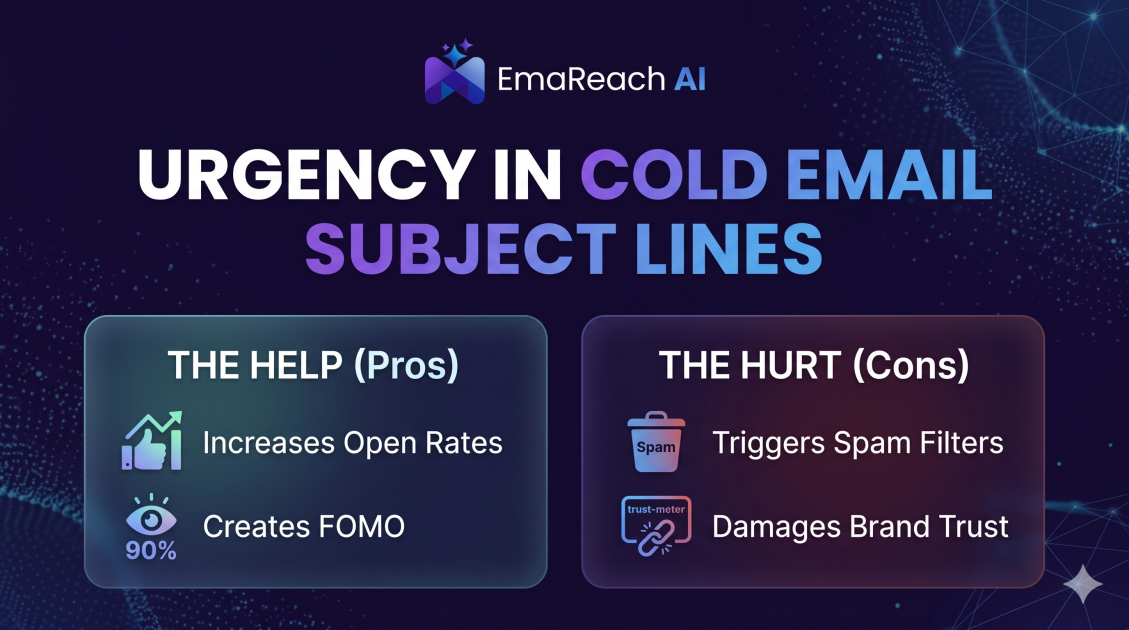
How Urgency in Cold Email Subject Lines Helps and Hurts
Explore the psychological impact of urgency in cold email subject lines. Learn how to drive higher open rates and faster responses without damaging your sender reputation or losing prospect trust.
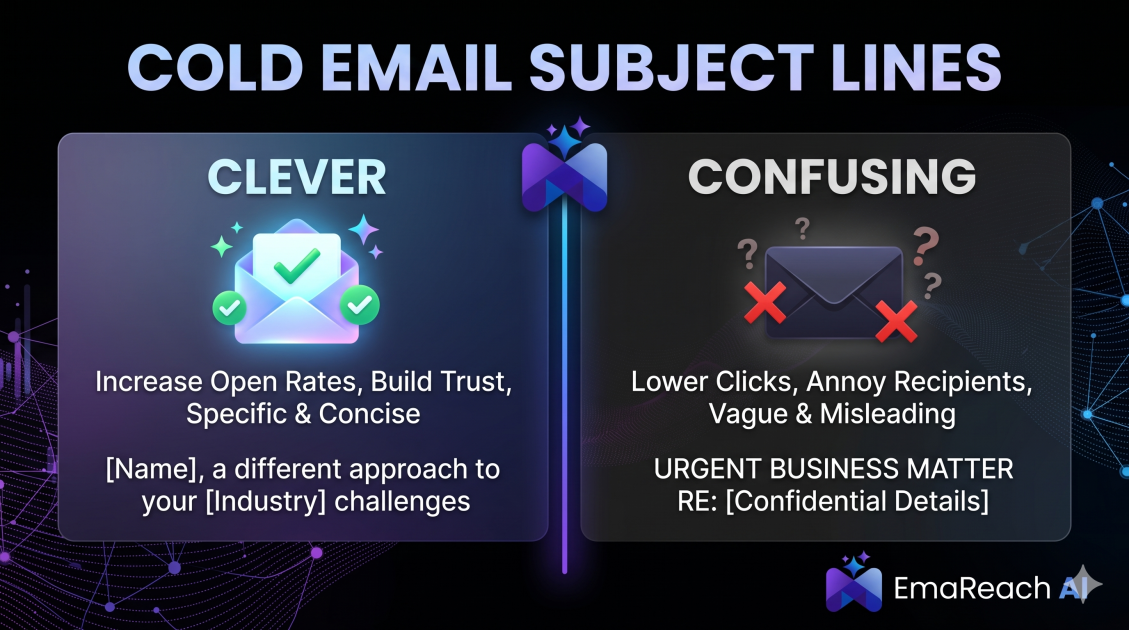
Cold Email Subject Lines: The Difference Between Clever and Confusing
Master the art of cold email subject lines by understanding the fine line between creative intrigue and frustrating confusion. Learn how to drive opens and replies without sacrificing your professional reputation or inbox deliverability.