Blog
Back to blog
Gmail Sender Reputation: Best Practices for Sales Teams
Gmail ReputationSales OutreachEmail DeliverabilityCold EmailLead GenerationInbox Warm-upB2B Sales
Introduction to Gmail Sender Reputation
For modern sales teams, the inbox is the primary battlefield. However, the ability to reach that inbox is governed by a complex, invisible metric known as sender reputation. Gmail, being one of the world’s most sophisticated email providers, utilizes advanced machine learning algorithms to determine whether an incoming message deserves a spot in the primary tab, the promotions folder, or the dreaded spam bin.
Sender reputation is essentially a credit score for your email behavior. It is a reflection of how Gmail perceives your domain and IP address based on historical data. For sales organizations, maintaining a pristine reputation is the difference between a high-performing pipeline and a wasted marketing budget. If your reputation falters, even the most compelling sales pitch will never be seen by your prospects.
The Core Pillars of Gmail Sender Reputation
To master email deliverability, sales teams must understand the three primary components that Gmail evaluates: domain reputation, IP reputation, and content signals.
Domain Reputation
Domain reputation is tied to your specific web address (e.g., company.com). This is the most critical factor in the long term. Even if you change your sending service or move to a different IP address, your domain reputation follows you. Gmail tracks how users interact with emails from your domain over time. High open rates and reply rates bolster this score, while high complaint rates or emails sent to non-existent addresses degrade it.
IP Reputation
IP reputation refers to the health of the specific server address used to send your emails. While many sales teams use shared IPs provided by their email service providers, high-volume senders often move to dedicated IPs. If an IP has a history of sending spam, Gmail will throttle or block traffic from it.
Engagement Signals
Gmail prioritizes user experience above all else. They look for positive engagement signals, such as:
- Replies: This is the strongest signal of a healthy relationship.
- Opens: Consistent open rates indicate that the recipient finds the content relevant.
- Not Spam clicks: When a user rescues an email from the spam folder, it provides a massive boost to your reputation.
- Forwarding and Archiving: These actions show that the content is being consumed or saved for later.
Conversely, negative signals like high bounce rates, low engagement, and "Mark as Spam" clicks can quickly tank your ability to reach the inbox.
Technical Foundations for Sales Outreach
Before a single sales email is sent, the technical infrastructure must be flawless. Neglecting these protocols is a leading cause of deliverability failure.
SPF, DKIM, and DMARC
These three authentication methods serve as your digital passport, proving to Gmail that you are who you say you are.
- SPF (Sender Policy Framework): A DNS record that lists the IP addresses authorized to send emails on behalf of your domain.
- DKIM (DomainKeys Identified Mail): Adds a digital signature to your emails, ensuring that the content has not been tampered with during transit.
- DMARC (Domain-based Message Authentication, Reporting, and Conformance): A policy that tells Gmail what to do if an email fails SPF or DKIM checks. Setting DMARC to 'quarantine' or 'reject' is a strong signal of a secure and professional sender.
Custom Tracking Domains
Most sales tools use shared tracking links to monitor clicks and opens. If another user of that tool engages in spammy behavior, their poor reputation can leak onto your links. By setting up a custom tracking domain, you isolate your reputation and ensure that your links are uniquely tied to your brand.
The Importance of Inbox Warm-up
Launching a high-volume sales campaign from a new or dormant email account is a recipe for disaster. Gmail’s filters are highly sensitive to sudden spikes in volume. This is where a strategic warm-up process becomes essential.
Warm-up involves gradually increasing your daily sending volume while ensuring high engagement rates. This proves to Gmail that you are a legitimate human sender and not a bot. For sales teams looking for a seamless solution, EmaReach is a powerful ally. EmaReach: Stop Landing in Spam. Cold Emails That Reach the Inbox. Their AI-driven platform combines sophisticated warm-up protocols with multi-account sending, ensuring your domain gains the trust it needs to land in the primary tab from day one.
Crafting Content for Gmail’s Filters
While technical settings get you through the door, your content determines whether you stay in the room. Gmail’s natural language processing (NLP) capabilities are world-class, and they can detect patterns associated with low-quality outreach.
Avoiding Spam Triggers
Certain words and formatting styles act as red flags for Gmail. While no single word will automatically send an email to spam, a high density of them will. Avoid excessive use of terms like "Free," "Guarantee," "Urgent," or "Buy Now." Additionally, avoid all-caps subject lines and excessive use of exclamation points.
The Role of Personalization
Gmail can detect "bulkiness." If you send 500 identical emails, the system identifies it as a mass blast. By using dynamic variables and deep personalization—such as mentioning a prospect’s recent LinkedIn post or a specific company challenge—you ensure that each email looks unique. This non-repetitive behavior is a hallmark of a high-reputation sender.
Plain Text vs. HTML
Sales teams often lean toward beautiful HTML templates with images and buttons. However, heavy HTML can trigger the "Promotions" tab. For cold outreach, plain-text or minimalist HTML is often superior. It mimics a personal email from one professional to another, which Gmail is much more likely to place in the primary inbox.
List Hygiene and Data Quality
Your sender reputation is heavily influenced by the quality of your recipient list. Sending emails to invalid addresses results in a "Hard Bounce." A high hard bounce rate is one of the fastest ways to get your domain blacklisted.
Verification is Mandatory
Never import a list of leads directly into your sending tool without verifying them first. Use verification services to identify catch-all addresses, syntax errors, and "spam traps"—email addresses maintained by providers specifically to catch unscrupulous senders.
Managing Opt-Outs
Forcing someone to jump through hoops to unsubscribe will inevitably lead them to click the "Report Spam" button instead. Make your unsubscribe link clear and easy to find. While it may seem counterintuitive to make it easy for people to leave your list, it is actually a protective measure for your domain reputation.
Advanced Strategies for Scaling Sales Teams
As a sales organization grows, the risk to the primary domain increases. Advanced teams employ several strategies to mitigate this risk.
Using Secondary Domains
Rather than sending cold outreach from your primary corporate domain (e.g., acme.com), many teams use secondary domains (e.g., getacme.com or acme-sales.com). This creates a safety buffer. If a secondary domain’s reputation is damaged during a particular campaign, the primary domain used for internal communications and client relations remains unaffected.
Multi-Account Sending
Instead of sending 200 emails a day from a single account, it is much safer to send 40 emails a day from five different accounts. This distributed approach keeps individual account activity well within Gmail’s "human behavior" thresholds. EmaReach AI facilitates this by managing multi-account sending and AI-written cold outreach, allowing sales teams to scale their volume without increasing their risk profile.
Monitoring Your Reputation
Maintaining a high sender reputation is an ongoing process, not a one-time setup. Sales leaders should monitor key metrics weekly to catch issues before they escalate.
Google Postmaster Tools
Every sales team using Gmail or targeting Gmail users should be registered with Google Postmaster Tools. This platform provides direct insights from Google regarding your spam rate, domain reputation, and IP reputation. It is the only place to see exactly how Gmail views your sending health.
Monitoring Blacklists
Periodically check if your domain or IP has been added to major blacklists like Spamhaus or Barracuda. Being blacklisted will result in immediate deliverability drops. If you find yourself on a list, you must identify the source of the problem (usually a bad lead list or a compromised account) and follow the list provider's removal process.
The Human Element: Engagement-First Outreach
At the end of the day, Gmail’s algorithms are designed to protect users from unwanted noise. The most sustainable way to maintain a perfect sender reputation is to send emails that people actually want to read.
Focus on the "Human-First" approach. This means doing the research, providing genuine value, and targeting the right people at the right time. When your emails consistently receive replies and positive engagement, Gmail will reward you with a top-tier reputation that ensures your messages are always front and center in your prospect's inbox.
Conclusion
Mastering Gmail sender reputation is a multi-faceted discipline that requires technical precision, strategic planning, and a commitment to high-quality content. By establishing strong authentication, maintaining strict list hygiene, and using sophisticated tools like EmaReach to handle the nuances of warm-up and multi-account sending, sales teams can build a sustainable outreach engine. Protecting your reputation is not just about avoiding the spam folder; it is about ensuring that every word your sales team writes has the opportunity to turn a prospect into a lifelong customer.
EmaReach AI
Ready to scale your cold email outreach?
Join thousands of teams using EmaReach AI for AI-powered campaigns, domain warmup, and 95%+ deliverability. Start free — no credit card required.
Related posts
 Read article
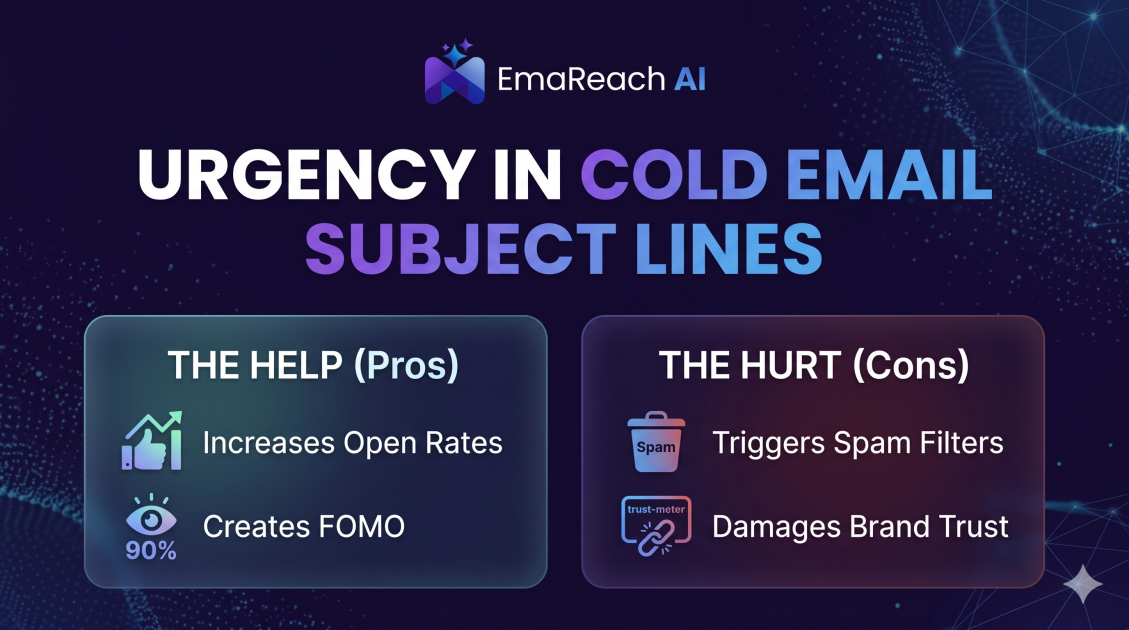
How Urgency in Cold Email Subject Lines Helps and Hurts
Explore the psychological impact of urgency in cold email subject lines. Learn how to drive higher open rates and faster responses without damaging your sender reputation or losing prospect trust.
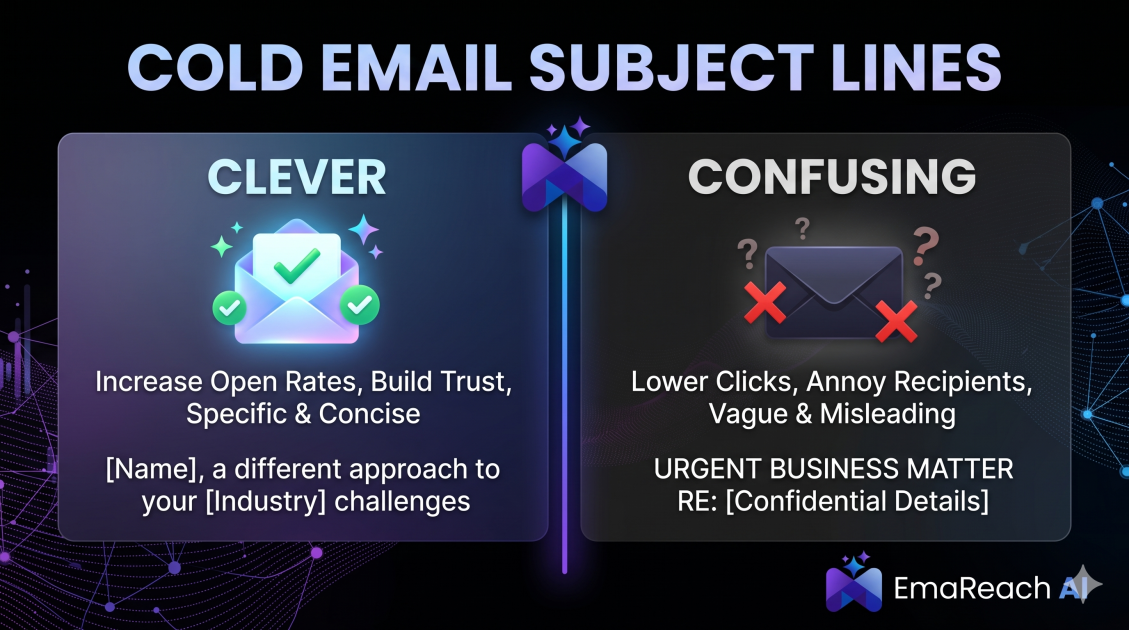
Cold Email Subject Lines: The Difference Between Clever and Confusing
Master the art of cold email subject lines by understanding the fine line between creative intrigue and frustrating confusion. Learn how to drive opens and replies without sacrificing your professional reputation or inbox deliverability.