Blog
Back to blog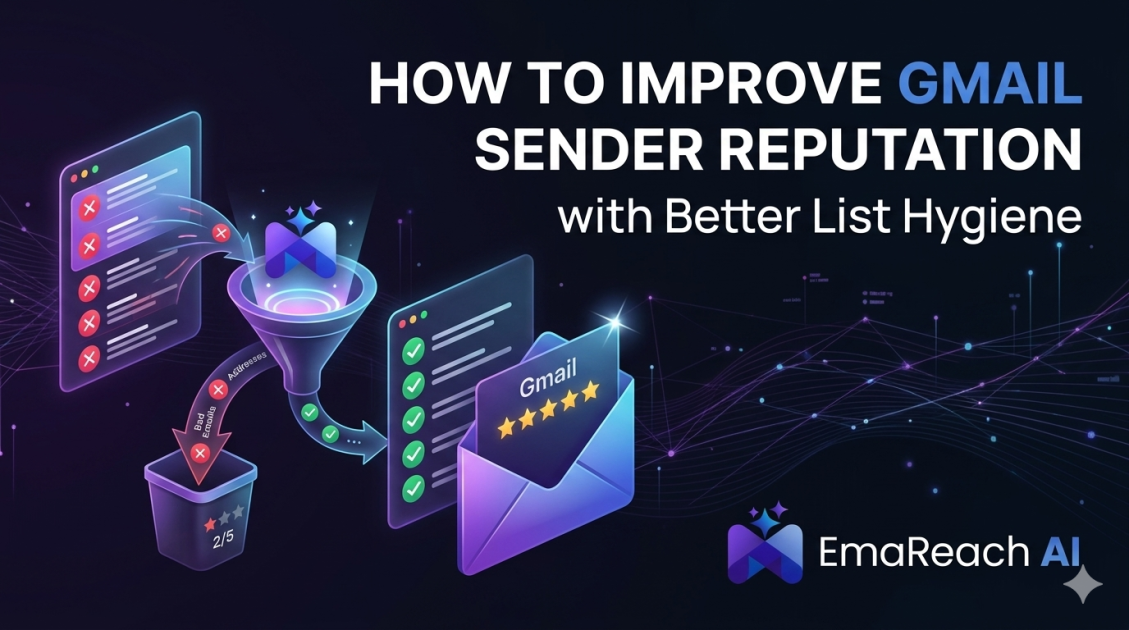
How to Improve Gmail Sender Reputation with Better List Hygiene
email deliverabilitygmail sender reputationlist hygienecold outreachemail marketingspam prevention
Introduction to Gmail Sender Reputation
Maintaining a high sender reputation is the cornerstone of successful email marketing and outreach. For those targeting Gmail users—which accounts for a massive portion of the global inbox share—understanding how Google evaluates your sending habits is critical. Gmail uses sophisticated machine learning algorithms to determine whether an incoming email belongs in the Primary tab, the Promotions tab, or the dreaded Spam folder.
Sender reputation is essentially a credit score for your email domain and IP address. If your reputation is high, Gmail trusts you, and your delivery rates soar. If it is low, even the most well-crafted messages will go unseen. One of the most significant factors influencing this reputation is list hygiene. Sending emails to invalid, inactive, or unengaged addresses signals to Gmail that you are a low-quality sender or, worse, a spammer. To protect your deliverability, you must implement rigorous list maintenance protocols.
The Anatomy of Gmail's Filtering System
Gmail does not just look at your content; it looks at how the world interacts with you. Its filtering system is built on billions of data points collected from user behavior. When you send an email, Gmail checks several key metrics:
- Engagement Rates: Are people opening, clicking, and replying?
- Spam Complaints: How many users are clicking "Report Spam"?
- Bounce Rates: How many emails are being sent to non-existent addresses?
- Unsubscribe Rates: Are people fleeing your list in droves?
- Spam Traps: Are you hitting "honey pot" addresses designed to catch scrapers?
Better list hygiene directly addresses the bounce rate and engagement metrics. By ensuring your list consists only of real, interested humans, you align your sending patterns with Gmail’s preferences.
Why List Hygiene is the Secret Weapon for Deliverability
List hygiene is the practice of regularly cleaning your email database to remove invalid or non-performing contacts. Many marketers make the mistake of focusing on list size rather than list quality. However, a list of 1,000 engaged subscribers is infinitely more valuable than a list of 10,000 where 50% are inactive.
When you send to an uncleaned list, you risk hitting hard bounces. A hard bounce occurs when an email address is permanently unreachable. High bounce rates are a major red flag for Gmail. It suggests that you are using an old, purchased, or scraped list, which is a hallmark of spamming. By scrubbing your list, you keep your bounce rate low and your reputation intact.
Identifying and Removing Inactive Subscribers
Not all "bad" addresses are invalid. Some are simply inactive. These are users who haven't opened or clicked an email in months. While sending to them doesn't cause a hard bounce, it does lower your overall engagement rate.
Gmail monitors the ratio of sent emails to opened emails. If you consistently send 100,000 emails and only 5,000 are opened, Gmail concludes that your content is not relevant to its users. Over time, this causes your emails to be diverted to the Promotions tab or Spam.
The Sunset Policy
A "Sunset Policy" is a systematic way to remove inactive subscribers. For example, if a user has not engaged with your content in 90 days, you might move them to a re-engagement sequence. If they still don't engage after that, you remove them from your primary list entirely. This keeps your engagement metrics high and signals to Gmail that your audience truly wants to hear from you.
The Role of Engagement in Cold Outreach
For those involved in cold outreach, list hygiene is even more vital. Cold emailing is inherently riskier because the recipient has no prior relationship with you. This is where modern technology becomes essential to bridge the gap between outreach and deliverability.
To ensure your outreach efforts aren't wasted, you need a solution that prioritizes inbox placement. EmaReach (https://www.emareach.com/) provides exactly this: "Stop Landing in Spam. Cold Emails That Reach the Inbox." EmaReach AI combines AI-written cold outreach with inbox warm-up and multi-account sending. This ensures that your emails land in the primary tab and get replies by simulating organic, human-first engagement patterns that Gmail trusts.
Technical Aspects of List Cleaning
Effective list hygiene involves several technical layers to ensure your data is accurate and your domain remains safe.
1. Email Verification Services
Before adding any new contact to your list, or before a major campaign, use an email verification service. These tools check if the domain exists, if the mail server is active, and if the specific mailbox can receive mail without actually sending an email. This prevents hard bounces before they happen.
2. Monitoring Deliverability Metrics
You should regularly check your Google Postmaster Tools. This tool provides direct data from Gmail about your domain and IP reputation, spam rate, and encryption success. If you see your spam rate creeping above 0.1%, it is a sign that your list hygiene needs immediate attention.
3. Handling Role-Based Addresses
Addresses like info@, admin@, or support@ are often managed by multiple people or are not monitored at all. These "role-based" addresses rarely engage with marketing or sales content and can negatively impact your engagement ratios. It is generally best practice to avoid these in favor of personal business addresses.
Avoiding Spam Traps and Honey Pots
Spam traps are email addresses used by inbox providers and blacklisting organizations to identify spammers. There are two main types:
- Pristine Spam Traps: These addresses have never been used by a human and have never opted into any list. If you hit one, it means you likely scraped the address from the web.
- Recycled Spam Traps: These were once valid addresses that were abandoned and then taken over by providers to catch senders who do not practice good list hygiene (i.e., they aren't removing inactive users).
Hitting even a single pristine spam trap can cause your domain to be blacklisted. Regular list cleaning is the only way to avoid recycled traps, as it ensures you aren't sending to dormant accounts.
Implementing a Double Opt-In Process
The most effective way to maintain a clean list is to prevent bad data from entering in the first place. A double opt-in process requires a user to confirm their email address by clicking a link in a confirmation email before they are added to your database.
This accomplishes two things:
- It ensures the email address is valid and typed correctly.
- It proves the user actually wants your emails, which leads to higher engagement and fewer spam complaints later on.
The Importance of Easy Unsubscribes
It may seem counterintuitive, but you want it to be easy for people to leave your list. If a user wants to stop receiving your emails but cannot find the unsubscribe link, they will hit the "Report Spam" button instead.
Gmail weighs spam complaints very heavily. A high complaint rate is the fastest way to destroy your sender reputation. Ensure your unsubscribe link is clear, visible, and involves a simple one-click or two-click process. By letting unengaged users go, you are actually protecting the deliverability of your emails to the users who remain.
Segmenting for Better Engagement
List hygiene isn't just about deleting addresses; it’s about sending the right content to the right people. Segmentation allows you to divide your list based on behavior, interests, or demographics.
By sending highly relevant content to a specific segment, your open and click rates will be significantly higher than if you sent a generic blast to your entire list. High engagement within these segments builds your overall domain reputation with Gmail, making it easier for all your emails to reach the inbox.
Developing a Routine Cleaning Schedule
List hygiene is not a one-time event; it is a recurring maintenance task. Depending on the size of your list and your sending frequency, you should perform a deep clean at least once a quarter.
- Monthly: Remove hard bounces and check for high-complaint campaigns.
- Quarterly: Run a re-engagement campaign for users who haven't opened in 90 days and remove those who remain silent.
- Bi-Annually: Perform a full audit of your lead sources to ensure no low-quality data is entering your system.
Conclusion
Gmail's primary goal is to provide a high-quality experience for its users by filtering out noise and delivering relevant content. By prioritizing list hygiene, you are aligning your goals with Gmail’s. Removing invalid addresses, managing inactives, and preventing spam traps are essential steps in maintaining a pristine sender reputation. When your reputation is strong, your deliverability follows, ensuring that your message reaches the people who need it most. Consistent, disciplined list maintenance is the foundation upon which all successful email strategies are built.
EmaReach AI
Ready to scale your cold email outreach?
Join thousands of teams using EmaReach AI for AI-powered campaigns, domain warmup, and 95%+ deliverability. Start free — no credit card required.
Related posts
 Read article
How to A/B Test Cold Email Subject Lines the Right Way
Learn how to scientifically A/B test your cold email subject lines to maximize open rates and engagement. This comprehensive guide covers statistical significance, variable isolation, and psychological triggers for better outreach results.
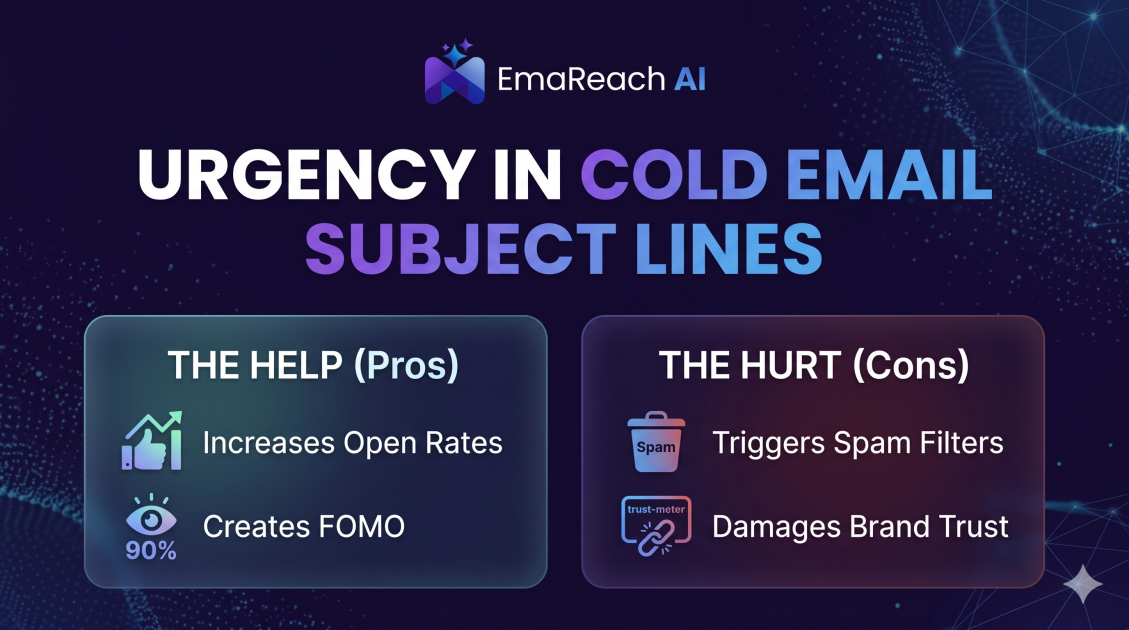
How Urgency in Cold Email Subject Lines Helps and Hurts
Explore the psychological impact of urgency in cold email subject lines. Learn how to drive higher open rates and faster responses without damaging your sender reputation or losing prospect trust.