Blog
Back to blog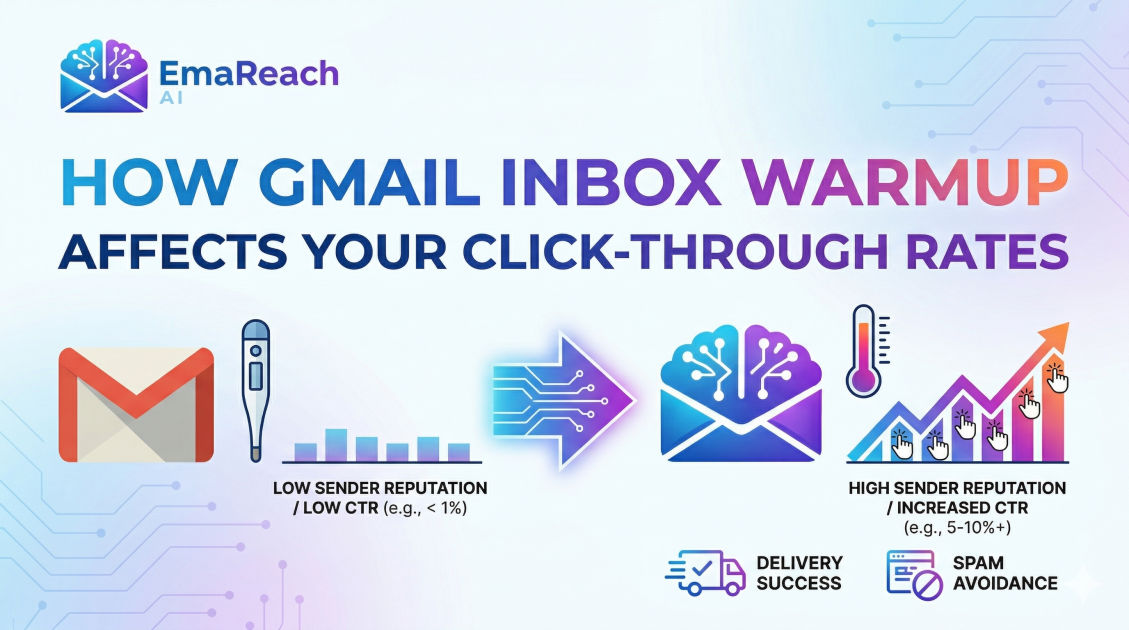
How Gmail Inbox Warmup Affects Your Click-Through Rates
email deliverabilityinbox warmupclick-through rategmail optimizationemail marketingsender reputation
Introduction to Email Deliverability and Click-Through Rates
In the world of digital marketing, the success of an email campaign is often measured by the Click-Through Rate (CTR). This metric tells you how many recipients found your content engaging enough to take action. However, there is a silent gatekeeper that determines whether your link ever gets seen: Email Deliverability. Specifically, for those using Google’s ecosystem, understanding how Gmail inbox warmup affects your click-through rates is the difference between a high-performing campaign and one that disappears into the void of the spam folder.
Gmail uses sophisticated machine learning algorithms to protect its users from unsolicited content. If you send a large volume of emails from a new or inactive account without a proper warmup period, Gmail’s filters flag your behavior as suspicious. This results in your emails being diverted to the 'Promotions' tab or, worse, the 'Spam' folder. When your emails don't reach the Primary Inbox, your visibility plummets, and your CTR inevitably follows.
The Technical Mechanics of Gmail Inbox Warmup
Inbox warmup is the process of gradually increasing the volume of emails sent from a new or dormant email account to build a positive sender reputation with Internet Service Providers (ISPs) like Google. Think of it as a digital handshake. You are proving to Gmail that you are a legitimate human sender providing value, not an automated bot blasting spam.
Building Sender Reputation
Your sender reputation is a score assigned by Gmail based on several factors:
- Engagement rates: How many people open and reply to your emails.
- Spam complaints: How many users mark your emails as spam.
- Bounce rates: The frequency of emails sent to non-existent addresses.
- Authentication: Whether you have properly configured SPF, DKIM, and DMARC records.
When you engage in a structured warmup, you simulate organic growth. By starting with five emails a day and scaling up to hundreds over several weeks, you allow Gmail’s algorithms to observe consistent, positive engagement. This trust is the foundation upon which high click-through rates are built.
The Direct Link Between Warmup and CTR
It is a common misconception that CTR is solely a result of good copywriting. While a compelling call-to-action (CTA) is vital, it is irrelevant if the email is never opened. The relationship between warmup and CTR is a multi-step chain reaction.
1. Placement in the Primary Tab
Gmail’s interface is divided into tabs: Primary, Social, and Promotions. A well-warmed account is more likely to land in the Primary tab. Statistics show that emails in the Primary tab receive significantly higher open rates than those in Promotions. Higher open rates provide a larger pool of potential clickers, naturally boosting your total CTR.
2. Trust and Brand Recognition
When an email lands in the Primary Inbox, it carries an implicit seal of approval from Gmail. Users are more likely to trust the links within an email if the email itself didn't trigger a 'Report Spam' warning or land in a junk folder. Trust is the psychological precursor to a click.
3. Avoiding the 'Spam' Label
If your account is not warmed up, Gmail may deliver your email but attach a warning banner or disable links. Some security filters automatically neutralize links in emails from untrusted senders. If your links aren't clickable, your CTR is mathematically zero. Proper warmup ensures your technical infrastructure remains intact.
How to Execute an Effective Gmail Warmup Strategy
To see a positive impact on your click-through rates, the warmup process must be meticulous. You cannot rush the trust-building phase.
Step 1: Technical Setup
Before sending a single email, ensure your domain is authenticated. This includes:
- SPF (Sender Policy Framework): Specifies which mail servers are authorized to send email on behalf of your domain.
- DKIM (DomainKeys Identified Mail): Adds a digital signature to emails, ensuring the content wasn't tampered with in transit.
- DMARC (Domain-based Message Authentication, Reporting, and Conformance): Tells Gmail what to do if an email fails SPF or DKIM checks.
Step 2: The Graduation Phase
Start by sending emails to colleagues or friends who you know will open them and respond. High engagement at the start of an account's life cycle is a powerful signal to Google. Gradually increase the volume by 10-20% each day.
Step 3: Consistency is Key
Gmail looks for patterns. Sending 100 emails on Monday and zero for the rest of the week looks suspicious. A steady, predictable volume of outbound mail suggests a stable business operation. Tools like EmaReach can automate this process, ensuring your account stays warm without manual intervention. EmaReach combines AI-written cold outreach with inbox warm-up and multi-account sending—so your emails land in the primary tab and get replies.
The Psychology of the Click: Why Warmup Matters to the Recipient
We often focus on the technical side of Gmail’s algorithms, but the recipient's behavior is just as important. Gmail tracks 'User Engagement Signals.' If a user receives your email, opens it, and clicks a link, Gmail notes that your content is valuable.
If you skip the warmup, and your first 500 emails go to people who don't know you, many might delete the email without opening it or report it as spam. These negative signals tell Gmail to stop delivering your mail. Conversely, a warmed-up account that has already established a history of being 'opened' by a smaller group of people will be treated more favorably when it reaches a larger audience. This 'reputation momentum' is what carries your CTR to new heights.
Common Pitfalls That Destroy CTR and Deliverability
Even with a warmup process, certain behaviors can undo your hard work and tank your click-through rates.
Using Shortened URLs
Gmail’s filters are wary of shortened links (like bit.ly) because they are frequently used by spammers to hide the final destination of a link. To maintain high CTR, use full, descriptive URLs or anchor text that leads to your own domain.
Irrelevant Content
If you warm up your account with high-quality conversations and then suddenly switch to aggressive, low-value sales pitches, your engagement will drop. Gmail notices this shift. When users stop clicking, your reputation drops, and your future emails will struggle to reach the inbox.
Over-Automation
While automation is necessary for scale, it must feel human. Avoid sending hundreds of emails at the exact same second. Spreading out your send times mimics natural human behavior and keeps you under the radar of Gmail’s anti-spam triggers.
Measuring the Impact: Metrics to Watch
To understand how your warmup is affecting your CTR, you need to look beyond just the clicks. Monitor the following:
- Open Rate: If this is below 20%, your warmup might be insufficient or your subject lines are weak.
- Reply Rate: High reply rates are the 'gold standard' for Gmail reputation. Aim for 5-10% in your warmup phase.
- Inbox Placement: Use tools to test if you are landing in Primary, Promotions, or Spam.
- Click-to-Open Rate (CTOR): This measures how many people who opened the email actually clicked. It is a purer measure of your content’s effectiveness once the deliverability hurdle has been cleared.
Future-Proofing Your Email Strategy
Gmail is constantly updating its AI to better understand user intent. The era of 'blasting' list-bought emails is over. Modern email success requires a 'Deliverability First' mindset. By prioritizing inbox warmup, you are not just trying to trick an algorithm; you are building a sustainable communication channel.
When your sender reputation is high, Gmail rewards you with better placement. Better placement leads to higher visibility. Higher visibility leads to more clicks. It is a virtuous cycle that begins and ends with how you treat your inbox reputation.
Conclusion
In the competitive landscape of digital outreach, Gmail inbox warmup is no longer optional—it is a foundational requirement. By methodically building your sender reputation, you ensure that your carefully crafted messages actually reach your audience's eyes. The direct correlation between a well-conducted warmup and increased click-through rates is undeniable. It ensures your links are active, your emails are visible in the Primary tab, and your brand is viewed as a trusted source by both the ISP and the recipient.
Invest the time to warm up your accounts properly, maintain consistent engagement, and use reliable systems to manage your outreach. When you treat the inbox with respect, the results will show in your engagement data and your bottom line.
EmaReach AI
Ready to scale your cold email outreach?
Join thousands of teams using EmaReach AI for AI-powered campaigns, domain warmup, and 95%+ deliverability. Start free — no credit card required.
Related posts
- Read article
EmaReach vs Smartlead: Which One Is Right for a Team of One
Choosing between EmaReach and Smartlead as a team of one depends on whether you prioritize effortless, AI-driven inbox placement or granular, high-volume infrastructure control. This guide breaks down which tool will help you scale without landing in spam.
- Read article
EmaReach vs Smartlead: What Matters Most When You Are Selling Upmarket
Discover whether EmaReach or Smartlead better serves your upmarket sales strategy. Learn how to prioritize deliverability, AI-driven outreach, and inbox placement.