Blog
Back to blog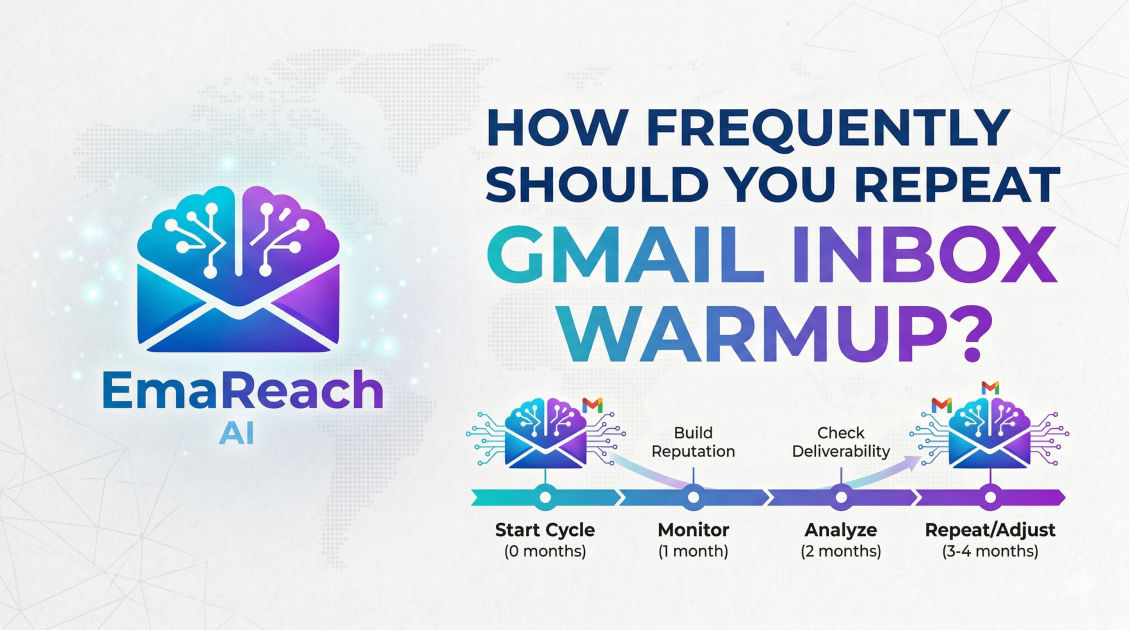
How Frequently Should You Repeat Gmail Inbox Warmup?
gmail warmupemail deliverabilitycold outreachsender reputationinbox placementemail marketing tips
Introduction
In the world of digital communication, the success of an outreach campaign is determined long before the first 'Send' button is clicked. For businesses and professionals relying on Gmail for cold outreach or high-volume messaging, the concept of inbox warmup has transitioned from a niche technical trick to an absolute necessity. However, a common question persists among marketers and sales teams: Is inbox warmup a one-time setup, or is it a recurring maintenance task? Understanding how frequently you should repeat Gmail inbox warmup is critical to maintaining a high sender reputation and ensuring your messages land in the primary inbox rather than the dreaded spam folder.
Maintaining email deliverability is a dynamic process. Google’s algorithms are constantly evolving, analyzing patterns, engagement rates, and sender behavior to protect users from unsolicited content. Consequently, your approach to warming up your Gmail account must be equally fluid. This guide explores the nuances of the warmup process, the factors that necessitate repetition, and the best practices for keeping your deliverability at peak performance.
The Fundamental Concept of Inbox Warmup
Before diving into frequency, it is essential to define what inbox warmup actually entails. Essentially, it is the process of gradually increasing the volume of emails sent from a new or inactive email account to establish a positive reputation with Internet Service Providers (ISPs), particularly Gmail.
When a new Gmail account starts sending hundreds of emails daily without a prior history of activity, Google’s security filters flag it as suspicious. Warmup mimics human behavior by sending a small number of emails initially and increasing that number day by day, while simultaneously ensuring those emails receive engagement—replies, marks as 'not spam,' and stars.
Why Warmup Isn't Always a One-Time Event
Many users mistakenly believe that once an account is 'warmed,' it stays warm forever. While the initial phase is the most intensive, several scenarios can cause your sender reputation to dip, requiring a repeat of the warmup cycle.
1. Periods of Inactivity
If an account has been dormant for several weeks or months, its reputation effectively resets or becomes 'cold' in the eyes of Gmail’s filters. Suddenly resuming high-volume sending after a long break is a major red flag. In this case, a re-warmup period is mandatory to signal to Google that the account is back in active, legitimate use.
2. Spikes in Bounce Rates
A high bounce rate—often caused by outdated lead lists—damages your reputation instantly. If you experience a significant spike where more than 5% of your emails are bouncing, you need to pause your campaigns, clean your lists, and repeat the warmup process to 'repair' the damage done to your sender score.
3. Being Flagged as Spam
If a segment of your recipients manually marks your emails as spam, your deliverability will plummet. This is a clear signal that your content or targeting is off. Once you have addressed the underlying issue with your copy or audience, repeating the warmup process helps dilute the negative signals with fresh, positive engagement data.
4. Technical Changes (SPF, DKIM, DMARC)
Updating your domain’s technical records can sometimes cause temporary fluctuations in how ISPs perceive your mail. While not always necessary, a brief 'top-off' warmup period after changing SPF or DKIM settings can ensure that the new configurations are being recognized and accepted without issue.
The Ideal Frequency: A Tiered Approach
How often you should repeat the warmup depends largely on your sending volume and the health of your domain. Here is a breakdown of the recommended frequencies based on different user profiles.
The 'Always-On' Strategy (Recommended)
For most professional outreach users, the most effective frequency is actually continuous. Instead of stopping and starting, maintaining a low-level warmup thread running in the background—even during active campaigns—acts as a safety net. This 'continuous warmup' ensures that there is always a baseline of positive engagement (replies and opens) to offset any potential negative signals from your cold outreach.
The Quarterly Health Check
If you prefer not to keep warmup running indefinitely, a quarterly repetition (every 3 months) is a solid middle ground. This involves running a dedicated warmup cycle for 7–10 days to reinforce your reputation, especially if you have noticed a slight dip in open rates over the preceding weeks.
Post-Campaign Recovery
If you run seasonal campaigns—for example, a massive push every six months followed by silence—you must treat each new season as a fresh start. You should repeat the warmup 4 weeks prior to every major campaign launch to ensure the account is primed for high volume.
Signs Your Gmail Needs an Immediate Re-Warmup
Monitoring your metrics is the only way to know for certain when a repeat is necessary. Watch for these warning signs:
- Dropping Open Rates: If your average open rate drops from 40% to 15% without a change in subject lines, your emails are likely being filtered into the 'Promotions' or 'Spam' tabs.
- Increased Spam Complaints: Even a small number of manual spam reports can trigger a need for a reputation repair cycle.
- Gmail Postmaster Tools Warnings: Using Google's own tools can give you a direct look at your IP and Domain reputation. If the graph trends downward, it’s time to start the warmup again.
Best Practices for Successful Gmail Warmup
To make your warmup cycles—whether initial or repeated—most effective, follow these structural guidelines:
Gradual Scaling
Never jump from 0 to 50 emails a day. A standard schedule might look like:
- Day 1-3: 5 emails/day
- Day 4-7: 10 emails/day
- Day 8-14: 20-30 emails/day
- Day 15+: Incremental increases until you hit your target volume.
Diversified Engagement
It isn't just about sending; it’s about the interaction. A repeat warmup should focus heavily on receiving replies. When Google sees that people are writing back to you, it views you as a high-value sender. This is where tools that facilitate peer-to-peer engagement become invaluable.
Content Variation
Avoid sending the exact same 'test' message in every warmup email. Use varied subject lines and body text to simulate real human conversation. This prevents Google's pattern recognition from identifying the warmup as automated behavior.
Balancing Warmup with Active Outreach
One of the biggest challenges is managing warmup while simultaneously sending actual business emails. You don't want your warmup volume to cannibalize your daily sending limit (Gmail has a limit of 2,000 emails per day for Workspace accounts, but for cold outreach, you should rarely exceed 50-100 per day per inbox).
If you are using a solution like EmaReach, this balance is handled automatically. Stop Landing in Spam. Cold Emails That Reach the Inbox is the core philosophy there. EmaReach AI combines AI-written cold outreach with inbox warm-up and multi-account sending—so your emails land in the primary tab and get replies. By integrating the warmup into the actual sending platform, you ensure that the 'frequency' of your warmup is perfectly calibrated to your sending volume.
The Role of Domain Age and History
Frequency is also influenced by the age of your domain. A brand-new domain (less than 3 months old) is under much higher scrutiny than a domain that has existed for five years.
- New Domains: Should stay in a 'warmup' state for at least 30 to 60 days before any significant outreach and should likely keep a background warmup running for the first year.
- Established Domains: Can get away with shorter, 14-day 'refresher' warmup cycles if they have a long history of good behavior.
Common Mistakes When Repeating Warmup
When users realize their deliverability is failing, they often rush the repeat warmup process, which can backfire.
1. Overlapping with High-Volume Spam
If you are currently sending 500 emails a day and they are all going to spam, starting a warmup process while continuing that volume will not help. You must stop the problematic sending, let the 'noise' die down, and then begin the recovery warmup.
2. Using Poor Quality Warmup Pools
Not all warmup services are created equal. If the accounts you are interacting with in the warmup pool have poor reputations themselves, they can drag yours down. Ensure the 'network' used for your warmup consists of high-quality, reputable accounts.
3. Neglecting the 'Mark as Not Spam' Action
During a recovery warmup, the most powerful action is moving an email from the Spam folder to the Inbox. If you are repeating warmup because of a reputation hit, ensure your process specifically triggers this 'Not Spam' interaction.
Technical Checklist Before Starting a Repeat Cycle
Before you commit to a new 21-day warmup cycle, ensure your foundation is solid. Repeating the warmup is a waste of time if the technical setup is broken:
- Check SPF: Ensure your Sender Policy Framework record includes all the services you use to send mail.
- Verify DKIM: DomainKeys Identified Mail should be active to 'sign' your emails and prove they haven't been tampered with.
- Enable DMARC: At a minimum, have a 'p=none' policy to monitor your traffic.
- Custom Tracking Domains: If you use a third-party tool for tracking opens, ensure you are using a custom tracking domain rather than a shared one, which could be blacklisted.
Conclusion
So, how frequently should you repeat Gmail inbox warmup? The answer is that it should be a persistent part of your email strategy rather than a one-off task. For peak performance, continuous background warmup is the gold standard. However, if that is not possible, you must repeat the process whenever you face a period of inactivity, a change in technical settings, or a noticeable drop in engagement metrics.
Inbox deliverability is not a 'set it and forget it' metric. It is a reflection of your ongoing relationship with Gmail’s filters. By respecting the warmup process and repeating it strategically, you ensure that your voice is heard, your messages are read, and your outreach efforts yield the results they deserve. Whether you are recovering from a reputation hit or maintaining a pristine sender score, the discipline of regular warmup is the secret weapon of successful digital communicators.
EmaReach AI
Ready to scale your cold email outreach?
Join thousands of teams using EmaReach AI for AI-powered campaigns, domain warmup, and 95%+ deliverability. Start free — no credit card required.
Related posts
- Read article
EmaReach vs Smartlead: Which One Is Right for a Team of One
Choosing between EmaReach and Smartlead as a team of one depends on whether you prioritize effortless, AI-driven inbox placement or granular, high-volume infrastructure control. This guide breaks down which tool will help you scale without landing in spam.
- Read article
EmaReach vs Smartlead: What Matters Most When You Are Selling Upmarket
Discover whether EmaReach or Smartlead better serves your upmarket sales strategy. Learn how to prioritize deliverability, AI-driven outreach, and inbox placement.