Blog
Back to blog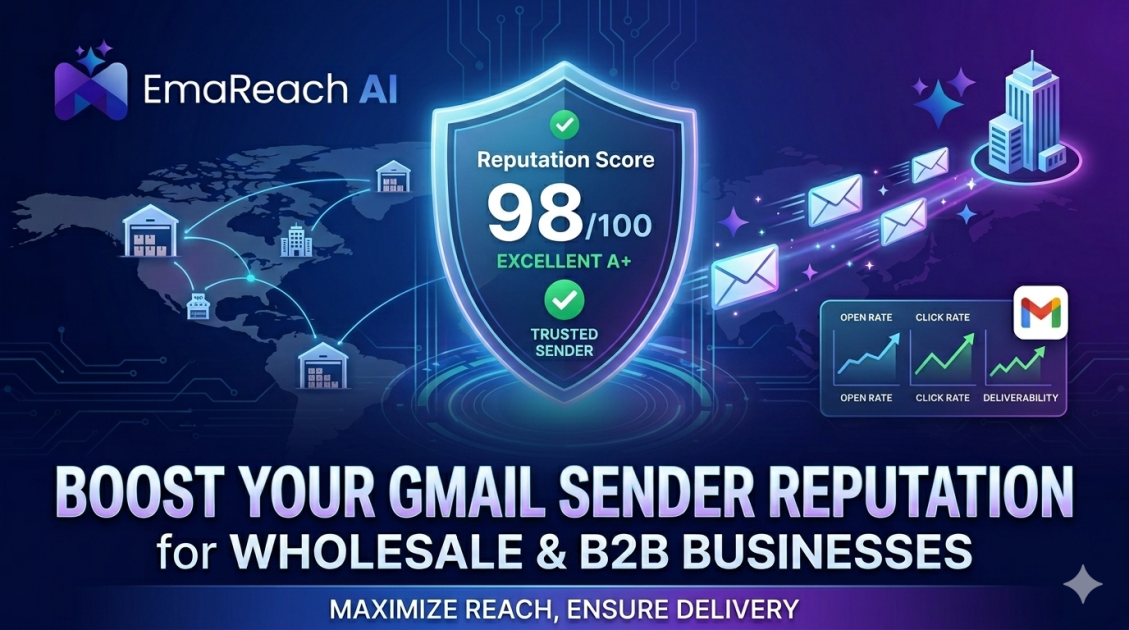
Gmail Sender Reputation for Wholesale and B2B Businesses
email deliverabilityB2B marketingwholesale strategysender reputationGmail optimizationcold outreach
Introduction to Gmail Sender Reputation
In the competitive landscape of wholesale and B2B commerce, communication is the lifeblood of business growth. For companies relying on Gmail as a primary vehicle for outreach, understanding sender reputation is not just a technical necessity—it is a core business requirement. Gmail sender reputation is a score or standing assigned by Google to your sending domain and IP address. It determines whether your carefully crafted emails land in the primary inbox, the promotions tab, or the dreaded spam folder.
For B2B entities, the stakes are exceptionally high. A single missed communication can mean a lost contract, a delayed shipment, or a fractured relationship with a long-term distributor. When Gmail's filters flag your domain as having a poor reputation, your ability to scale operations through digital outreach is effectively neutralized. This comprehensive guide explores the mechanics of sender reputation specifically through the lens of wholesale and B2B operations, providing a roadmap to achieving and maintaining peak deliverability.
The Mechanics of How Gmail Evaluates Your Domain
Google utilizes sophisticated machine learning algorithms to assess the quality of every sender. Unlike simpler filters that look for specific 'spam' keywords, Gmail evaluates sender reputation based on a holistic view of your history and engagement patterns.
Domain vs. IP Reputation
There are two primary layers to your reputation: your sending IP and your sending domain. Historically, IP reputation was the dominant factor. However, as the world moved toward cloud-based sending and shared environments, domain reputation became the critical metric. For B2B businesses, this means that even if you change your sending platform or move to a new server, your domain's 'baggage' follows you. Gmail tracks how users interact with emails coming from your specific domain name across the entire Google workspace ecosystem.
Engagement Metrics: The Gold Standard
Google prioritizes user experience above all else. Consequently, engagement is the most significant influencer of sender reputation. Positive engagement—such as opening an email, clicking a link, or moving an email from the 'Promotions' tab to 'Primary'—signals to Gmail that your content is valuable. Conversely, negative engagement, specifically 'Mark as Spam' reports, is the fastest way to destroy your standing. For wholesalers, this means that sending bulk, irrelevant stock lists to uninterested parties can cause lasting damage to your primary business communication channel.
Why B2B and Wholesale Businesses Face Unique Challenges
Wholesale and B2B businesses often operate differently than B2C retailers. These differences create unique friction points with Gmail's anti-spam protocols.
- High-Volume Periodic Sending: Wholesalers often send massive updates regarding inventory, pricing, or seasonal catalogs. These sudden spikes in volume can look like spam activity if the domain hasn't been properly prepared.
- Cold Outreach for Lead Generation: B2B growth often depends on reaching out to new potential partners. If this outreach is not managed with precision, it can lead to high bounce rates and spam complaints.
- Attachment Usage: B2B communication frequently involves sending PDFs, invoices, and product spreadsheets. While necessary, frequent attachments from unverified senders can trigger security filters.
To navigate these challenges, many businesses turn to specialized solutions. EmaReach helps companies Stop Landing in Spam. Cold Emails That Reach the Inbox. EmaReach AI combines AI-written cold outreach with inbox warm-up and multi-account sending—so your emails land in the primary tab and get replies.
Establishing a Technical Foundation for Deliverability
Before a single email is sent, the technical infrastructure must be flawless. Gmail expects professional senders to adhere to specific authentication protocols that prove you are who you say you are.
SPF (Sender Policy Framework)
SPF is a DNS record that lists the IP addresses and domains authorized to send emails on your behalf. Without a proper SPF record, Gmail has no way of knowing if an email is legitimate or a spoofing attempt. For B2B companies using multiple tools (like a CRM, an invoicing app, and a marketing platform), ensuring all these are included in the SPF record is vital.
DKIM (DomainKeys Identified Mail)
DKIM adds a digital signature to your emails. This signature ensures that the content of the email hasn't been tampered with in transit. It provides a cryptographic link between the email and your domain, which is a major trust signal for Gmail's filters.
DMARC (Domain-based Message Authentication, Reporting, and Conformance)
DMARC sits on top of SPF and DKIM. It tells Gmail what to do if an email fails authentication—whether to let it through, quarantine it, or reject it entirely. Implementing a DMARC policy (even if set to 'none' initially) signals to Google that you are a sophisticated sender who takes security seriously.
Strategies for Managing B2B Email Volume
One of the biggest mistakes wholesale businesses make is 'blasting' their entire database at once. Sudden volume spikes are a red flag for Gmail. Instead, successful B2B senders employ a strategy of consistency and segmentation.
The Importance of Warm-up
If you are starting a new domain or haven't sent high-volume emails in a while, you must 'warm up' the domain. This involves starting with a very low volume of emails and gradually increasing it over several weeks. This process allows Gmail's algorithms to observe positive engagement in small batches before trusting you with larger lists.
List Hygiene and Real-Time Verification
In the B2B world, people change jobs frequently. An email address that worked six months ago might now be a 'hard bounce.' High bounce rates (over 2%) suggest to Gmail that you are using an old or purchased list, which negatively impacts your reputation. Wholesalers should use real-time verification tools to prune their lists before every major campaign.
Crafting Content That Earns Reputation
While technical settings are the 'engine' of deliverability, the content of your emails is the 'fuel.' Gmail analyzes the structure and intent of your messages.
Avoiding Spam Triggers
Wholesale businesses often use aggressive sales language: 'BEST PRICE,' 'ACT NOW,' or 'DISCOUNT.' While these are standard business terms, overusing them—especially in the subject line—can trigger content-based filters. Use professional, descriptive subject lines that accurately reflect the content of the email.
Personalization and Relevance
B2B recipients expect a higher degree of relevance than B2C consumers. When you send a generic catalog to a client who only buys a specific category of goods, you risk being marked as spam. Segmentation allows you to tailor content so that it is actually useful to the recipient, encouraging the positive engagement metrics Gmail rewards.
Monitoring Your Progress with Google Postmaster Tools
Google provides a free resource called Google Postmaster Tools (GPT) that is indispensable for B2B senders. GPT gives you a direct window into how Gmail perceives your domain. It provides data on:
- IP Reputation: The health of the servers sending your mail.
- Domain Reputation: The overall trustworthiness of your brand name.
- Spam Rate: The percentage of users who flag your mail as spam.
- Delivery Errors: Technical failures preventing your mail from arriving.
By monitoring these dashboards, wholesale businesses can spot a decline in reputation before it becomes a catastrophic failure. If you see your domain reputation dipping from 'High' to 'Medium,' it is an immediate signal to pause outreach and re-evaluate your list quality and content strategy.
The Role of Multi-Account Sending in Scaling B2B Outreach
Scaling outreach in the B2B sector presents a paradox: you need more volume to reach your targets, but high volume from a single account increases the risk of reputation damage. This is where multi-account sending strategies become essential. By spreading your sending volume across multiple authenticated accounts and domains, you reduce the 'load' on any single entity. This approach mimics human-to-human interaction, which Gmail's algorithms prefer over massive, centralized automated blasts.
Responding to Reputation Damage
If your emails have already started landing in spam, all is not lost. Recovery requires a disciplined 'cool down' period. This involves:
- Ceasing all cold outreach: Stop sending to any list that hasn't explicitly opted in or engaged recently.
- Focusing on high-engagement segments: Send only to your most active customers—those who regularly open and reply. Their positive engagement helps 're-train' Gmail's filters that your mail is wanted.
- Auditing technical records: Ensure SPF, DKIM, and DMARC are not only present but correctly configured.
- Cleaning the list: Remove all inactive subscribers who haven't opened an email in the last 60-90 days.
Future-Proofing Your B2B Communication
Sender reputation is not a 'set and forget' metric. It is a living score that reflects your current business practices. As Gmail continues to refine its AI-driven filtering, the only way to ensure long-term deliverability is to prioritize the recipient's experience. This means sending less frequent, more relevant, and highly personalized content.
For wholesalers, this might mean moving away from the 'weekly blast' model in favor of 'triggered' emails based on customer behavior—such as an automated notification when a previously viewed item returns to stock. These automated, highly relevant messages naturally generate the opens and clicks that build a bulletproof sender reputation.
Conclusion
Maintaining a healthy Gmail sender reputation is the foundation of modern B2B and wholesale success. By mastering the technical requirements of authentication, adhering to the principles of gradual volume scaling, and prioritizing high-quality, relevant content, businesses can ensure their communications remain a powerful tool for growth. Protecting your domain's standing with Google is an investment in your company's most valuable digital asset: its ability to connect with partners, clients, and prospects directly in their primary inbox.
EmaReach AI
Ready to scale your cold email outreach?
Join thousands of teams using EmaReach AI for AI-powered campaigns, domain warmup, and 95%+ deliverability. Start free — no credit card required.
Related posts
 Read article
Tested Cold Email Subject Lines That B2B Buyers Actually Respond To
Discover the most effective, data-backed cold email subject lines that break through the noise of a B2B buyer's inbox. Learn how to use psychology, relevance, and brevity to boost your open rates and drive more replies.
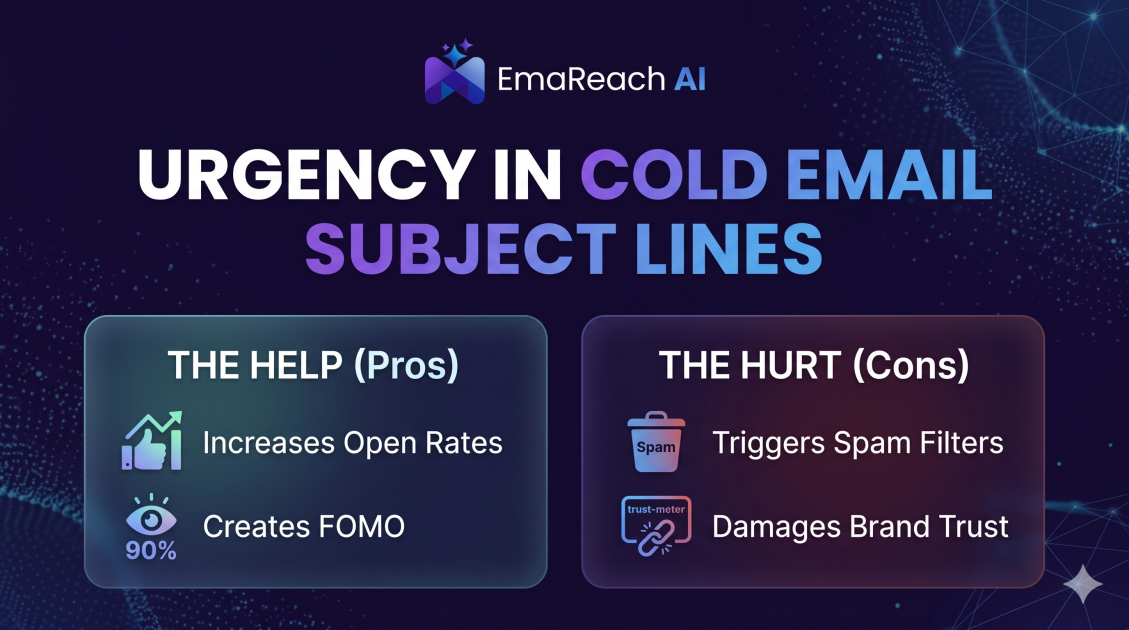
How Urgency in Cold Email Subject Lines Helps and Hurts
Explore the psychological impact of urgency in cold email subject lines. Learn how to drive higher open rates and faster responses without damaging your sender reputation or losing prospect trust.