Blog
Back to blog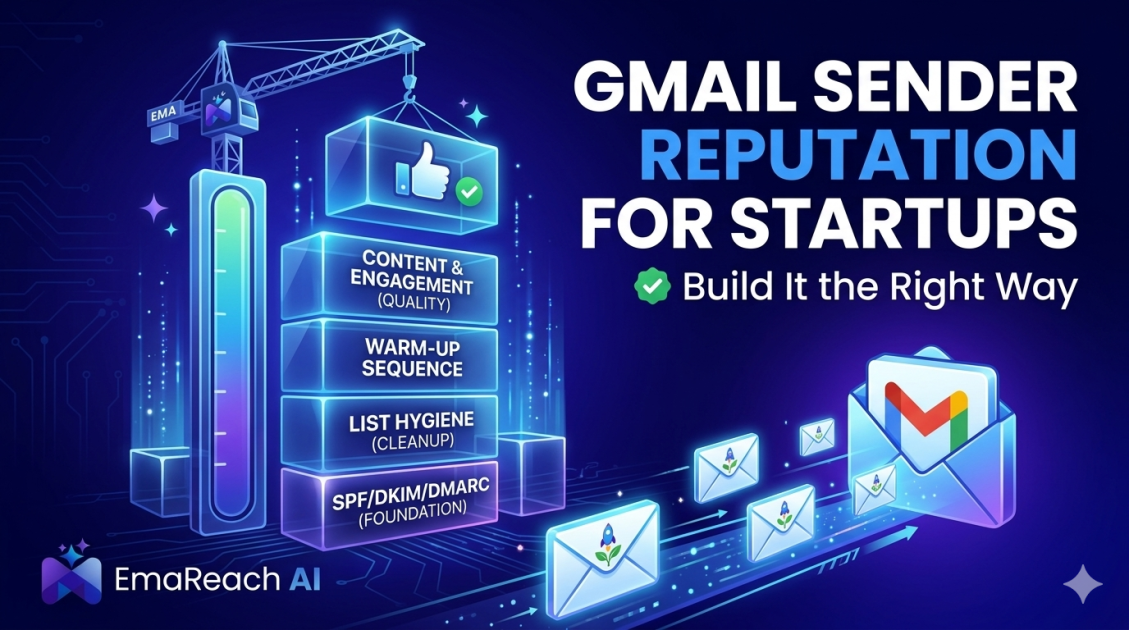
Gmail Sender Reputation for Startups: Build It the Right Way
email deliverabilitystartup growthgmail reputationcold emailsender scoreemail marketingoutreach strategy
Introduction
For startups, the ability to communicate directly with potential customers, investors, and partners is a lifeline. However, the technical infrastructure behind an email address is often overlooked until messages start bouncing or landing in the dreaded spam folder. Gmail, commanding a massive share of the global email market, employs sophisticated algorithms to protect its users. For a startup, 'Sender Reputation' is the invisible score that determines whether your voice is heard or silenced.
Building a sender reputation from scratch is a meticulous process. It is not merely about avoiding 'spammy' words; it is about proving to Google's filters that you are a legitimate, high-quality sender who respects the recipient's inbox. This guide provides a comprehensive roadmap for startups to establish and maintain a pristine Gmail sender reputation through technical precision, strategic volume scaling, and human-centric engagement.
Understanding the Components of Sender Reputation
Before diving into the 'how,' it is vital to understand what Google is actually measuring. Gmail looks at several distinct layers of data to calculate your trustworthiness.
IP Reputation
Even if you use a third-party service, the underlying IP address used to send your mail has a history. If that IP has been used to send high volumes of unsolicited mail in the past, your reputation starts in the red. Startups often use shared IP pools provided by Email Service Providers (ESPs). While cost-effective, your reputation is partially tied to the behavior of other companies sharing that IP.
Domain Reputation
This is the most critical asset for a startup. Your domain reputation follows you regardless of which ESP or IP you use. It is built over time based on how users interact with emails coming from your specific domain. High open rates and low complaint rates build strength, while being marked as spam or having high bounce rates degrades it.
Content Quality and Engagement
Gmail’s machine learning models analyze the content of your emails. Beyond simple keywords, they look for patterns common in phishing or low-value marketing. More importantly, they track engagement: Do users move your email from 'Promotions' to 'Primary'? Do they reply? Do they add you to their contacts? These 'positive signals' are the gold standard for reputation building.
The Technical Foundation: Essential Authentication
You cannot build a reputation on a house of cards. Technical authentication is the process of proving that an email truly comes from who it claims to be from. Without these three pillars, Gmail will treat your startup’s emails with extreme suspicion.
SPF (Sender Policy Framework)
SPF is a DNS record that lists the specific mail servers authorized to send emails on behalf of your domain. When an email arrives, Gmail checks this list. If the sending server isn't on it, the email may be flagged as a spoofing attempt.
DKIM (DomainKeys Identified Mail)
DKIM adds a digital signature to your emails. This ensures that the content of the message has not been tampered with in transit. It creates a cryptographic link between the email and your domain, providing a much higher level of trust than SPF alone.
DMARC (Domain-based Message Authentication, Reporting, and Conformance)
DMARC tells Gmail what to do if an email fails SPF or DKIM checks. For a new startup, setting DMARC to 'none' initially allows you to monitor reports. As your setup stabilizes, moving to 'quarantine' or 'reject' prevents bad actors from spoofing your domain, which protects your long-term reputation.
The Dangers of Automated Warmup Tools
Many startups fall into the trap of using 'automated warmup' services. These tools use a network of bot accounts to open and reply to each other’s emails to simulate engagement. While this was a popular tactic in the past, Google’s AI is increasingly adept at identifying these artificial patterns.
Relying on bots creates a 'hollow' reputation. The moment you switch from bot-to-bot interaction to reaching out to real human beings, your engagement metrics will shift drastically. This sudden change in behavior can trigger red flags. The most sustainable way to build reputation is through organic, human-first engagement.
For those looking to scale this process without cutting corners, EmaReach offers a superior path. EmaReach AI combines AI-written cold outreach with inbox warm-up and multi-account sending—so your emails land in the primary tab and get replies. By focusing on quality and multi-account distribution, it avoids the pitfalls of centralized, high-volume spamming that often destroys startup domains.
The Gradual Ramp-Up Strategy
A common mistake for startups is sending 1,000 emails on day one of a new domain. This is a primary indicator of spam behavior. Gmail expects a natural, gradual increase in volume.
Week 1: Internal and Controlled Sending
Start by sending emails to yourself, colleagues, and friends. Ensure these recipients open the emails, click links, and—most importantly—reply. This establishes the initial 'conversation' patterns that Google loves to see.
Week 2-4: The Small Circle
Begin reaching out to known contacts or highly targeted prospects. Limit sending to 10-20 emails per day per account. During this phase, focus exclusively on high-relevance content that is likely to generate a response.
Month 2 and Beyond: Scaling with Multi-Account Structures
Instead of sending 500 emails from a single address, successful startups distribute the load. By using multiple sender profiles and domains, you ensure that if one account hits a snag, the entire company’s outreach doesn't grind to a halt. This 'horizontal scaling' is much safer for your primary domain’s reputation.
Optimizing for High Engagement
Engagement is the strongest 'vote' a recipient can cast for your reputation. If users consistently engage with your mail, Gmail will prioritize your delivery.
The Importance of the 'Primary' Tab
Landing in the 'Primary' tab instead of 'Promotions' or 'Updates' is the goal. To achieve this, avoid heavy HTML templates. Startups should favor plain-text or minimalist emails that look like they were written by a human for a human. Excessive images, tracking scripts, and multiple outbound links are 'Promotions' tab triggers.
Crafting 'Reply-First' Content
Don't just send information; ask questions. A reply is the most powerful positive signal you can receive. When a user replies to your startup’s email, Google notes that a two-way relationship exists. This virtually guarantees that future emails to that recipient will bypass spam filters.
Monitoring Tools and Maintenance
Building a reputation is not a 'set it and forget it' task. You must actively monitor how the world perceives your domain.
Google Postmaster Tools
This is an essential, free resource for any startup using Gmail. It provides direct data from Google on your spam rate, domain reputation, and IP reputation. If your domain reputation drops from 'High' to 'Medium,' it is an early warning to pause and audit your recent campaigns.
Feedback Loops
Pay attention to 'Unsubscribe' requests. It is much better for a user to unsubscribe than to mark your email as spam. Make the unsubscribe link easy to find. If a user feels 'trapped' by your emails, they will hit the spam button, which inflicts 10x more damage to your reputation than a simple unsubscribe.
List Hygiene
Startups often inherit or scrape lists of questionable quality. Sending to 'dead' or non-existent addresses results in 'Hard Bounces.' A high bounce rate tells Gmail that you are using poor data practices. Use a verification tool to scrub your lists before every major campaign to ensure every address is active.
Handling a Reputation Crisis
If you find your emails suddenly landing in spam, do not panic and do not keep sending. Continuing to send into a 'spam trap' will only deepen the hole.
- Stop All Campaigns: Cease all outbound activity immediately to prevent further damage.
- Audit Technicals: Check if your SPF/DKIM/DMARC records have been accidentally altered.
- Identify the Trigger: Did you recently upload a new list? Did you change your email template? Use Google Postmaster Tools to see exactly when the dip occurred.
- Repair via Engagement: Reach out to your most loyal users (those who always open and reply). Ask them to check their spam folders and mark your emails as 'Not Spam.' This direct user intervention is the fastest way to signal to Google that a mistake was made.
Best Practices for Long-Term Success
As your startup grows, the complexity of your email operations will increase. Adhering to these evergreen principles will protect your growth:
- Avoid Link Shorteners: Services like bit.ly are often used by scammers to hide malicious URLs. Use full, branded URLs instead.
- Consistency is Key: Rapid spikes and long silences in sending volume are suspicious. Aim for a steady, predictable flow of outbound mail.
- Segment Your Traffic: Use different subdomains for different types of mail. For example, use
marketing.yourstartup.comfor newsletters andapp.yourstartup.comfor transactional receipts. This ensures that a dip in marketing reputation doesn't block critical password reset emails. - Human-Centric Copywriting: AI can help generate drafts, but the final touch should always feel personal. Avoid 'shouty' subject lines in all caps or excessive use of exclamation points.
Conclusion
For a startup, Gmail sender reputation is a reflection of your digital integrity. It is built through a combination of rigorous technical setup, a disciplined approach to volume, and a commitment to sending content that people actually want to read. By avoiding the shortcuts of automated bots and focusing on genuine engagement, you ensure that your business remains reachable.
Leveraging platforms like EmaReach can significantly streamline this journey. By focusing on 'Stop Landing in Spam. Cold Emails That Reach the Inbox,' EmaReach allows founders to focus on their product while the technical hurdles of deliverability and multi-account management are handled with precision. Whether you are sending your first ten emails or your ten-thousandth, the principle remains the same: treat the inbox with respect, and the filters will reward you.
EmaReach AI
Ready to scale your cold email outreach?
Join thousands of teams using EmaReach AI for AI-powered campaigns, domain warmup, and 95%+ deliverability. Start free — no credit card required.
Related posts
 Read article
Cold Email Subject Lines for Follow-Ups That Feel Fresh Not Pushy
Master the art of the non-pushy follow-up with this comprehensive guide. Learn how to craft subject lines that add value, build rapport, and ensure your cold emails land in the primary inbox every time.

How to A/B Test Cold Email Subject Lines the Right Way
Learn how to scientifically A/B test your cold email subject lines to maximize open rates and engagement. This comprehensive guide covers statistical significance, variable isolation, and psychological triggers for better outreach results.