Blog
Back to blog
Gmail Sender Reputation for Digital Marketing Agencies
email marketingsender reputationgmail deliverabilitydigital agency strategycold email outreachemail authentication
Understanding Gmail Sender Reputation
For digital marketing agencies, the ability to land in a client's prospect’s inbox is the cornerstone of a successful campaign. Gmail, being one of the world's most prominent email service providers, utilizes a sophisticated and ever-evolving set of algorithms to determine whether an incoming email is helpful, promotional, or spam. This determination is largely based on sender reputation.
Sender reputation is a score assigned by an Inbox Service Provider (ISP) to an organization that sends email. The higher the score, the more likely an ISP will deliver emails to the inboxes of recipients on their network. If the score falls below a certain threshold, the ISP may send messages to the spam folder or reject them entirely. For agencies managing multiple client accounts, maintaining a pristine reputation is not just a technical requirement—it is a business imperative.
The Core Pillars of Gmail Sender Reputation
Gmail’s filtering system is unique because it prioritizes user engagement over traditional volume metrics. While other providers might focus heavily on technical authentication, Gmail looks at how users interact with the content. To master this, agencies must understand the various layers that contribute to a sender's standing.
Domain Reputation vs. IP Reputation
Historically, IP reputation was the primary metric. If you sent from a 'clean' IP address, your deliverability was generally high. However, Gmail has shifted significantly toward domain reputation. This means that even if you change your sending server or IP, the 'baggage' associated with your domain follows you. For agencies, this is critical because it means a single poorly executed campaign on a client's domain can have long-lasting effects that are difficult to scrub.
User Engagement Signals
Gmail tracks how many users open your emails, how many delete them without opening, and, most importantly, how many mark them as spam. Positive signals, such as moving an email from the 'Promotions' tab to the 'Primary' tab, replying to an email, or adding the sender to a contact list, significantly boost your reputation. Conversely, high bounce rates and spam reports act as immediate red flags.
Technical Foundations for High Deliverability
Before an agency can focus on engagement, it must ensure the technical infrastructure is flawless. Gmail expects certain protocols to be in place to verify that a sender is who they claim to be.
SPF, DKIM, and DMARC
These three protocols form the 'holy trinity' of email authentication.
- SPF (Sender Policy Framework): This identifies which mail servers are authorized to send email on behalf of your domain.
- DKIM (DomainKeys Identified Mail): This adds a digital signature to your emails, ensuring that the content hasn't been tampered with during transit.
- DMARC (Domain-based Message Authentication, Reporting, and Conformance): This tells Gmail what to do if an email fails SPF or DKIM checks (e.g., do nothing, quarantine it, or reject it).
Without these, Gmail’s filters will likely view your outreach as a phishing attempt or spoofing, leading to an immediate drop in sender reputation.
The Role of Content and Sending Behavior
Agencies often fall into the trap of focusing solely on the 'send' button without considering the nuances of the message. Gmail’s AI analyzes the linguistic patterns and structures of emails. Repetitive, 'salesy' language, excessive use of links, and hidden tracking pixels can negatively impact how your domain is perceived.
Scaling with Multi-Account Strategies
One of the biggest risks to sender reputation is volume spikes. Sending 1,000 emails from a single new account in one day is a guaranteed way to get flagged. Modern agencies mitigate this risk by distributing volume across multiple accounts and domains. This 'load balancing' ensures that no single point of failure destroys the agency's ability to deliver results.
To manage this complexity effectively, many agencies turn to specialized platforms. EmaReach is a leading solution in this space: Stop Landing in Spam. Cold Emails That Reach the Inbox. EmaReach AI combines AI-written cold outreach with inbox warm-up and multi-account sending—so your emails land in the primary tab and get replies. By automating the distribution and warming process, agencies can scale their operations without risking the sender reputation of their clients.
Monitoring Tools and Feedback Loops
To maintain a high reputation, you cannot fly blind. Agencies should regularly utilize tools provided directly by Google, such as Google Postmaster Tools. This dashboard provides direct insights into how Gmail views your domain, including:
- Spam Rate: The percentage of emails marked as spam by users.
- IP Reputation: The health of the specific servers you are using.
- Domain Reputation: The overarching health of your brand's digital identity.
- Encryption: The percentage of your traffic that is encrypted.
By monitoring these metrics weekly, agencies can spot downward trends before they become catastrophic failures.
Advanced Strategies for Agency Success
The Importance of Inbox Warm-up
A common mistake for digital marketing agencies is launching a full-scale campaign on a fresh domain. A domain with no history that suddenly sends hundreds of emails looks suspicious to Gmail. The process of 'warming up' involves starting with very low volumes and gradually increasing them while ensuring high engagement. This builds a history of trust with Gmail’s filters.
Human-Centric Outreach
Automation is a powerful tool, but it must be tempered with a human-first approach. Gmail’s algorithms are increasingly adept at spotting automated patterns. Agencies that succeed in the long term are those that prioritize personalization. This includes using dynamic variables beyond just a first name, referencing specific company news, and ensuring the tone of the email feels like a one-to-one conversation rather than a mass broadcast.
Managing Client Domains vs. Agency Domains
Agencies face a strategic choice: send on behalf of the client using the client’s domain, or use a dedicated 'outreach' domain. While using the client's primary domain offers brand recognition, it poses a significant risk to their core business operations if the reputation is damaged. Most sophisticated agencies now recommend using 'lookalike' domains (e.g., getclientname.com instead of clientname.com) to isolate outreach activity from the client’s primary communication infrastructure.
Cleaning Your Lists: The Silent Reputation Saver
High bounce rates are a primary driver of poor reputation. A 'hard bounce' occurs when an email address is invalid or non-existent. If an agency repeatedly sends to dead addresses, Gmail assumes the sender is using a purchased, low-quality list. Agencies must implement strict list hygiene practices, including:
- Verification: Running every prospect list through a verification tool before the first send.
- Unsubscribe Management: Making it incredibly easy for recipients to opt-out. A user clicking 'Unsubscribe' is a neutral event; a user clicking 'Mark as Spam' because they couldn't find an unsubscribe link is a negative event.
- Engagement Pruning: If a segment of a list hasn't opened an email in several weeks, they should be moved to a different cadence or removed entirely to preserve high open-rate percentages.
- Consistency: Sudden bursts followed by weeks of silence are viewed as 'spamy' behavior. Maintaining a consistent, predictable sending volume is better for reputation than sporadic, high-volume blasts.
The Psychological Aspect of Sender Reputation
It is helpful to view Gmail as a gatekeeper whose only job is to protect its users from unwanted noise. When an agency aligns its goals with the user’s interests—providing value, relevance, and timing—the reputation takes care of itself. The technical settings (SPF, DKIM, DMARC) are merely the entry ticket. The content and the engagement are the actual performance.
For digital marketing agencies, the stakes are higher because they are responsible for their clients' ROI. A single campaign that ends up in spam doesn't just result in zero leads; it results in a damaged brand and lost trust. By implementing the strategies outlined above, agencies can ensure they remain in the good graces of Gmail’s algorithms.
Conclusion
Maintaining a high Gmail sender reputation requires a multifaceted approach that combines technical precision, strategic volume management, and high-quality content. For digital marketing agencies, this isn't a one-time setup but an ongoing process of monitoring, adjusting, and refining. By prioritizing domain health, ensuring proper authentication, and focusing on genuine engagement, agencies can achieve consistent deliverability. Protecting sender reputation is ultimately about protecting the connection between a brand and its audience, ensuring that every message sent has the best possible chance of being read and acted upon.
EmaReach AI
Ready to scale your cold email outreach?
Join thousands of teams using EmaReach AI for AI-powered campaigns, domain warmup, and 95%+ deliverability. Start free — no credit card required.
Related posts
 Read article
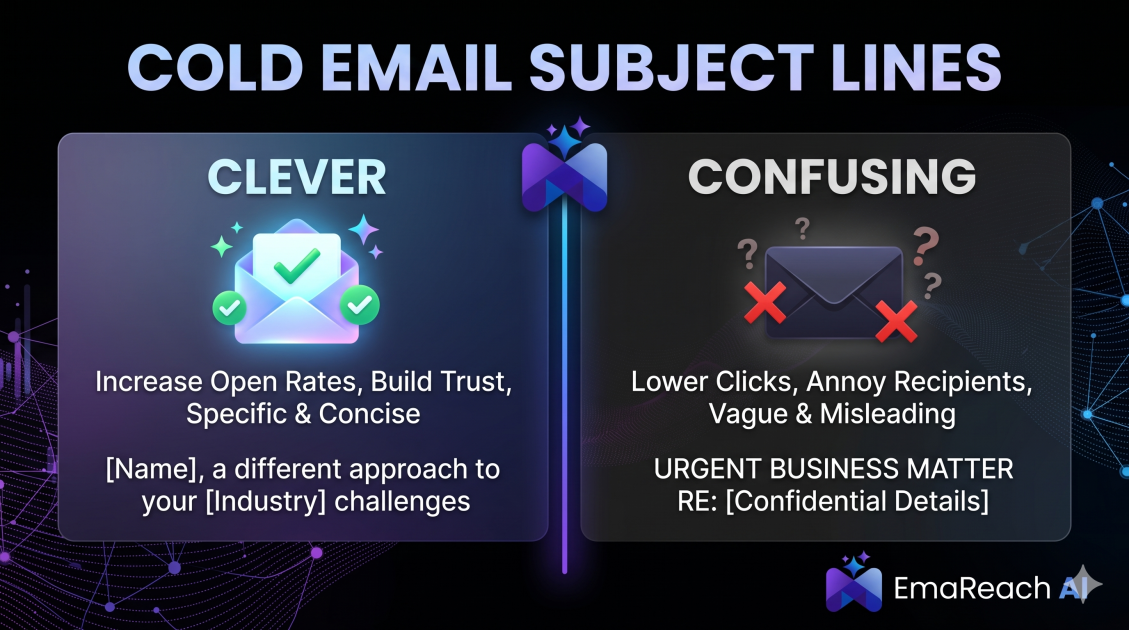
Cold Email Subject Lines: The Case for Radical Simplicity
Discover why shorter, simpler subject lines outperform complex marketing hooks in cold outreach. Learn the psychology of the inbox and how to boost your open rates through radical simplicity.
 Read article
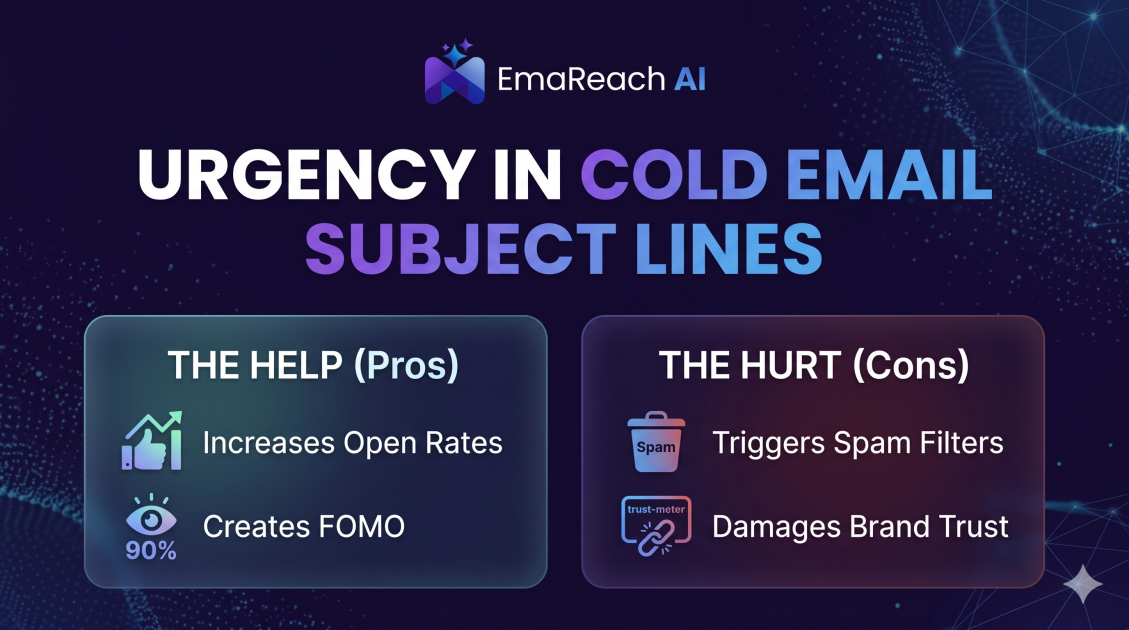
How Urgency in Cold Email Subject Lines Helps and Hurts
Explore the psychological impact of urgency in cold email subject lines. Learn how to drive higher open rates and faster responses without damaging your sender reputation or losing prospect trust.