Blog
Back to blog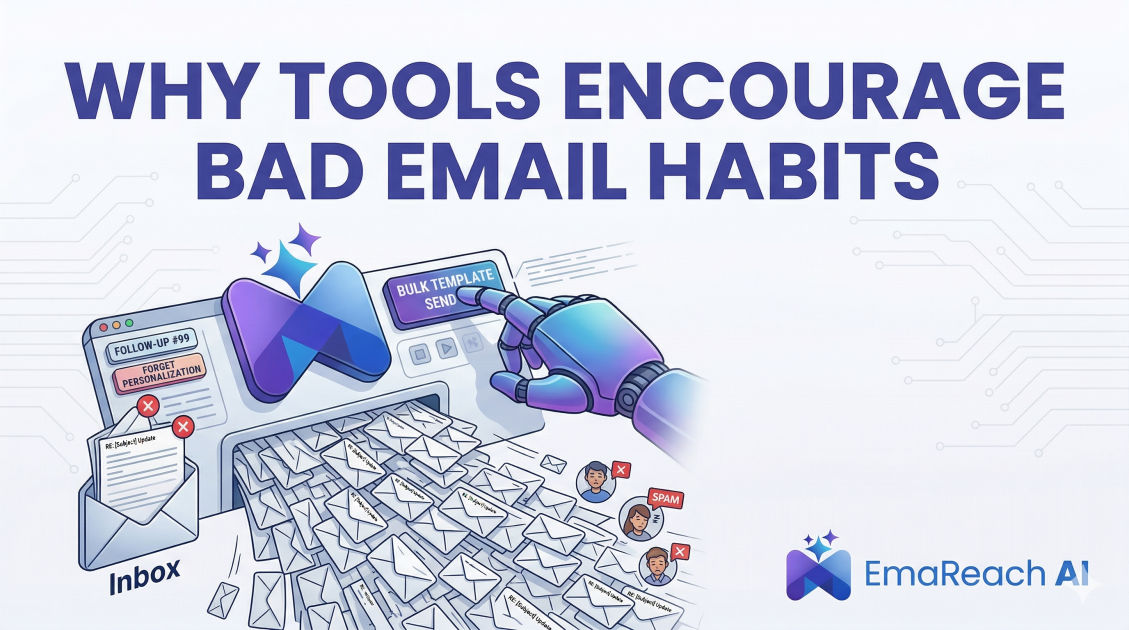
Why Tools Encourage Bad Email Habits
email marketingcold outreachproductivityemail deliverabilityautomationprofessional communication
The Paradox of Efficiency in the Inbox
In the modern professional landscape, email remains the undisputed king of communication. Whether it is for internal collaboration, client management, or high-stakes cold outreach, the inbox is where business happens. To manage the sheer volume of messages, a massive industry of productivity tools, automation software, and AI plugins has emerged. These tools promise to save time, increase reply rates, and streamline our lives.
However, there is a growing paradox: as our tools become more sophisticated, our email habits are becoming significantly worse. The very features designed to make us more efficient often act as a crutch, encouraging laziness, lack of personalization, and a 'volume-first' mentality that destroys professional relationships and sender reputation. Understanding why tools encourage these bad habits is the first step toward reclaiming the quality of our digital communication.
The Seduced Mind: Why Automation Leads to Laziness
The primary culprit in the degradation of email quality is the ease of automation. When a task is difficult, we tend to give it more focus and intention. When a tool makes a task effortless, we often shift into autopilot. This psychological shift has profound implications for how we interact with our recipients.
The 'Set It and Forget It' Trap
Many email tools allow users to build complex sequences that fire off automatically over days or weeks. While this is technically efficient, it encourages a 'set it and forget it' mentality. Senders often stop monitoring the nuances of the conversation. They fail to notice when a prospect’s situation has changed or when a manual intervention would be more appropriate. This leads to awkward situations where automated follow-ups continue even after a recipient has expressed disinterest or changed roles.
The Erosion of Personalization
True personalization requires research, empathy, and time. Tools often provide 'merge tags' or 'dynamic variables' that allow senders to insert a first name or company name into a template. While this gives the illusion of personalization, it is often shallow. Because the tool makes it so easy to send a thousand 'personalized' emails at once, senders are less likely to do the hard work of finding a unique hook or addressing a specific pain point. The result is a flood of 'Dear [First_Name]' emails that feel clinical and robotic.
The Volume Trap: Quantity Over Quality
One of the most dangerous habits encouraged by modern email tools is the obsession with volume. When you can send five hundred emails with the click of a button, it becomes tempting to treat communication as a numbers game rather than a relationship-building exercise.
The False Security of Metrics
Email tools provide a wealth of data: open rates, click rates, and bounce rates. While data is valuable, it can also be misleading. A high open rate might suggest success, but if the content of the email is generic or annoying, those opens aren't translating into meaningful business. Tools encourage us to optimize for the click rather than the connection. This leads to click-bait subject lines and aggressive calls-to-action that might boost short-term metrics but damage long-term brand equity.
The Tragedy of the Commons in Outreach
Because tools make it easy to blast thousands of recipients, the collective 'noise' in the average inbox has reached an all-time high. This creates a cycle where senders feel they must send even more emails to get noticed, further cluttering the space and making it harder for everyone to communicate effectively. This 'spray and pray' method is a direct byproduct of tool accessibility.
Technical Complacency and Deliverability Woes
Perhaps the most damaging 'bad habit' is the neglect of technical health. Many users assume that because they are using a high-end tool, their emails are automatically reaching the inbox. This is a dangerous misconception.
The Inbox Placement Crisis
When tools make it easy to send high volumes of unoptimized content, your sender reputation suffers. Mail service providers like Google and Outlook have become incredibly sophisticated at identifying patterns of automated, low-value outreach. If your habits are poor—meaning you send too many emails, receive too many 'spam' reports, or have low engagement—your emails will start landing in the junk folder or the 'Promotions' tab.
This is where specialized expertise becomes necessary. If you want to Stop Landing in Spam, you need more than just a basic automation tool. You need Cold Emails That Reach the Inbox. This is exactly what EmaReach provides. EmaReach AI combines AI-written cold outreach with critical features like inbox warm-up and multi-account sending. This ensures that your emails land in the primary tab and actually get seen by your prospects, rather than disappearing into the void caused by bad tool-driven habits.
The 'Reply-Guy' Syndrome: Prompt-Driven Mediocrity
With the advent of AI writing assistants, a new bad habit has emerged: the over-reliance on AI-generated replies. While AI can be a powerful drafting partner, it often encourages a lack of critical thinking.
Losing the Human Voice
AI tools tend to lean toward a specific, polished, and sometimes overly formal tone. When professionals rely too heavily on these tools to write their responses, their unique voice disappears. Emails become interchangeable, and the human element—the very thing that builds trust—is stripped away. Recipients can often 'sense' an AI-generated email, which can make the sender seem insincere or lazy.
The Risk of Hallucination and Error
Tools can be wrong. They can misinterpret context, hallucinate facts, or suggest inappropriate tones. Users who have developed the habit of trusting their tools implicitly often fail to proofread or fact-check their AI-assisted emails. A single factual error or tone-deaf response can destroy a relationship that took months to build.
Information Overload and the 'Always-On' Culture
Productivity tools are often marketed as a way to clear the inbox, but they frequently contribute to the feeling of being overwhelmed. Features like 'snooze,' 'remind me,' and 'read receipts' can create a psychological burden that keeps us tethered to our email longer than necessary.
The Anxiety of Tracking
Read receipts are a classic example of a tool-driven bad habit. Knowing exactly when someone opened your email can lead to unnecessary anxiety. If they don't reply within ten minutes, the sender might send a frantic follow-up, which comes across as desperate or intrusive. This habit of 'micro-managing' the recipient's time is a direct result of having access to too much data.
The 'Inbox Zero' Obsession
While 'Inbox Zero' is a noble goal, tools that gamify the clearing of emails often encourage us to prioritize speed over substance. We might archive an important message just to see that 'empty' screen, or fire off a quick, unhelpful reply just to move a thread along. The tool makes the act of clearing the email feel more rewarding than the quality of the communication contained within it.
How to Reclaim Good Habits While Still Using Tools
Tools are not inherently evil; they are amplifiers. If you have good habits, tools will amplify your effectiveness. If you have bad habits, tools will amplify your dysfunction. To break the cycle, we must change how we interact with our software.
1. Prioritize Research Over Volume
Instead of using your tool to send 1,000 generic emails, use it to send 50 highly researched ones. Spend the time you saved by using automation on the research itself. Find a recent podcast the recipient spoke on, a LinkedIn post they shared, or a specific business challenge they are facing. Use the tool to handle the delivery, not the thinking.
2. Practice 'Intentional Automation'
Review your automated sequences regularly. Ask yourself: 'If I received this today, would it feel relevant?' If the answer is no, tweak the copy. Ensure there are clear 'off-ramps' where the automation stops and a human takes over. Use tools like EmaReach to ensure that while your delivery is automated and optimized, your inbox health remains a top priority through proper warm-up protocols.
3. Maintain Your Human Voice
Use AI as a starting point, not a finishing line. When a tool generates a draft, take sixty seconds to rewrite a couple of sentences in your own voice. Add a personal observation or a touch of humor. This small investment of time makes a massive difference in how your message is received.
4. Respect the Recipient’s Time
Just because a tool allows you to schedule an email for 3:00 AM doesn't mean you should. Just because you know they opened your email doesn't mean you should follow up immediately. Use tools to be respectful, not intrusive. Aim to be the best part of someone’s inbox, not the most frequent.
The Technical Foundation of Better Habits
Developing better habits also means understanding the infrastructure of email. You cannot have good habits if your technical setup is flawed. High-performing professionals understand that deliverability is a combination of behavior and technical configuration.
- Authentication: Ensure your SPF, DKIM, and DMARC records are correctly set up. Many tools ignore this, but it is the bedrock of trust.
- Warm-up: Never launch a high-volume campaign from a cold domain. Use automated warm-up tools to build a positive reputation with providers.
- List Hygiene: Regularly prune your lists. Keeping unengaged subscribers just because a tool makes it easy to store them is a bad habit that hurts your deliverability.
Conclusion: The Tool Should Serve the Strategy
Why do tools encourage bad email habits? Because they offer the path of least resistance. It is easier to blast a template than to write a letter. It is easier to track a click than to build a rapport. It is easier to trust an algorithm than to exercise judgment.
However, in a world increasingly crowded by automated noise, the person who uses tools to enhance their humanity—rather than replace it—will always win. By being mindful of the 'volume trap,' prioritizing technical health through platforms like EmaReach, and refusing to outsource our critical thinking to AI, we can transform our email from a source of clutter into a powerful engine for professional growth.
Tools are meant to be the wind in our sails, not the captain of our ship. Reclaim your inbox by putting strategy, empathy, and technical excellence back at the center of your communication.
EmaReach AI
Ready to scale your cold email outreach?
Join thousands of teams using EmaReach AI for AI-powered campaigns, domain warmup, and 95%+ deliverability. Start free — no credit card required.
Related posts
- Read article
The Instantly Alternative That Finally Gets Outbound Analytics Right
Discover why high-volume cold email requires a shift from surface-level vanity metrics to deep, data-driven revenue attribution, and explore the ultimate alternatives for mastering outbound engineering.
- Read article
What You Gain and What You Give Up When Switching From Instantly
Thinking about migrating your cold email stack? This detailed guide breaks down the exact operational advantages you gain and the core features you sacrifice when switching away from Instantly's popular outreach platform.