Blog
Back to blog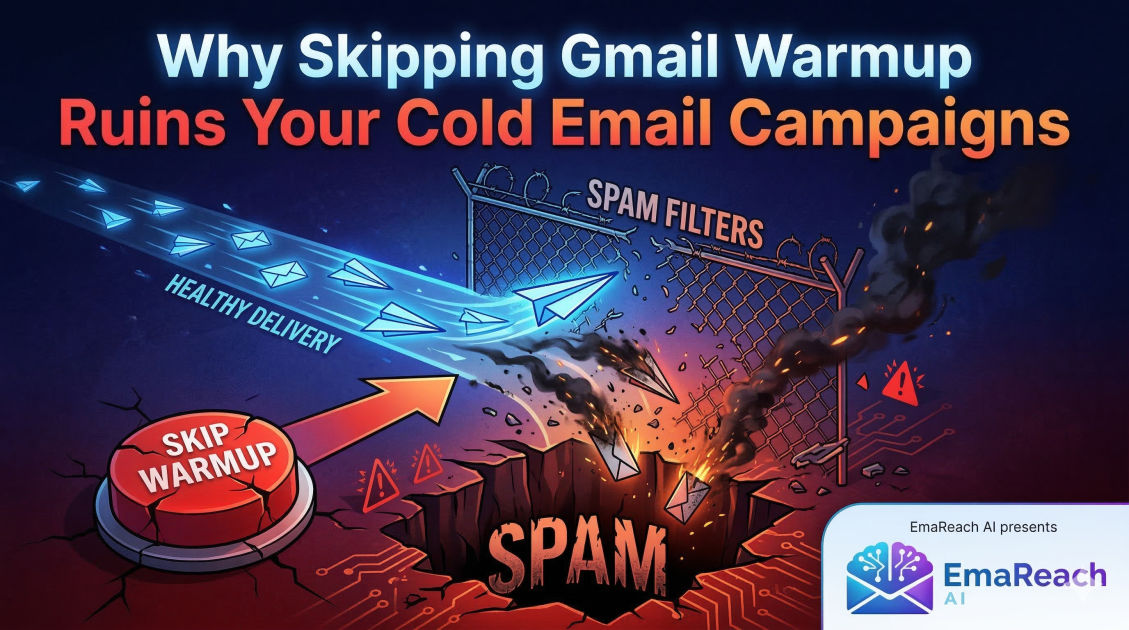
Why Skipping Gmail Warmup Ruins Your Cold Email Campaigns
cold emailgmail warmupemail deliverabilityoutreach strategysender reputationinbox placement
Introduction
In the world of digital outreach, there is a silent killer of ROI that most beginners—and even some seasoned pros—overlook: email deliverability. You could have the most persuasive copy, a perfectly curated lead list, and a revolutionary product, but if your emails are landing in the spam folder, your campaign is effectively invisible.
One of the most critical steps in ensuring your messages hit the primary inbox is the process of warming up your Gmail account. Skipping this phase is akin to sprinting a marathon without a warmup; you might start fast, but you will quickly crash. This article explores the mechanics of Gmail's filtering algorithms and why bypassing the warmup phase is the fastest way to ruin your cold email reputation.
Understanding the Gmail Algorithm
Gmail uses some of the most sophisticated machine learning algorithms in the world to protect its users from unsolicited mail. These filters aren't just looking for keywords like 'free' or 'win'; they are analyzing patterns of behavior.
When a new or inactive email account suddenly sends out hundreds of messages, it triggers a 'red flag' in Gmail’s system. To the algorithm, this looks exactly like a compromised account or a bot being used for spam. The result? Your emails are immediately throttled or diverted to the spam folder.
The Concept of Sender Reputation
Every email address and domain carries a 'sender reputation score.' This score is built over time based on your sending history. Factors that influence this include:
- Consistency: How regularly do you send emails?
- Volume: How many emails do you send daily?
- Engagement: Do people open, reply to, and mark your emails as 'not spam'?
- Bounce Rate: How many of your emails are sent to non-existent addresses?
Skipping the warmup means you are trying to operate at a high level without a reputation to back it up.
What Exactly is Gmail Warmup?
Email warmup is the process of gradually increasing the volume of emails sent from a new account to establish a positive reputation with Internet Service Providers (ISPs). It involves sending a small number of emails initially and slowly scaling up over several weeks.
Crucially, it isn't just about sending; it’s about engagement. A proper warmup involves receiving replies, having your emails moved from the 'Promotions' or 'Spam' tabs to the 'Primary' inbox, and having them marked as important. This tells Gmail that you are a real person engaging in legitimate conversations.
The Risks of Skipping the Warmup Phase
1. Instant Blacklisting
If you jump straight into sending 50 or 100 cold emails a day from a fresh Gmail account, you risk getting your domain blacklisted. Once you are on a blacklist (like Spamhaus or Barracuda), it is incredibly difficult to get off. Even your legitimate, one-on-one business emails will start failing to deliver.
2. High Bounce Rates and Throttling
Gmail monitors how many of your emails are rejected. If you send a large batch and many bounce because your reputation is low, Gmail will 'throttle' your account. This means they will intentionally delay the delivery of your emails, sometimes by hours or days, which kills the timing of your outreach.
3. Destruction of Domain Authority
If you are sending cold emails from a subdomain or your main company domain without a warmup, you are putting your entire company’s communication at risk. If your domain reputation drops, it affects everyone in your organization. This can lead to internal emails between colleagues or critical client updates being lost in spam filters.
How Cold Email Platforms Solve This
Managing a manual warmup is tedious and nearly impossible to scale. This is where specialized technology comes into play. For instance, EmaReach helps users avoid these pitfalls. EmaReach AI combines AI-written cold outreach with automated inbox warm-up and multi-account sending—ensuring your emails land in the primary tab and get replies. By automating the 'human' side of the warmup process, these tools build the necessary trust with Gmail before you ever hit 'send' on a major campaign.
The Anatomy of a Proper Warmup Schedule
A successful warmup usually takes between 14 to 30 days. Here is a general breakdown of how a safe ramp-up looks:
- Week 1: Send 5-10 emails per day. These should be to known addresses (like friends or your own secondary accounts) where you can guarantee a 100% reply rate.
- Week 2: Increase to 20-30 emails per day. Start engaging with automated warmup pools where other accounts interact with yours.
- Week 3: Move to 50 emails per day. Monitor your deliverability metrics closely. If you see open rates dropping, scale back.
- Week 4: Reach your target volume (e.g., 100 per day). By now, Gmail views your account as an established, trustworthy sender.
The Role of SPF, DKIM, and DMARC
You cannot talk about Gmail warmup without mentioning technical authentication. Skipping these steps is just as damaging as skipping the warmup itself.
- SPF (Sender Policy Framework): A list of IP addresses authorized to send mail on your domain’s behalf.
- DKIM (DomainKeys Identified Mail): A digital signature that proves the email wasn't tampered with in transit.
- DMARC (Domain-based Message Authentication, Reporting, and Conformance): A protocol that uses SPF and DKIM to tell the receiving server what to do if an email fails authentication.
Without these 'ID cards,' Gmail’s filters will treat your warmed-up account with suspicion regardless of your sending volume.
Why Quality Content Matters During Warmup
Many people make the mistake of sending 'test' or 'lorem ipsum' text during their warmup. This is a mistake. Modern AI filters are smart enough to recognize gibberish. If your warmup emails look like spam, they will be treated like spam.
Your warmup emails should look like natural business correspondence. They should have subject lines, greetings, and coherent bodies. This is why using AI-driven tools to generate realistic outreach content is so effective; it mimics the natural variance of human writing, which Gmail favors over repetitive templates.
Common Mistakes to Avoid
Using a Brand New Domain
If possible, buy your domain and let it 'age' for a few months before you even start the warmup. A domain that was registered yesterday is a major red flag for ISPs.
Inconsistent Sending Patterns
Sending 100 emails on Monday, 0 on Tuesday, and 200 on Wednesday is a sure way to get flagged. Gmail prefers steady, predictable growth. Automation is your best friend here to ensure a consistent cadence.
Ignoring the 'Spam' Folder
During your warmup, you must check if your emails are landing in spam. If they are, you must manually move them to the inbox. This 'rescue' action is one of the strongest positive signals you can send to Gmail’s algorithm.
Conclusion
Skipping Gmail warmup is the fastest way to ensure your cold email campaign fails before it even starts. In an era where privacy and anti-spam measures are at an all-time high, you cannot afford to take shortcuts. By investing the time to properly warm up your inbox, authenticating your domain, and using the right tools to maintain a steady reputation, you turn your email account into a powerful, high-deliverability asset. Remember, in cold outreach, getting seen is half the battle. Don't let your hard work disappear into the void of the spam folder.
EmaReach AI
Ready to scale your cold email outreach?
Join thousands of teams using EmaReach AI for AI-powered campaigns, domain warmup, and 95%+ deliverability. Start free — no credit card required.
Related posts
- Read article
The Instantly Alternative That Works Better for Trigger-Based Campaigns
Discover why Instantly falls short for advanced, signal-driven outbound and explore the ultimate API-first alternatives optimized for high-converting, trigger-based cold email campaigns.
- Read article
The Instantly Alternative That Handles High Bounce Rates Without Panic
Discover how transitioning to an advanced Instantly alternative can safeguard your cold email infrastructure. Learn to handle high bounce rates effortlessly using real-time verification, smart mailbox rotation, and automated safety nets to protect your sender reputation and maintain consistent primary inbox placement.