Blog
Back to blog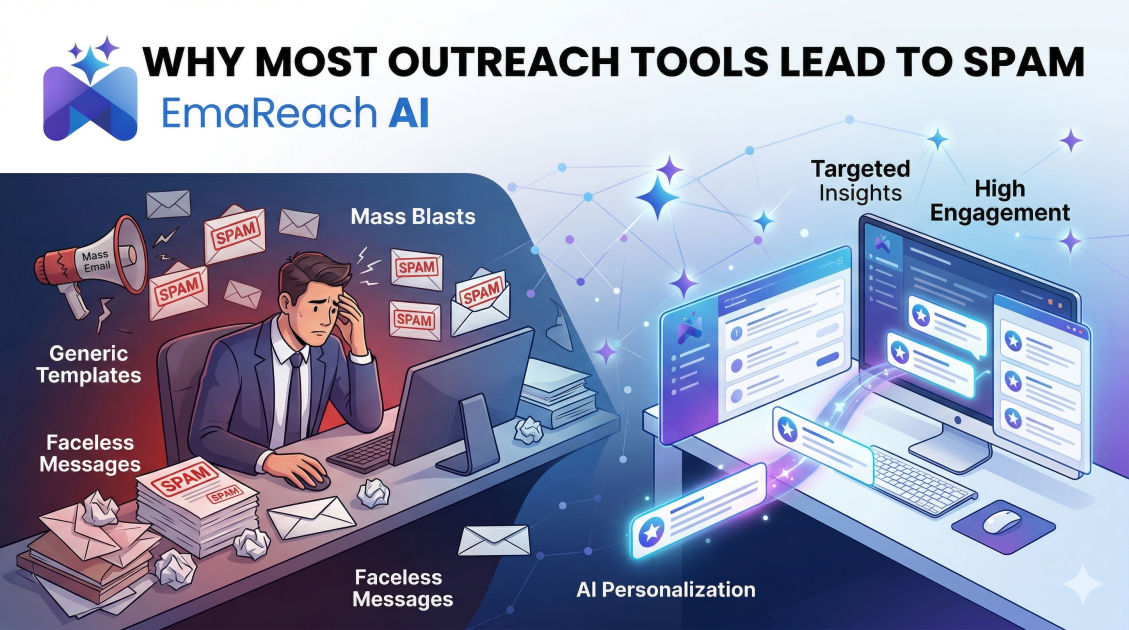
Why Most Outreach Tools Lead to Spam
cold emailemail deliverabilityoutreach strategyspam filterslead generationmarketing automationsales tips
Introduction
In the modern digital landscape, the promise of automation has transformed how businesses approach growth. Sales teams and marketers have flocked to a myriad of outreach tools, hoping to scale their efforts and reach hundreds, if not thousands, of potential leads with the click of a button. However, there is a growing irony in the industry: the very tools designed to facilitate connection are increasingly becoming the primary reason those connections fail. Instead of landing in the primary inbox, messages are being rerouted to the dreaded spam folder, or worse, resulting in the complete blacklisting of sender domains.
Understanding why most outreach tools lead to spam requires a deep dive into the mechanics of email deliverability, the evolution of spam filters, and the fundamental shift in how internet service providers (ISPs) evaluate sender reputation. This article explores the systemic failures of traditional outreach platforms and provides a roadmap for navigating the complexities of modern communication.
The Paradox of Scalability
The fundamental allure of outreach tools is scalability. Manual outreach is slow, tedious, and difficult to track. Automation promises to solve this by handling the heavy lifting. However, scalability is a double-edged sword. When a tool allows a single user to send 5,000 emails a day, it also enables that user to trigger every spam alarm in existence simultaneously.
Most legacy tools are built on a philosophy of volume. They prioritize the number of emails sent over the quality of the delivery. This volume-centric approach is outdated. Modern ISPs like Google and Microsoft have implemented sophisticated machine learning algorithms that look for patterns associated with mass mailing. When a tool blasts out identical or near-identical messages from a single IP address or domain in a short window, it creates a digital footprint that screams "automated spam."
The Technical Trap: Shared IP Reputations and Footprints
One of the most significant technical reasons outreach tools fail is the use of shared infrastructure. Many lower-tier or legacy tools send emails through shared IP addresses. If another user on that same IP address is sending low-quality content or buying questionable lead lists, the reputation of that IP drops. Consequently, your perfectly crafted email is penalized because of your neighbor's bad habits.
Furthermore, many tools leave a "footprint" in the metadata of the email. This could be a specific tracking pixel, a hidden line of code in the HTML, or a consistent redirect link used for click tracking. Spam filters are trained to recognize these footprints. If a specific tool’s tracking domain is flagged once, every single user of that tool using that same tracking domain finds their deliverability compromised.
The Content Crisis: Lack of True Personalization
Spam filters have evolved beyond just looking at technical headers; they now analyze the content of the message using Natural Language Processing (NLP). Most outreach tools offer "dynamic tags" like {{first_name}} or {{company_name}}. A decade ago, this was enough to pass as a personalized message. Today, it is the bare minimum.
When a tool sends 500 emails where only two words change, the underlying structure of the message remains constant. Filters recognize this repetitive structure. True personalization involves varying the intent, the sentence structure, and the value proposition for each recipient. Most tools are not equipped to do this, leading to a high "fingerprint" similarity across all outgoing mail.
Domain Health and the Absence of Warm-up
A critical oversight in many outreach strategies is the failure to properly "warm up" a sending domain. You cannot register a new domain on Monday and send 1,000 emails on Tuesday. This behavior is the hallmark of a temporary spam operation.
Reliable deliverability requires a gradual increase in volume and a high engagement rate (opens, replies, and moves from spam to inbox). Many basic tools lack automated warm-up features, leaving users to guess the safe limits. This is where specialized solutions become necessary. For those looking to solve this, you must Stop Landing in Spam. Cold Emails That Reach the Inbox. EmaReach AI combines AI-written cold outreach with inbox warm-up and multi-account sending—so your emails land in the primary tab and get replies. Without this level of sophistication, the "burn and turn" method of outreach will inevitably lead to domain death.
The Engagement Gap: Why Replies Matter More Than Opens
For years, open rates were the North Star of outreach metrics. However, tracking pixels (which measure opens) are increasingly unreliable due to privacy updates like Apple’s Mail Privacy Protection. More importantly, ISPs have shifted their focus to positive engagement signals.
Positive signals include:
- Replies: The strongest indicator that the email was wanted.
- Forwarding: Indicates high-value content.
- Marking as "Not Spam": Explicitly tells the ISP the filter made a mistake.
- Consistent Open Rates: Though harder to track, steady engagement over time builds trust.
Most outreach tools focus on the "send" but ignore the "receive." If your tool is helping you send emails but not helping you generate meaningful replies, it is effectively a spam engine. High bounce rates and high "Mark as Spam" reports from recipients provide immediate feedback to ISPs to block your future attempts.
The Danger of Poor List Hygiene
Outreach tools are only as good as the data fed into them. A major contributor to spam folder placement is a high bounce rate. If you upload a list where 15% of the emails are invalid, ISPs will immediately flag your account. Many tools do not include integrated, real-time email verification. They trust the user to provide clean data, which rarely happens.
Sending to a "honey pot" or a spam trap—email addresses specifically designed by ISPs to catch unauthorized bulk mailers—is the fastest way to get a permanent ban. Without rigorous cleaning and validation, tools simply accelerate your journey toward being blacklisted.
The Shift to Multi-Account Sending
A common mistake facilitated by standard outreach tools is sending too much volume from a single email account. Even with a perfectly warmed-up domain, there is a physical limit to how many emails a human can realistically send in a day. When an account exceeds this threshold (often around 50-100 high-quality emails), it triggers a manual review or an automatic throttle from providers like Outlook or Gmail.
Modern strategies require spreading the volume across multiple accounts and multiple domains. This mimics natural human behavior. If you need to send 500 emails, it is better to send 50 emails from 10 different accounts than 500 from one. Most basic tools make managing this complex infrastructure nearly impossible, leading users to take shortcuts that land them in spam.
How AI is Changing the Rules
We are entering an era where "templated" outreach is dead. The future belongs to generative AI that can write unique, context-aware messages for every single prospect. Standard tools that rely on a "Master Template" are falling behind because they cannot adapt to the recipient's specific digital presence or recent activities.
AI can analyze a prospect's LinkedIn profile, recent company news, and industry trends to craft a message that feels truly one-to-one. This level of relevance not only bypasses spam filters but also significantly increases the reply rate. When an ISP sees that your emails are actually getting responded to, your sender reputation skyrockets.
The Regulatory Environment
Laws such as GDPR in Europe and CCPA in California have tightened the rules around unsolicited communication. While cold B2B outreach remains legal under many of these frameworks (often under the umbrella of "Legitimate Interest"), the requirements for opting out and data handling are strict.
Many tools do not provide the necessary compliance features, such as easy-to-use unsubscribe links that actually work, or headers that identify the sender according to legal standards. Failing these regulatory checks can cause your emails to be filtered out by corporate firewalls before they even reach the ISP level.
Summary of Why Tools Fail
| Failure Point | Cause | Result |
|---|---|---|
| Infrastructure | Shared IPs and poor domain setup | Immediate block by ISPs |
| Volume | Blasting too many emails at once | Triggered rate limits and throttling |
| Content | Repetitive, low-value templates | Detection by NLP spam filters |
| Engagement | High bounce rates and zero replies | Permanent damage to sender reputation |
| Verification | Lack of list cleaning | Hitting spam traps and dead addresses |
Best Practices for Successful Outreach
To move away from the spam-heavy approach of most tools, a strategic shift is required.
- Focus on Quality over Quantity: Instead of 1,000 generic emails, send 100 highly researched ones.
- Use Dedicated Domains: Never send outreach from your primary corporate domain. Use "look-alike" domains (e.g., getcompany.com instead of company.com).
- Prioritize the Warm-up: Spend at least 3-4 weeks slowly building a domain's reputation before starting any serious campaign.
- Implement Technical Protocols: Ensure SPF, DKIM, and DMARC are correctly configured for every domain you use.
- Integrate Real AI: Move beyond simple variables. Use AI to vary the language and structure of every email.
Conclusion
The era of "spray and pray" is over. The reason most outreach tools lead to spam is that they were built for an internet that no longer exists—one where volume was king and filters were simple. Today, the gatekeepers are smarter, the recipients are more discerning, and the technical requirements for reaching the inbox are more stringent than ever.
Success in modern outreach requires a sophisticated blend of technical precision, human-like behavior, and genuine relevance. By understanding the pitfalls of shared infrastructure, repetitive content, and poor list hygiene, businesses can rebuild their sender reputation. Moving forward, the only way to scale effectively is to use systems that prioritize deliverability and engagement over raw volume. If your current tool treats email like a numbers game, you aren't just losing prospects—you're destroying your digital identity.
EmaReach AI
Ready to scale your cold email outreach?
Join thousands of teams using EmaReach AI for AI-powered campaigns, domain warmup, and 95%+ deliverability. Start free — no credit card required.
Related posts
- Read article
The Instantly Alternative That Finally Gets Outbound Analytics Right
Discover why high-volume cold email requires a shift from surface-level vanity metrics to deep, data-driven revenue attribution, and explore the ultimate alternatives for mastering outbound engineering.
- Read article
What You Gain and What You Give Up When Switching From Instantly
Thinking about migrating your cold email stack? This detailed guide breaks down the exact operational advantages you gain and the core features you sacrifice when switching away from Instantly's popular outreach platform.