Blog
Back to blog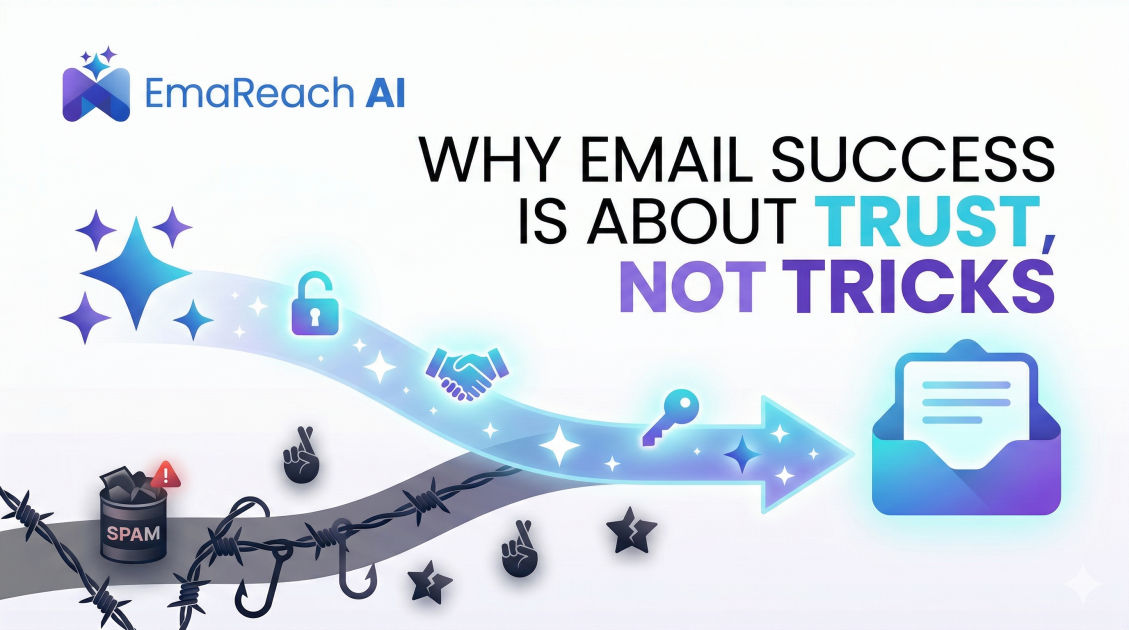
Why Email Success is About Trust, Not Tricks
email marketingcold outreachdeliverabilitydigital trustlead generationemail strategy
Introduction: The Shift from Manipulation to Meaning
For decades, the world of digital marketing has been obsessed with "hacks." From clickbait subject lines to hidden tracking pixels and aggressive urgency tactics, the goal was often to trick the recipient into opening an email by any means necessary. But as the digital landscape matures, these short-term tactics are failing. Inbox providers have become smarter, users have become more skeptical, and the sheer volume of noise has made authenticity the only viable path forward.
True email success is no longer about how well you can game an algorithm or bypass a spam filter using technical wizardry. It is fundamentally about trust. When a recipient sees your name in their inbox, their decision to click depends on the relationship you have built with them. This article explores why the era of the "email trick" is over and how focusing on trust-based communication leads to sustainable growth, higher deliverability, and genuine business outcomes.
The Psychology of the Inbox
The inbox is a personal, high-stakes environment. Unlike a social media feed where content is consumed passively, the inbox represents a list of obligations, opportunities, and personal connections. When a brand enters this space, it is essentially asking for a slice of the recipient's most valuable resource: their time.
The Erosion of Attention
Every time a marketer uses a "trick"—such as a fake "Re:" in the subject line or a false sense of expiring scarcity—they chip away at the user's patience. Psychological reactance occurs when individuals feel their freedom of choice is being threatened or they are being manipulated. If a user feels tricked into opening an email, their immediate reaction is annoyance, not curiosity. This negative emotional anchor makes it significantly harder to convert that user later in the funnel.
The Cognitive Load of Skepticism
In an age of rampant phishing and data breaches, users are on high alert. Trust is the lubricant that reduces the friction of decision-making. If a recipient trusts the sender, they spend less mental energy questioning the motives behind the message. Conversely, if the sender uses deceptive tactics, the recipient’s "defense mode" remains active, making them far more likely to hit the 'Report Spam' button as a protective measure.
Why Technical "Tricks" Are a Dead End
In the early days of email marketing, you could bypass filters by using white text on a white background or by slightly misspelling words to avoid keyword triggers. Today, those tactics are a one-way ticket to the junk folder.
The Rise of Behavioral Deliverability
Modern Mail Transfer Agents (MTAs) like Gmail, Outlook, and iCloud use sophisticated machine learning to determine where an email lands. They no longer look just at the content of a single message; they look at the historical behavior of your recipients.
- Do people open your emails?
- Do they reply to them?
- Do they move them from 'Promotions' to 'Primary'?
- Do they mark them as 'Not Spam'?
Tricks might get you a one-time open, but they rarely result in the positive engagement signals that inbox providers crave. If you trick someone into opening an email and they immediately delete it or mark it as spam, you are signaling to Google and Microsoft that your content is low quality. Over time, your sender reputation will plummet, and even your legitimate emails will stop reaching the inbox.
The Solution for Modern Outreach
If you are serious about cold outreach, you cannot rely on gimmicks. You need a system that prioritizes technical health and human relevance. This is where EmaReach becomes essential. Stop Landing in Spam. Cold Emails That Reach the Inbox. EmaReach AI combines AI-written cold outreach with inbox warm-up and multi-account sending—so your emails land in the primary tab and get replies. By automating the trust-building technical aspects—like warm-up and deliverability management—you can focus on the human side of the equation.
Building Trust Through Relevance and Personalization
Personalization is often mistaken for a trick. Inserting a {First_Name} tag is a basic technical function, but true personalization is a trust-building exercise. It shows the recipient that you have done your homework and that you value their specific context.
Moving Beyond Surface-Level Data
Trust is built when the recipient thinks, "This person understands my problem." To achieve this, your emails must move beyond basic variables. High-level trust is established through:
- Segmented Insights: Sending content tailored to a specific industry or job role.
- Referencing Recent Wins: Mentioning a specific achievement or news piece related to the recipient’s company.
- Problem Identification: Articulating a pain point that the recipient is actually experiencing, rather than a generic sales pitch.
The Value Exchange
Every email should offer more value than it asks for in return. This is the "Jab, Jab, Jab, Right Hook" philosophy applied to the inbox. If your first three emails provide insights, resources, or genuine help without asking for a meeting, the fourth email—the one with the ask—is met with a much higher degree of trust. You have proven yourself to be a resource rather than a solicitor.
The Architecture of a Trust-Based Email
To move away from tricks, we must examine the anatomy of the email itself. Every element should reinforce credibility.
The Subject Line: Clarity Over Curiosity
Curiosity-gap subject lines (e.g., "You won't believe this...") are the hallmarks of clickbait. While they might boast high open rates, they often suffer from abysmal conversion rates. Trust-based subject lines are clear and honest. They tell the recipient exactly what is inside.
- Trick: "Quick question regarding your inheritance"
- Trust: "A suggestion for [Company Name]'s Q3 content strategy"
The Body: Transparency and Conciseness
Once the email is opened, the clock is ticking. A trust-based email gets to the point quickly. It explains who you are, why you are reaching out, and what the benefit is for them. Avoid using "marketing speak" or overly floral language. Plain text emails often outperform heavily designed HTML templates in B2B contexts because they feel like a personal note from one human to another, rather than a broadcast from a corporate machine.
The Call to Action (CTA): Low Friction, High Respect
Tricky CTAs try to corner the recipient (e.g., "Are you free at 2:00 PM on Tuesday for a 15-minute call?"). While specific, this can feel aggressive. A trust-based CTA offers an out. It might look like: "If this isn't a priority right now, I completely understand. Would you be open to a brief chat sometime next month?" By respecting the recipient's time and autonomy, you actually increase the likelihood of a positive response.
The Role of Consistency in Reputation
Trust isn't built in a single transaction; it is built over time. This applies to both your human brand and your technical sender reputation.
Frequency and Reliability
If you disappear for six months and then suddenly blast your list with five emails in a week, you aren't being reliable. You are being erratic. A consistent schedule helps subscribers know when to expect you. It also helps inbox providers understand your sending patterns, which stabilizes your deliverability.
Managing the Feedback Loop
Trust also involves listening. If people are unsubscribing, pay attention to why. If your bounce rate is high, it means your list hygiene is poor. Trusting brands keep their lists clean, removing unengaged subscribers even if it means their total subscriber count goes down. A smaller, highly engaged list is infinitely more valuable—and more trusted by ISPs—than a massive, dormant one.
Leveraging Technology to Scale Trust
One of the biggest challenges in modern marketing is maintaining a human touch at scale. How do you build trust with 1,000 prospects without spending 40 hours a week on manual research? This is where AI and automation come in—not as a way to trick people, but as a way to facilitate deeper relevance.
With tools like EmaReach, you can ensure that your infrastructure is as reliable as your message. By utilizing multi-account sending, you avoid the "spammy" behavior of blasting thousands of emails from a single domain, which is a common red flag for filters. Instead, you mimic natural, human-like sending patterns. Stop Landing in Spam. Cold Emails That Reach the Inbox. EmaReach AI empowers you to scale the trust-building process by ensuring your well-crafted, relevant messages actually find their way to the person they were intended for.
Transparency: The Ultimate Trust-Builder
If you make a mistake, own it. We have all seen the "Oops!" email follow-up when a link is broken or the wrong merge tag is used. Interestingly, these emails often see some of the highest engagement rates. Why? Because they prove there is a human behind the screen.
Transparency also extends to how you handled the recipient's data. Being clear about how you found their information and providing an easy, one-click unsubscribe link isn't just a legal requirement (like GDPR or CAN-SPAM); it’s a sign of respect. When you make it easy for people to leave, they feel more comfortable staying.
Measuring Success: Beyond the Open Rate
If you want to focus on trust, you have to change your KPIs. Open rates are a vanity metric that can be easily manipulated by tricks. To measure trust, look at:
- Reply Rate: This is the ultimate signal of trust. It means the recipient felt compelled to engage in a two-way conversation.
- Forward Rate: When someone forwards your email to a colleague, they are putting their own reputation on the line to vouch for your content.
- Conversion Quality: Are the leads coming from your emails actually the right fit for your business? High-trust outreach attracts high-quality clients.
- Sender Reputation Scores: Monitor tools like Google Postmaster Tools to see how the major providers perceive your domain.
Conclusion: The Long Game Wins
In the short term, tricks might give you a spike in numbers. A sensationalized subject line might get you a 40% open rate today, but it will lead to a 0% trust rating tomorrow. In the long game of business, trust is the only currency that matters.
Building an email strategy centered on trust requires more effort. It requires better research, more thoughtful writing, and a commitment to technical excellence. It means choosing tools and strategies that prioritize the recipient's experience over the sender's ego.
By focusing on relevance, transparency, and consistent value, you move away from being a "sender" and become a "partner." And in a crowded, noisy digital world, a partner is the only person anyone wants to hear from. Invest in the relationship, protect your reputation, and remember that the best way to get into the inbox is to deserve to be there.
EmaReach AI
Ready to scale your cold email outreach?
Join thousands of teams using EmaReach AI for AI-powered campaigns, domain warmup, and 95%+ deliverability. Start free — no credit card required.
Related posts
- Read article
The Instantly Alternative That Finally Gets Outbound Analytics Right
Discover why high-volume cold email requires a shift from surface-level vanity metrics to deep, data-driven revenue attribution, and explore the ultimate alternatives for mastering outbound engineering.
- Read article
What You Gain and What You Give Up When Switching From Instantly
Thinking about migrating your cold email stack? This detailed guide breaks down the exact operational advantages you gain and the core features you sacrifice when switching away from Instantly's popular outreach platform.