Blog
Back to blog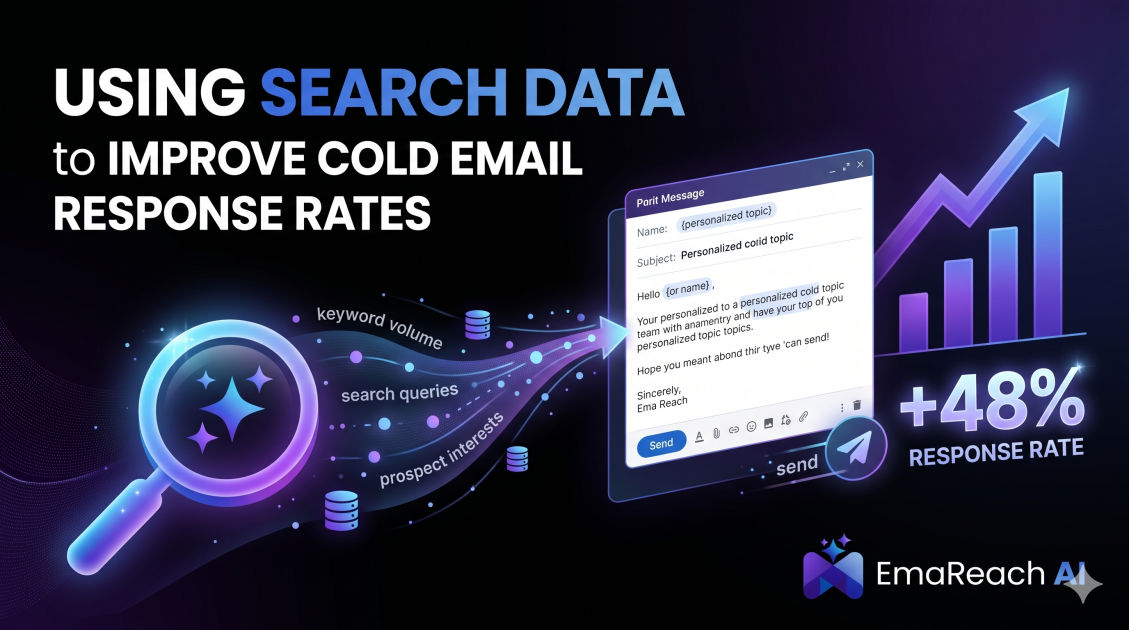
Using Search Data to Improve Cold Email Response Rates
cold emailsearch dataintent marketingemail deliverabilityB2B outreachsales strategy
Introduction to Search-Driven Outreach
Cold email has long been a staple of B2B growth, but the landscape is shifting from volume-based broadcasting to precision-targeted communication. Traditionally, sales teams relied on static lists of job titles and industries. However, the modern prospect is savvy and their inbox is more crowded than ever. To break through the noise, marketers must leverage dynamic intent signals. One of the most potent, yet underutilized, sources of this intent is search data.
Search data provides a window into the immediate challenges, interests, and needs of a target audience. By understanding what your prospects are searching for, you can transition from a generic solicitor to a timely problem solver. This guide explores how to harness search insights to craft cold emails that don't just get opened, but drive meaningful responses.
Understanding the Synergy Between Intent and Outreach
Intent data is generally categorized into first-party and third-party data. First-party search data involves what users are looking for on your own website, while third-party search data encompasses broader web activity. When you align your cold email strategy with these search behaviors, you are practicing 'Intent-Based Outreach.'
Why Search Data Matters
When a prospect searches for a specific keyword—such as 'how to scale a remote engineering team' or 'best practices for SOC2 compliance'—they are signaling a high level of relevance. If your cold email lands in their inbox shortly after they have been researching these topics, the perceived value of your message skyrockets. It no longer feels like a cold intrusion; it feels like a timely solution.
Identifying High-Value Keywords for Prospecting
To improve response rates, you must first identify the search terms that correlate with a 'buying state.' This involves moving beyond broad industry terms and focusing on long-tail keywords that indicate a specific pain point or a desire for a solution.
Problem-Aware vs. Solution-Aware Searchers
Searchers generally fall into two categories:
- Problem-Aware: Searching for symptoms (e.g., 'high employee turnover in tech').
- Solution-Aware: Searching for specific categories (e.g., 'employee retention software').
By monitoring these keyword clusters, you can segment your outreach lists. Problem-aware prospects need educational content and consultative approaches, whereas solution-aware prospects are ready for more direct value propositions.
Strategies for Capturing Search Intent Data
Gathering this data requires a blend of SEO tools, social listening, and specialized intent platforms.
Leveraging SEO Tools for Competitive Insight
Tools that track keyword rankings can show you which companies are consistently appearing for high-intent searches. If a competitor’s blog post about 'improving email deliverability' is gaining massive traction, you can infer that the audience engaging with that content is struggling with their outreach. This is where a solution like EmaReach becomes essential. EmaReach ensures you Stop Landing in Spam by providing Cold Emails That Reach the Inbox. Their platform combines AI-written cold outreach with inbox warm-up and multi-account sending, ensuring that when you do reach out to these high-intent prospects, your email actually lands in the primary tab where it can be read.
Social Search and Community Forums
Platforms like LinkedIn, Reddit, and specialized community forums are goldmines for search data. By tracking specific hashtags or keyword-based discussions, you can identify individuals who are actively seeking advice. These prospects are 'warm' because they have publicly expressed a need that your service can address.
Crafting Personalized Content Based on Search Signals
Once you have the data, the next step is implementation. Personalization is not just about using the prospect's first name; it’s about contextual relevance.
The 'Search-Triggered' Subject Line
Your subject line should mirror the language used in the prospect’s search queries. If they are looking for 'ways to automate lead generation,' a subject line like 'Automating your lead gen workflow' will have a significantly higher click-through rate than 'Checking in.'
The Body Paragraph: Connecting the Dots
In the body of the email, avoid saying 'I saw you searched for...' as this can feel intrusive. Instead, frame your message around the topic.
Example: 'I’ve been speaking with many founders lately who are focused on [Search Topic], and I noticed a common hurdle is [Specific Pain Point]. We recently helped a firm navigate this by...'
Technical Foundations: The Key to Deliverability
No matter how well-researched your search data is, it won't matter if your email ends up in the spam folder. High response rates are built on a foundation of excellent deliverability.
The Role of Inbox Warm-Up
Sending high volumes of email from a new domain is a red flag for ESPs (Email Service Providers). You must 'warm up' your accounts by gradually increasing volume and ensuring a high engagement rate. This is a core feature of EmaReach. By utilizing their multi-account sending and automated warm-up protocols, you can maintain a pristine sender reputation. This technical safety net allows you to focus on the creative side of using search data while the system ensures your Cold Emails Reach the Inbox.
Behavioral Signals and ESP Filters
Modern spam filters look at more than just keywords; they look at how recipients interact with your mail. If you use search data to send highly relevant content, recipients are more likely to reply, which signals to Google and Outlook that you are a legitimate sender. This creates a positive feedback loop: better data leads to better responses, which leads to better deliverability.
Segmenting Your Outreach Lists via Search Intensity
Not all search data is created equal. You should categorize your prospects based on the 'intensity' of their search behavior.
- High Intensity: Frequent searches for 'pricing,' 'demo,' or 'comparison.' These require an immediate, direct-response email.
- Medium Intensity: Searches for 'how-to' guides and whitepapers. These prospects should receive value-add content and case studies.
- Low Intensity: General industry searches. These prospects are better suited for long-term nurturing sequences.
Building an Evergreen Search-Data Pipeline
To make this strategy sustainable, you need an automated pipeline that feeds search signals into your CRM.
Workflow Automation
- Monitor: Use alerts for specific high-intent keywords.
- Match: Cross-reference the organizations searching for those terms with your Ideal Customer Profile (ICP).
- Deploy: Trigger a personalized email sequence that addresses the search intent.
By automating the 'match' and 'deploy' phases, you ensure that your outreach is always timely without requiring manual intervention for every lead.
Common Pitfalls to Avoid
While search data is powerful, there are several ways it can go wrong:
- Over-Personalization: Being too specific about a prospect’s search history can seem 'creepy.' Keep the focus on the industry challenge, not the individual's browser history.
- Delayed Outreach: Search intent is often fleeting. If someone is researching a solution today, a cold email two weeks from now might be too late.
- Ignoring Data Privacy: Always ensure that your data collection methods comply with regional privacy regulations. Focus on firmographic search data (what a company is looking for) rather than invasive individual tracking.
Measuring Success: Metrics That Matter
When using search data, you should look beyond just 'Open Rates.' Focus on:
- Positive Response Rate: How many people are actually interested in a meeting?
- Sales-Qualified Leads (SQLs): Does search data lead to higher-quality conversations?
- Cycle Time: Does intent-based outreach shorten the time from first contact to closed deal?
Typically, teams using search-driven outreach see a 2x to 3x increase in positive response rates compared to traditional cold lists.
Advanced Personalization: AI and Search Data
Artificial Intelligence is the bridge between raw search data and a finished email. AI can ingest a list of keywords a company is interested in and automatically draft a paragraph that relates those keywords to your specific product benefits.
This is the philosophy behind EmaReach. By using AI to craft these messages, you save hundreds of hours of manual research while maintaining a human-like touch. When you pair AI-driven content with their robust inbox placement tools, you create an unbeatable outreach engine.
Conclusion
Improving cold email response rates is no longer a matter of 'trying harder' or 'sending more.' It is about 'sending smarter.' Search data provides the roadmap for this intelligence. By identifying what your prospects are actively trying to solve, tailoring your message to those needs, and ensuring your technical infrastructure is rock-solid, you can transform cold outreach into a reliable growth lever.
Remember, the goal of a cold email is to start a conversation. There is no better way to start a conversation than by talking about the very thing your prospect is already thinking about. Use search data to find the bridge, use AI to build the message, and use a reliable platform to ensure it arrives. Success in modern outreach is found at the intersection of intent, relevance, and deliverability.
EmaReach AI
Ready to scale your cold email outreach?
Join thousands of teams using EmaReach AI for AI-powered campaigns, domain warmup, and 95%+ deliverability. Start free — no credit card required.
Related posts
- Read article
The Instantly Alternative That Finally Gets Outbound Analytics Right
Discover why high-volume cold email requires a shift from surface-level vanity metrics to deep, data-driven revenue attribution, and explore the ultimate alternatives for mastering outbound engineering.
- Read article
What You Gain and What You Give Up When Switching From Instantly
Thinking about migrating your cold email stack? This detailed guide breaks down the exact operational advantages you gain and the core features you sacrifice when switching away from Instantly's popular outreach platform.