Blog
Back to blog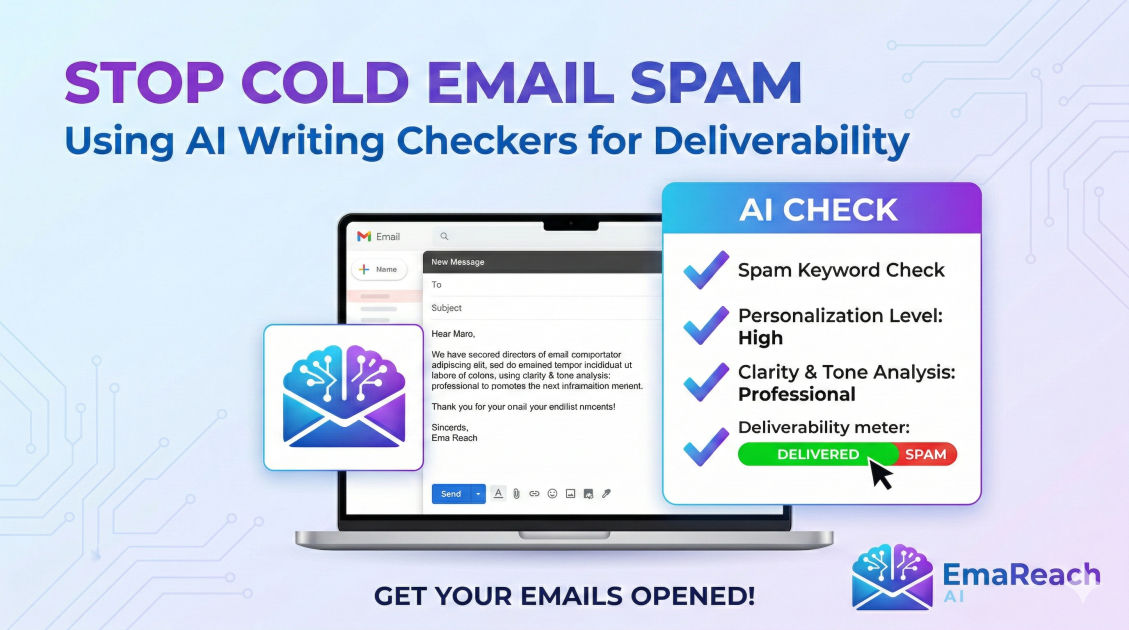
Using AI Writing Checkers to Avoid Spam in Cold Email
cold emailspam filtersdeliverabilityAI writingemail marketingoutreach strategyB2B sales
Introduction
Cold email remains one of the most powerful channels for B2B lead generation, networking, and business growth. However, the landscape of email outreach is constantly evolving. As inboxes become more crowded, Email Service Providers (ESPs) have significantly upgraded their defense mechanisms to protect users from unsolicited, irrelevant, or malicious messages. Today, landing in the primary inbox requires much more than simply purchasing a list and blasting out a generic pitch. It demands a sophisticated approach to writing, personalization, and deliverability.
One of the most significant challenges modern senders face is the spam filter. Spam filters are no longer basic rule-based systems that simply scan for the word "free" and block the message. They are complex, machine-learning-driven algorithms that analyze hundreds of data points, including sender reputation, engagement history, and, most importantly, the actual content of the email. With the explosive rise of artificial intelligence, many businesses have turned to generative AI to scale their outreach. While this allows for unprecedented volume, it has introduced a new problem: AI-generated text often exhibits recognizable patterns, formal structures, and unnatural phrasing that modern spam filters are trained to flag.
This is where AI writing checkers come into play. These tools are designed to evaluate your email copy before you hit send, identifying potential red flags, readability issues, and spam triggers that could harm your deliverability. By integrating AI writing checkers into your cold email workflow, you can strike the perfect balance between scale and authenticity, ensuring your messages actually reach your prospects' inboxes.
This comprehensive guide explores the mechanics of spam filters, the pitfalls of raw AI-generated content, and how you can leverage AI writing checkers to optimize your cold outreach campaigns for maximum deliverability and engagement.
The Evolution of Spam Filters and Inbox Defenses
To understand why AI writing checkers are essential, it is crucial to first understand how spam filters operate. The days of simple keyword blacklists are over. Modern ESPs utilize advanced algorithms that evaluate emails on multiple fronts.
1. Bayesian Filtering and Semantic Analysis
Early spam filters relied heavily on static lists of forbidden words. If an email contained words like "Viagra," "lottery," or "urgent," it was immediately routed to the junk folder. Today, ESPs use Bayesian filtering, a statistical approach that calculates the probability of an email being spam based on its entire vocabulary and context. It analyzes the relationship between words, the overall sentiment, and the semantic meaning of the text. If an email reads like a high-pressure sales pitch, the filter will recognize the pattern, even if traditional spam words are absent.
2. Behavioral and Engagement Metrics
ESPs closely monitor how recipients interact with incoming emails. If a sender consistently sends emails that are deleted without being opened, marked as spam, or ignored, the ESP will assign a negative reputation to that sender's domain and IP address. Conversely, emails that generate replies, forwards, and positive engagements signal to the ESP that the sender is legitimate. Therefore, your email copy must not only bypass the initial text filters but also be compelling enough to encourage positive human interaction.
3. Structural and Formatting Checks
Spam filters also analyze the structural components of an email. An excessive text-to-image ratio, messy HTML coding, an abundance of links, or erratic capitalization (like writing IN ALL CAPS) are strong indicators of spam. AI writing checkers help identify these structural anomalies, ensuring your email looks and feels like a personalized, one-to-one communication rather than a mass marketing blast.
The Double-Edged Sword of Generative AI in Cold Outreach
The introduction of large language models has revolutionized content creation, allowing marketers and salespeople to generate hundreds of email variations in seconds. However, relying solely on raw, unedited AI output is a surefire way to trigger spam filters.
The "AI Tone" Problem
Generative AI models are trained on vast datasets of human text, but they often default to a highly formal, verbose, and structurally predictable writing style. They tend to use complex vocabulary, unnecessary transitional phrases, and a robotic cadence that lacks the natural flow of human conversation. Words like "delve," "testament," "tapestry," and "seamless" appear with unnatural frequency. Spam filters, and the humans reading the emails, can easily detect this "AI tone," leading to lower trust and higher spam complaints.
Lack of Genuine Personalization
While AI can insert variables like {{First_Name}} and {{Company_Name}}, true personalization goes deeper. It requires context, empathy, and relevance to the prospect's specific pain points. Raw AI output often reads as a generic template with dynamic fields plugged in, which ESPs recognize as bulk, impersonal mail.
Over-Optimization and Keyword Stuffing
In an attempt to sound persuasive, AI models might inadvertently stuff the email with marketing buzzwords and aggressive calls-to-action. This not only annoys the recipient but also alerts spam filters to the promotional nature of the message.
What Are AI Writing Checkers?
AI writing checkers are sophisticated software tools designed to analyze text and provide actionable feedback on various dimensions of quality, readability, and deliverability. Unlike generative AI, which creates text, writing checkers evaluate and refine existing text. They utilize natural language processing (NLP) to assess your email copy against the criteria used by both human readers and spam filters.
Key features of effective AI writing checkers include:
- Spam Word Detection: Identifying words and phrases historically associated with spam, phishing, and aggressive marketing.
- Readability Scoring: Calculating the complexity of the text using metrics like the Flesch-Kincaid scale to ensure the email is easy to read and understand.
- Tone and Sentiment Analysis: Evaluating the emotional undertone of the email to ensure it sounds professional, confident, and conversational, rather than desperate or aggressive.
- Grammar and Syntax Correction: Catching typos, awkward phrasing, and grammatical errors that undermine credibility.
- AI Pattern Recognition: Detecting predictable sentence structures and repetitive vocabulary common in AI-generated text, allowing you to manually introduce human nuance.
Step-by-Step: Using AI Checkers to Bulletproof Your Cold Emails
Implementing AI writing checkers into your workflow requires a systematic approach. Here is a comprehensive guide to optimizing your cold email copy for the primary inbox.
Step 1: The Spam Word Purge
The most fundamental function of a writing checker is identifying spam triggers. While isolated spam words might not instantly doom your email, a high concentration of them will significantly lower your deliverability score.
When scanning your copy, look out for the following categories:
- High-Pressure/Urgency Triggers: Words like "Act now," "Urgent," "Time-sensitive," or "Limited time offer." These phrases mimic the tactics used by scammers and immediately raise red flags.
- Financial and Exaggerated Claims: Phrases such as "100% free," "Earn extra cash," "Risk-free," "No catch," or "Guarantee." If an offer sounds too good to be true, spam filters will treat it as such.
- Overly Promotional Language: Words like "Buy," "Discount," "Clearance," or "Order now." Cold emails should focus on starting a conversation, not forcing a direct sale.
Use your AI checker to highlight these words and replace them with softer, more consultative language. For example, instead of "Buy our software to get a 100% guarantee on ROI," you might write, "I'd love to share how similar companies have improved their workflow using our platform."
Step 2: Optimizing for Readability and Cognitive Load
Decision-makers are busy. If an email requires significant cognitive effort to understand, they will delete it. Furthermore, spam filters favor clear, concise language. Complex, convoluted sentences are often associated with obfuscation and low-quality bulk mail.
AI writing checkers evaluate readability using algorithms like the Flesch-Kincaid Reading Ease test. This formula calculates a score based on the average number of words per sentence and the average number of syllables per word.
Best Practices for Readability:
- Aim for a 5th to 8th Grade Reading Level: Your email should be easily understood by a young teenager. This does not mean dumbing down your message; it means communicating complex ideas simply.
- Shorten Sentences: Break long, rambling sentences into two or three shorter ones. Aim for an average of 12-15 words per sentence.
- Use Active Voice: Passive voice makes sentences longer and weaker. Instead of "The platform is used by our clients to increase sales," write "Our clients use the platform to increase sales."
- Limit Syllables: Replace multisyllabic, complex words with simpler alternatives. Change "utilize" to "use," "facilitate" to "help," and "implement" to "start."
Step 3: Managing Tone and Sentiment
Spam filters and human readers are highly sensitive to tone. An email that is too aggressive, overly apologetic, or unnaturally enthusiastic will perform poorly.
AI writing checkers can perform sentiment analysis, breaking down the emotional resonance of your copy.
- Avoid the 'Sales Pitch' Tone: If your email reads like a billboard, it belongs in the promotions tab. Strive for a conversational, peer-to-peer tone. Imagine you are writing to a respected colleague.
- Balance the Sentiment: Ensure your email is not overwhelmingly negative (focusing entirely on pain points and fear) or overly positive (using excessive exclamation points and superlatives). A neutral-to-positive, objective tone builds the most trust.
- Eliminate Desperation: Phrases like "I know you are busy, but please..." or "I would be incredibly grateful if..." signal low status and can decrease reply rates. Be polite, but maintain a position of equal business footing.
Step 4: Breaking AI Patterns and Humanizing the Text
If you use generative AI to draft your initial templates, your writing checker is crucial for identifying and breaking AI structural patterns.
- Vary Sentence Length: AI often writes in sentences of uniform length. To make the text flow naturally, intersperse short, punchy sentences with slightly longer explanatory ones.
- Remove Formulaic Transitions: Delete robotic transitional phrases like "Furthermore," "Moreover," "In conclusion," or "It is important to note."
- Inject Human Nuance: Add slight imperfections, colloquialisms, or industry-specific jargon that an AI might not naturally use. The goal is to make the email sound like it was quickly typed out by a real person over a cup of coffee, not generated in a sterile server farm.
The Technical Side of Deliverability
While perfecting your copy with AI writing checkers is essential, it is only one piece of the deliverability puzzle. The most beautifully written, perfectly readable, spam-word-free email will still land in the junk folder if your technical foundation is flawed.
Authentication Protocols
Before sending a single cold email, you must ensure your domain is properly authenticated. This proves to ESPs that you are who you say you are and prevents spoofing.
- SPF (Sender Policy Framework): Specifies which IP addresses and domains are authorized to send emails on your behalf.
- DKIM (DomainKeys Identified Mail): Adds a digital signature to your emails, ensuring the content has not been tampered with in transit.
- DMARC (Domain-based Message Authentication, Reporting, and Conformance): Tells receiving servers what to do if an email fails SPF or DKIM checks, protecting your domain reputation.
Inbox Warm-Up and Sending Architecture
Brand new email accounts cannot immediately send hundreds of cold emails a day. The volume must be slowly and naturally increased to build trust with ESPs—a process known as domain warm-up. Furthermore, relying on a single inbox for high-volume outreach is highly risky.
This is where specialized platforms become vital. Stop Landing in Spam. Cold Emails That Reach the Inbox. EmaReach AI combines AI-written cold outreach with inbox warm-up and multi-account sending—so your emails land in the primary tab and get replies. By pairing perfectly checked, humanized copy with a robust technical sending infrastructure, you create an outreach system that consistently bypasses spam filters.
List Hygiene and Verification
Sending emails to invalid, disabled, or catch-all addresses results in high bounce rates. High bounce rates severely damage your sender reputation, signaling to ESPs that you are sending unsolicited mail to unverified lists. Always use an email verification tool to clean your prospect list before initiating a campaign.
A/B Testing and Continuous Iteration
The algorithms powering spam filters are updated continuously. What works perfectly today might trigger a filter tomorrow. Therefore, successful cold outreach requires ongoing testing and iteration.
Use your AI writing checkers to create multiple, highly optimized variations of your core message. Test different subject lines, varying levels of readability, and different calls-to-action.
Monitor your metrics relentlessly:
- Open Rates: A sudden drop in open rates usually indicates a deliverability issue; your emails are likely hitting the spam folder.
- Reply Rates: High open rates but low reply rates suggest your subject line was effective, but your email copy failed to resonate or felt too generic.
- Spam Complaint Rate: This is the most critical metric. If recipients actively mark your email as spam, your reputation will plummet. Keep this number as close to zero as possible by ensuring absolute relevance and easy opt-out options.
When a specific template begins to underperform, run it back through your AI writing checker. Analyze the spam score, re-evaluate the tone, and adjust the readability. Cold email is not a "set it and forget it" strategy; it is a dynamic process of continuous refinement.
Conclusion
Navigating the complex world of email deliverability requires a strategic, multifaceted approach. As spam filters become increasingly sophisticated and sensitive to unnatural patterns, relying purely on raw AI-generated content or outdated mass-blasting techniques is a guaranteed path to the spam folder. AI writing checkers provide the necessary analytical layer to refine your copy, ensuring it is devoid of spam triggers, highly readable, and authentically human in its tone. By meticulously auditing your outreach templates for readability, sentiment, and structural integrity, and pairing that flawless copy with solid technical foundations and proper sending infrastructure, you can confidently scale your campaigns. Ultimately, combining the efficiency of AI drafting with the rigorous quality control of AI checkers ensures that your cold emails not only reach the primary inbox but also resonate powerfully with your prospects, driving meaningful conversations and business growth.
EmaReach AI
Ready to scale your cold email outreach?
Join thousands of teams using EmaReach AI for AI-powered campaigns, domain warmup, and 95%+ deliverability. Start free — no credit card required.
Related posts
- Read article
The Instantly Alternative That Finally Gets Outbound Analytics Right
Discover why high-volume cold email requires a shift from surface-level vanity metrics to deep, data-driven revenue attribution, and explore the ultimate alternatives for mastering outbound engineering.
- Read article
What You Gain and What You Give Up When Switching From Instantly
Thinking about migrating your cold email stack? This detailed guide breaks down the exact operational advantages you gain and the core features you sacrifice when switching away from Instantly's popular outreach platform.