Blog
Back to blog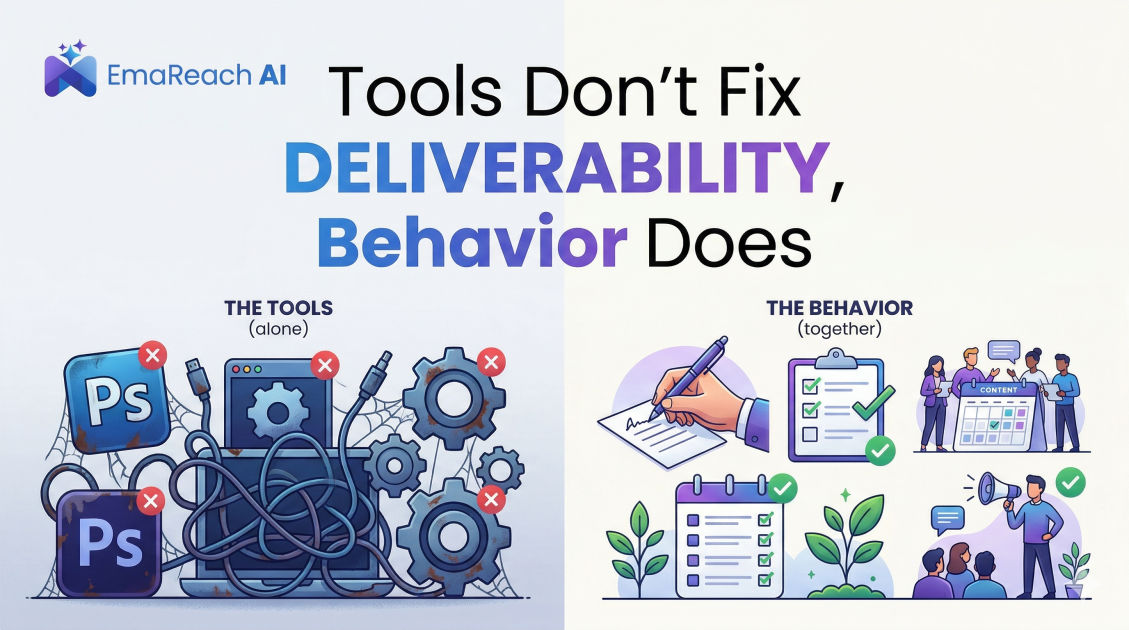
Tools Don’t Fix Deliverability, Behavior Does
email deliverabilitycold outreachemail marketingsender reputationlead generationinbox placement
Introduction
In the world of digital communication, particularly cold outreach and email marketing, there is a pervasive myth that the right piece of software can solve any problem. We see it in marketing forums and LinkedIn threads every day: "Which tool should I use to fix my deliverability?" or "What is the best platform to ensure I never land in spam?" The uncomfortable truth that many vendors won't tell you is that tools are merely vehicles. You can put a reckless driver in a high-end sports car, and they will still crash.
Email deliverability is not a technical setting you toggle on; it is a reputation you earn. While infrastructure matters, the primary reason emails land in the junk folder isn't usually the software being used—it is the behavior of the sender. Internet Service Providers (ISPs) and email filters have become incredibly sophisticated. They no longer just look at your SPF or DKIM records; they look at how humans interact with your messages. If your behavior mimics that of a spammer, no tool in the world can save your reputation.
The Technical Foundation vs. The Human Element
It is important to distinguish between delivery and deliverability. Delivery is a binary technical success: did the receiving server accept the message? Deliverability is the art of reaching the inbox. You can have 100% delivery and 0% deliverability if every single one of your messages is routed to the spam folder.
Most modern email tools handle the technical foundation—the DNS records, the tracking pixels, and the sending loops. However, the human element is where most campaigns fail. ISPs like Google and Microsoft prioritize user experience. Their goal is to protect their users from unwanted, irrelevant, or high-volume noise. When you prioritize tools over behavior, you are focusing on the pipes while ignoring the quality of the water flowing through them.
Why Your "Perfect" Setup Still Lands in Spam
Many marketers spend weeks perfecting their technical setup. They authenticate their domains, they set up custom tracking domains, and they use dedicated IP addresses. Yet, they still find themselves blacklisted. Why? Because their behavior signals a lack of respect for the recipient's inbox.
The Volume Trap
One of the most common behavioral mistakes is the sudden spike in volume. Imagine a domain that typically sends ten emails a day suddenly sending five thousand. To an ISP, this looks like a compromised account or a spam bot. Tools allow you to scale, but scaling without a warm-up period is a death sentence for your deliverability.
This is where an integrated approach becomes necessary. EmaReach helps users avoid this trap by ensuring they stop landing in spam. Cold emails that reach the inbox require more than just a 'send' button; EmaReach AI combines AI-written cold outreach with inbox warm-up and multi-account sending, so your emails land in the primary tab and get replies. By distributing volume across multiple accounts and mimicking human pacing, you align your tool's capabilities with healthy sender behavior.
The Psychology of the Recipient: Engagement as a Metric
ISPs monitor engagement metrics more closely than ever. They look at:
- Open Rates: Are people actually interested in what you have to say?
- Reply Rates: Is this a one-way blast or a two-way conversation?
- Mark as Spam Rates: This is the ultimate negative signal.
- Delete Without Opening: A sign of irrelevance.
- Move to Inbox: When a user rescues an email from spam, it provides a massive boost to your reputation.
If your behavior involves sending generic, unresearched templates to thousands of people, your engagement metrics will plummet. Low engagement tells the ISP that your content is not valued, and they will adjust your deliverability accordingly. No tool can "force" an ISP to put a boring, irrelevant email into the primary tab if the recipients aren't engaging with it.
Data Hygiene: The Behavioral Pillar of Deliverability
Your behavior regarding data management is perhaps the most overlooked aspect of deliverability. Many senders purchase large lists and blast them immediately. This behavior triggers several red flags:
Hard Bounces and Spam Traps
Persistent bouncing occurs when you send emails to addresses that don't exist. High bounce rates are a primary indicator of a low-quality sender. Even more dangerous are "spam traps"—email addresses that exist solely to catch spammers. These addresses are never used to sign up for newsletters, so if you hit one, it proves your list-building behavior is unethical or automated.
Clean data behavior means:
- Verifying every email address before sending.
- Removing inactive subscribers who haven't opened an email in months.
- Never, under any circumstances, using "scraped" lists without extreme vetting.
Content Behavior: Beyond the "Spammy" Words
For years, the advice was to avoid words like "Free," "Winner," or "Cash." While those are still worth avoiding, modern filters are much smarter. They use natural language processing to understand the intent of your message.
If your behavior is to send the exact same copy to 10,000 people, filters will identify the footprint. This is known as "fingerprinting." When an ISP sees the same message structure hitting thousands of inboxes simultaneously, it flags it as a mass broadcast.
To counter this, your behavior must shift toward personalization and variation. This doesn't just mean adding a {{first_name}} tag. It means changing the sentence structure, the value proposition, and the call to action. Authentic behavior involves talking to individuals, not segments.
The Warm-Up Ritual: A Long-Term Behavioral Strategy
Building a reputation takes time, but losing it takes seconds. A common mistake is treating email like a faucet that you can turn on full blast from day one. Proper behavior dictates a "warm-up" period. This is the process of gradually increasing your email volume to establish a positive history with ISPs.
During a warm-up, you want high engagement. You want people to open, click, and reply. If you are starting a new domain, your behavior should be conservative. Start with 5-10 emails a day to known contacts who will definitely reply. This "seed" behavior tells the ISP, "This new sender produces content that people actually want."
The Role of Multi-Account Infrastructure
As you scale, the behavior of a single account becomes a bottleneck. If you try to send 500 cold emails a day from one address, you are courting disaster. Healthy scaling behavior involves distributing that load.
Instead of one account sending 500 emails, have ten accounts sending 50 emails each. This mimics a real company with multiple employees reaching out to prospects. It reduces the risk associated with any single account and keeps your sending patterns within the realm of "normal" human behavior.
Why "Unsubscribe" Is Your Best Friend
Many senders try to hide their unsubscribe link or make the process difficult. This is counterproductive behavior. If a user wants to stop receiving your emails and they can't find the unsubscribe button, they will hit the "Report Spam" button instead.
A spam report is significantly more damaging to your deliverability than an unsubscribe. Proper behavior involves making it easy for people to leave. You should want an audience that wants to be there. By maintaining a list of engaged prospects, your deliverability remains high for the people who actually matter to your business.
The Trap of Technical Shortcuts
There is a constant temptation to find a "hack" for deliverability. Whether it's using "pixel tracking" workarounds or trying to spoof headers, these shortcuts are behaviors that eventually get caught. Technology moves fast, but the algorithms protecting inboxes move faster.
When you focus on the behavior of providing value, your deliverability becomes resilient. Tools should be used to automate the good behaviors you’ve already established, not to try and mask bad ones. If your strategy relies on outsmarting a Google algorithm, you have already lost. If your strategy relies on being a relevant, respectful sender, you have already won.
Actionable Behavioral Changes You Can Make Today
If your emails are hitting the spam folder, stop looking for a new tool and start auditing your behavior. Here is a checklist of behavioral shifts:
- Reduce your daily volume per mailbox: Aim for 30-50 high-quality emails rather than 200 generic ones.
- Increase personalization: Ensure that the first two sentences of every cold email are unique to the recipient.
- Check your list source: If you didn't build the list through research or opt-ins, discard it.
- Prioritize replies over clicks: A reply is the strongest signal of engagement. Craft your emails to ask a simple, low-friction question.
- Monitor your sender reputation: Use postmaster tools to see how ISPs perceive your domain.
Conclusion
At the end of the day, deliverability is a reflection of your relationship with your audience. Tools are essential—they provide the infrastructure, the automation, and the data necessary to run a modern campaign. However, they are not a substitute for ethical, strategic, and human-centric behavior.
Success in the inbox comes to those who treat email as a privilege, not a right. By focusing on data hygiene, gradual scaling, relevant content, and genuine engagement, you create a sender profile that ISPs trust. Remember: the tool handles the 'how,' but your behavior dictates the 'where'—and the 'where' should always be the primary inbox.
EmaReach AI
Ready to scale your cold email outreach?
Join thousands of teams using EmaReach AI for AI-powered campaigns, domain warmup, and 95%+ deliverability. Start free — no credit card required.
Related posts
- Read article
The Instantly Alternative That Finally Gets Outbound Analytics Right
Discover why high-volume cold email requires a shift from surface-level vanity metrics to deep, data-driven revenue attribution, and explore the ultimate alternatives for mastering outbound engineering.
- Read article
What You Gain and What You Give Up When Switching From Instantly
Thinking about migrating your cold email stack? This detailed guide breaks down the exact operational advantages you gain and the core features you sacrifice when switching away from Instantly's popular outreach platform.