Blog
Back to blog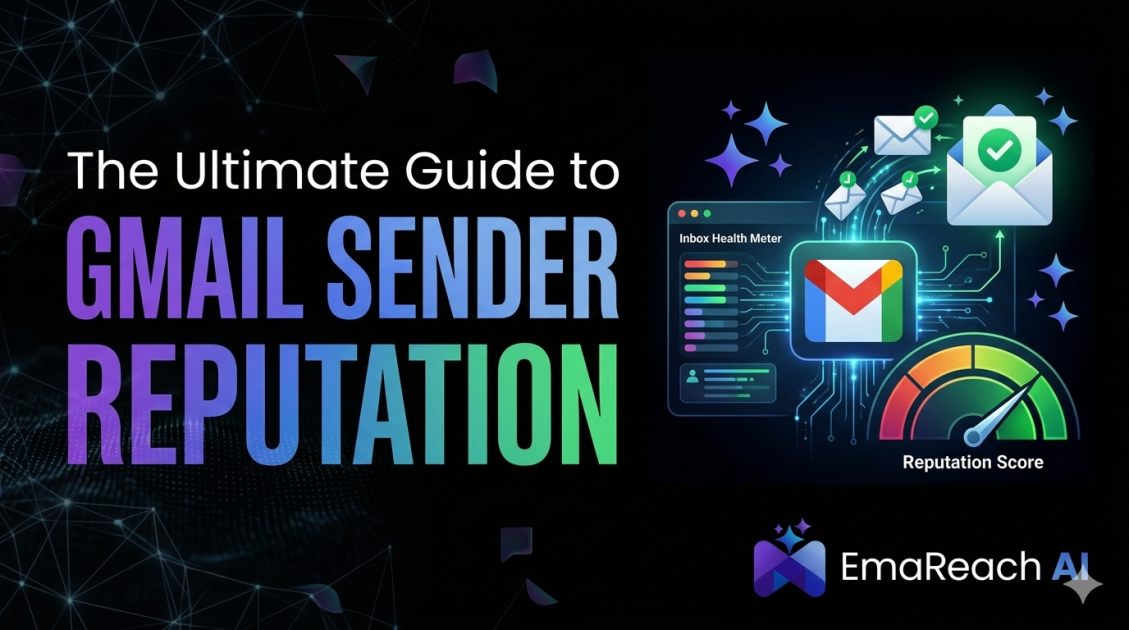
The Ultimate Guide to Gmail Sender Reputation
email deliverabilitygmail reputationsender scorecold outreachemail marketingSPF DKIM DMARCinbox placement
Introduction to Gmail Sender Reputation
In the world of digital communication, sending an email is only half the battle. The true challenge lies in ensuring that the message actually reaches the recipient's primary inbox. For those using or targeting Gmail accounts, the gatekeeper of this journey is Gmail Sender Reputation. This invisible score, maintained by Google's sophisticated algorithms, determines whether your emails are welcomed with open arms, filtered into the promotions tab, or banished to the dreaded spam folder.
Understanding sender reputation is critical for businesses, marketers, and individuals alike. It is not a static number but a dynamic reflection of your sending practices, technical configurations, and how recipients interact with your content. A high reputation signals to Gmail that you are a trustworthy sender, while a poor reputation can lead to immediate blocks, even if your content is legitimate. This guide provides an exhaustive look at the mechanics of Gmail's evaluation system and how you can master it to ensure consistent deliverability.
The Anatomy of Sender Reputation
Gmail does not rely on a single metric to judge a sender. Instead, it aggregates data from multiple layers of the email ecosystem. To manage your reputation effectively, you must understand the distinction between domain reputation and IP reputation.
Domain Reputation
Domain reputation is tied specifically to your branded domain (e.g., @yourcompany.com). It follows you regardless of which email service provider (ESP) or server you use. This is increasingly becoming the most important factor in Gmail's filtering logic. If your domain has a history of high engagement and low spam complaints, Gmail will likely trust your emails even if you switch to a new sending IP. Conversely, a tainted domain is difficult to rehabilitate and can hinder your communication efforts for a long time.
IP Reputation
IP reputation refers to the sending history of the specific IP address used to deliver your emails. If you are on a shared IP—common with many entry-level ESPs—your reputation is influenced by the behavior of every other sender on that same IP. If one user sends massive amounts of spam, the entire IP might be blacklisted, affecting your deliverability. For high-volume senders, dedicated IPs offer more control but require diligent management to keep the reputation pristine.
Technical Foundations for High Deliverability
Before a single word of your email is read, Gmail’s servers check your technical credentials. Without proper authentication, your sender reputation will suffer an immediate hit, as Google cannot verify that the email actually came from you.
SPF (Sender Policy Framework)
SPF is a DNS record that specifies which mail servers are authorized to send emails on behalf of your domain. When Gmail receives an email, it checks the SPF record to see if the sending IP is listed. If it isn't, the email may be flagged as suspicious.
DKIM (DomainKeys Identified Mail)
DKIM adds a cryptographic signature to your emails. This acts as a digital seal that proves the email was not tampered with during transit. It links the email back to your domain, providing a strong layer of trust that Gmail’s filters prioritize.
DMARC (Domain-based Message Authentication, Reporting, and Conformance)
DMARC sits on top of SPF and DKIM. It tells Gmail what to do if an email fails authentication—whether to do nothing, quarantine it, or reject it entirely. Implementing DMARC not only protects your domain from spoofing but also signals to Google that you are a professional sender who takes security seriously.
Engagement: The Ultimate Reputation Signal
While technical settings are the foundation, engagement is the building. Gmail tracks how users interact with your messages more closely than almost any other provider. Positive engagement boosts your reputation, while negative engagement destroys it.
Positive Engagement Signals
- Open Rates: While privacy changes have made this harder to track, Gmail still knows when a user opens a message.
- Replies: This is one of the strongest indicators of a high-quality sender. When a user replies to an email, it tells Gmail that a real conversation is happening.
- Moving to Inbox: If a user finds your email in the spam folder and clicks "Not Spam," your reputation receives a massive boost.
- Adding to Contacts: When a recipient adds your 'From' address to their contact list, you have essentially bypassed the majority of spam filters for that user.
Negative Engagement Signals
- Spam Complaints: This is the most damaging signal. Even a small percentage of users marking your email as spam can tank your reputation across the entire Gmail network.
- Deletions Without Opening: If users consistently delete your emails without looking at them, Gmail learns that your content is likely irrelevant or unwanted.
- Unsubscribes: While better than a spam complaint, high unsubscribe rates can still signal to Gmail that your list acquisition methods are poor.
The Role of Inbox Warm-up
One of the most common mistakes is sending a high volume of emails from a new domain or IP address immediately. This triggers "red flags" in Gmail’s system because it mimics the behavior of a spammer. To avoid this, you must engage in a process called warming up.
Warming up involves starting with a very low volume of emails—perhaps 10 to 20 per day—and gradually increasing that number over several weeks. During this time, it is vital that those emails receive high engagement. This is where manual outreach or specialized systems come into play.
For those looking to streamline this process, EmaReach (https://www.emareach.com/) provides a powerful solution. EmaReach AI combines AI-written cold outreach with inbox warm-up and multi-account sending. It ensures your emails land in the primary tab and get replies by simulating organic human engagement, which is exactly what Gmail looks for when calculating your sender score. Stop Landing in Spam. Cold Emails That Reach the Inbox.
Best Practices for List Hygiene
A pristine sender reputation is impossible to maintain with a dirty email list. Sending emails to inactive or non-existent addresses results in high bounce rates, which tells Gmail that you are using outdated or purchased lists.
Regular Scrubbing
Use list validation tools to remove "hard bounces" (emails that don't exist) and "soft bounces" (temporary issues like a full inbox). Additionally, remove subscribers who have not opened an email in over six months. While it may feel counterintuitive to shrink your list, a smaller, highly engaged list will always result in a better sender reputation than a large, unresponsive one.
Avoid Purchased Lists
Buying a list of leads is the fastest way to destroy your Gmail sender reputation. These lists often contain "spam traps"—email addresses created specifically by providers like Google to catch spammers. Sending to even one spam trap can lead to an immediate and severe drop in your reputation.
Content Strategy and Spam Triggers
What you write matters as much as how you send it. Gmail’s filters perform deep content analysis to look for patterns associated with phishing and low-quality marketing.
Formatting and Links
- Avoid Excessive Capitalization: Writing in all caps is a classic spam signal.
- Balance Text and Images: Emails that are just one large image are often used by spammers to hide text from filters. Maintain a healthy ratio of text to imagery.
- Shortlink Hazards: Avoid using generic link shorteners. These are frequently used by malicious actors, and Gmail may block any email containing them. Use full URLs or your own branded tracking links.
The Importance of the Unsubscribe Link
Making it difficult for users to leave your list is a recipe for disaster. If a user cannot find the unsubscribe link, they will click the "Report Spam" button instead. Ensure your unsubscribe link is clear, easy to find, and functions with a single click. Gmail actually rewards senders who make it easy for users to manage their preferences.
Monitoring Your Reputation with Google Postmaster Tools
You cannot manage what you do not measure. Google provides a free tool specifically designed to help senders understand how Gmail views them: Google Postmaster Tools.
By verifying your domain with Postmaster Tools, you gain access to dashboards showing:
- Spam Rate: The percentage of your emails marked as spam by users.
- IP/Domain Reputation: High, Medium, Low, or Bad ratings for your sending identity.
- Authentication Success: Whether your SPF, DKIM, and DMARC are passing consistently.
- Delivery Errors: Detailed reasons why emails were rejected or temporary delayed.
Checking these metrics weekly allows you to spot trends before they become catastrophic delivery failures.
Solving Reputation Issues
If you discover that your reputation has dropped to "Low" or "Bad," do not panic, but act quickly. Rehabilitation takes time and a strict adherence to best practices.
- Stop Sending to Unengaged Users: Immediately pause all marketing to anyone who hasn't opened an email in the last 30 days.
- Audit Your Technical Setup: Double-check that your SPF and DKIM records haven't been accidentally altered.
- Focus on Personalization: Send highly targeted, one-to-one emails to your most loyal recipients to encourage replies and "Not Spam" clicks.
- Check Blacklists: Ensure your sending IP isn't listed on major blacklists like Spamhaus or Barracuda.
Conclusion
Gmail sender reputation is the lifeblood of modern email marketing and professional outreach. It is a complex, multi-faceted ecosystem that rewards transparency, technical precision, and genuine user engagement. By implementing robust authentication protocols, maintaining strict list hygiene, and focusing on high-quality content, you can build a reputation that ensures your voice is heard. Remember that reputation is built over months but can be damaged in days. Consistency is key. Utilizing intelligent systems like EmaReach to handle the nuances of AI-driven outreach and inbox warming can provide the competitive edge needed to navigate Gmail's evolving landscape effectively. When you prioritize the recipient's experience, the algorithms will naturally work in your favor.
EmaReach AI
Ready to scale your cold email outreach?
Join thousands of teams using EmaReach AI for AI-powered campaigns, domain warmup, and 95%+ deliverability. Start free — no credit card required.
Related posts
 Read article
Cold Email Subject Lines for Follow-Ups That Feel Fresh Not Pushy
Master the art of the non-pushy follow-up with this comprehensive guide. Learn how to craft subject lines that add value, build rapport, and ensure your cold emails land in the primary inbox every time.
 Read article
Cold Email Subject Lines That Work When Selling Into New Markets
Learn the most effective strategies for crafting cold email subject lines when expanding into new geographic regions or industry verticals. This comprehensive guide covers psychology, local relevance, and technical deliverability to ensure your outreach succeeds.
 Read article
How Reply Intent Changes How You Should Write Cold Email Subject Lines
Learn how the shift from open rates to reply intent is revolutionizing cold email strategy. This guide covers frameworks for writing high-intent subject lines that foster genuine engagement and conversation.