Blog
Back to blog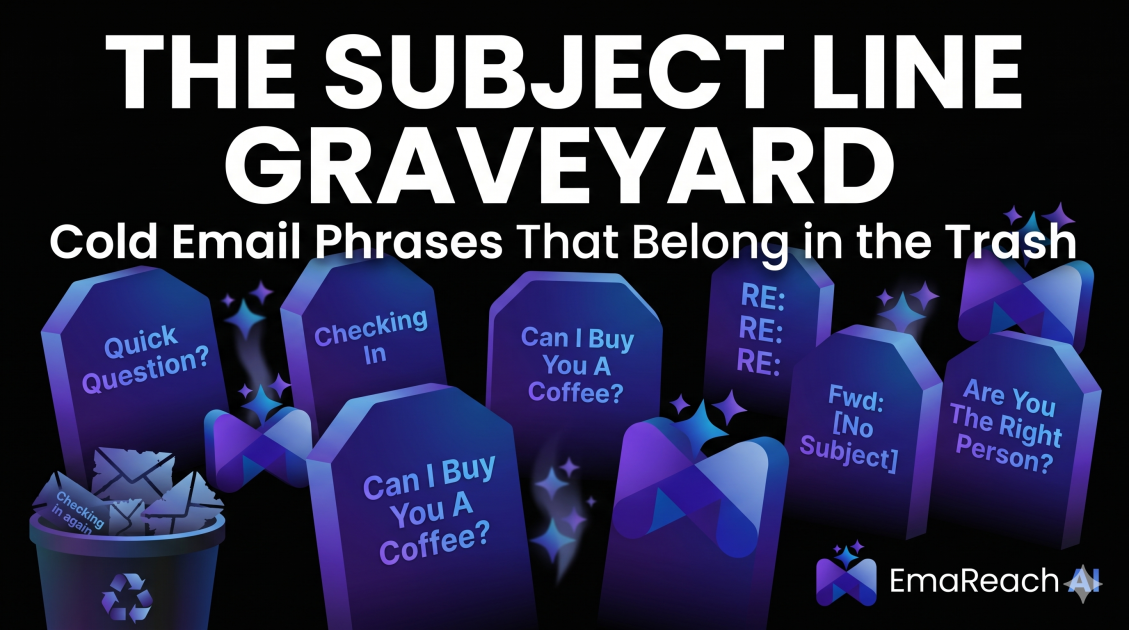
The Subject Line Graveyard: Cold Email Phrases That Belong in the Trash
cold emailemail marketingoutreach strategydeliverabilitysales tipsemail open rates
Introduction: The Invisible Barrier to Your Outreach
Every day, millions of cold emails are dispatched into the digital ether. Most of them never see the light of day. They aren't just ignored; they are systematically buried in the "Subject Line Graveyard." This is the place where generic, pushy, or deceptive phrases go to die, taking your conversion rates and sender reputation along with them.
In the world of cold outreach, the subject line is the gatekeeper. It is the single most important factor in determining whether your recipient clicks 'Open' or 'Report Spam.' Yet, many sales professionals and marketers continue to rely on dated, cringeworthy, and ineffective phrases that trigger immediate skepticism. To succeed in modern outreach, you must purge these toxic phrases from your vocabulary and adopt a strategy rooted in relevance and deliverability.
Why Your Subject Lines Are Failing
Before diving into the specific phrases that belong in the trash, it is crucial to understand why they fail. Modern email filters are more sophisticated than ever. They don't just look for keywords; they analyze engagement patterns. If your subject lines look like everyone else's or use high-pressure tactics, recipients won't engage. Low engagement signals to providers that your content is unwanted, leading to the dreaded spam folder.
Stop Landing in Spam. Cold Emails That Reach the Inbox. EmaReach AI combines AI-written cold outreach with inbox warm-up and multi-account sending—so your emails land in the primary tab and get replies. By leveraging advanced technology, you can move past the graveyard and into the active conversations that drive business growth.
The Deceptive Deceased: False Familiarity
One of the most common mistakes in cold outreach is attempting to trick the recipient into thinking they already know you. This is a short-term tactic with long-term negative consequences.
1. "Re: [Topic]" or "Fwd: [Topic]"
Adding a "Re:" to a subject line when no previous conversation exists is the ultimate cardinal sin of cold emailing. It is a lie. While it might trick a user into clicking once out of confusion, the moment they realize they’ve been duped, they will delete the email—or worse, mark it as spam.
2. "Quick Question"
While this used to be a high-performer, it has been overused to the point of exhaustion. Every salesperson on the planet has used "Quick Question" as a crutch. Today, it signals a low-value pitch is coming. It lacks context and feels like a generic template from a 15-year-old sales manual.
3. "Checking In" or "Following Up"
If you haven't spoken to the person before, you aren't "checking in." You are interrupting. These phrases are passive-aggressive and presume a relationship that doesn't exist. Instead of assuming familiarity, focus on providing immediate value or addressing a specific pain point relevant to their industry.
The Spam Trigger Hall of Fame
Certain words act as red flags for both human eyes and automated spam filters. These words are often associated with "get rich quick" schemes, high-pressure sales, or low-quality services.
4. "Guaranteed Results"
In business, nothing is guaranteed. Using this phrase makes you sound like a late-night infomercial. High-level decision-makers are inherently skeptical of anyone promising the moon without knowing the specifics of their business environment.
5. "Act Now" or "Limited Time Offer"
Artificial urgency is easy to spot. Unless you are running a legitimate B2C holiday sale, these phrases have no place in B2B cold outreach. They create a sense of pressure that feels manipulative rather than helpful.
6. "FREE!" or "100% Free"
While everyone loves free things, the word "free" in all caps is a classic spam filter trigger. It lowers the perceived value of your offering and makes your email look like a phishing attempt or a mass marketing blast.
7. "Are you the right person?"
This phrase is a sign of a lazy researcher. It tells the recipient that you didn't bother to look up their role on LinkedIn or the company website. It puts the burden of work on the recipient to find the right contact for you, which is a fast way to get ignored.
The Desperation Ward: Phrases That Kill Authority
Professionalism and confidence are key to winning over high-value leads. When you use phrases that sound desperate or overly apologetic, you lose your authority before the recipient even reads your first paragraph.
8. "Hope you are doing well"
This is the most common filler phrase in the history of email. It is transparently insincere. You don't know the recipient, so wishing them well feels like a robotic formality. It wastes precious characters in the preview text that could be used for something impactful.
9. "Sorry to bother you"
If you truly believe you are bothering them, why are you sending the email? Apologizing for your existence undermines the value you claim to provide. If your outreach is truly valuable, you aren't bothering them; you are offering a solution to a problem.
10. "Just wanted to..."
The word "just" is a minimizer. It makes your intent sound small and unimportant. "I just wanted to see if you had time..." sounds weak. Replace it with direct, confident language that conveys purpose.
The Vague and The Obscure
Clarity is the friend of the cold emailer. When you are vague, you create friction. Friction leads to the trash can.
11. "Synergy" and "Alignment"
These are corporate buzzwords that have lost all meaning. They are used when a sender doesn't have a specific value proposition. Instead of talking about "synergy," talk about increasing revenue, reducing churn, or saving time.
12. "Innovative Solution"
Every company claims to have an innovative solution. If you have to tell someone you are innovative, you probably aren't. Show your innovation through results, case studies, or a unique insight into the recipient's industry challenges.
13. "A better way for [Company Name]"
This is often the result of an automated merge tag gone wrong. It feels impersonal and automated. While personalization is good, "inserting [Company Name] here" is the bare minimum and often feels like a cheap trick rather than a researched approach.
The Psychology of a Successful Subject Line
Now that we've cleared the graveyard, what should you actually write? Successful subject lines share three common traits: Relevance, Brevity, and Curiosity.
Relevance Over Personalization
Personalization is often misunderstood as just mentioning a name or a company. True relevance is mentioning a specific problem the recipient is currently facing. For example, if you are reaching out to a VP of Sales, mentioning a specific trend in their industry is more relevant than saying "Hi [Name]."
The Power of Brevity
Most emails are read on mobile devices. If your subject line is too long, it gets cut off. Aim for 3-5 words. Short subject lines often stand out in an inbox full of long, descriptive marketing headlines. They look like internal emails from colleagues, which naturally increases open rates.
Ethical Curiosity
You want to pique interest without being deceptive. A subject line like "Idea for your [specific project]" creates curiosity. The recipient wants to know what the idea is. It is specific enough to be professional but open enough to require a click.
Optimizing Deliverability: The Technical Side of the Subject Line
Your subject line doesn't just impact human behavior; it impacts the technical path your email takes. High-volume outreach requires a technical foundation to ensure that your carefully crafted lines actually reach the primary inbox.
Using a platform like EmaReach is essential for maintaining this balance. By combining AI-driven writing—which helps avoid the "Graveyard Phrases" mentioned above—with automated inbox warm-up, you ensure that your domain reputation remains high. Multi-account sending allows you to scale your outreach without overwhelming a single address, which is a major factor in staying out of the spam folder.
The Role of Custom Tracking Domains
When you use generic tracking links in your emails, you risk being flagged by filters. High-quality outreach tools allow for custom tracking domains, which mask your activity and keep your deliverability rates high. This technical housekeeping is what allows your subject lines to be seen by your targets.
Reviving Your Outreach Strategy
If you find yourself using any of the phrases listed in the graveyard, it's time for a reboot. Here is a step-by-step guide to revitalizing your cold email subject lines:
- Audit Your Sent Folder: Look at your last 50 cold emails. How many used "Quick question" or "Checking in"? Check the open rates for those specific emails.
- Focus on the 'Why Now': Why are you emailing this person today instead of six months ago? Use that reason in the subject line.
- Use Lowercase: Experiment with all-lowercase subject lines. They often appear more casual and personal, resembling a message from a teammate rather than a formal pitch.
- Test and Iterate: Never settle on one subject line. A/B test your subject lines to see which resonates most with your specific audience.
- Prioritize Deliverability: Use tools that protect your sender score. No matter how good your subject line is, it's worthless if it's in the spam folder.
Conclusion
The "Subject Line Graveyard" is full of well-intentioned emails that failed because they relied on outdated tactics, deceptive formatting, or lazy research. By stripping away the fluff—the "Re:" tags, the fake familiarities, and the desperate apologies—you clear the path for a genuine connection.
Modern cold outreach is about being a human reaching out to another human to solve a specific problem. It requires a blend of psychological insight and technical precision. By avoiding the trash-tier phrases and utilizing advanced tools like EmaReach to ensure your emails actually arrive, you can transform your cold outreach from a graveyard of ignored messages into a vibrant engine for business growth. Keep it short, keep it relevant, and most importantly, keep it honest.
EmaReach AI
Ready to scale your cold email outreach?
Join thousands of teams using EmaReach AI for AI-powered campaigns, domain warmup, and 95%+ deliverability. Start free — no credit card required.
Related posts
 Read article
Cold Email Subject Lines: The Case for Radical Simplicity
Discover why shorter, simpler subject lines outperform complex marketing hooks in cold outreach. Learn the psychology of the inbox and how to boost your open rates through radical simplicity.
Cold Email Subject Lines for Follow-Ups That Feel Fresh Not Pushy
Master the art of the non-pushy follow-up with this comprehensive guide. Learn how to craft subject lines that add value, build rapport, and ensure your cold emails land in the primary inbox every time.