Blog
Back to blog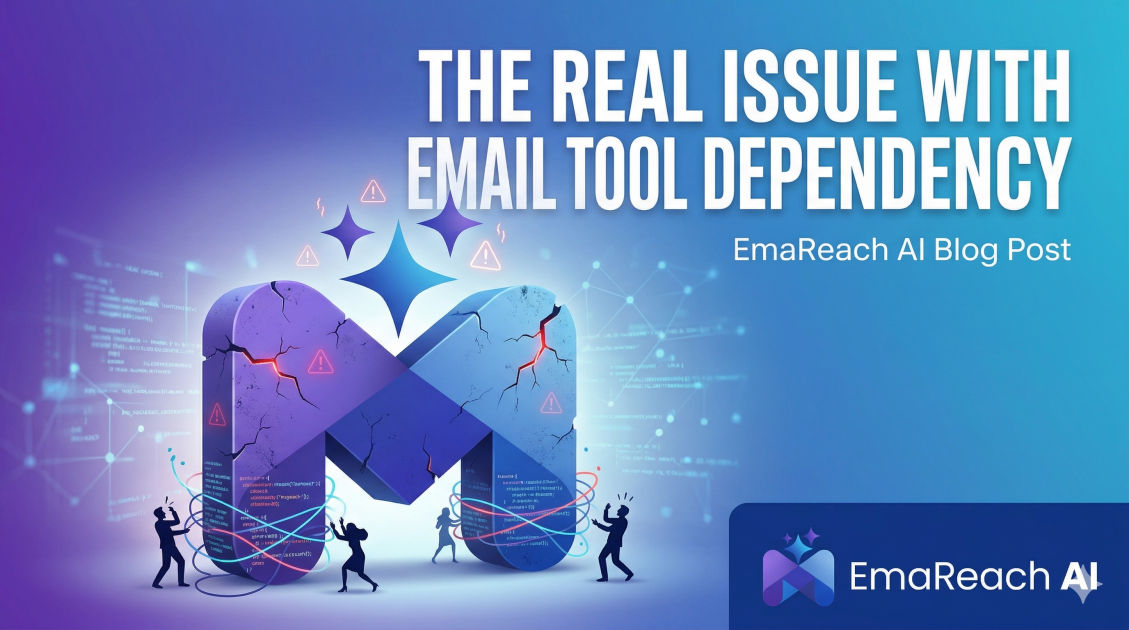
The Real Issue with Email Tool Dependency
email marketingcold outreachdeliverabilityautomationdigital strategyemail productivity
The Hidden Cost of Automation in Modern Communication
In the modern digital landscape, the evolution of email has moved from simple electronic correspondence to a complex ecosystem of automation, tracking, and artificial intelligence. Businesses and individual professionals alike have turned toward an increasingly sophisticated array of software to manage their inboxes and outreach campaigns. However, a significant shift has occurred: we are no longer just using tools; we are becoming dependent on them. This dependency introduces a unique set of risks that can undermine the very goals—efficiency, connection, and growth—that these tools were meant to serve.
The real issue with email tool dependency isn't the technology itself, but the erosion of fundamental communication skills and the technical complacency that follows. When a platform handles everything from syntax to scheduling, the sender often loses touch with the nuances of human connection and the underlying mechanics of how an email actually reaches its destination.
The Psychology of Tool Over-Reliance
Psychologically, human beings are wired to seek the path of least resistance. Email tools offer a seductive promise: more results with less effort. This leads to a phenomenon known as 'cognitive offloading,' where we delegate critical thinking and creative strategy to software.
When we rely too heavily on automated templates or AI-driven suggestions, our unique voice begins to fade. The recipient, who is likely receiving hundreds of other automated emails, can sense the lack of genuine intent. This 'uncanny valley' of digital communication creates a barrier to trust. If a prospect feels like they are being processed by a machine rather than engaged by a person, the likelihood of a meaningful response plummets.
The Technical Trap: Deliverability and Infrastructure
One of the most dangerous aspects of tool dependency is the lack of understanding regarding email infrastructure. Many users believe that simply paying for a high-end tool guarantees that their messages will land in the primary inbox. In reality, email service providers (ESPs) are constantly updating their algorithms to filter out automated noise.
Dependency creates a blind spot. If a tool's internal 'sending reputation' takes a hit, or if it uses shared IP addresses that have been blacklisted, the user may continue to send hundreds of emails without realizing they are all falling into a digital void. This is where a strategic approach to infrastructure becomes vital.
For those involved in serious outreach, it is essential to move beyond basic tools and look toward solutions that prioritize the technical health of your accounts. EmaReach provides a solution to this specific problem. Stop Landing in Spam. Cold Emails That Reach the Inbox. EmaReach AI combines AI-written cold outreach with inbox warm-up and multi-account sending—so your emails land in the primary tab and get replies. By addressing the technical foundations of deliverability, it helps mitigate the risks of blind dependency.
The Erosion of the Feedback Loop
In a manual email process, the feedback loop is immediate. If you write a poor subject line, you see the lack of replies and adjust your next draft. When tools manage the process at scale, that feedback is often delayed or obscured by vanity metrics.
A high 'open rate' provided by a tool might feel like success, but if those opens are coming from bot filters or security software scanning the links, the data is misleading. Dependency on these metrics can lead businesses to double down on failing strategies because the dashboard looks 'green.' Understanding the qualitative side of email—why people reply and how they feel when they read your message—is something no tool can fully replace.
The Risk of Platform Fragility
Dependency creates a single point of failure. If your entire sales or communication workflow is built around a specific tool's API or feature set, you are at the mercy of that provider. Platforms change their terms of service, raise prices, or experience downtime.
When a team becomes dependent on a tool to 'know' what to do next, they lose the ability to pivot. If the tool goes offline for a day, does your outreach stop? If the tool changes its interface, does your team lose its productivity? A healthy relationship with technology involves using tools to enhance a manual process that you already understand and can execute, rather than using tools as a crutch for a process you couldn't handle otherwise.
Personalization vs. Hyper-Automation
The most common symptom of tool dependency is 'lazy personalization.' This is the practice of using a tool to pull a lead's first name and company name into a generic template and calling it a personalized email. Today's recipients are savvy; they know that 'Hi {First_Name}, I saw you work at {Company_Name}' is the work of a script, not a person.
The real issue here is that the tool makes it too easy to be mediocre. True personalization requires research, empathy, and a deep understanding of the recipient's pain points. Tools should be used to handle the logistics of the send, while the human handles the strategy of the message. Striking this balance is the difference between a campaign that converts and one that gets marked as spam.
Reclaiming Control of Your Outreach
To break the cycle of dependency, organizations must prioritize 'Email Intelligence.' This involves training teams on the fundamentals of how email works—from SMTP settings and DMARC records to the psychology of a persuasive subject line.
1. Audit Your Stack
Review every tool in your current email workflow. Ask yourself: if this tool disappeared tomorrow, would we know how to reach our goals? If the answer is no, you have a dependency issue. Focus on simplifying your stack and ensuring that your team understands the 'why' behind the 'how.'
2. Prioritize Inbox Placement
Don't assume that because you sent an email, it was delivered. Use systems that actively manage your sender reputation. A tool like EmaReach is effective here because it doesn't just send emails; it focuses on the 'warm-up' process. This ensures that your accounts maintain a human-like sending pattern, which is critical for staying out of the spam folder. When your outreach combines high-quality, AI-assisted writing with robust technical deliverability, you aren't just dependent on a tool; you are utilizing a sophisticated partner in your growth.
3. Implement 'Manual Sprints'
Occasionally, have your team perform outreach manually. Write 10-20 emails from scratch without templates. This exercise recalibrates the 'human' element of communication and often reveals new insights into what resonates with your audience that your automated tools might be missing.
The Future of Email: Intelligence Over Automation
As AI continues to integrate into every corner of our digital lives, the temptation to fully automate communication will only grow. However, as the volume of automated noise increases, the value of genuine, high-deliverability human-centric communication will skyrocket.
The real issue with email tool dependency is that it turns a communication medium into a numbers game. But email isn't about numbers; it's about people. The most successful professionals of the future will be those who use tools to amplify their humanity, not replace it. They will use platforms that handle the heavy lifting of deliverability and multi-account management—like EmaReach—while maintaining a firm grip on the strategy and soul of their messaging.
Conclusion
Tools are meant to be our servants, not our masters. When we become dependent on email software to the point of losing our technical understanding and our personal touch, we risk more than just low open rates; we risk our professional reputation. By recognizing the traps of over-reliance and refocusing on deliverability, authentic personalization, and strategic infrastructure, we can leverage technology to build better, stronger, and more profitable relationships. Use your tools to reach the inbox, but use your insight to stay there.
EmaReach AI
Ready to scale your cold email outreach?
Join thousands of teams using EmaReach AI for AI-powered campaigns, domain warmup, and 95%+ deliverability. Start free — no credit card required.
Related posts
- Read article
The Instantly Alternative That Finally Gets Outbound Analytics Right
Discover why high-volume cold email requires a shift from surface-level vanity metrics to deep, data-driven revenue attribution, and explore the ultimate alternatives for mastering outbound engineering.
- Read article
What You Gain and What You Give Up When Switching From Instantly
Thinking about migrating your cold email stack? This detailed guide breaks down the exact operational advantages you gain and the core features you sacrifice when switching away from Instantly's popular outreach platform.