Blog
Back to blog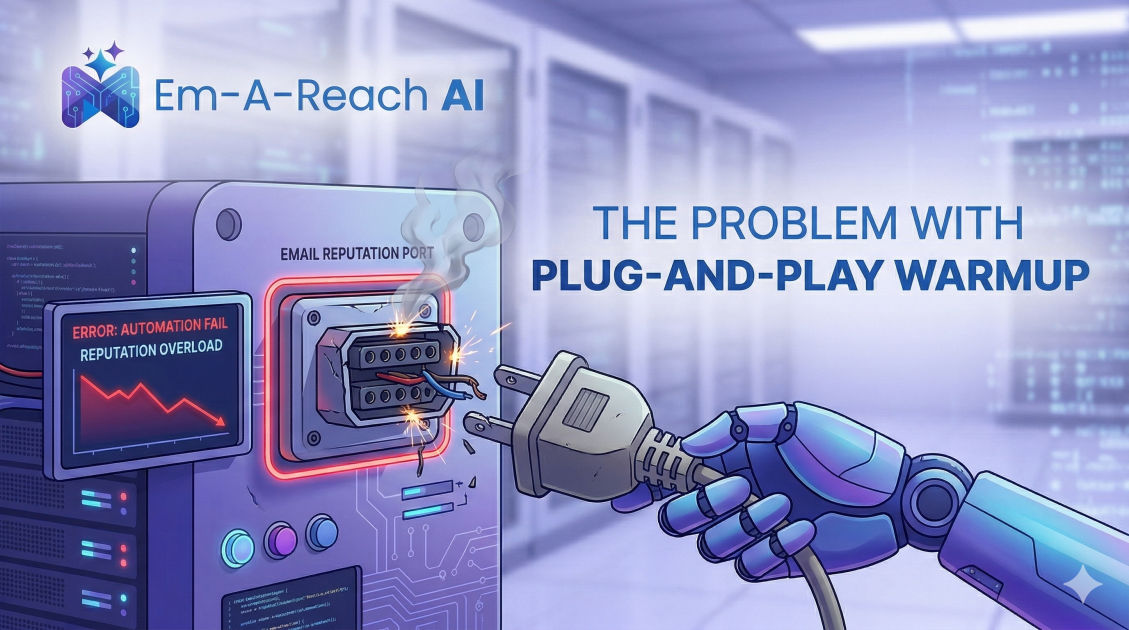
The Problem with Plug-and-Play Warmup
cold emailemail deliverabilityoutreach strategysender reputationinbox warmupemail marketing
Introduction
In the high-stakes world of digital communication, the bridge between a sent email and a read email is built on a foundation of sender reputation. For years, the industry standard for establishing this reputation was a process known as 'warmup.' Traditionally, this meant gradually increasing sending volume to signal to Internet Service Providers (ISPs) that a new IP or domain was a legitimate, non-spam sender.
However, as email filters have evolved into sophisticated, machine-learning-driven gatekeepers, a new trend has emerged: the 'Plug-and-Play' warmup. These are automated services that promise to fix your deliverability issues with a single click by trading simulated emails between a network of bot-controlled accounts. While the convenience is undeniable, the efficacy and safety of these automated shortcuts are increasingly being called into question. Relying on a generic, automated warmup strategy is no longer just ineffective; it can be actively detrimental to your long-term outreach success.
The Illusion of the 'Easy Button'
The allure of plug-and-play warmup tools is rooted in the desire for a quick fix. Business owners and growth hackers often view email deliverability as a technical hurdle to be bypassed rather than a relationship to be managed. These tools operate on a simple premise: they connect your inbox to a pool of thousands of other users and send meaningless, AI-generated text back and forth, automatically marking them as 'not spam' and moving them to the primary folder.
At first glance, the metrics look great. Your dashboard shows a high open rate and zero spam complaints within the network. But this is a closed loop—a simulated environment that bears little resemblance to the real-world behavior of a human sender. ISPs like Google and Microsoft are not easily fooled by repetitive, non-contextual patterns. When your 'warmup' traffic looks identical to thousands of other accounts using the same service, it creates a footprint that is easily identified and flagged.
Why ISPs Are Cracking Down on Automated Warmup
ISPs have one primary goal: protecting their users from unwanted content. To do this, they analyze billions of data points to differentiate between a human engaging in business communication and a bot attempting to manipulate the system. Plug-and-play warmup services often fail because they create 'unnatural' signals.
Lack of Realistic Engagement
Real human engagement involves variety. Humans don't just open every email they receive; they read some, delete others, reply to a few, and ignore many. Automated warmup tools typically force a 100% open and 'positive engagement' rate. To an ISP's machine learning algorithm, a perfect engagement score on a brand-new domain is a massive red flag. It suggests manipulation rather than genuine interest.
The Footprint Problem
Most plug-and-play tools use similar templates, subject lines, and sending frequencies. When an ISP sees ten thousand different domains all sending the same gibberish sentences to each other at the same intervals, they don't see ten thousand healthy senders—they see one giant network of bot activity. Once the service is identified, every domain associated with it can be 'guilt-associated,' leading to a sudden drop in deliverability across the board.
The Strategic Shift: Beyond the Bot
If the plug-and-play model is broken, how do modern marketers ensure their emails actually hit the inbox? The answer lies in a more holistic approach to deliverability that combines technical setup, content quality, and intelligent automation.
This is where advanced solutions like EmaReach (https://www.emareach.com/) change the game. Instead of relying on hollow, bot-driven interactions, EmaReach focuses on the mantra: "Stop Landing in Spam. Cold Emails That Reach the Inbox." By combining AI-written cold outreach with sophisticated inbox warm-up and multi-account sending, it ensures your emails land in the primary tab and actually get replies. It moves away from the 'plug-and-play' trap by creating sequences that mimic real human behavior and provide actual value to the recipient.
The Technical Risks of 'Set it and Forget it'
One of the most significant problems with plug-and-play warmup is the 'set it and forget it' mentality. Deliverability is not a static milestone; it is a dynamic state.
DNS and Technical Misconfigurations
Plug-and-play tools often ignore the foundational technical requirements of a domain. Simply running a warmup tool won't fix a broken SPF (Sender Policy Framework), a missing DKIM (DomainKeys Identified Mail), or a poorly configured DMARC (Domain-based Message Authentication, Reporting, and Conformance) record. If these are not handled correctly from the start, the volume generated by a warmup tool can actually accelerate the blacklisting of your domain.
Domain Aging vs. Volume Spiking
True warmup is about time and consistency. Automated tools often try to compress months of reputation-building into a few weeks. A sudden spike in volume from zero to two hundred emails a day, even if they are 'warmup' emails, can trigger security alerts. Legitimate business growth is rarely that linear or that aggressive in its infancy.
The Content Quality Gap
Traditional warmup tools send 'seed' emails—useless strings of text meant only to trigger a filter. The problem is that when you switch from sending gibberish to sending your actual sales pitch, the ISP notices the shift in content style and metadata. This 'content shock' can lead to your actual campaign being flagged even if your warmup phase seemed successful.
Effective outreach requires a seamless transition between the reputation-building phase and the active outreach phase. Modern tools avoid this by using AI to generate relevant, high-quality content from the very first email. This ensures that the 'fingerprint' of your warmup matches the 'fingerprint' of your actual business activity.
Multi-Account Sending: The New Standard
A major flaw in the plug-and-play philosophy is the reliance on a single 'power' account. In the current landscape, sending 500 emails a day from one account is a recipe for disaster. The sophisticated alternative is multi-account sending—distributing your volume across multiple domains and inboxes to keep the 'per-account' volume low and the deliverability high.
By spreading the load, you reduce the risk associated with any single point of failure. If one account hits a snag, your entire operation doesn't grind to a halt. This distributed approach, integrated with intelligent warmup, creates a much more resilient outreach infrastructure than any single-click tool could offer.
Identifying the Signs of 'Warmup Burnout'
How do you know if your plug-and-play tool is hurting you? There are several warning signs of what we call 'Warmup Burnout':
- The 'Cliff' Effect: You see 90% open rates during the warmup phase, but the moment you send your first real campaign, your open rate drops to 5%.
- High 'Other' Folder Placement: Your emails are technically 'delivered,' but they are landing in the 'Promotions' or 'Updates' tab rather than the 'Primary' tab.
- Inconsistent Results: One day you get great engagement, and the next, your domain is on a private blacklist, despite no change in your sending habits.
- Feedback Loop Absence: You aren't receiving any genuine 'Out of Office' replies or human responses, which are key indicators of a healthy, visible inbox.
Building a Sustainable Outreach Ecosystem
To move away from the pitfalls of automated shortcuts, you must build a sustainable ecosystem. This involves several key pillars:
1. Rigorous Domain Health Monitoring
Instead of just looking at open rates, monitor your domain health via tools like Google Postmaster Tools. Look for IP reputation and domain reputation trends. If you see a downward trend, stop your automated warmup immediately and investigate your technical setup.
2. High-Intent Prospecting
The best 'warmup' for an email account is sending emails that people actually want to read. High-quality, targeted prospecting leads to natural opens and replies. When a recipient replies to your email, it is the strongest possible signal to an ISP that you are a trusted sender.
3. Integrated AI Writing
As mentioned earlier, the transition from warmup text to sales text is a major friction point. Using AI to craft personalized, relevant outreach from the beginning ensures that your 'reputation' is built on the same type of content you will eventually scale. This is why EmaReach is so effective—it bridges the gap between the technical necessity of warmup and the creative necessity of high-performing copy.
The Hidden Cost of 'Free' or 'Cheap' Warmup
Many users gravitate toward cheap plug-and-play options because they seem low-risk. However, the true cost is measured in lost opportunities. Every time an email lands in spam, you lose a potential lead, a potential deal, and a piece of your brand's digital equity. Recovering a 'burned' domain is significantly harder and more expensive than setting it up correctly the first time.
Investing in a premium, integrated solution is an investment in the long-term viability of your sales pipeline. You aren't just paying for 'warmup'; you are paying for the peace of mind that comes with knowing your infrastructure is being managed by systems designed to navigate the complexities of modern ISP algorithms.
Practical Steps to Transition Away from Basic Warmup
If you are currently using a plug-and-play service and want to switch to a more professional setup, follow these steps:
- Audit Your Setup: Use a deliverability tester to check your current 'inbox placement.' Don't trust the dashboard provided by the warmup tool itself.
- Clean Your Lists: Ensure that you are only sending to verified, high-quality email addresses. High bounce rates will kill a domain faster than any warmup tool can save it.
- Slow Down: If you decide to stop an automated tool, don't just stop cold. Gradually decrease the 'warmup' volume while simultaneously increasing your 'real' outreach volume to keep the total sending volume stable.
- Adopt Multi-Inbox Strategies: Start setting up secondary domains. Never send cold outreach from your primary corporate domain (e.g., use company-outreach.com instead of company.com).
Conclusion
The era of 'set it and forget it' email warmup is coming to an end. As ISPs become more adept at identifying and penalizing automated manipulation, the reliance on plug-and-play tools becomes a liability rather than an asset. Success in cold outreach today requires a more nuanced, intelligent approach that prioritizes human-like engagement, technical excellence, and high-quality content.
By moving away from the illusion of the quick fix and adopting integrated solutions that handle both the 'science' of deliverability and the 'art' of the outreach, you can build a resilient system that delivers results. Remember, the goal of warmup isn't just to increase a number on a dashboard; it's to ensure your message reaches the human on the other side of the screen. Don't let a shortcut be the reason your best ideas end up in the spam folder.
EmaReach AI
Ready to scale your cold email outreach?
Join thousands of teams using EmaReach AI for AI-powered campaigns, domain warmup, and 95%+ deliverability. Start free — no credit card required.
Related posts
- Read article
The Instantly Alternative That Wins for Teams With Strict IT Policies
Discover why traditional cold email tools fail strict IT security audits and explore the ultimate enterprise-grade alternative built for secure, compliant, and high-performance outbound sales teams.
- Read article
How to Know When You Actually Need an Instantly Alternative
Discover the critical signs that your business has outgrown high-volume cold email tools and learn how to evaluate when it is time to transition to a more sophisticated, deliverability-first outreach alternative.