Blog
Back to blog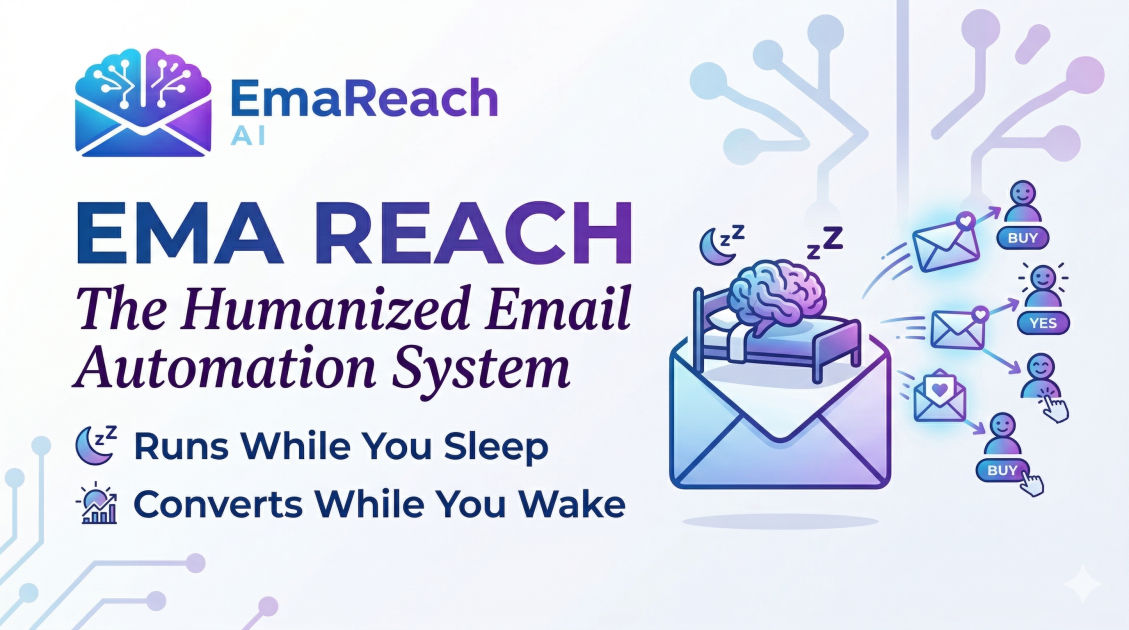
The Humanized Email Automation System That Runs While You Sleep and Converts While You Wake
email automationcold outreachlead generationdeliverabilitydigital marketingconversion optimization
Introduction: The Paradox of Modern Email Automation
In the digital age, the promise of automation has always been efficiency. We were told that technology would handle the repetitive tasks, freeing us to focus on high-level strategy and creative execution. However, as automation became more accessible, a new problem emerged: the 'uncanny valley' of digital communication. Many automated systems became cold, mechanical, and easily detectable by both human intuition and sophisticated spam filters. The result was a decline in engagement, a rise in unsubscribe rates, and a reputation for being 'just another bot.'
To succeed today, businesses must transition from simple automation to humanized automation. This is a system that maintains the scale and tireless nature of software while preserving the nuance, empathy, and relevance of a one-to-one human conversation. It is a system that runs while you sleep, meticulously nurturing leads and building trust, so that you wake up to a calendar full of high-intent meetings and an inbox full of positive conversions.
The Architecture of a Humanized System
A truly humanized email system is not built on a single piece of software, but rather on a philosophy of 'relevance over volume.' It requires a deep understanding of the recipient's journey and the technical infrastructure to support high-level deliverability.
1. The Foundation of Deliverability
Before a single word of copy is written, the technical foundation must be unshakable. If your emails land in the promotions tab or, worse, the spam folder, your automation system is effectively invisible. Humanization starts with appearing where humans hang out: the primary inbox.
This involves setting up proper authentication protocols like SPF, DKIM, and DMARC. Beyond these basics, a humanized system utilizes inbox warm-up techniques. By gradually increasing sending volume and fostering engagement through simulated interactions, you signal to Internet Service Providers (ISPs) that your account is a legitimate communicator, not a bulk-blaster. For those looking to ensure their messages hit the mark, services like EmaReach can be invaluable. EmaReach AI combines AI-written cold outreach with inbox warm-up and multi-account sending, ensuring your emails land in the primary tab where they belong.
2. Behavioral Triggers vs. Linear Sequences
Old-school automation followed a linear path: Email 1 goes out on Day 1, Email 2 on Day 3, regardless of what the user did. Humanized automation is nonlinear. It responds to behavioral triggers. If a prospect clicks a specific link about 'pricing,' the system should pivot to address value and ROI. If they ignore three consecutive emails, the system should gracefully 'break up' or move them to a long-term nurture track rather than continuing to shout into the void.
Crafting the 'Human' Voice at Scale
The greatest challenge of automation is maintaining a voice that sounds like it was typed by a person sitting at a desk, not generated by a server. This requires a departure from 'marketing speak' and a move toward conversational intelligence.
The Power of Micro-Personalization
Generic tokens like {{first_name}} are the bare minimum. True humanization uses micro-personalization. This involves referencing specific data points that prove you have done your homework. This could include:
- Recent company news or funding rounds.
- Specific technologies used on their website.
- Common connections or shared educational backgrounds.
- Specific pain points relevant to their specific job title.
Writing for the 'Reply,' Not the 'Sale'
One of the biggest mistakes in automated email is trying to close the deal in the first message. Humans don't ask for a marriage proposal on the first date. A humanized system focuses on starting a conversation. The goal of the automated sequence is to get a 'reply.' Once the reply happens, the 'automation' has done its job, and the 'human' takes over to navigate the nuances of the relationship.
The Importance of 'Soft' Follow-ups
Most sales happen in the follow-up, yet most follow-ups are aggressive. A humanized system uses 'soft' follow-ups. Instead of 'Just circling back on this,' try providing additional value. 'I saw this article and thought of our last conversation' or 'I realized I forgot to mention this specific case study that relates to your industry.' This feels like a helpful peer reaching out, not a persistent salesperson.
Leveraging AI for Contextual Relevance
Artificial Intelligence is the engine that allows humanization to scale. In the past, writing a custom opening line for 500 prospects took weeks. Today, AI can analyze a prospect's LinkedIn profile, company website, and recent tweets to generate a contextually relevant opening line in seconds.
However, the AI must be guided by human strategy. The prompts should focus on empathy and problem-solving. A system that uses AI to merely 'spin' words is still a bot. A system that uses AI to understand intent is humanized. By utilizing tools that combine AI writing with technical deliverability—like EmaReach—you bridge the gap between high-tech efficiency and high-touch personalization.
Building the 'Sleep and Wake' Workflow
To create a system that truly converts while you wake, you need a closed-loop workflow that manages the lead lifecycle from discovery to appointment.
Phase 1: Passive Lead Generation
While you sleep, your system should be scanning databases or monitoring social triggers to identify new prospects that fit your Ideal Customer Profile (ICP). This ensures the top of your funnel is always being replenished without manual intervention.
Phase 2: The Multi-Account Strategy
To avoid being flagged as a spammer, humanized systems spread their volume across multiple accounts. If you need to send 500 emails a day, it is better to send 50 emails from 10 different accounts than 500 from one. This mimics the behavior of a real team and protects your primary domain reputation.
Phase 3: The 'Primary Tab' Nurture
As the emails go out, the system monitors engagement. It handles 'Out of Office' replies by rescheduling the next touchpoint for when the prospect returns. It filters out 'unsubscribes' immediately to maintain list hygiene. Most importantly, it identifies 'positive intent' replies and surfaces them to your inbox so they are the first thing you see when you start your workday.
The Psychology of Timing and Frequency
When does a human send an email? Usually during business hours, but occasionally late at night if they are working on something important. An automated system that sends 100 emails at exactly 9:00 AM on a Tuesday looks like a machine. A humanized system staggers its delivery. It randomizes the intervals between emails so that no two prospects receive the message at the exact same millisecond.
Furthermore, it respects the 'rhythm' of the week. Sending a high-pressure sales email on a Friday afternoon is a mistake. A humanized system might send a 'low-friction' resource on a Thursday and a 'check-in' on a Tuesday morning when people are most productive.
Measuring Success: Beyond Open Rates
In a humanized system, open rates are a vanity metric. What matters is the Positive Reply Rate and the Meeting Conversion Rate. If 50% of people open your email but 0% reply, your automation is failing to connect. If only 20% open but 5% book a meeting, your system is highly effective.
To improve these metrics, you must treat your automation as a living document. A/B testing is crucial, but don't just test subject lines. Test different 'angles' of value. Test different 'asks' (e.g., asking for a 15-minute call vs. asking for feedback on a resource). Over time, the data will show you exactly which humanized elements are resonating with your specific audience.
Ethical Considerations in Automation
With great power comes great responsibility. A humanized system should never be used to deceive. Transparency is key. If a prospect asks if the email was automated, honesty is the best policy. 'I use a system to help me reach out to people I think I can genuinely help, but I personally reviewed your profile and wanted to connect' is a response that builds more trust than a lie.
Furthermore, respecting privacy and data regulations is a non-negotiable part of being a 'human' communicator. Providing easy ways to opt-out and honoring those requests instantly is part of the digital etiquette that defines a high-quality system.
The Role of Multi-Channel Integration
While email is the backbone, a truly humanized system is multi-channel. Imagine a prospect receiving an email, then seeing a relevant post from you on LinkedIn, then receiving a personalized video message. This 'omnipresence' makes you feel like a real person who is active in their industry, rather than a ghost in their inbox.
Automated systems can now trigger LinkedIn connection requests or 'likes' on a prospect's post based on where they are in the email sequence. This creates a cohesive brand experience that surrounds the prospect with value without being intrusive.
Conclusion: Reclaiming Your Time
The goal of a humanized email automation system is to reclaim the most valuable asset any business owner or salesperson has: time. By building a system that operates with technical precision and emotional intelligence, you remove yourself from the 'grunt work' of prospecting.
You shift from being a 'hunter' who has to track down every lead manually to a 'cultivator' who tends to a growing garden of relationships. The system runs 24/7, working tirelessly in the background to find, filter, and engage your ideal clients. When you wake up, you aren't staring at an empty calendar; you're looking at a list of people who are ready to talk to you because you've already proven your value through a sophisticated, humanized journey.
Investing in this infrastructure—from the deliverability safeguards of EmaReach to the nuances of behavioral copy—is not just a technical upgrade. It is a fundamental shift in how you grow your business. It allows you to scale your personality, your expertise, and your impact far beyond what you could achieve alone. Stop sending emails that get ignored, and start building a system that converts.
EmaReach AI
Ready to scale your cold email outreach?
Join thousands of teams using EmaReach AI for AI-powered campaigns, domain warmup, and 95%+ deliverability. Start free — no credit card required.
Related posts
- Read article
The Instantly Alternative That Finally Gets Outbound Analytics Right
Discover why high-volume cold email requires a shift from surface-level vanity metrics to deep, data-driven revenue attribution, and explore the ultimate alternatives for mastering outbound engineering.
- Read article
What You Gain and What You Give Up When Switching From Instantly
Thinking about migrating your cold email stack? This detailed guide breaks down the exact operational advantages you gain and the core features you sacrifice when switching away from Instantly's popular outreach platform.