Blog
Back to blog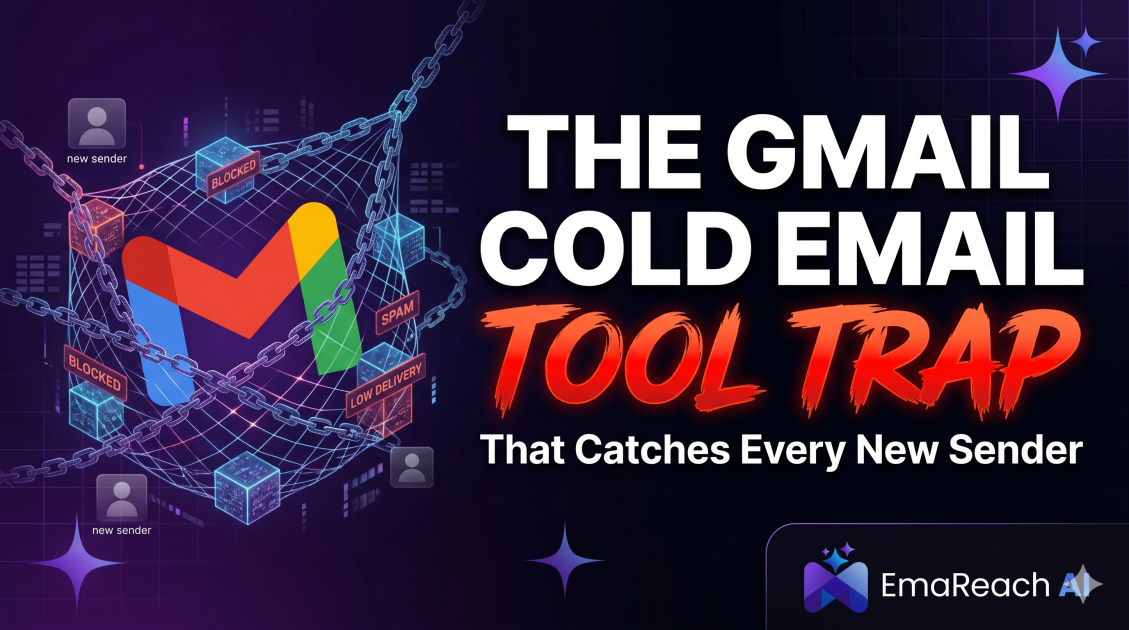
The Gmail Cold Email Tool Trap That Catches Every New Sender
cold emailoutreachemail deliverabilitysales automationb2b lead generationemail marketinggrowth hacking
Introduction
There is a common, almost universal rite of passage for new entrepreneurs, agency owners, and sales professionals entering the world of outbound marketing. Filled with enthusiasm and a fresh list of prospects, they register a shiny new domain name, set up a standard Google Workspace account, and download a highly-rated mail-merge Chrome extension. They load up a spreadsheet of hundreds of contacts, write a quick pitch, and hit send, expecting their calendar to instantly fill with qualified meetings.
Instead, they hear nothing but crickets.
After a few days of zero open rates and nonexistent replies, they check their settings, only to realize a devastating truth: their account has been flagged, their domain reputation is in ruins, and every single email they sent went directly into the spam folder.
This phenomenon is what industry veterans call the "Gmail Cold Email Tool Trap." It is a trap built on the illusion of simplicity, designed by software vendors who prioritize user acquisition over long-term email deliverability. The trap preys on a lack of technical knowledge regarding how modern email service providers (ESPs) filter, categorize, and penalize incoming mail.
In this comprehensive guide, we are going to deconstruct this trap piece by piece. We will explore the hidden mechanics of email deliverability, the dangers of using primary domain accounts for outbound sales, and the precise, step-by-step infrastructure you must build to ensure your messages bypass the spam folder and land directly in the primary inbox of your ideal prospects.
The Allure of the Standard Setup
To understand why the Gmail Trap is so pervasive, we first have to examine why it is so appealing. When you are bootstrapping a new venture or trying to scale a sales team quickly, speed and cost-efficiency are paramount. Google Workspace is the gold standard for business email. It is intuitive, deeply integrated with the tools most professionals already use, and relatively inexpensive.
Simultaneously, the software market is flooded with lightweight, inexpensive browser extensions and basic email tools that promise to "turn your Gmail into a cold email machine." These tools are remarkably easy to install. With a few clicks, they allow you to connect a Google Sheet, map some personalization variables, and initiate a mass email campaign right from your familiar inbox interface.
The pitch is incredibly seductive: Why pay for complex, enterprise-grade sending infrastructure when you can just use your existing inbox and a five-dollar plugin?
The answer lies in the fundamental difference between transactional/conversational email and bulk unsolicited outreach. Google Workspace is designed for the former. It is engineered to facilitate secure, reliable communication between colleagues, clients, and known contacts. It is explicitly not designed to be a bulk cold outreach server. When you attempt to force a conversational infrastructure to behave like a mass-marketing engine, the ecosystem reacts defensively.
Decoding the Algorithms: How Spam Filters Actually Work
Before diving into the mechanics of the trap, it is vital to understand what happens after you click "send." Your email does not simply travel through a vacuum to reach the recipient. It must pass through a gauntlet of incredibly sophisticated, AI-driven gatekeepers.
Modern spam filters do not just look for obvious spam keywords like "Free," "Discount," or "Act Now." They analyze hundreds of interconnected data points in real-time. These algorithms evaluate:
- Sender Infrastructure: Are the technical records of the sending domain properly configured and authenticated?
- IP Reputation: Does the server sending the email have a history of sending unwanted mail?
- Domain Age and History: Is the sending domain brand new? Does it have a track record of consistent, organic email volume?
- Engagement Metrics: How do recipients typically react to emails from this sender? Do they open them, reply to them, forward them, or drag them to the spam folder?
- Content Analysis: Does the email contain suspicious links, tracking pixels, or formatting that mimics known spam patterns?
When you use a basic tool connected to a fresh Gmail account, you almost always fail the majority of these checks simultaneously. You are sending a sudden spike of identical emails from a domain with zero history, lacking advanced authentication, to recipients who have never interacted with you before. To the algorithms, this looks exactly like a malicious spam attack.
The Anatomy of the Gmail Trap
So, how exactly does the trap snap shut? It usually happens through a combination of three fatal errors that new senders make without even realizing it.
1. The Volume Spike Paradox
Google publicly states that a standard Workspace account can send up to 2,000 emails per day. This number is a trap in itself. While technically true from a system capacity standpoint, it is absolutely false from a deliverability standpoint.
If you take a brand new email account that has previously sent perhaps five or ten emails a day, and suddenly blast out 500 cold emails in a single afternoon, Google's internal security protocols will instantly trigger. This behavior is the hallmark of a compromised account. Your sending privileges may be temporarily suspended, and any emails that do make it out will be routed straight to spam.
2. The Shared IP Vulnerability
When you send directly from the Gmail interface using a simple browser extension, you are utilizing Google's shared IP pools. While Google maintains excellent overall IP health, sending bulk cold email through these standard channels means you are at the mercy of the platform's strictest behavioral algorithms. If the receiving servers detect anomalous bulk sending behavior from a standard user account, they will block the domain, regardless of Google's overarching IP reputation.
3. Missing the Authentication Trinity
Perhaps the most common trap for beginners is ignoring the technical backend of email. Buying a domain and setting up a mailbox is only step one. For an email to be trusted by receiving servers, the domain must possess the "Authentication Trinity":
- SPF (Sender Policy Framework): A DNS record that publicly lists the IP addresses and services authorized to send email on behalf of your domain.
- DKIM (DomainKeys Identified Mail): A cryptographic signature added to every outgoing email that proves the message has not been altered in transit.
- DMARC (Domain-based Message Authentication, Reporting, and Conformance): A protocol that ties SPF and DKIM together, instructing receiving servers on exactly what to do if an email fails authentication checks.
Most basic email extensions do not warn you if these are missing. They simply let you send. Without these records perfectly configured, your emails are effectively arriving at the recipient's door without identification, virtually guaranteeing they will be rejected.
The Devastating Domino Effect of a Burned Domain
The most dangerous aspect of the Gmail Cold Email Trap is not just that your campaign fails; it is that the damage is systemic and contagious.
When you send spammy campaigns from your primary company domain (e.g., yourcompany.com), you actively destroy that domain's reputation across the entire internet. Email service providers communicate with one another. If Microsoft's servers notice that emails from yourcompany.com are consistently marked as spam or bouncing, they will flag your domain. Soon, Google, Yahoo, and enterprise firewalls will follow suit.
This leads to domain burning. Once your primary domain is burned, it is not just your cold outreach that suffers. Your day-to-day business operations are compromised. Invoices sent to existing clients go to spam. Investor updates get blocked. Crucial communications with your own team members can even be routed to the junk folder. Reversing domain reputation damage is a grueling, complex process that can take months of careful rehabilitation.
Escaping the Trap: The Professional Outreach Architecture
To succeed in outbound marketing, you must abandon the amateur setup and build a professional infrastructure. This requires a shift in mindset: you are no longer just "sending emails"; you are managing a specialized data delivery network.
Step 1: Domain Diversification Strategy
Never, under any circumstances, use your primary company domain for outbound cold email. Instead, purchase secondary, variations of your domain specifically for outreach.
If your main website is acmecorp.com, you should purchase domains like tryacmecorp.com, getacme.com, or acmecorp-app.com. Set up new Google Workspace or Microsoft 365 tenants for these secondary domains. If one of these secondary domains gets burned or flagged, your core business communication remains perfectly safe and unaffected.
Step 2: Flawless Technical Setup
Before a single email is sent, the backend must be locked down. This means perfectly configuring SPF, DKIM, and DMARC records for every secondary domain you register. Furthermore, you must set up Custom Tracking Domains.
Standard open and click tracking uses shared pixels from the email software providers. Spam filters recognize these shared tracking links and penalize emails containing them. By setting up a Custom Tracking Domain (a CNAME record pointing to your sending platform), you ensure that all underlying links in your email match the domain of the sender, dramatically boosting trust.
Step 3: The Art and Science of Email Warm-up
You cannot send emails from a fresh domain immediately. The domain must be "warmed up." This process involves sending a slowly increasing volume of emails over several weeks to established, highly-engaged accounts.
The goal is to prove to the major internet service providers that you are a legitimate sender with organic, conversational traffic. Professional warm-up networks automate this process, sending emails, automatically opening them, marking them as important, taking them out of the spam folder, and replying to them. This builds a pristine sender reputation before you ever contact a real prospect.
Step 4: Utilizing Dedicated Sending Platforms
Finally, you must discard the lightweight Chrome extensions and migrate to a dedicated, specialized cold email platform designed specifically for deliverability and scale.
This is where leveraging advanced technology becomes critical. For a complete solution that handles the complexities of modern outreach, you need tools built for the realities of the inbox.
EmaReach: Stop Landing in Spam. Cold Emails That Reach the Inbox. EmaReach AI combines AI-written cold outreach with inbox warm-up and multi-account sending—so your emails land in the primary tab and get replies.
Platforms like EmaReach are vital because they automate the most difficult parts of the infrastructure. They allow you to connect multiple secondary domains, automatically rotate your sending accounts to keep daily volumes low per inbox, manage the complex warm-up processes, and use artificial intelligence to generate unique, highly personalized copy that evades spam filters.
Crafting Copy That Survives the Algorithms
Even with a perfect technical setup, your copy can still trigger the spam trap. Deliverability is highly dependent on content.
1. Eliminate HTML Heavy Designs: Cold emails should look exactly like an email you would send to a colleague. Remove heavy HTML templates, large image banners, and complex formatting. Plain text (or very light rich text) performs best.
2. Eradicate Spam Words: Algorithms scan for hyperbolic language. Avoid terms like "100% free," "Guarantee," "Act Now," or excessive use of exclamation points and capital letters. Speak naturally, professionally, and concisely.
3. Minimize Links: Every link in an email is a potential liability. If a link points to a site with a poor reputation, the email will be penalized. In initial cold outreach, aim for zero or one link maximum. The goal of a cold email is not to force a click; it is to generate a conversational reply.
4. Utilize Spintax and Personalization: Sending the exact same template to 1,000 people creates a footprint that algorithms easily detect. Modern platforms allow for dynamic personalization and Spintax (spinning syntax), which subtly changes greetings, sign-offs, and sentence structures so that every single email leaving your server is structurally unique.
Maintaining Inbox Supremacy
Deliverability is not a "set it and forget it" task; it is a continuous operational discipline. You must monitor your campaign analytics obsessively. If your open rates suddenly drop below standard benchmarks, it is an early warning sign of reputation degradation. When this happens, you must pause sending, increase your automated warm-up volume, and audit your technical setup and copy.
Furthermore, maintaining pristine list hygiene is non-negotiable. Sending emails to invalid addresses causes "hard bounces." A high bounce rate tells email providers that you are guessing email addresses or using purchased, unverified lists—a massive red flag. Always run your prospect lists through bulk email verification services before uploading them to your sending platform.
Conclusion
The era of setting up a single Gmail account and blasting thousands of prospects is permanently over. The algorithms have evolved, and the penalties for amateur behavior are severe. The Gmail Cold Email Tool Trap catches new senders because they try to force consumer-grade setups to perform enterprise-grade tasks.
By understanding the mechanics of spam filters, protecting your primary domain, meticulously configuring your technical records, warming up your infrastructure, and utilizing sophisticated multi-account sending platforms, you transform cold email from a frustrating gamble into a predictable, scalable revenue engine. Building the right foundation takes time and investment upfront, but it is the only way to ensure your message actually reaches the people who need to hear it.
EmaReach AI
Ready to scale your cold email outreach?
Join thousands of teams using EmaReach AI for AI-powered campaigns, domain warmup, and 95%+ deliverability. Start free — no credit card required.
Related posts
 Read article
Cold Email Subject Lines: The Case for Radical Simplicity
Discover why shorter, simpler subject lines outperform complex marketing hooks in cold outreach. Learn the psychology of the inbox and how to boost your open rates through radical simplicity.
Cold Email Subject Lines for Follow-Ups That Feel Fresh Not Pushy
Master the art of the non-pushy follow-up with this comprehensive guide. Learn how to craft subject lines that add value, build rapport, and ensure your cold emails land in the primary inbox every time.