Blog
Back to blog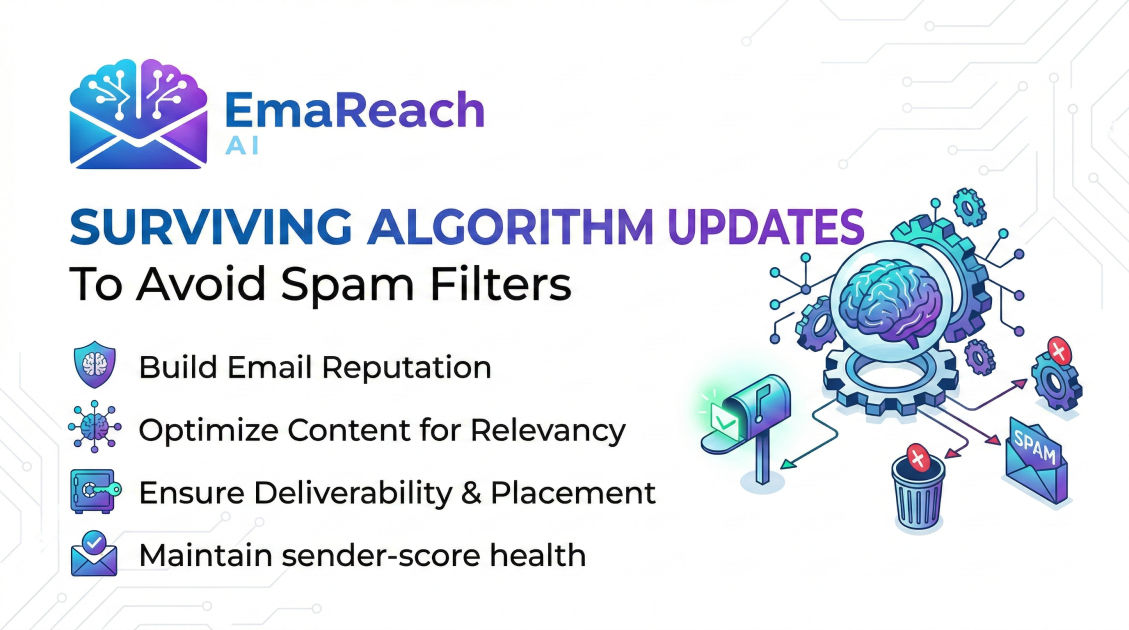
Surviving Algorithm Updates to Avoid Spam in Cold Email
cold emailemail deliverabilityspam filtersoutreach strategyemail marketingsender reputation
Introduction
The landscape of cold email is constantly shifting. For those who rely on outbound sales to drive growth, the phrase "algorithm update" can be a source of significant anxiety. Major email service providers (ESPs) such as Google and Microsoft are in a perpetual arms race against low-quality, high-volume senders. Their goal is simple: protect the user experience by ensuring that only relevant, high-quality communications reach the inbox.
However, for legitimate businesses attempting to connect with potential partners, these updates can feel like collateral damage. A strategy that worked flawlessly yesterday might result in a 0% open rate today. Surviving these updates requires a shift from "blunderbuss" tactics to a sophisticated, technical, and human-centric approach. This guide explores the mechanics of email algorithms and how to build a resilient outreach system that thrives despite constant changes.
The Anatomy of Modern Email Algorithms
To survive updates, you must first understand what the algorithms are looking for. Modern spam filters are no longer just looking for keywords like "free" or "buy now." They utilize machine learning and massive data sets to evaluate sender reputation across multiple dimensions.
Engagement Metrics: The Ultimate Deciding Factor
Algorithms prioritize user behavior. If people frequently open your emails, reply to them, and move them to their primary folder, the algorithm views you as a high-quality sender. Conversely, if your emails are deleted without being opened, or worse, marked as spam, your reputation takes a hit.
Technical Infrastructure
ESPs check your "digital credentials" every time you hit send. This includes your SPF, DKIM, and DMARC records. If these are missing or misconfigured, your email is viewed as a security risk and will likely be throttled or blocked entirely.
Sending Patterns and Volume
Sudden spikes in sending volume are a major red flag. If an account goes from sending five emails a day to 500, the algorithm assumes the account has been compromised or is being used for spam. Consistency and gradual scaling are the keys to staying under the radar.
Building a Bulletproof Technical Foundation
Before you write a single line of copy, your technical setup must be flawless. This is the bedrock of deliverability. Even the best content will fail if the underlying infrastructure is weak.
Domain Diversification
One of the most common mistakes in cold email is sending from your primary company domain. If your primary domain gets blacklisted, your entire company loses the ability to communicate with clients, vendors, and even internal staff. Instead, use specialized "sending domains" that are variations of your main brand. This isolates your outreach activity and protects your core business infrastructure.
Authentication Protocols
- SPF (Sender Policy Framework): A DNS record that specifies which mail servers are authorized to send email on behalf of your domain.
- DKIM (DomainKeys Identified Mail): Adds a digital signature to your emails, allowing the receiver to verify that the email was indeed authorized by the owner of that domain.
- DMARC (Domain-based Message Authentication, Reporting, and Conformance): A policy that uses SPF and DKIM to tell receiving servers how to handle emails that fail authentication.
Proper Inbox Warm-up
Never start sending cold emails from a brand-new inbox immediately. You must "warm up" the account by gradually increasing the volume of sent and received emails. This mimics natural human behavior and builds a positive sender history.
For those looking for a seamless way to manage this, EmaReach provides a comprehensive solution. It combines AI-written cold outreach with automated inbox warm-up and multi-account sending, ensuring your emails land in the primary tab and get replies rather than being buried in the spam folder.
Content Strategy: Beyond the Template
Algorithm updates frequently target specific patterns in content. When thousands of people use the exact same template found in a popular blog post, spam filters quickly learn to identify and block that specific string of text.
High-Level Personalization
Surface-level personalization, such as "Hi {First_Name}," is no longer enough. Sophisticated algorithms can detect templated structures. To survive, you must incorporate deep personalization that includes specific details about the recipient’s company, recent achievements, or industry challenges. This proves to the algorithm (and the recipient) that the email is a one-to-one communication.
Avoiding Spam Triggers and Formatting Red Flags
While the filters are smarter, basic spam triggers still matter. Avoid:
- Excessive use of bold or capitalized text.
- Using too many links or attachments in the first touchpoint.
- Using "clickbait" subject lines that don't match the body of the email.
- Including excessive HTML styling; plain-text emails often perform better as they look like personal notes.
The Power of Spin Tax and Variation
If you are sending to a larger list, use "spin tax" to vary your language. Instead of saying "I'd love to chat," you might rotate between "Are you open to a brief call?" or "Would you be interested in a quick sync?" This prevents the algorithm from identifying a repetitive footprint.
Data Quality and List Hygiene
Your deliverability is only as good as your data. High bounce rates are one of the fastest ways to destroy a sender's reputation. When an ESP sees that you are repeatedly sending emails to addresses that don't exist, they conclude that you are using an unverified, low-quality list.
Regular Verification
Use email verification tools to scrub your lists before every campaign. Remove catch-all addresses, syntax errors, and known "spam traps" (email addresses set up by providers specifically to catch unauthorized senders).
Segmentation and Targeting
Sending a broad message to a massive, unsegmented list is a recipe for disaster. Break your lists down by industry, job title, or pain point. Highly targeted emails receive higher engagement rates, which signals to the algorithm that your content is valuable.
Monitoring and Adapting to Changes
You cannot manage what you do not measure. Surviving algorithm updates requires constant monitoring of your deliverability metrics.
Key Metrics to Track
- Open Rate: A sudden drop usually indicates you've moved from the inbox to the spam folder.
- Reply Rate: The gold standard of engagement. High reply rates can actually improve your reputation over time.
- Bounce Rate: Keep this below 2% to stay in the good graces of ESPs.
- Spam Complaint Rate: This should be as close to zero as possible. Even a small number of "mark as spam" clicks can trigger a manual review or a permanent block.
Setting Up Postmaster Tools
Tools like Google Postmaster provide direct insight into how Google views your domain. It tracks your reputation, encryption levels, and delivery errors. If you see your reputation trending downward, it’s time to pause your campaigns and investigate the cause.
The Human Element: Why Empathy Wins
At the end of the day, algorithms are designed to mimic human preferences. If you write emails that a human actually wants to read, you are already halfway to surviving any update. Focus on providing value rather than just asking for a meeting. Share a helpful resource, offer a unique insight, or ask a thoughtful question. When your outreach feels like a helpful suggestion rather than an unwanted intrusion, your engagement metrics will reflect that, and the algorithms will reward you with inbox placement.
Scaling Safely: The Multi-Inbox Approach
To reach a large audience without triggering spam filters, you should distribute your volume across multiple inboxes and domains. Instead of sending 100 emails from one account, send 20 emails from five different accounts. This keeps the volume per inbox low and natural-looking.
This is where a tool like EmaReach becomes essential. By automating the management of multiple accounts and ensuring each one is properly warmed up, it allows you to scale your outreach safely and effectively. It takes the technical burden off your shoulders so you can focus on closing deals.
Conclusion
Surviving algorithm updates in the world of cold email is not about finding a "hack" or a shortcut. It is about committing to technical excellence, maintaining high data standards, and prioritizing genuine human connection. By building a robust infrastructure, personalizing your content at scale, and monitoring your reputation closely, you can ensure that your messages continue to reach the people who need them most. The rules of the game will continue to change, but those who focus on quality and deliverability will always find a way to the inbox.
EmaReach AI
Ready to scale your cold email outreach?
Join thousands of teams using EmaReach AI for AI-powered campaigns, domain warmup, and 95%+ deliverability. Start free — no credit card required.
Related posts
- Read article
The Instantly Alternative That Finally Gets Outbound Analytics Right
Discover why high-volume cold email requires a shift from surface-level vanity metrics to deep, data-driven revenue attribution, and explore the ultimate alternatives for mastering outbound engineering.
- Read article
What You Gain and What You Give Up When Switching From Instantly
Thinking about migrating your cold email stack? This detailed guide breaks down the exact operational advantages you gain and the core features you sacrifice when switching away from Instantly's popular outreach platform.