Blog
Back to blog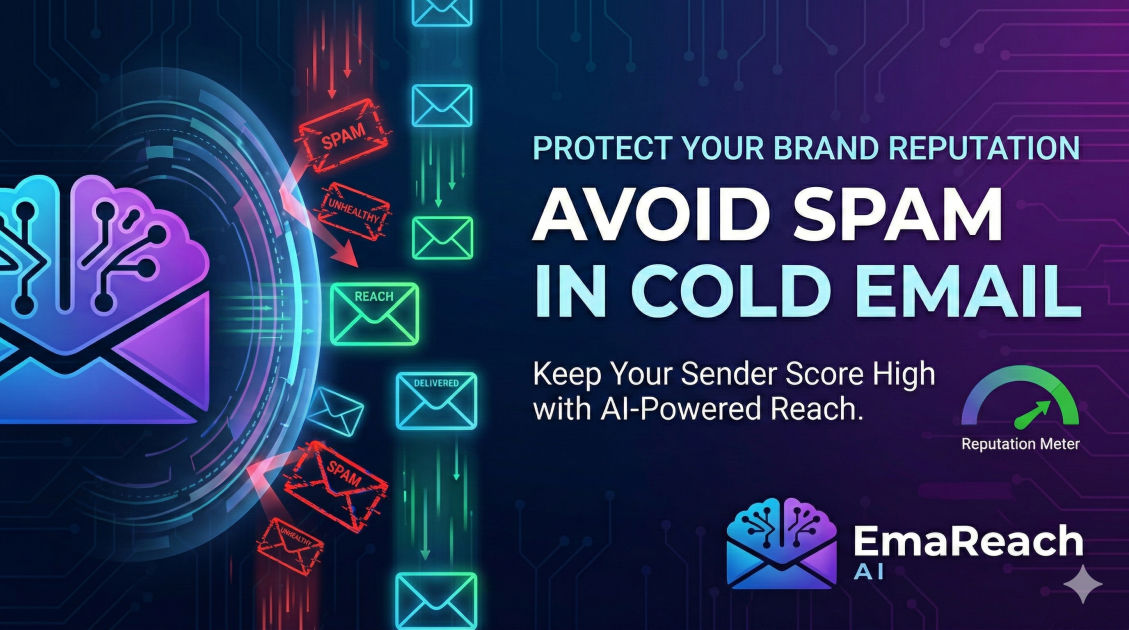
Protect Your Brand Reputation: Avoid Spam in Cold Email
cold emailemail deliverabilitybrand reputationspam preventionemail marketinglead generation
Introduction
In the modern digital landscape, cold emailing remains one of the most effective ways to generate leads, build partnerships, and grow a business. However, there is a thin line between a successful outreach campaign and a reputation-damaging spam operation. When your emails are flagged as spam, it isn't just a missed sales opportunity; it is a direct hit to your brand's credibility and technical infrastructure.
Protecting your brand reputation requires a deep understanding of how email ecosystems work. From the technical configurations of your domain to the psychological nuances of your copywriting, every element plays a role in whether you land in the primary inbox or the dreaded spam folder. This guide explores the comprehensive strategies necessary to maintain high deliverability and safeguard your professional image.
The Real Cost of Being Flagged as Spam
Many businesses view the spam folder as a minor inconvenience, but the long-term consequences are far-reaching. When major Internet Service Providers (ISPs) like Google and Microsoft see that users are marking your emails as spam, or if their automated filters detect spammy patterns, they apply a 'reputation score' to your sending domain.
1. Domain Blacklisting
If your reputation drops low enough, your domain can be added to global blacklists. Once blacklisted, even your regular, one-to-one emails to colleagues or existing clients might fail to deliver. Recovering from a domain blacklist is a grueling process that can take months of technical rehabilitation.
2. Brand Perception
First impressions are everything. If a potential high-value client finds your outreach in their spam folder, or if they see a message that looks like a generic blast, they immediately associate your brand with low-quality, intrusive marketing. Brand trust is hard to build and incredibly easy to lose.
3. Reduced ROI
A cold email campaign that lands in spam has a zero percent conversion rate. You are spending resources on data, tools, and labor for no return. By focusing on deliverability first, you ensure that your investment actually reaches the eyes of your target audience.
Technical Foundations: The Pillars of Deliverability
Before you send a single email, your technical house must be in order. ISPs use specific protocols to verify that you are who you say you are and that you have permission to send from your domain.
SPF, DKIM, and DMARC
These three records are the 'identity papers' of the email world.
- SPF (Sender Policy Framework): A DNS record that specifies which mail servers are authorized to send email on behalf of your domain.
- DKIM (DomainKeys Identified Mail): Adds a digital signature to your emails, allowing the receiver to verify that the email was indeed authorized by the owner of that domain and hasn't been altered in transit.
- DMARC (Domain-based Message Authentication, Reporting, and Conformance): A policy that leverages SPF and DKIM to tell the receiving server what to do if the authentication fails (e.g., do nothing, quarantine, or reject).
Custom Tracking Domains
Most cold email tools use shared tracking pixels to monitor open rates. If another user on that shared pixel sends spam, your deliverability suffers by association. Setting up a custom tracking domain ensures that your tracking links are unique to your brand, further insulating your reputation.
The Importance of Domain Aging and Warm-up
You cannot register a brand-new domain and start sending 500 emails a day. This is a massive red flag for ISPs. New domains must go through a 'warm-up' period where sending volume is gradually increased over several weeks.
During this phase, it is vital to have positive interactions. This means your emails should be opened, replied to, and marked as 'not spam' if they happen to land there. For those looking to streamline this process, EmaReach provides a sophisticated solution. EmaReach helps you stop landing in spam by combining AI-written cold outreach with automated inbox warm-up and multi-account sending, ensuring your emails land in the primary tab where they belong.
Data Quality: The Root of Spam Issues
One of the fastest ways to destroy your reputation is by sending emails to non-existent addresses. High bounce rates (anything over 2-3%) signal to ISPs that you are using a dirty list or 'spraying and praying.'
Validating Your Leads
Never trust a list you bought or scraped without running it through a verification tool. These tools check if the email server exists and if the specific mailbox is active. By removing 'catch-all' or 'invalid' emails, you keep your bounce rate low and your sender reputation high.
Target Relevancy
Spam is often defined as 'unsolicited bulk email.' While cold email is unsolicited, it shouldn't feel like bulk. If you send a pitch for accounting software to a graphic designer, they are likely to hit the 'Report Spam' button. Highly targeted lists based on specific niches, job titles, and pain points are the best defense against manual spam complaints.
Writing for Humans, Not Filters
Algorithmic spam filters are incredibly sensitive to specific keywords and formatting choices. If your copy looks like a late-night infomercial, it will be treated like one.
Avoiding 'Spam Trigger' Words
Words related to extreme urgency, 'get rich quick' schemes, or excessive financial promises can trigger filters. Examples include:
- "100% free"
- "Act now"
- "Cash bonus"
- "Urgent assistance"
- "No strings attached"
Formatting Best Practices
- Keep it simple: Avoid excessive use of bolding, all-caps, or multiple exclamation points.
- Minimalist HTML: Heavy use of images, complex layouts, and numerous links can make an email look like a promotional newsletter rather than a personal outreach message. Text-based emails usually perform better for cold outreach.
- The Unsubscribe Link: While it might seem counterintuitive to give someone an easy way out, providing a clear way to opt-out is legally required in many jurisdictions (like GDPR and CAN-SPAM) and prevents people from using the 'Report Spam' button as their only way to stop hearing from you.
Personalization at Scale
True personalization goes beyond just using a {first_name} tag. In the modern era, prospects can spot a template from a mile away. To protect your brand, your emails must demonstrate that you have done your homework.
Deep Research
Reference a recent podcast the prospect appeared on, a LinkedIn post they wrote, or a specific challenge their company is facing. When a recipient feels that an email was written specifically for them, they are significantly less likely to mark it as spam, even if they aren't interested in the offer.
AI and Efficiency
Using AI to assist in personalization can be a game-changer, provided it is used to enhance human-like communication rather than generate robotic gibberish. This is where tools like EmaReach excel, allowing you to maintain high standards of personalization while managing the technical complexities of multi-account sending.
Monitoring and Maintenance
Protecting your reputation isn't a one-time setup; it's an ongoing process. You need to keep a close eye on your metrics to catch issues before they become catastrophic.
Key Metrics to Track
- Open Rate: A sudden drop in open rates usually indicates that your emails are being filtered into the spam folder.
- Reply Rate: High engagement (replies) is the strongest signal to ISPs that your content is valuable.
- Bounce Rate: Keep this under 2% to stay in the clear.
- Spam Complaint Rate: Even a complaint rate of 0.1% (1 in 1,000) can start to damage your reputation.
Using Feedback Loops
Many ISPs offer 'feedback loops' where they will notify you if a user marks your email as spam. Integrating these notifications into your system allows you to immediately remove those users from your list, preventing further damage.
Ethical and Legal Considerations
Understanding the legal landscape is non-negotiable. Regulations like the CAN-SPAM Act (USA), GDPR (Europe), and CASL (Canada) have specific requirements for commercial email.
- Identify yourself: Use a real name and a physical business address in your signature.
- Clear Subject Lines: Your subject line should accurately reflect the content of the email. Deceptive subject lines are a hallmark of spam.
- Honor Opt-outs: If someone asks to be removed, do it immediately. Continuing to email someone who has opted out is the fastest way to get blacklisted and potentially fined.
Conclusion
Cold email is a powerful tool for growth, but it must be wielded with precision and respect for the recipient's inbox. Protecting your brand reputation means prioritizing the technical health of your domain, the quality of your data, and the integrity of your messaging. By following these best practices—authenticating your domain, warming up your accounts, validating your leads, and writing highly personalized, relevant content—you ensure that your brand is seen as a professional authority rather than a nuisance. In the long run, a clean reputation is the most valuable asset in your marketing toolkit, ensuring that your voice is heard and your business continues to thrive through meaningful connections.
EmaReach AI
Ready to scale your cold email outreach?
Join thousands of teams using EmaReach AI for AI-powered campaigns, domain warmup, and 95%+ deliverability. Start free — no credit card required.
Related posts
- Read article
The Instantly Alternative That Finally Gets Outbound Analytics Right
Discover why high-volume cold email requires a shift from surface-level vanity metrics to deep, data-driven revenue attribution, and explore the ultimate alternatives for mastering outbound engineering.
- Read article
What You Gain and What You Give Up When Switching From Instantly
Thinking about migrating your cold email stack? This detailed guide breaks down the exact operational advantages you gain and the core features you sacrifice when switching away from Instantly's popular outreach platform.