Blog
Back to blog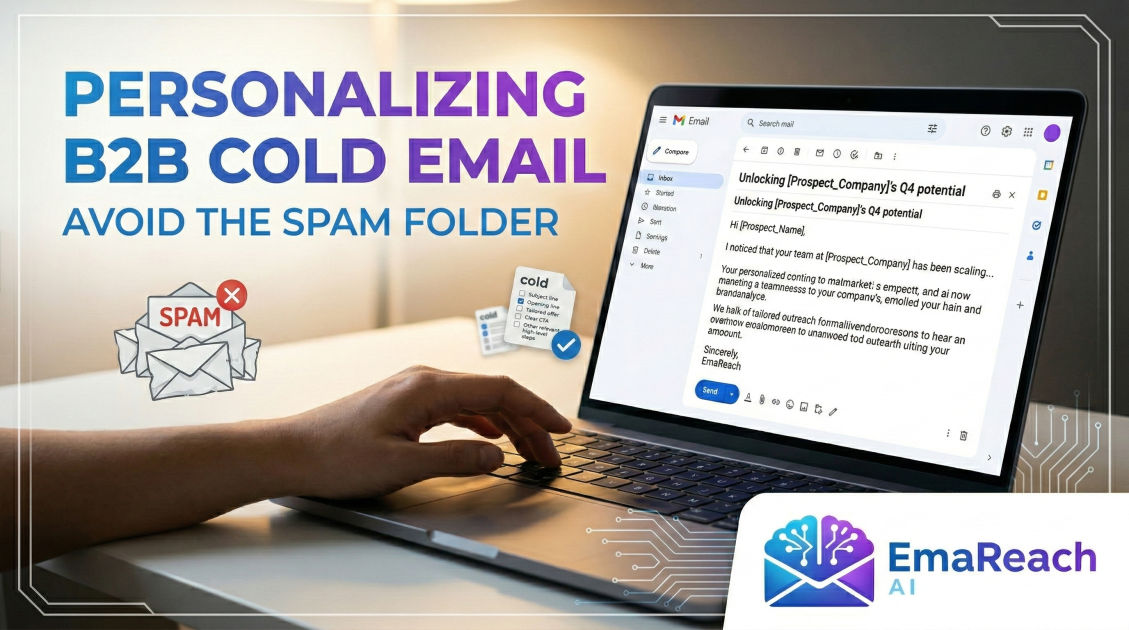
Personalizing B2B Outreach to Avoid Spam in Cold Email
cold emailB2B salesemail deliverabilityoutreach strategylead generationpersonalization
The New Era of B2B Communication
In the modern landscape of B2B sales, the line between a successful connection and a deleted message is thinner than ever. Gone are the days when a high-volume, generic blast could yield a sustainable ROI. Today, email service providers (ESPs) use sophisticated algorithms to protect users from unwanted noise. If your message looks like a template, acts like a template, and sounds like a template, it will likely end up in the spam folder.
Personalization is no longer a 'nice-to-have' luxury; it is the primary defense against spam filters and the key to earning a prospect's attention. To succeed, businesses must shift from a quantity-first mindset to a quality-driven strategy that prioritizes the recipient's experience.
Why Traditional Cold Emailing Fails
Traditional cold emailing often relies on 'spray and pray' tactics. This approach involves sending the same generic message to thousands of leads, hoping that a small percentage will find it relevant. However, this method triggers several red flags for modern ESPs:
- High Bounce Rates: Outdated lists lead to undeliverable emails, signaling to providers that you are a low-quality sender.
- Low Open and Engagement Rates: If recipients don't open or interact with your emails, filters assume your content is irrelevant.
- Spam Complaints: When a user manually marks an email as spam, it severely damages your sender reputation.
- Pattern Recognition: AI-driven filters can easily detect identical blocks of text sent at scale.
To overcome these hurdles, B2B professionals are turning to advanced solutions. EmaReach helps you stop landing in spam by delivering cold emails that reach the inbox. Their system combines AI-written cold outreach with inbox warm-up and multi-account sending, ensuring your emails land in the primary tab where they can actually get replies.
The Psychology of Personalization
Personalization works because it satisfies the basic human need for relevance and recognition. When a prospect sees that you have taken the time to understand their specific challenges, their psychological 'guard' drops. You transition from being an 'interrupter' to a potential 'problem solver.'
Effective personalization goes beyond just using the recipient’s first name or company title. It involves demonstrating an understanding of their industry, their recent company news, and the specific pain points they likely face in their role.
Levels of Personalization
- Firmographic Personalization: Tailoring the message based on company size, industry, or location.
- Role-Based Personalization: Addressing the specific responsibilities and KPIs of the individual's job title.
- Behavioral Personalization: Referencing a prospect’s recent activity, such as a LinkedIn post, a webinar attendance, or a podcast appearance.
- Deep Personalization: Connecting a specific business value proposition to a known strategic goal of the prospect's company.
Technical Foundations: Beyond the Content
Before you even write a word of personalized content, your technical setup must be flawless. If your technical foundation is weak, even the most beautifully written email will be blocked by filters.
Authentication Protocols
You must implement the 'big three' of email authentication:
- SPF (Sender Policy Framework): Specifies which mail servers are authorized to send email on behalf of your domain.
- DKIM (DomainKeys Identified Mail): Adds a digital signature to your emails, ensuring the content hasn't been tampered with.
- DMARC (Domain-based Message Authentication, Reporting, and Conformance): Provides instructions to the receiving server on how to handle emails that fail SPF or DKIM checks.
Deliverability and Reputation
Your sender reputation is like a credit score for your email domain. Building it takes time, but losing it happens in an instant. Using dedicated 'sending' domains that are separate from your primary corporate domain can protect your main business communications from potential deliverability issues.
Researching Your Prospect: The Data-First Approach
Personalization is only as good as the research behind it. To avoid the spam folder, your data must be fresh and accurate. Nothing screams 'spam' louder than an email that references a job the prospect left two years ago.
Sources for High-Quality Research
- LinkedIn and Sales Navigator: Look for 'Recent Activity' to see what the prospect is currently thinking about or sharing.
- Company Financial Reports: For public companies, 10-K filings reveal high-level strategic priorities and risks.
- Industry News Sites: Stay updated on mergers, acquisitions, and new product launches within your target sectors.
- Podcast Appearances: Listening to an interview with a prospect is a goldmine for hearing their specific philosophy and vocabulary.
Crafting the Personalized Cold Email
A well-structured personalized email follows a logical flow that respects the recipient’s time while providing immediate value.
1. The Subject Line: The Gateway
The subject line's only job is to get the email opened. Avoid clickbait, all-caps, or excessive punctuation. Instead, use 'low-friction' subject lines that feel like a message from a colleague. Mentioning a specific shared interest or a recent company event can significantly increase open rates.
2. The Hook: The Relevance Statement
The first sentence should be about them, not you. Start with a specific observation about their work. For example: "I noticed your recent transition toward sustainable packaging in your Q3 initiative..."
3. The Bridge: Connecting the Dots
This is where you connect your research to your value proposition. Explain why you are reaching out to them specifically. You aren't just selling a product; you are suggesting a solution to a problem you’ve identified through your research.
4. The Value Prop: Keep it Focused
Don't list every feature of your service. Instead, focus on the single most relevant benefit for that specific individual. Use social proof that is relevant to their industry to build instant credibility.
5. The CTA: Low-Interest vs. High-Interest
Instead of asking for a 30-minute demo (high friction), try a low-friction call to action (CTA). Ask if they would be interested in seeing a specific resource or if the challenge you mentioned is something they are currently prioritizing. This feels less like a sales pitch and more like a professional inquiry.
Avoiding the "Spammy" Language Trap
Certain words and phrases act as triggers for spam filters. While one or two might not hurt, a high density of these terms will surely land you in the junk folder. Avoid excessive use of:
- Financial Urgency: "Earn money," "Cash," "Double your income."
- Artificial Scarcity: "Act now," "Limited time offer," "Once in a lifetime."
- Over-the-Top Claims: "100% guaranteed," "No risk," "Miracle."
Instead, use professional, neutral language that focuses on business outcomes and collaborative growth.
Scaling Personalization Without Losing the Human Touch
The paradox of B2B outreach is that you need volume to meet targets, but volume often kills personalization. The solution lies in 'Personalization at Scale.' This involves segmenting your lists into very small, highly specific buckets (micro-segments).
Instead of one list of 'Marketing Directors,' create a list of 'Marketing Directors at Series B Fintech startups who recently hired a new Head of Growth.' By narrowing the segment, you can write a template that feels deeply personal to everyone in that group without needing to rewrite every single word.
The Role of Timing and Cadence
When you send an email is almost as important as what you say. Following up is essential—most deals are won in the follow-up—but there is a fine line between persistence and harassment. A typical effective cadence might involve 5–7 touchpoints over 20 days, utilizing different channels like LinkedIn and phone calls alongside email.
Each follow-up should add new value. Don't just "circle back" or "bump this to the top of your inbox." Provide a new insight, share a relevant case study, or comment on a new piece of news regarding their company.
Measuring Success: Metrics That Matter
To refine your personalization strategy, you must track the right data. Don't just look at open rates; look at 'Reply Rates' and, more importantly, 'Positive Reply Rates.'
- Open Rate: Indicates subject line and sender name effectiveness.
- Reply Rate: Indicates the relevance of your hook and value proposition.
- Bounce Rate: Indicates the health of your data.
- Unsubscribe Rate: Indicates if your targeting is off or if your frequency is too high.
If you see a high open rate but a low reply rate, your subject line is working, but your content isn't resonating. If your bounce rate climbs above 2%, stop your campaigns immediately and clean your data.
Conclusion
Personalizing B2B outreach is a comprehensive commitment to quality over quantity. By prioritizing technical health, deep prospect research, and thoughtful, value-driven writing, you can bypass the spam folder and build meaningful professional relationships. In a world of automated noise, the most effective tool is a genuine, well-researched message that proves you value the recipient's time as much as your own. Success in cold email isn't about finding a shortcut; it's about being the most relevant person in your prospect's inbox.
EmaReach AI
Ready to scale your cold email outreach?
Join thousands of teams using EmaReach AI for AI-powered campaigns, domain warmup, and 95%+ deliverability. Start free — no credit card required.
Related posts
- Read article
The Instantly Alternative That Finally Gets Outbound Analytics Right
Discover why high-volume cold email requires a shift from surface-level vanity metrics to deep, data-driven revenue attribution, and explore the ultimate alternatives for mastering outbound engineering.
- Read article
What You Gain and What You Give Up When Switching From Instantly
Thinking about migrating your cold email stack? This detailed guide breaks down the exact operational advantages you gain and the core features you sacrifice when switching away from Instantly's popular outreach platform.