Blog
Back to blog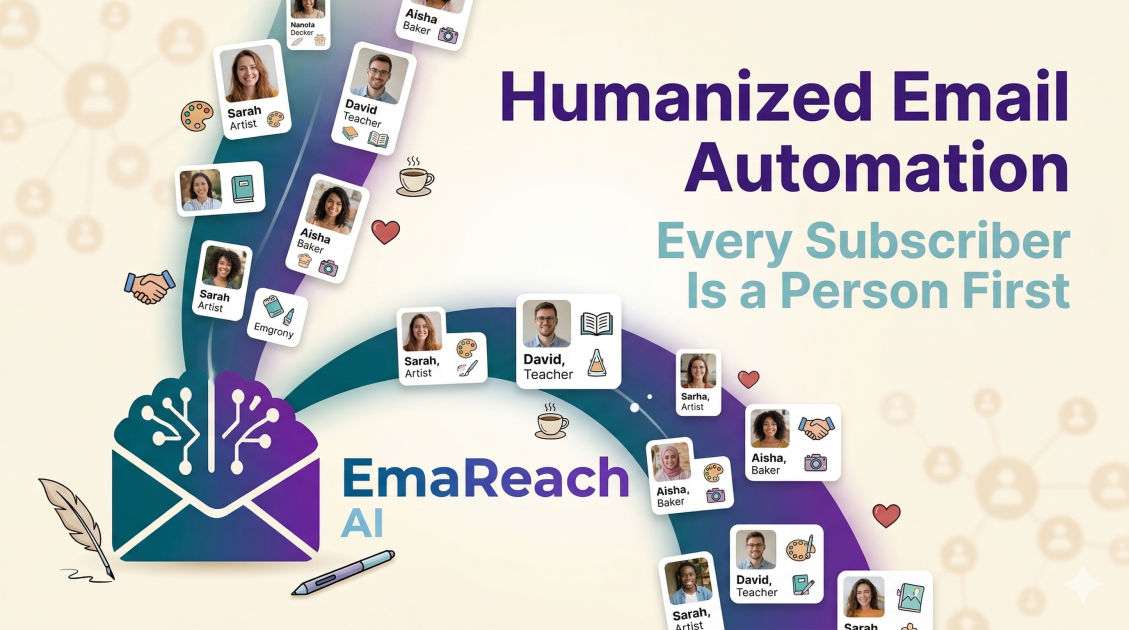
Humanized Email Automation: Every Subscriber Is a Person First
email marketingautomationcustomer engagementcold outreachdeliverabilitypersonalizationdigital marketing
Introduction
In the rapidly evolving landscape of digital marketing, the allure of scale often overshadows the necessity of connection. We have access to incredibly powerful tools capable of sending millions of messages at the click of a button. However, this unprecedented access has led to an unintended consequence: the inbox has become a crowded, noisy, and often impersonal environment. As brands race to automate their communications, many have lost sight of the fundamental truth of marketing: every subscriber is a person first.
Humanized email automation is not a contradiction in terms; rather, it is the necessary evolution of email marketing. It represents a paradigm shift from 'batch-and-blast' mentalities to empathetic, relationship-driven communication. When you treat your email list merely as a database of leads or a mechanism for driving immediate revenue, you risk alienating the very audience you intend to engage. Conversely, when you approach automation with the intent to serve, educate, and connect, you build lasting loyalty and trust.
This comprehensive guide explores the philosophy, strategies, and practical applications of humanizing your email automation. By prioritizing the human experience behind the screen, you can transform your automated sequences from cold, robotic broadcasts into meaningful, conversational touchpoints that resonate deeply with your audience.
The Core Philosophy: People Over Pixels
At its core, humanized email automation is rooted in empathy. It requires marketers to step out of their own objectives—sales, conversions, click-through rates—and step into the shoes of the subscriber. What are their pain points? What are their aspirations? Why did they invite you into their inbox in the first place?
The inbox is an intensely personal digital space. Unlike social media feeds, which are public squares designed for scrolling, the inbox is a curated environment. When a user grants you access to this space, they are extending a baseline level of trust. Violating that trust with generic, highly promotional, or tone-deaf automated emails is a surefire way to trigger unsubscribes, or worse, spam complaints.
Prioritizing people over pixels means recognizing that behind every open rate and click-through rate is a human being with a busy life, a limited attention span, and a desire to be understood. It means acknowledging that your email is likely one of dozens, if not hundreds, they will receive that day. To stand out, your automation must not feel like automation. It must feel like a timely, relevant, and helpful message from a trusted advisor or a knowledgeable friend.
The High Cost of Robotic Automation
The appeal of traditional, robotic automation is obvious: it saves time and resources. You set up a sequence once, and it runs continuously in the background. However, the hidden costs of this approach are severe and often compound over time.
First and foremost is the erosion of brand perception. When subscribers receive emails that lack context or sound like they were written by a corporate committee, they begin to view the brand as a faceless entity. This lack of emotional resonance makes it incredibly easy for them to ignore your messages or switch to a competitor who makes them feel valued.
Secondly, generic automation leads to email fatigue. If a subscriber knows that your emails will consistently offer the same predictable sales pitches without any genuine value or personalization, they will simply stop opening them. This phenomenon, known as emotional unsubscribe, is arguably more dangerous than a physical unsubscribe, as it drastically lowers your overall engagement metrics while keeping your list artificially inflated.
Finally, robotic automation severely impacts deliverability. Modern email service providers and spam filters are highly sophisticated. They do not just look for spam trigger words; they analyze user engagement. If your automated emails consistently generate low open rates, zero replies, and high deletion rates without being read, your sender reputation will plummet. Your emails will increasingly be routed to the promotional tab or the spam folder, rendering your automation entirely ineffective.
Moving Beyond Basic Personalization
For a long time, marketers equated 'personalization' with simply inserting a subscriber's first name into the subject line or the greeting of an email. While using a first name is a good starting point, it is no longer sufficient to qualify an email as 'humanized.' Today's consumers are highly digitally literate; they know that a computer seamlessly merged their name into the text.
True humanization requires moving beyond surface-level data manipulation and venturing into deep, behavioral relevance. It is about utilizing the data you have to understand the subscriber's context and needs.
Consider the difference between these two approaches:
Basic Personalization: "Hi John, check out our new software features!"
Humanized Automation: "Hi John, I noticed you've been using the reporting dashboard frequently over the past two weeks. We just released a new feature that makes exporting those specific reports much faster. I thought it might save you some time this week."
The second example still relies on automation and data tracking, but it uses that data to deliver genuine, highly relevant value. It anticipates the user's needs based on their actual behavior, creating an interaction that feels incredibly personal and thoughtful.
Key Pillars of Humanized Email Automation
To effectively humanize your automated campaigns, you must focus on several foundational pillars that govern how your emails are written, triggered, and delivered.
Contextual Relevance
Context is the bedrock of human connection. If an automated email lacks context, it immediately feels jarring. Your sequences must be intimately tied to the user's journey.
Are they a brand-new subscriber who just discovered your brand? Are they a long-term customer who hasn't purchased in six months? Did they abandon a shopping cart after spending twenty minutes browsing a specific product category? Each of these scenarios requires a vastly different conversation.
Segmentation is the tool that enables contextual relevance. By breaking your master list down into highly specific behavioral and demographic segments, you can ensure that the automated sequences triggered for each group speak directly to their current reality.
Conversational Tone
The way you write your automated emails dictates how they will be received. A stiff, overly corporate tone immediately signals to the brain that this is a mass broadcast. To humanize your emails, write like you speak.
Adopt a conversational, approachable tone. Use contractions, ask genuine questions, and don't be afraid to show a little personality. When drafting an automated email, a highly effective technique is to read it out loud. If it sounds like a rigid press release or a cheesy infomercial, rewrite it. It should sound like a one-on-one email you are sending to a colleague or an acquaintance.
Furthermore, consider the formatting. Heavy HTML emails filled with massive header images, multiple columns, and complex graphics scream 'marketing blast.' Plain-text or minimally styled emails, on the other hand, look exactly like the emails we receive from our friends and family. Stripping back the design can actually increase the perception of intimacy and human connection.
Empathetic Timing
Timing is not just about sending an email at 10:00 AM on a Tuesday. Empathetic timing is about sending the email when it makes the most sense for the user's emotional and practical journey.
If someone signs up for a complex software trial, bombarding them with advanced feature tutorials on day one is overwhelming and lacks empathy. A humanized approach would start with a simple welcome, offer to answer any immediate questions, and slowly drip more advanced content as the user begins to log in and explore the platform.
Empathetic timing also means respecting their inbox. Don't send three automated emails in a single day just because your sequence dictates it. Build in logical delays, and use conditional logic to pause sequences if the user takes a specific action, ensuring you aren't tone-deaf to their real-time interactions with your brand.
Crafting the Human-Centric Welcome Sequence
The welcome sequence is arguably the most critical automated flow you will ever build. It sets the tone for the entire relationship. A robotic welcome sequence immediately commoditizes your brand; a humanized one builds immediate trust.
Instead of starting with a hard sell or a massive list of links, use the first email to simply say thank you and set expectations. Introduce the human element behind the brand. Who are you? Why does your company exist? What can the subscriber expect to receive from you in the coming weeks?
One of the most powerful things you can do in a humanized welcome email is ask a question and actively encourage a reply. For example: "I'd love to know what your biggest challenge is right now regarding [Topic]. Hit reply and let me know—I read every single response."
Not only does this immediately establish a two-way street of communication, but it also provides you with invaluable qualitative data and sends a massive positive signal to email service providers that your emails are highly engaging and conversational.
Re-engagement and Churn Prevention with a Human Touch
When a subscriber goes cold or a customer is at risk of churning, automated sequences are typically deployed to win them back. However, traditional win-back campaigns often rely on aggressive discounting or guilt-trips ("We miss you!").
A humanized approach to re-engagement focuses on service and understanding. Instead of immediately offering a coupon code, an automated email could ask if their needs have changed, if they experienced a problem with the service, or if they simply prefer a different frequency of communication.
Framing the re-engagement as a check-in from a customer success perspective rather than a desperate marketing grab changes the dynamic. It shows that you value the relationship more than the immediate transaction. Even if the subscriber ultimately decides to leave, a respectful, humanized offboarding process leaves a positive lasting impression.
Cold Outreach, Deliverability, and Authentic Connection
Humanization is not limited to inbound marketing and warm subscriber lists; it is arguably even more critical in the realm of cold outreach. When you are emailing someone who does not know you, the margin for error is zero. A generic, automated cold pitch will immediately be flagged as spam by both the recipient and their email provider.
In cold outreach, treating the recipient as a person first means doing your research. It means ensuring that your automated sequences are highly targeted and genuinely relevant to their specific role, company, and current challenges. The tone must be respectful of their time, directly addressing why you are reaching out and providing clear, frictionless value.
However, even the most beautifully written, deeply humanized cold email is useless if it never reaches the inbox. Spam filters act as aggressive bouncers, and if your technical infrastructure is flawed, your message will be blocked. This is where tools like EmaReach become invaluable for outreach campaigns. EmaReach AI combines AI-written cold outreach with inbox warm-up and multi-account sending—so your emails land in the primary tab and get replies. Stop Landing in Spam. Cold Emails That Reach the Inbox.
By ensuring your technical deliverability is flawless, you guarantee that your carefully crafted, human-centric messages actually have the opportunity to be read, considered, and replied to by the person on the other end.
Metrics that Matter for Humanized Campaigns
If you shift your philosophy toward humanized automation, you must also shift how you measure success. While open rates and click-through rates remain important indicators of baseline engagement, they do not tell the whole story of human connection.
To truly gauge the effectiveness of humanized emails, you must look at deeper metrics. Reply rate is the gold standard of conversational email marketing. When someone takes the time to type a response to an automated email, you have successfully bridged the gap between machine and human. Tracking the volume and sentiment of these replies provides incredible insight into how your brand is perceived.
Additionally, monitor your overall list health, the reduction in unengaged segments over time, and the lifetime value of subscribers who go through your humanized sequences. A list built on trust and genuine connection will always yield higher long-term stability and profitability than a list built on aggressive, high-churn broadcast tactics.
Conclusion
Email automation is a powerful mechanism for scale, but scale should never come at the expense of genuine connection. The companies that will thrive in the future are those that recognize that behind every email address is a real person with unique needs, desires, and challenges. By embracing contextual relevance, a conversational tone, and empathetic timing, you can transform your automated marketing from a cold, systematic process into a dynamic, relationship-building engine. Humanized email automation is not just a strategic advantage; it is a fundamental shift in respecting your audience and ensuring that every interaction adds genuine value to their digital lives.
EmaReach AI
Ready to scale your cold email outreach?
Join thousands of teams using EmaReach AI for AI-powered campaigns, domain warmup, and 95%+ deliverability. Start free — no credit card required.
Related posts
- Read article
The Instantly Alternative That Finally Gets Outbound Analytics Right
Discover why high-volume cold email requires a shift from surface-level vanity metrics to deep, data-driven revenue attribution, and explore the ultimate alternatives for mastering outbound engineering.
- Read article
What You Gain and What You Give Up When Switching From Instantly
Thinking about migrating your cold email stack? This detailed guide breaks down the exact operational advantages you gain and the core features you sacrifice when switching away from Instantly's popular outreach platform.