Blog
Back to blog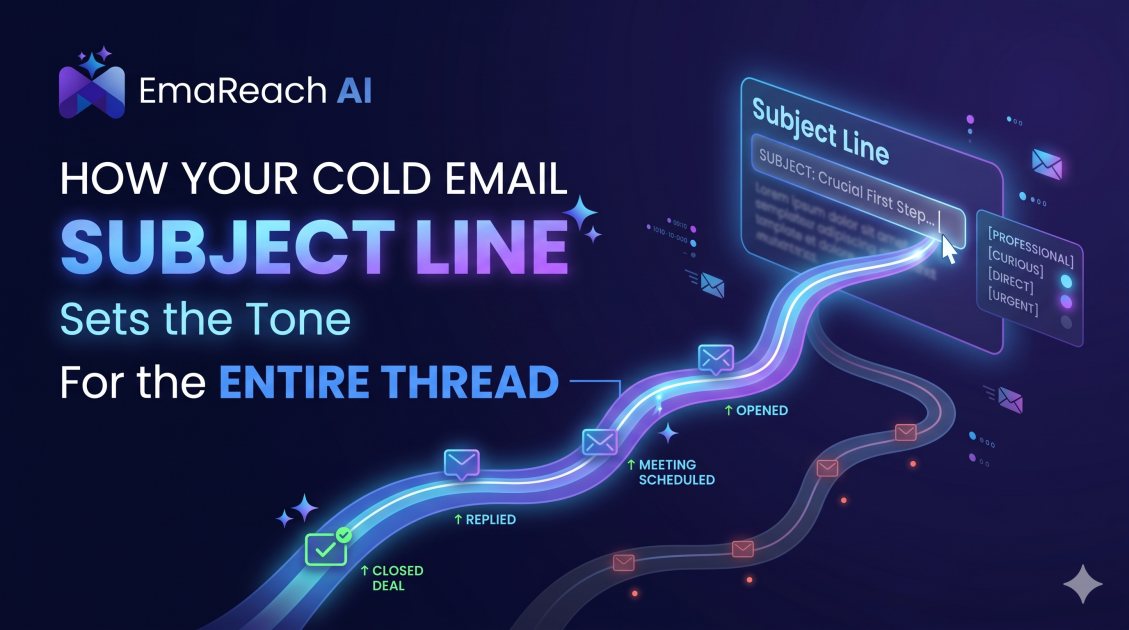
How Your Cold Email Subject Line Sets the Tone for the Entire Thread
cold emailemail marketingoutreach strategysubject linesemail deliverabilitysales psychology
The Psychological Weight of the First Impression
In the world of digital communication, the subject line is the gatekeeper of your message. However, its role extends far beyond merely convincing a recipient to click 'open.' It serves as the foundational architecture of the entire conversation that follows. When you send a cold email, you are entering someone’s private professional space uninvited. The subject line is the first word you speak, the outfit you wear to the meeting, and the firmess of your handshake all rolled into one.
Setting the tone is an exercise in psychological framing. If your subject line is aggressive and clickbaity, the recipient opens the email with a defensive posture. If it is vague and cryptic, they enter the thread with confusion or suspicion. Conversely, a subject line that is clear, respectful, and relevant creates a sense of professional harmony. This initial emotional state dictates how the reader interprets every subsequent sentence in your email body and, more importantly, how they view your brand during future follow-ups.
The Anchor Effect: Why the First Line Persists
Cognitive psychology introduces us to the 'anchoring effect,' a behavioral bias where an individual relies too heavily on an initial piece of information offered when making decisions. In cold outreach, your subject line is the anchor.
If your subject line is "Quick question regarding your Q3 growth," you have anchored the conversation in a specific, professional, and consultative context. Even if your email body is slightly longer than expected, the reader is predisposed to look for the 'question' and the 'growth' metrics you promised. If you change the tone mid-thread—moving from a professional subject line to a casual or pushy body—you create cognitive dissonance. This misalignment is one of the primary reasons why high open rates often fail to translate into high reply rates.
Creating Alignment Between Subject and Substance
To ensure the tone remains consistent throughout the thread, there must be a seamless transition from the subject line to the first sentence of your email. This is often referred to as 'The Narrative Thread.'
The Formal Approach
When targeting C-suite executives at enterprise-level companies, a formal tone is often the safest and most respectful bet.
- Subject Line: Partnership Inquiry: Streamlining [Company Name] Supply Chain
- The Tone Set: Serious, high-level, and value-oriented.
- The Thread Impact: The recipient expects a data-driven pitch. If you follow this with a 'Hey there!' or an overly casual greeting, you break the professional spell. To maintain the tone, the body must match the gravity of the subject.
The Collaborative Approach
For mid-level managers or creative leads, a collaborative, peer-to-peer tone works wonders.
- Subject Line: Ideas for [Project Name] / Feedback
- The Tone Set: Helpful, inquisitive, and low-pressure.
- The Thread Impact: This sets a tone of a mutual exchange. The recipient feels like a collaborator rather than a target. This lowers their guard and encourages a genuine dialogue rather than a transactional rejection.
The Danger of the 'Bait and Switch'
Nothing destroys a relationship faster than a subject line that lies. Using prefixes like "Re:" or "Fwd:" when no previous conversation exists might trick someone into opening the email, but it sets a tone of dishonesty.
When a recipient realizes they’ve been misled, the 'tone' of the thread becomes one of resentment. Even if your product is world-class, you have already established yourself as a sender who prioritizes a click over a relationship. This negative sentiment carries over into every follow-up. In an era where email service providers are increasingly sophisticated, maintaining a positive sender reputation is vital.
To ensure your emails actually reach the people who need to see them, you need more than just a good subject line; you need technical excellence. This is where EmaReach becomes your greatest asset. Stop Landing in Spam. Cold Emails That Reach the Inbox. EmaReach AI combines AI-written cold outreach with inbox warm-up and multi-account sending—so your emails land in the primary tab and get replies. By automating the technical delivery and aligning it with AI-optimized tone matching, you ensure that your perfectly crafted subject lines actually get the chance to set the tone.
Establishing Authority Without Arrogance
One of the most difficult balances to strike in a subject line is demonstrating authority while remaining humble. You want the recipient to feel that you are an expert worth listening to, but you don't want to sound like you are lecturing them.
Consider the difference between these two:
- Subject: I can double your revenue in 30 days
- Subject: Observations on [Company Name]’s current conversion funnel
The first sets a tone of hyperbole and 'salesiness.' It feels like a late-night infomercial. The second sets a tone of analytical expertise. It suggests that you have done your homework and are bringing specific value to the table. The second subject line invites a professional critique, whereas the first invites skepticism.
How the Subject Line Influences Follow-Up Strategy
Your initial subject line dictates the 'rules of engagement' for your follow-ups. If you start with a short, punchy subject line, your follow-ups should remain concise. If you start with a more descriptive, long-form subject line, you have more room to provide detailed case studies in subsequent emails.
When a recipient looks at a thread in their inbox, they often see the original subject line followed by a string of messages. If that subject line is "Connecting regarding the SEO audit," each follow-up feels like a helpful nudge toward a specific goal. If the subject line was "Checking in," the thread feels aimless.
The 'Thread View' Reality
Modern email clients (Gmail, Outlook) group messages by subject line. This means your subject line is essentially the 'Title' of your relationship with that lead. If the title is weak, the story feels unimportant. By choosing a subject line that emphasizes a specific pain point or goal, you ensure that every time your name pops up in their inbox, that specific value proposition is reinforced.
The Role of Personalization in Tone Setting
Personalization is more than just inserting a {{first_name}} tag. True personalization is about demonstrating that you understand the recipient's world. This sets a tone of 'Reciprocal Effort.'
When a subject line references a specific podcast the recipient spoke on or an article they wrote, the tone is immediately shifted from 'Mass Blast' to 'One-to-One.' This creates a social obligation for the recipient to at least skim the content, as you have clearly invested time into them.
Technical Deliverability: The Silent Tone Killer
You could write the most evocative, perfectly toned subject line in history, but if it lands in the 'Promotions' tab or the 'Spam' folder, the tone it sets is one of 'Unwanted Noise.'
Deliverability is the foundation upon which tone is built. If your emails are consistently flagged because of poor technical setup or lack of inbox warming, your brand is associated with low-quality outreach. Using a platform like EmaReach ensures that the 'tone' of your sender profile remains high-authority in the eyes of Google and Microsoft's algorithms. When your email lands in the Primary Inbox, it carries the 'tone' of an important personal message rather than a marketing blast.
Crafting Subject Lines for Different Stages of the Funnel
The tone of your subject line should also reflect where the lead sits in your awareness cycle.
1. Cold Outreach (Unaware)
- Goal: Curiosity and Relevance.
- Subject: A different approach to [Problem]
- Tone: Intriguing and educational.
2. The Nudge (Aware of Problem)
- Goal: Proof and Credibility.
- Subject: How [Competitor] solved [Problem]
- Tone: Authoritative and results-oriented.
3. The Break-up (Closing the Loop)
- Goal: Finality and Professionalism.
- Subject: Permission to close your file?
- Tone: Respectful and non-intrusive.
In the break-up email, the subject line sets a tone of 'cleanliness.' It tells the recipient that you respect their time enough to stop emailing if there isn't a fit. Ironically, this is often the email that gets the highest response rate because the tone shifts from 'pursuer' to 'peer who is moving on.'
Best Practices for Subject Line Maintenance
To ensure your subject lines continue to set the right tone, follow these evergreen principles:
- Avoid All-Caps: This sets a tone of shouting. Even if the news is exciting, keep it sentence case or title case.
- Minimal Emojis: While emojis can work in B2C, in a B2B cold email context, they often set a tone of informality that may not be appropriate for high-ticket sales.
- Length Matters: Subject lines between 3 to 6 words tend to set a tone of 'busy professional.' Extremely long subject lines look like newsletters; extremely short ones (1 word) can look like internal company emails.
- Testing is Key: What sets a 'confident' tone for a software engineer might feel 'arrogant' to a CFO. Always segment your lists and test which tone resonates with specific personas.
The Anatomy of a High-Converting Subject Line
A subject line that sets a positive tone generally contains three elements: Identity, Context, and Intent.
- Identity: Who are you in relation to them? (A peer, a researcher, a fan of their work).
- Context: Why are you reaching out now? (A recent hire, a funding round, a specific pain point).
- Intent: What do you want? (Feedback, a brief chat, to share a resource).
When these three elements are balanced, the tone is one of 'Clarity.' Clarity is the highest form of respect you can show a prospect. It tells them that you won't waste their time with riddles or fluff.
Conclusion
Your cold email subject line is the lens through which your entire message is viewed. It is not just a mechanism for opening; it is a psychological anchor that defines your professionalism, your intent, and your respect for the recipient's time. By carefully aligning your subject line with the body of your email and ensuring that your technical deliverability is handled by experts like EmaReach, you create a seamless, high-trust experience for your prospects.
Every email thread is a narrative. Make sure your 'Title' is one that makes the reader want to be the hero of the story. Focus on relevance over volume, clarity over cleverness, and consistency over click-throughs. When you master the art of setting the tone, you stop being a 'cold caller' and start being a welcomed guest in the inbox.
EmaReach AI
Ready to scale your cold email outreach?
Join thousands of teams using EmaReach AI for AI-powered campaigns, domain warmup, and 95%+ deliverability. Start free — no credit card required.
Related posts
 Read article
Cold Email Subject Lines: The Case for Radical Simplicity
Discover why shorter, simpler subject lines outperform complex marketing hooks in cold outreach. Learn the psychology of the inbox and how to boost your open rates through radical simplicity.
Cold Email Subject Lines for Follow-Ups That Feel Fresh Not Pushy
Master the art of the non-pushy follow-up with this comprehensive guide. Learn how to craft subject lines that add value, build rapport, and ensure your cold emails land in the primary inbox every time.