Blog
Back to blog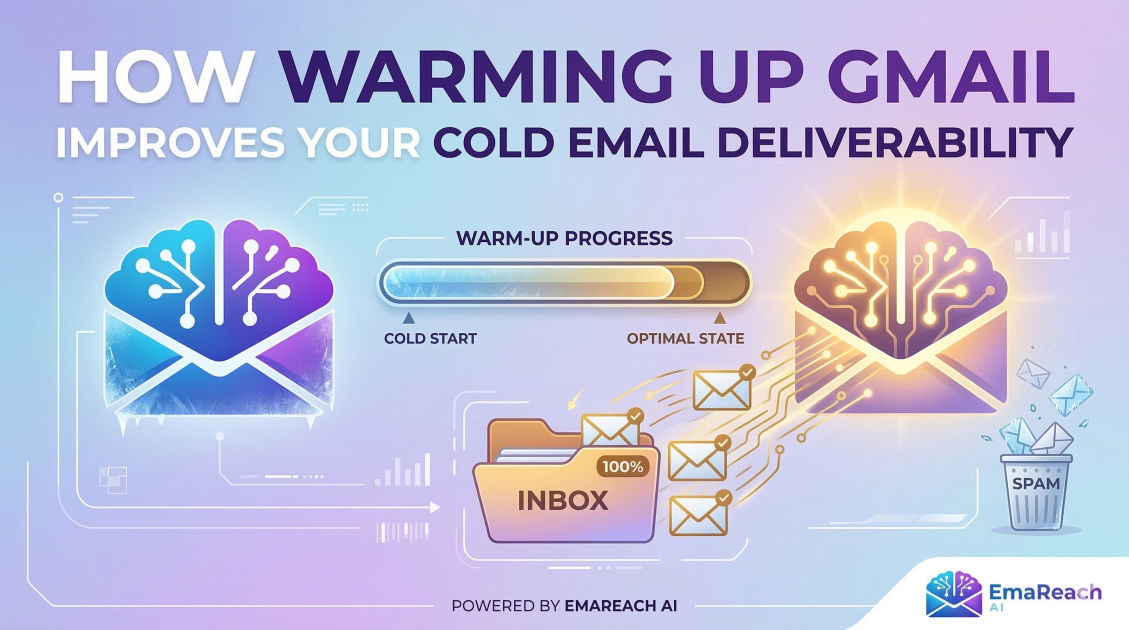
How Warming Up Gmail Improves Your Cold Email Deliverability
cold emaildeliverabilityemail marketinggmailinbox warm-upoutreach strategy
The Invisible Barrier to Cold Email Success
In the world of digital outreach, the most beautifully crafted email is worthless if it never reaches the recipient's eyes. You may have spent hours researching your prospects, segmenting your lists, and perfecting your value proposition, only to find that your open rates are hovering near zero. Often, the culprit isn't your copywriting or your offer—it is your deliverability.
Gmail, as one of the world's most sophisticated email service providers (ESPs), employs complex algorithms designed to protect its users from spam. When you launch a cold email campaign from a fresh or inactive account, these algorithms view your sudden surge in activity as a red flag. This is where the process of "warming up" your Gmail account becomes the bridge between being flagged as a spammer and landing in the primary inbox.
Understanding Email Deliverability and Sender Reputation
Before diving into the mechanics of warming up, it is essential to understand the foundation of email deliverability: Sender Reputation. Think of sender reputation as a credit score for your email address and domain.
Google evaluates your reputation based on several key metrics:
- Sending Volume Consistency: Sudden spikes in volume are suspicious.
- Engagement Rates: Do people open, click, and reply to your emails?
- Spam Complaints: How often do recipients hit the "Report Spam" button?
- Bounce Rates: Are you sending to invalid email addresses?
- Technical Setup: Are your SPF, DKIM, and DMARC records correctly configured?
When you use a new Gmail account, you start with a neutral reputation. However, in the eyes of an anti-spam filter, "neutral" is often treated with the same caution as "bad." By warming up your account, you are proactively building a positive history that proves to Google you are a legitimate human sender.
What is Gmail Warming Up?
Gmail warming up is the process of gradually increasing the volume of emails sent from a new or dormant email account to establish a positive sender reputation. It involves simulating human-like behavior by sending small batches of emails, receiving replies, and ensuring your messages are marked as "not spam" if they happen to land there.
This process signals to Google's filters that the account is being used for genuine communication. Without this phase, sending 50 or 100 emails on day one from a new account is a guaranteed way to get your domain blacklisted or your account suspended.
Why Gmail is Particularly Strict
Google handles billions of emails daily. To maintain a high-quality user experience, they have developed some of the most aggressive spam filters in the industry. These filters use machine learning to analyze patterns.
If you are using a workspace account or a personal Gmail for cold outreach, you are playing in an environment where "engagement" is king. If Google sees that you are sending messages that are ignored or, worse, flagged, they will quickly demote your sender authority. Warming up acts as a buffer, teaching the algorithm that your emails are expected and welcomed by recipients.
The Mechanics: How Warming Up Influences the Algorithm
1. Building Positive Engagement Loops
When you warm up an account, you aren't just sending emails; you are generating replies. In the eyes of an ESP, a reply is the ultimate signal of relevance. When an account consistently receives replies to its outgoing mail, the algorithm concludes that the content is valuable. This creates a "halo effect" that protects your future cold emails.
2. Moving Out of the Spam Folder
A critical part of the warm-up process is the manual or automated rescue of emails from the spam folder. If an email lands in spam and a user moves it to the inbox, it sends a powerful correction signal to the filter. Professional warm-up strategies ensure this happens frequently, teaching Gmail that your domain belongs in the primary tab.
3. Establishing Sending Patterns
Spammers typically send thousands of emails in a single burst and then disappear. Legitimate business users send emails throughout the day at irregular intervals. A proper warm-up replicates this staggered, natural timing, making your account indistinguishable from a standard business user.
The Step-by-Step Guide to Warming Up Your Gmail Account
Phase 1: The Technical Foundation
You cannot warm up an account that is fundamentally broken. Before sending your first email, ensure your technical DNS settings are flawless:
- SPF (Sender Policy Framework): Specifies which mail servers are authorized to send email on behalf of your domain.
- DKIM (DomainKeys Identified Mail): Adds a digital signature to your emails, proving they weren't tampered with in transit.
- DMARC (Domain-based Message Authentication, Reporting, and Conformance): Tells receiving servers what to do if an email fails SPF or DKIM checks.
Phase 2: The Slow Start (Days 1–7)
Start by sending 5–10 emails per day to people you know—colleagues, friends, or your own alternative email addresses. The goal here is 100% engagement. Every email sent should receive a reply. Keep the conversations natural and avoid using marketing jargon or heavy links during this first week.
Phase 3: Gradual Scaling (Days 8–21)
Increase your daily limit by 5–10 emails every few days. By the end of the third week, you should be sending approximately 30–50 emails per day. At this stage, you should start diversifying your recipients. This is where automated tools become invaluable, as managing 50 back-and-forth conversations manually is nearly impossible for a busy professional.
Phase 4: Monitoring and Maintenance
Even after your account is "warm," you must maintain the habit. If you stop sending emails for a month and then suddenly try to send 100 in a day, your reputation will tank. Warm-up is a continuous process that should run in the background of your active campaigns.
The Role of AI in Modern Email Deliverability
As spam filters become smarter, the old methods of simply sending "test" strings of text are no longer effective. Filters can now recognize repetitive, nonsensical warm-up text. This has given rise to sophisticated solutions like EmaReach.
EmaReach helps you stop landing in spam by ensuring your cold emails reach the inbox through a combination of AI-written outreach and automated inbox warm-up. By using AI to generate unique, contextually relevant conversations, it mimics real human interaction much more effectively than traditional methods. When your warm-up interactions look like real business discussions, your sender reputation becomes bulletproof, allowing your multi-account sending strategy to thrive in the primary tab.
Common Mistakes That Ruin Your Warm-Up Efforts
Sending Too Much, Too Soon
The temptation to move fast is the leading cause of "burned" domains. If you attempt to skip the 3–4 week warm-up period, you risk permanent damage to your domain's reputation. Once a domain is blacklisted by Google, it is incredibly difficult to recover.
Using Low-Quality Content
Even during the warm-up phase, the content matters. Avoid using "spammy" keywords like "FREE," "BUY NOW," or excessive dollar signs. If your warm-up emails look like spam, the filters will treat them as such, defeating the entire purpose of the exercise.
Neglecting the "Mark as Not Spam" Step
If you are doing a manual warm-up, you must check the spam folder of your recipient accounts. If your email is there, you must move it to the inbox. If you ignore those emails, you are effectively training the filter to keep you in the spam folder.
Using Only One Account
For serious cold outreach, relying on a single Gmail account is a recipe for disaster. If that one account hits a snag, your entire sales pipeline freezes. A better approach is to use multiple accounts across different domains, all warming up simultaneously. This distributes the volume and protects your primary brand domain.
How to Measure if Your Gmail is Successfully Warmed Up
How do you know when you are ready to start your actual cold outreach? There are a few key indicators:
- Deliverability Tests: Use seed list tools to send a test email and see where it lands across different providers. If you are hitting 100% inbox on Gmail, you are in a good spot.
- Open Rates: Once you start your cold campaign, an open rate of 40% or higher is a strong indicator that you are landing in the primary inbox rather than the promotions or spam tabs.
- Low Bounce Rate: Your bounce rate should stay under 2%. High bounces will quickly undo all your warm-up progress.
The Relationship Between Warm-Up and Personalization
Deliverability isn't just about the "pipes" you use to send email; it is also about the reaction of the recipient. Even a perfectly warmed-up account will eventually fail if the recipients constantly mark the messages as spam.
This is why personalization is a deliverability tactic. When an email is highly relevant to the recipient, they are more likely to engage and less likely to report it. Warming up gets you into the inbox, but high-quality, AI-optimized content keeps you there. This holistic approach ensures that your outreach remains sustainable in the long term.
Best Practices for Long-Term Deliverability
Once you have achieved a high sender reputation, you must guard it.
- Maintain Consistent Volume: Avoid "hockey stick" graphs in your sending volume.
- Prune Your Lists: Use email verification tools to remove "catch-all" and invalid addresses before you send.
- Make Unsubscribing Easy: It is much better for a prospect to click "Unsubscribe" than to click "Report Spam."
- Monitor Blacklists: Regularly check if your domain or IP has appeared on any major industry blacklists.
Conclusion
Warming up your Gmail account is not an optional step in modern cold email marketing; it is the foundation upon which all successful outreach is built. By taking the time to slowly establish a positive sender reputation, you respect the ecosystems created by Google and prove yourself to be a legitimate communicator.
While the process requires patience and precision, the reward is a direct line to your prospects' primary inbox. Whether you choose to manage this manually or leverage advanced AI tools like EmaReach to automate the heavy lifting, the goal remains the same: ensuring your message is heard. Treat your sender reputation as your most valuable digital asset, and your cold email campaigns will yield the results your business deserves.
EmaReach AI
Ready to scale your cold email outreach?
Join thousands of teams using EmaReach AI for AI-powered campaigns, domain warmup, and 95%+ deliverability. Start free — no credit card required.
Related posts
- Read article
The Instantly Alternative That Finally Gets Outbound Analytics Right
Discover why high-volume cold email requires a shift from surface-level vanity metrics to deep, data-driven revenue attribution, and explore the ultimate alternatives for mastering outbound engineering.
- Read article
What You Gain and What You Give Up When Switching From Instantly
Thinking about migrating your cold email stack? This detailed guide breaks down the exact operational advantages you gain and the core features you sacrifice when switching away from Instantly's popular outreach platform.