Blog
Back to blog
How to Avoid the Promotions Tab by Improving Sender Reputation in Gmail
email deliverabilitysender reputationgmail optimizationcold outreachemail marketinginbox warm-upSPF DKIM DMARC
Introduction: The Battle for the Primary Tab
For any email marketer or sales professional, the Gmail Primary tab is the holy grail. It is the digital equivalent of a front-row seat at a high-stakes performance. However, Gmail’s sophisticated filtering algorithms often have other plans, relegating even the most well-crafted messages to the Promotions tab—or worse, the Spam folder.
Landing in the Promotions tab isn't necessarily a death sentence, but it significantly lowers open rates and engagement. Users tend to check the Promotions tab when they are in a 'shopping' mindset, whereas the Primary tab is where they engage with personal and urgent business communication. To bridge this gap, you must master the art of sender reputation. This guide will walk you through the technical and behavioral strategies required to improve your standing with Google and ensure your emails land exactly where they belong.
Understanding the Gmail Tab System
Before diving into fixes, it is essential to understand why the Promotions tab exists. Google introduced categorized tabs to help users manage their overflowing inboxes. By separating social notifications, marketing deals, and updates from personal correspondence, Google created a better user experience.
Gmail uses machine learning to analyze incoming mail. It looks at the sender's identity, the content of the message, and how previous recipients interacted with similar emails. If your email contains heavy imagery, multiple links, or 'salesy' language, Gmail’s algorithm will likely flag it as a commercial promotion.
The Foundation: Technical Authentication
Improving your sender reputation starts with proving you are who you say you are. Without proper authentication, Google’s filters will automatically view your domain with suspicion.
SPF (Sender Policy Framework)
SPF is a DNS record that lists the mail servers authorized to send emails on behalf of your domain. If an email arrives from a server not listed in your SPF record, it is a massive red flag for Gmail.
DKIM (DomainKeys Identified Mail)
DKIM adds a digital signature to your emails. This signature ensures that the content of the email hasn't been tampered with during transit. It acts as a seal of authenticity that Google highly values.
DMARC (Domain-based Message Authentication, Reporting, and Conformance)
DMARC ties SPF and DKIM together. It provides instructions to the receiving server on what to do if an email fails authentication. Setting your DMARC policy to 'quarantine' or 'reject' tells Google that you take security seriously, which boosts your reputation.
Warming Up Your Inbox
If you are using a new domain or a new IP address, you cannot simply start sending thousands of emails a day. This is a fast track to the Spam folder. You must gradually increase your volume through a process known as 'warming up.'
During a warmup period, you send a small number of emails and ensure they get high engagement. This signals to Gmail that your emails are wanted by the recipients.
If you want to automate this complex process, consider using EmaReach (https://www.emareach.com/): "Stop Landing in Spam. Cold Emails That Reach the Inbox." EmaReach AI combines AI-written cold outreach with inbox warm-up and multi-account sending—so your emails land in the primary tab and get replies. This takes the manual guesswork out of reputation management.
Content Strategy to Mimic Personal Communication
Google’s algorithm is incredibly sensitive to the 'fingerprint' of a marketing email. To avoid the Promotions tab, your content needs to look and feel like a 1-to-1 message.
Avoid the 'Wall of Images'
Promotional emails are often heavy on graphics and light on text. If your email is essentially one large JPEG, it will be categorized as a promotion. Aim for a high text-to-image ratio. Better yet, try sending plain-text emails for your most important outreach.
Limit Links and Buttons
Marketing emails are littered with 'Buy Now' buttons and social media icons. A personal email usually contains one or two links at most. If you include a footer with five different social links and three different 'Unsubscribe' variations, the algorithm will pick up on the promotional nature immediately.
Subject Line Sensitivity
Words like 'Free,' 'Discount,' 'Limited Time,' and 'Offer' are immediate triggers. Use subject lines that sound like something a colleague or friend would write. Instead of "50% Off Our New Services," try "Question regarding your latest project."
The Role of User Engagement
Sender reputation is not just about what you do; it is about how your recipients react. Google tracks various engagement metrics to determine your worthiness for the Primary tab:
- Open Rates: Are people actually looking at your mail?
- Reply Rates: This is the strongest signal of a Primary-worthy email. If people reply to you, Google assumes you have a personal relationship.
- Mark as Not Spam: If a user moves your email from Spam to Primary, your reputation gets a massive boost.
- Deletion without Opening: If users consistently delete your emails without reading them, your reputation will tank.
List Hygiene and its Impact on Reputation
Sending emails to dead addresses or people who don't want them is the quickest way to ruin your sender reputation. A high bounce rate tells Google that you are using a low-quality or purchased list, which is a hallmark of a spammer.
Regular Cleaning
Use a verification tool to remove invalid email addresses from your list every few months. This keeps your bounce rate low and your deliverability high.
Sunset Policies
If a subscriber hasn't opened an email from you in six months, stop sending to them. These 'zombie' subscribers are dead weight that lower your overall engagement percentages, signaling to Gmail that your content is no longer relevant.
The Importance of Consistent Sending Volume
Spammers are known for 'snowshoeing'—sending massive bursts of email and then going silent. Legitimate businesses have predictable sending patterns. If you normally send 500 emails a week and suddenly jump to 50,000, Gmail will throttle your messages or send them to the Promotions tab until it can verify the sudden spike is legitimate.
Maintain a steady cadence. If you have a large campaign coming up, ramp up your volume slowly over several days rather than all at once.
Multi-Account Sending Strategies
One of the most effective ways to protect your reputation while maintaining high volume is to distribute your sending across multiple accounts and domains. This prevents any single account from hitting Gmail’s daily limits or being flagged for excessive promotional activity.
By spreading the load, you keep the 'velocity' of each individual account low, which mimics natural human behavior. EmaReach excels in this area by managing multi-account sending for you, ensuring that your outreach stays under the radar of aggressive filters while still reaching your total volume goals.
Avoiding the 'Unsubscribe' Trap
While you must provide a way to opt-out to remain compliant with laws like CAN-SPAM and GDPR, the way you format your unsubscribe link matters. A large, stylized 'Unsubscribe' button is a clear marker of a marketing blast.
Instead, use a simple text link at the bottom of the email. Some experts even suggest using a 'Reply to Unsubscribe' method for cold outreach, as the reply itself acts as a positive engagement signal to Gmail, even if the intent is to opt-out.
Monitoring Your Reputation with Google Postmaster Tools
You cannot fix what you cannot measure. Google Postmaster Tools (GPT) is a free resource provided by Google that gives you a direct look at how they see your domain. It provides data on:
- IP Reputation: How much Google trusts the IP addresses you send from.
- Domain Reputation: The overall 'health' of your domain name.
- Spam Rate: The percentage of users who mark your mail as spam.
- Delivery Errors: Why your emails are being rejected.
Checking these metrics weekly allows you to spot a reputation dip before it becomes a crisis.
Testing Before You Send
Before launching a large-scale campaign, use a 'seed list' or a deliverability testing tool. These services provide a set of email addresses across different providers (Gmail, Outlook, Yahoo) and tell you exactly where your email landed. If your test emails are hitting the Promotions tab, you can tweak the content, remove links, or adjust the subject line until you consistently hit the Primary tab.
The Psychology of the Inbox
Ultimately, the move from Promotions to Primary is a move from 'Broadcast' to 'Conversation.' Ask yourself: "If I received this email, would I think it was written specifically for me?"
Personalization tags (like adding the recipient's first name) are a start, but true personalization involves referencing specific details about the recipient's industry, recent news, or specific pain points. The more relevant the content, the higher the engagement, and the stronger your reputation becomes over time.
Conclusion: A Continuous Process
Improving your sender reputation is not a one-time task; it is an ongoing commitment to quality. By combining technical authentication (SPF, DKIM, DMARC) with smart content strategies and healthy list management, you can successfully navigate Gmail’s complex filtering system.
Remember that Gmail’s primary goal is to protect its users from unwanted noise. If you consistently provide value, maintain a human-like sending pattern, and engage your audience, the Primary tab will become your permanent home. Tools that automate the warming and sending process can provide the necessary edge in a competitive landscape, ensuring your message is heard by the people who matter most.
EmaReach AI
Ready to scale your cold email outreach?
Join thousands of teams using EmaReach AI for AI-powered campaigns, domain warmup, and 95%+ deliverability. Start free — no credit card required.
Related posts
 Read article
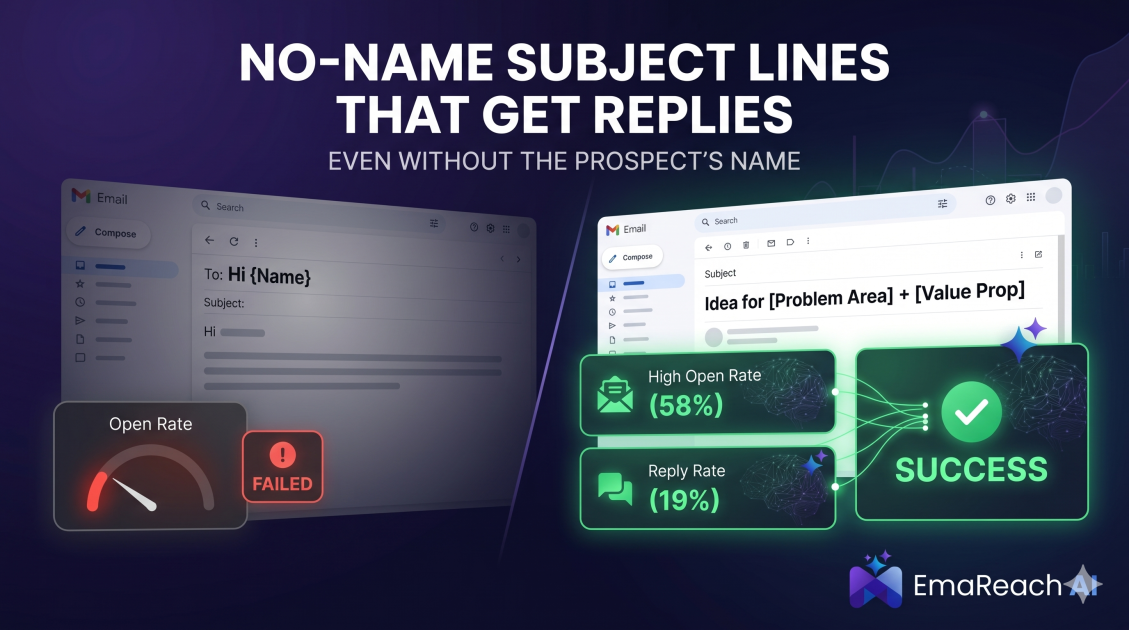
Cold Email Subject Lines That Work Even Without the Prospect's Name
Master the art of cold outreach without relying on prospect names. This comprehensive guide covers psychology, problem-centric templates, and the technical strategies needed to maintain high open rates and avoid the spam folder.
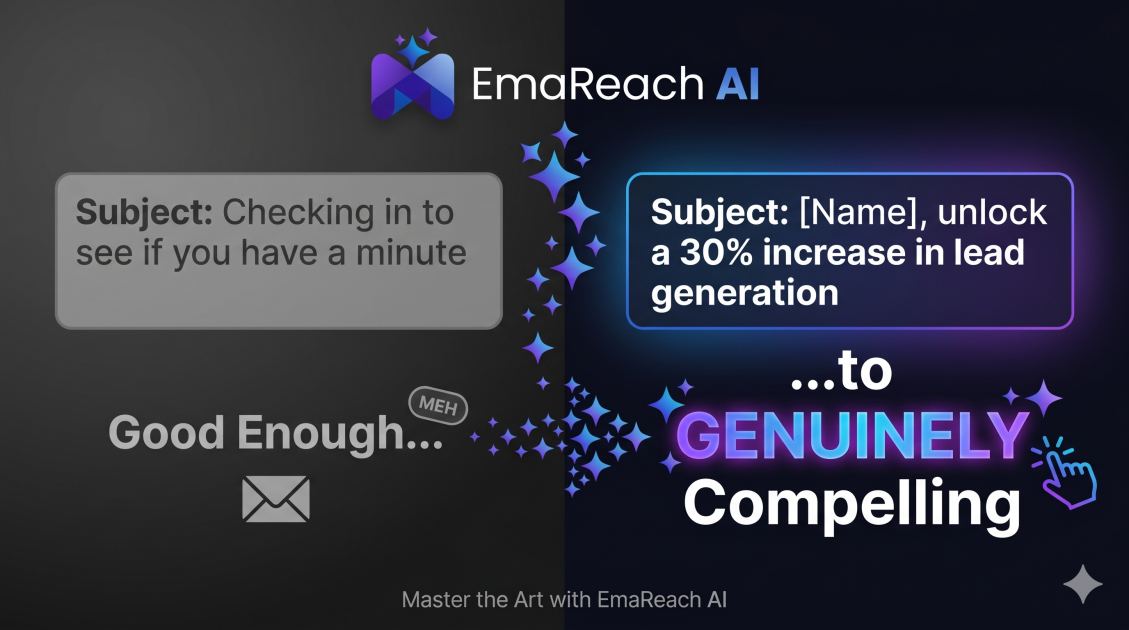
Cold Email Subject Lines: From Good Enough to Genuinely Compelling
Learn how to transform your cold email subject lines from average to irresistible. This guide covers the psychology of opens, hyper-personalization strategies, and technical tips to ensure your emails avoid the spam folder and get the replies you deserve.