Blog
Back to blog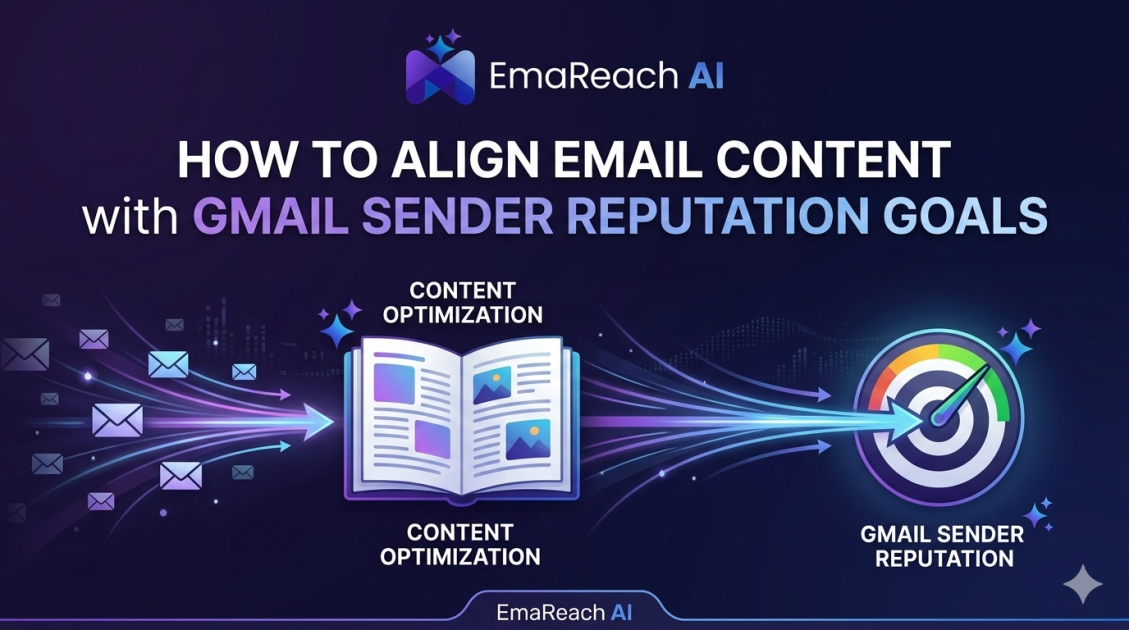
How to Align Email Content with Gmail Sender Reputation Goals
email deliverabilitysender reputationgmail marketingemail content strategyinbox placementcold outreach
Introduction
Maintaining a high sender reputation with Gmail is the cornerstone of any successful email marketing or outreach strategy. Gmail, as one of the world's most sophisticated email service providers, utilizes complex machine learning algorithms to determine whether an incoming message belongs in the Primary inbox, the Promotions tab, or the dreaded Spam folder. While technical setups like SPF, DKIM, and DMARC provide the foundation for delivery, it is the content of your emails that ultimately dictates how Gmail perceives your sender reputation over the long term.
Gmail’s filtering systems prioritize user experience above all else. If users interact positively with your content—opening, reading, and replying—your reputation climbs. If they ignore, delete, or mark your messages as spam, your reputation plummets. Aligning your email content with Gmail's sender reputation goals requires a strategic shift from high-volume broadcasting to value-driven, human-centric communication. This guide explores the intricate relationship between content quality and inbox placement, providing actionable strategies to ensure your emails consistently reach your audience.
Understanding the Gmail Reputation Ecosystem
Gmail does not look at your emails in isolation. Instead, it builds a multi-dimensional profile of you as a sender. This profile is influenced by your domain reputation, your IP reputation, and, increasingly, the engagement metrics generated by the content you send.
User Engagement as a Proxy for Quality
For Gmail, user engagement is the ultimate signal of content quality. Positive signals include high open rates, long dwell times (the time a user spends reading the email), and, most importantly, reply rates. When a recipient replies to an email, it signals to Gmail that a two-way conversation is occurring, which is the highest form of validation for a sender. Conversely, negative signals like high bounce rates and spam complaints act as immediate red flags.
The Role of Machine Learning in Content Analysis
Gmail’s filters use natural language processing (NLP) to scan the body and subject lines of your emails. They look for patterns associated with phishing, deceptive marketing, and low-value "blast" campaigns. If your content mirrors the linguistic patterns of known spammers—such as excessive use of urgency, monetary claims, or suspicious links—your sender reputation will suffer regardless of your technical authentication.
Crafting Subject Lines that Build Trust
The subject line is the first point of contact between your brand and the recipient. It is also the first thing Gmail evaluates. To align with reputation goals, your subject lines must be honest, relevant, and free of "spammy" triggers.
Avoiding Deceptive Tactics
Never use prefix tricks like "Re:" or "Fwd:" when no prior conversation exists. While these might temporarily boost open rates, they lead to high frustration and a surge in spam complaints once the user realizes they have been misled. Gmail tracks these interactions, and the resulting damage to your reputation far outweighs any short-term gain in opens.
Precision and Relevance
Clear, concise subject lines that accurately reflect the content of the email perform best for long-term reputation. Instead of "Check this out!", use "Feedback on your recent project proposal." This clarity encourages the right users to open the email and discourages those who aren't interested from marking it as irrelevant.
The Anatomy of High-Reputation Email Body Content
The body of your email should be designed to foster engagement and provide immediate value. A high-reputation email feels like a message from a professional acquaintance rather than an automated machine.
The Importance of Personalization
Deep personalization goes beyond simply inserting a first name. It involves tailoring the message to the recipient's industry, challenges, or recent public milestones. When content is highly relevant, the likelihood of a reply increases significantly. This is where modern technology can bridge the gap between scale and quality. For those managing high-volume outreach, EmaReach provides a powerful solution. Stop Landing in Spam. Cold Emails That Reach the Inbox. EmaReach AI combines AI-written cold outreach with inbox warm-up and multi-account sending—so your emails land in the primary tab and get replies. By automating the research and writing process, it ensures every message feels bespoke, protecting your sender reputation.
Text-to-HTML Ratio and Formatting
Gmail tends to favor emails that look like personal correspondence. Heavy HTML templates with excessive images, banners, and complex layouts are often flagged as promotional. To align with reputation goals, prioritize plain-text or simple HTML formats. Ensure your text-to-code ratio is high; a wall of code with very little readable text is a common characteristic of automated spam.
Strategic Use of Links
Too many links in a single email can trigger Gmail's security filters. Limit your links to one or two essential calls to action. Furthermore, ensure that the domains you are linking to have a good reputation. Linking to blacklisted or suspicious sites will instantly degrade your own sender standing. Avoid using link shorteners (like bit.ly), as spammers frequently use them to hide the final destination of a URL. Instead, use full, transparent descriptive links.
Fostering Human-First Engagement
Gmail rewards senders whose recipients treat their emails like real mail. This means your goal should always be to elicit a response.
The Power of the Reply-To Address
Always use a functional "Reply-To" address. Using "no-reply@" sends a clear signal to both the user and Gmail that you are not interested in a conversation. This stifles engagement and prevents the positive reputation boost that comes from receiving replies. Encouraging users to ask questions or provide feedback within the email body is an excellent way to prime your domain for better deliverability.
Avoiding Trigger Words
While Gmail’s filters are more sophisticated than simple keyword lists, certain words still carry a high "spam weight" when used in specific contexts. Terms like "Free," "Winner," "Cash," "Urgent," and "Act Now" should be used sparingly. Focus instead on professional verbs and nouns that describe value and collaboration.
Technical Content Considerations for Gmail
Beyond the words themselves, how those words are delivered matters. Gmail looks for consistency and technical hygiene within the content metadata.
Unsubscribe Visibility
A clear, easy-to-find unsubscribe link is actually a reputation-saver. If a user wants to stop receiving your emails and cannot find the unsubscribe link, they will hit the "Report Spam" button instead. To Gmail, an unsubscribe is a neutral event, but a spam report is a catastrophic negative event. Aligning with reputation goals means making it easier for disinterested parties to leave your list gracefully.
List Hygiene and Content Targeting
Sending the same content to your entire list regardless of their interests leads to "engagement decay." Over time, your open rates will drop, signaling to Gmail that your content is no longer relevant. Use segmentation to ensure that the content you send is highly targeted to the recipient's segment. High relevancy maintains high engagement, which in turn preserves your sender reputation.
Monitoring and Adjusting Based on Feedback
Alignment is not a one-time task but a continuous process of monitoring and refinement. Gmail provides tools like Postmaster Tools to help senders understand how their content is being received.
Analyzing Postmaster Tools Data
Gmail Postmaster Tools provides insights into your spam rate, domain reputation, and delivery errors. If you notice a dip in domain reputation after a specific campaign, analyze the content of that campaign. Was the subject line too aggressive? Did it contain too many links? Use this data to iterate on your content strategy.
A/B Testing for Deliverability
Instead of testing just for clicks, test for deliverability and engagement. Send two versions of a campaign to small segments: one with a traditional marketing layout and one with a plain-text, conversational approach. Monitor which version receives more replies and fewer spam complaints. In most cases, the conversational, human-centric approach will result in a healthier sender reputation.
Conclusion
Aligning email content with Gmail sender reputation goals requires a commitment to quality over quantity. By focusing on authentic personalization, transparent communication, and technical hygiene, senders can build a lasting rapport with Gmail’s filtering systems. Remember that every email you send is a data point that Gmail uses to define your identity. When you prioritize the recipient's experience—by providing value and encouraging genuine interaction—the technical rewards of high inbox placement will naturally follow. Protecting your reputation is an investment in the long-term viability of your digital communication, ensuring that your message always finds its way to the people who need to hear it most.
EmaReach AI
Ready to scale your cold email outreach?
Join thousands of teams using EmaReach AI for AI-powered campaigns, domain warmup, and 95%+ deliverability. Start free — no credit card required.
Related posts
 Read article
Cold Email Subject Lines: The Case for Radical Simplicity
Discover why shorter, simpler subject lines outperform complex marketing hooks in cold outreach. Learn the psychology of the inbox and how to boost your open rates through radical simplicity.
Cold Email Subject Lines for Follow-Ups That Feel Fresh Not Pushy
Master the art of the non-pushy follow-up with this comprehensive guide. Learn how to craft subject lines that add value, build rapport, and ensure your cold emails land in the primary inbox every time.