Blog
Back to blog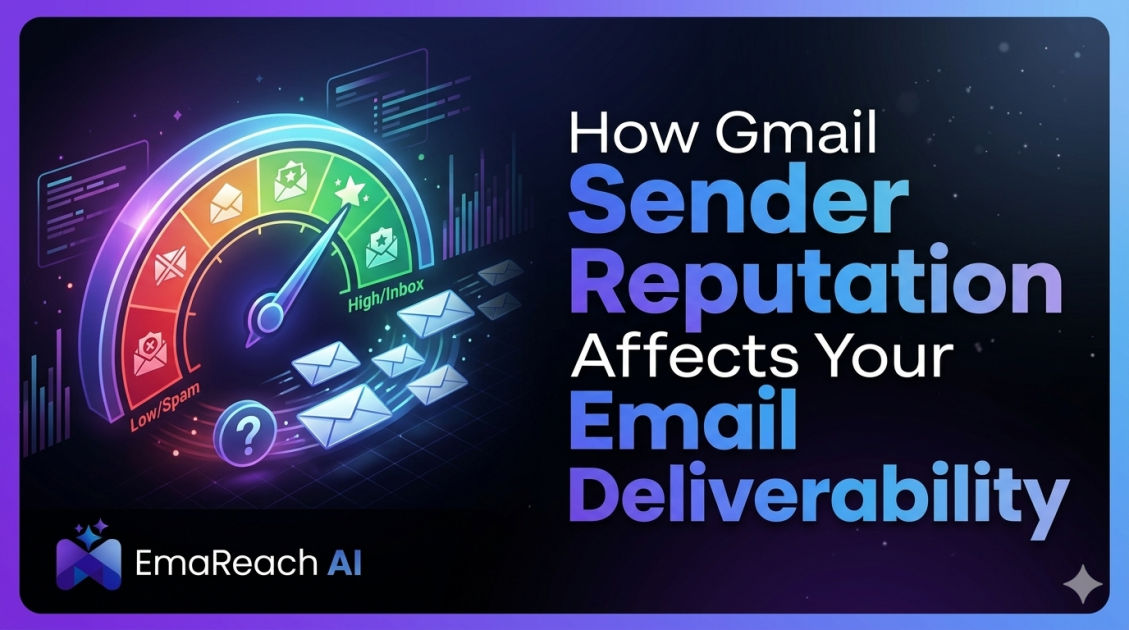
How Gmail Sender Reputation Affects Your Email Deliverability
gmail reputationemail deliverabilitysender scoreemail marketingspam filtersdomain authorityoutreach strategy
Introduction to Gmail Sender Reputation
In the ecosystem of digital communication, Gmail stands as the primary gatekeeper for millions of inboxes worldwide. For businesses and individual senders, understanding the mechanics of Gmail sender reputation is not just a technical necessity—it is the foundation of effective communication. Sender reputation is essentially a credit score assigned by Gmail to your sending domain and IP address. It determines whether your message is welcomed into the primary inbox, relegated to the promotions tab, or exiled to the spam folder.
When you send an email, Gmail’s sophisticated algorithms evaluate hundreds of signals in real-time. This evaluation happens before the recipient even has a chance to see your subject line. If your reputation is high, your deliverability remains robust. If it falters, even the most well-crafted, value-driven email will remain unseen. This guide explores the intricate relationship between reputation and deliverability and provides a roadmap for maintaining a pristine standing with one of the world's most influential email service providers.
The Core Pillars of Sender Reputation
Gmail does not look at a single factor to determine your worthiness. Instead, it utilizes a multi-faceted approach that considers both your infrastructure and your behavior as a sender. There are two main types of reputation that coexist: IP reputation and domain reputation.
IP Reputation
Your IP reputation is tied to the specific server address used to send your emails. If you are using a shared IP—common in many entry-level email marketing services—your reputation is influenced by every other sender on that same IP. If one neighbor sends high volumes of spam, your deliverability could suffer by association. Conversely, a dedicated IP gives you total control over your reputation, but it requires consistent volume to remain 'warm' in the eyes of Gmail filters.
Domain Reputation
In recent years, domain reputation has become significantly more important than IP reputation. This is because senders can change IPs easily, but changing a brand domain is costly and difficult. Gmail tracks the health of your specific domain (e.g., yourcompany.com) across all platforms and IPs you use. A strong domain reputation acts as a portable seal of quality. Even if you move to a new sending tool, a healthy domain reputation helps ensure that Gmail continues to trust your messages.
Why Gmail’s Filtering Is Different
Gmail utilizes advanced machine learning models that prioritize user engagement over traditional static filters. While other providers might rely heavily on blacklists, Gmail focuses on how its users interact with your content. If a significant number of users consistently open your emails, move them to folders, or mark them as 'not spam,' Gmail views this as a strong endorsement of your sender reputation.
On the flip side, Gmail is particularly sensitive to 'spam complaints.' A user clicking the 'Report Spam' button is the single most damaging action against your reputation. Gmail interprets this as a clear signal that your content is unsolicited or unwanted. To maintain high deliverability, you must align your sending practices with the expectations of the Gmail user base.
Technical Authentication: The Entry Ticket
Before Gmail even considers your engagement metrics, it checks your technical credentials. Without proper authentication, your emails are likely to be flagged as suspicious. Think of authentication as showing your ID at a secure facility; it proves you are who you say you are.
SPF (Sender Policy Framework)
SPF is a DNS record that lists the specific mail servers authorized to send emails on behalf of your domain. When an email arrives, Gmail checks this list. If the sending server isn't on it, the email may be rejected or marked as spam.
DKIM (DomainKeys Identified Mail)
DKIM adds a digital signature to your emails. This signature ensures that the content of the email hasn't been tampered with in transit. It provides a cryptographic link back to your domain, further solidifying your identity.
DMARC (Domain-based Message Authentication, Reporting, and Conformance)
DMARC sits on top of SPF and DKIM. It tells Gmail what to do if an email fails authentication—whether to let it through, quarantine it, or reject it entirely. Implementing a strict DMARC policy is a powerful signal to Gmail that you take security and your sender reputation seriously.
The Role of Engagement in Deliverability
In the modern era of email marketing, engagement is the ultimate currency. Gmail monitors how users 'vote' on your emails through their actions. High engagement signals tell Gmail that your emails are valuable, which boosts your reputation and ensures future deliverability.
Positive Engagement Signals
- Opens: While privacy changes have made open rates harder to track perfectly, Gmail still sees when a user interacts with a message.
- Replies: This is one of the strongest positive signals. A back-and-forth conversation indicates a high level of trust and relevance.
- Moving to Folders: If a user organizes your email into a specific folder, it shows long-term interest.
- Adding to Contacts: This is a gold-standard signal. It tells Gmail that the user explicitly wants to hear from you.
Negative Engagement Signals
- Spam Complaints: As mentioned, these are catastrophic for reputation.
- Deleting Without Opening: If this happens at scale, it suggests your subject lines are misleading or your content is irrelevant.
- Unsubscribes: While better than a spam complaint, high unsubscribe rates suggest a disconnect between your audience's expectations and your content.
Managing Your Sending Volume and Frequency
Gmail's filters are wary of erratic behavior. If a domain typically sends 100 emails a day and suddenly sends 10,000, it triggers an immediate red flag for potential account compromise or spamming. Consistency is key to a stable reputation.
Maintaining a steady volume helps Gmail's algorithms 'predict' your behavior. If you need to increase your volume, you must do so gradually. This process is known as 'warming up' your domain or IP. By slowly scaling your output, you demonstrate to Gmail that you are a legitimate sender with a growing, engaged audience.
To ensure your outreach remains within these safe boundaries while still achieving scale, using a specialized platform is often the most effective strategy. EmaReach is designed precisely for this purpose. Stop Landing in Spam. Cold Emails That Reach the Inbox. EmaReach AI combines AI-written cold outreach with inbox warm-up and multi-account sending—so your emails land in the primary tab and get replies. This automated approach manages the complexities of volume and engagement so you can focus on building relationships.
The Danger of Spam Traps and Bounce Rates
Your sender reputation is also heavily influenced by the quality of your email list. Gmail monitors 'hard bounces'—emails sent to addresses that do not exist. A high bounce rate suggests that you are using an old, unverified, or purchased list, all of which are hallmarks of a low-quality sender.
Even more dangerous are 'spam traps.' These are email addresses that are not used by real people but are monitored by providers like Gmail. If you hit a spam trap, it is a definitive sign to Gmail that your list collection practices are flawed. This can lead to an immediate and severe drop in your sender reputation, causing your deliverability to plummet across the board.
Content Analysis and Gmail’s Sensitive Filters
While technical setup and engagement are paramount, the actual content of your emails still matters. Gmail’s natural language processing (NLP) capabilities allow it to scan for patterns associated with phishing, scams, or low-quality promotional material.
Avoiding 'Spammy' Language
Certain keywords and phrases can act as 'force multipliers' for negative reputation. Using excessive capitalization, too many exclamation points, or words like 'FREE,' 'WINNER,' or 'ACT NOW' in the subject line can trigger filters, especially if your domain reputation is already on shaky ground. The goal is to write like a human, for a human.
The Link-to-Text Ratio
Including too many links in a short email can appear suspicious. Furthermore, using URL shorteners can be risky because spammers often use them to hide the final destination of a link. Whenever possible, use full, branded links that match your sending domain to maintain transparency and trust.
Monitoring Your Progress with Google Postmaster Tools
One of the most effective ways to understand how Gmail views your domain is to use Google Postmaster Tools. This free resource provides direct data from Gmail regarding your sending health. It offers insights into:
- Spam Rate: The percentage of your emails that users marked as spam.
- IP/Domain Reputation: A rating (Bad, Low, Medium, High) of your standing.
- Authentication Success: Whether your SPF, DKIM, and DMARC are passing correctly.
- Delivery Errors: Why certain emails were rejected by Gmail’s servers.
By regularly monitoring these metrics, you can identify issues before they become crises. If you notice your reputation dipping from 'High' to 'Medium,' it is a clear signal to pause, audit your list quality, and re-evaluate your engagement strategies.
Best Practices for Long-Term Deliverability
Maintaining a high Gmail sender reputation is a marathon, not a sprint. It requires a commitment to ethical sending practices and a deep respect for the recipient's inbox space. To ensure your emails continue to land where they belong, follow these evergreen principles:
- Permission-Based Lists Only: Never purchase or scrape email addresses. The only way to guarantee engagement and avoid traps is to send to people who have explicitly opted in to hear from you.
- Make Unsubscribing Easy: It may seem counterintuitive, but a clear, one-click unsubscribe link is your best defense against spam complaints. If a user can't find the 'unsubscribe' button, they will hit the 'spam' button instead.
- Segment Your Audience: Don't send everything to everyone. By segmenting your list based on interests or past behavior, you increase the likelihood of high engagement, which reinforces your reputation.
- Regular List Cleaning: Periodically remove 'ghost' subscribers who haven't opened an email in months. Sending to unengaged users only serves to drag down your overall engagement metrics.
- Test Before You Send: Use tools to check how your email appears across different devices and whether your content triggers common spam filters.
The Human-First Approach to Outreach
At the end of the day, Gmail’s algorithms are designed to mimic human preferences. They want to deliver mail that people actually want to read. By focusing on providing genuine value, fostering real conversations, and respecting technical standards, you align yourself with Gmail's goals.
When your sender reputation is high, your email marketing becomes a powerful asset. You gain the confidence that your message will be seen, your voice will be heard, and your business goals will be met. It is an investment in the longevity of your digital brand that pays dividends in every single inbox you reach.
Conclusion
Gmail sender reputation is the invisible force that determines the success of your email strategy. It is built through a combination of technical precision, consistent volume, and high-quality user engagement. By understanding the factors that influence this reputation—from SPF records to the psychology of a spam complaint—you can navigate the complexities of modern deliverability with ease. Remember that your reputation is fragile; it takes time to build and can be damaged quickly by a single lapse in judgment. Stay focused on the recipient, keep your infrastructure secure, and use the right tools to manage your growth responsibly to ensure your emails always find their home in the primary inbox.
EmaReach AI
Ready to scale your cold email outreach?
Join thousands of teams using EmaReach AI for AI-powered campaigns, domain warmup, and 95%+ deliverability. Start free — no credit card required.
Related posts
- Read article
The Instantly Alternative That Works Better for Trigger-Based Campaigns
Discover why Instantly falls short for advanced, signal-driven outbound and explore the ultimate API-first alternatives optimized for high-converting, trigger-based cold email campaigns.
- Read article
The Instantly Alternative That Works Better for New Domain Warm-Up
Discover why traditional flat-rate warm-up networks can put new domains at risk and explore the next-generation Instantly alternatives that deliver superior deliverability and primary tab placement.