Blog
Back to blog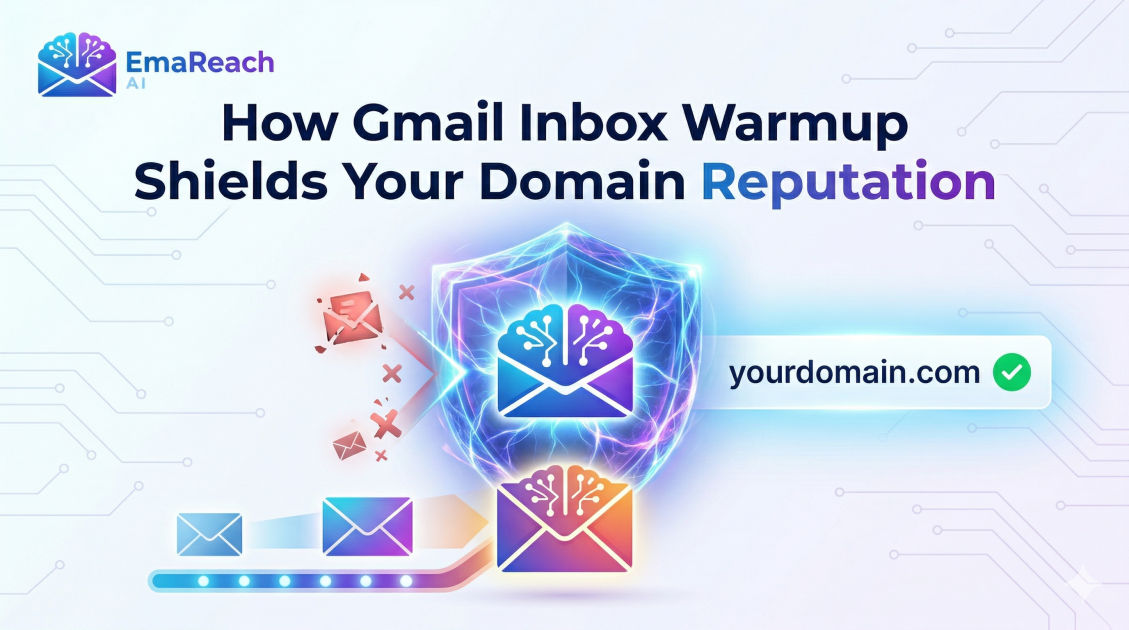
How Gmail Inbox Warmup Shields Your Domain Reputation
Gmail WarmupDomain ReputationEmail DeliverabilityCold OutreachEmail MarketingInbox PlacementSpam Prevention
Introduction: The Hidden Gatekeepers of the Inbox
In the digital age, your domain is more than just a web address; it is your professional identity. For businesses relying on email for communication, sales, and networking, the reputation of that domain determines whether your message is welcomed into a recipient's primary inbox or relegated to the shadows of the spam folder. Gmail, being one of the world's most sophisticated email service providers (ESPs), employs intricate algorithms to protect its users from unsolicited clutter.
This protective layer creates a significant challenge for legitimate senders. If you suddenly increase your email volume or send messages from a fresh domain, Gmail’s filters may flag your activity as suspicious. This is where the concept of "Inbox Warmup" becomes critical. By systematically establishing a positive sending history, domain owners can shield their reputation and ensure their communications reach the intended eyes.
Understanding Domain Reputation
Before diving into the mechanics of warming up an inbox, it is essential to understand what domain reputation actually is. Think of it as a credit score for your email activity. It is a metric used by ESPs to gauge the trustworthiness of your sending domain.
Several factors influence this score:
- Sending Volume and Consistency: Erratic spikes in email volume are often associated with spam bots.
- Engagement Rates: High open rates and click-through rates signal to Gmail that your content is valuable.
- Spam Complaints: Even a few users marking your email as spam can severely damage your standing.
- Bounce Rates: Sending emails to non-existent addresses suggests poor list hygiene.
- Blacklist Status: If your domain or IP appears on global blacklists, your deliverability will plummet.
The Role of Gmail’s AI Filters
Gmail utilizes advanced machine learning to analyze every incoming message. It looks at the relationship between the sender and the receiver, the content of the email, and the historical behavior of the sending domain. When a domain has no history, or a history of low engagement, Gmail defaults to caution, often placing these emails in the 'Promotions' or 'Spam' tabs. Shielding your reputation requires proving to these AI filters that you are a human sender providing value.
What is Gmail Inbox Warmup?
Inbox warmup is the process of gradually increasing the volume of emails sent from a new or inactive email account to build a positive reputation with ESPs. The goal is to simulate natural, human-like interaction. This isn't just about sending emails; it’s about generating positive engagement.
When you participate in a warmup process, your emails are sent to a network of other accounts that interact with them. They open the emails, mark them as 'not spam,' and even reply. This activity sends a powerful signal to Gmail that your domain is legitimate and your content is desired by users.
How Warmup Shields Your Domain Reputation
1. Establishing a Behavioral Baseline
Spammers typically operate by sending thousands of emails at once from fresh domains, hoping to catch a few leads before the domain is blacklisted. By contrast, a legitimate business grows its communication naturally. Warmup mimics this organic growth. By starting with five emails a day and slowly scaling to fifty or a hundred, you establish a behavioral baseline that looks human. This gradual ramp-up prevents the "shock" to the system that triggers automated spam filters.
2. Boosting Engagement Metrics
Engagement is the strongest currency in email deliverability. If Gmail sees that 80% of your emails are opened and 20% receive a reply, it concludes that your domain is a high-quality sender. During the warmup phase, automated or peer-to-peer networks ensure that your emails are engaged with consistently. This 'simulated' high engagement builds a buffer for your domain reputation, making it more resilient when you eventually start sending to colder leads who may not engage as frequently.
3. Recovering from the 'Spam' Trap
Sometimes, even well-meaning senders end up in the spam folder due to technical errors or a temporary lapse in list hygiene. Inbox warmup acts as a rehabilitative tool. By having a network of accounts move your emails from the spam folder back to the primary inbox, you are effectively telling Gmail’s algorithm, "This was a mistake; this sender is actually important." This corrective action is vital for shielding and restoring a tarnished reputation.
The Technical Foundations of a Secure Domain
Warmup is highly effective, but it must sit on a foundation of proper technical setup. Without these three pillars, no amount of warming will fully protect your reputation:
SPF (Sender Policy Framework)
SPF is a DNS record that specifies which mail servers are authorized to send email on behalf of your domain. It prevents 'spoofing,' where bad actors pretend to be you.
DKIM (DomainKeys Identified Mail)
DKIM adds a digital signature to your emails. This allows the receiving server to verify that the email was indeed sent by the domain owner and wasn't tampered with during transit.
DMARC (Domain-based Message Authentication, Reporting, and Conformance)
DMARC ties SPF and DKIM together. It provides instructions to the receiving server on what to do if an email fails authentication (e.g., do nothing, quarantine it, or reject it entirely).
The Risks of Manual vs. Automated Warmup
Manual Warmup: The Gritty Approach
In the early days of digital marketing, warmup was done manually. Teams would create spreadsheets and take turns emailing each other, replying, and moving messages out of spam. While authentic, this is impossible to scale and highly prone to human error. If you forget to send for three days, the inconsistency can actually hurt your reputation.
Automated Warmup: The Strategic Shield
Modern solutions have automated this process. They use AI to generate unique content (preventing footprint detection) and manage the schedule perfectly. For those looking to scale their outreach, leveraging a tool like EmaReach can be a game-changer. Stop Landing in Spam. Cold Emails That Reach the Inbox. EmaReach AI combines AI-written cold outreach with inbox warm-up and multi-account sending—so your emails land in the primary tab and get replies.
Best Practices for Maintaining a Healthy Domain
Shielding your reputation is an ongoing process, not a one-time event. Even after your domain is "warm," you should adhere to these principles:
- Monitor Your Reputation: Use tools like Google Postmaster Tools to track your domain's health directly from Gmail’s perspective.
- Maintain High Content Quality: Avoid "spammy" trigger words like "free," "winner," or "guaranteed" in your subject lines.
- Provide an Easy Opt-Out: Always include a clear unsubscribe link. It is much better for a user to unsubscribe than to mark you as spam.
- Clean Your Lists: Regularly remove inactive subscribers or bounced addresses to keep your engagement rates high.
- Diversify Senders: Don't send all your marketing, transactional, and cold outreach emails from the same primary domain. Use subdomains or secondary domains to isolate risk.
The Impact of Multi-Account Sending
A sophisticated strategy for shielding domain reputation involves spreading the sending load across multiple accounts. If you need to send 500 emails a day, sending them all from sales@yourdomain.com is risky. If that one account gets flagged, your entire operation stops.
By warming up ten different accounts and sending 50 emails from each, you significantly reduce the pressure on any single inbox. This distributed approach, often managed by AI-driven platforms, ensures that even if one account encounters a temporary dip in reputation, the others remain shielded and operational.
Common Myths About Inbox Warmup
Myth 1: "I only need to warm up once."
While the initial warmup is the most intensive, domain reputation is dynamic. If you stop sending for a month, your reputation can cool down. It is often wise to keep a low-volume warmup running in the background to maintain consistent activity.
Myth 2: "Warmup can hide illegal spamming."
False. Warmup is designed to help legitimate senders establish trust. If you use a warmed-up domain to send malicious content or massive amounts of unsolicited illegal spam, the real-time feedback from users (spam reports) will quickly override any positive reputation built during the warmup phase.
Myth 3: "It's just about the number of emails."
Quantity without quality is useless. Ten emails with replies are worth more than a hundred emails that are ignored. The 'shield' is built on the quality of the interactions.
How to Measure Success
How do you know your warmup is working? Look for these signs:
- Increased Open Rates: As your domain reputation improves, more emails bypass the 'Promotions' tab and land in 'Primary,' leading to higher opens.
- Decreased Spam Folder Placement: Use seed list testing to check where your emails land across different providers.
- Positive Google Postmaster Data: Your domain reputation should move from 'Low' or 'Medium' to 'High.'
- Steady Reply Rates: Genuine engagement from your target audience is the ultimate proof that your emails are being seen and trusted.
Conclusion
In the competitive landscape of digital communication, your domain reputation is your most valuable asset. Gmail’s sophisticated filtering systems are designed to protect users, but they can inadvertently block legitimate businesses that haven't taken the time to prove their trustworthiness.
Inbox warmup is the essential shield that protects you from these filters. By simulating organic growth, fostering positive engagement, and ensuring technical compliance, you build a foundation of trust with Gmail. Whether you are launching a new brand, scaling a sales team, or rehabilitating a domain that has seen better days, a disciplined warmup strategy is the difference between being heard and being ignored. Protect your domain, nurture your reputation, and ensure that your messages always find their way to the heart of the inbox.
EmaReach AI
Ready to scale your cold email outreach?
Join thousands of teams using EmaReach AI for AI-powered campaigns, domain warmup, and 95%+ deliverability. Start free — no credit card required.
Related posts
- Read article
Instantly vs EmaReach: What SDRs Actually Think After 90 Days
After 90 days, SDRs prioritize deliverability over volume. We compare Instantly and EmaReach to see which tool actually helps you land in the primary inbox.
- Read article
Instantly vs EmaReach: The Comparison That Saves You Months of Testing
Discover the critical differences between Instantly and EmaReach. Learn how to choose the right outreach tool to ensure your emails land in the primary inbox.