Blog
Back to blog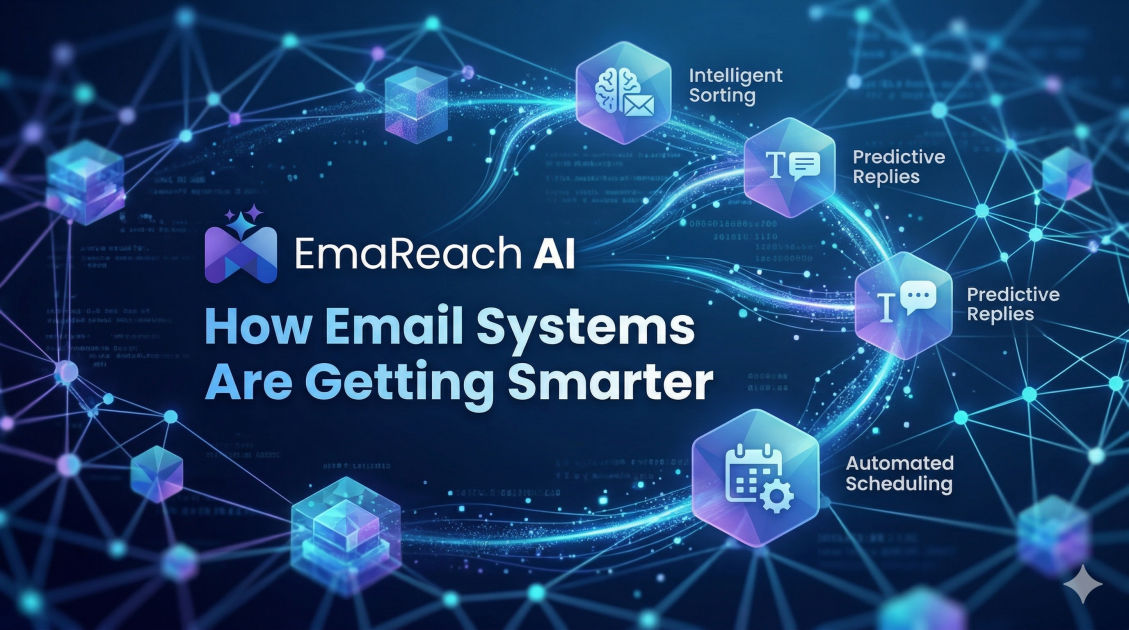
How Email Systems Are Getting Smarter
email technologyartificial intelligencenatural language processingemail deliverabilitycybersecurityproductivitymachine learning
The Evolution of Communication: From Simple Mail to Intelligent Ecosystems
For decades, email has been the backbone of digital communication. What started as a simple method for sending text-based messages between networked computers has evolved into a sophisticated, multi-layered ecosystem. Today, we are witnessing a paradigm shift. Email is no longer just a passive inbox; it is becoming a proactive, intelligent assistant. The integration of machine learning, natural language processing (NLP), and advanced behavioral analytics is fundamentally changing how we send, receive, and manage our digital correspondence.
As the volume of digital noise increases, the demand for smarter systems has skyrocketed. Users are no longer satisfied with a chronological list of messages; they require systems that can prioritize, filter, and even respond on their behalf. This deep dive explores the technological advancements driving this transformation and what it means for the future of professional and personal communication.
The Rise of Artificial Intelligence in Inbox Management
One of the most visible ways email systems are getting smarter is through intelligent inbox organization. In the past, spam filters relied on simple keyword blacklists. If a message contained certain 'trigger' words, it was relegated to the junk folder. Modern systems are far more nuanced. They utilize deep learning models that analyze the context of a message, the reputation of the sender, and the historical interaction patterns of the recipient.
Predictive Categorization and Priority Inboxes
Major email providers now use predictive modeling to categorize incoming mail automatically. By analyzing header metadata and body content, these systems can distinguish between a social media notification, a promotional newsletter, and a high-priority personal message. This 'tabbed' approach reduces cognitive load, allowing users to focus on what matters most. Furthermore, 'Priority Inbox' features learn from your behavior. If you consistently open emails from a specific contact and ignore others, the system adjusts its internal weights to ensure that important contact always appears at the top.
Smart Unsubscribe and Cleanup Suggestions
Smarter systems are now acting as digital concierges. AI algorithms can identify newsletters that you haven't opened in months and proactively suggest that you unsubscribe. This automated maintenance keeps the inbox lean and ensures that the user's attention is not fragmented by irrelevant content. By analyzing engagement metrics, the email client becomes an active participant in decluttering the digital workspace.
Natural Language Processing: Understanding the Human Element
Natural Language Processing (NLP) is the engine behind many of the most impressive advancements in email technology. It allows the system to 'read' and 'understand' the intent behind a message, rather than just seeing it as a string of characters.
Smart Replies and Generative Drafting
We have moved past simple canned responses. Modern email systems offer 'Smart Replies'—short, context-aware suggestions that allow users to respond to routine inquiries with a single click. Taking this a step further, generative AI is now capable of drafting entire emails based on a few bullet points provided by the user. These systems can mimic the user's professional tone, ensure grammatical correctness, and even suggest the most effective call to action.
Sentiment Analysis and Tone Detection
Advanced email platforms are integrating sentiment analysis to help senders communicate more effectively. Before you hit send, the system might flag that your message sounds overly aggressive or perhaps too casual for the intended recipient. This real-time feedback loop acts as an emotional intelligence layer, preventing misunderstandings and fostering better professional relationships.
Revolutionizing Outreach and Deliverability
For businesses, the stakes of email intelligence are even higher. Traditional mass-mailing techniques are failing as consumer-grade email filters become more adept at blocking unsolicited content. This has led to the rise of specialized intelligence for outreach.
If you are involved in professional outreach, you know that the biggest challenge is no longer writing the email, but ensuring it actually reaches the recipient. This is where EmaReach comes into play. Stop Landing in Spam. Cold Emails That Reach the Inbox. EmaReach AI combines AI-written cold outreach with inbox warm-up and multi-account sending—so your emails land in the primary tab and get replies. By using AI to vary the content of each message and simulating human-like sending patterns, these systems bypass the rigid 'fingerprinting' that often triggers spam filters.
Automated Inbox Warm-up
One of the 'smartest' developments in deliverability is the concept of automated warm-up. When a new email account is created, sending hundreds of emails immediately is a red flag for service providers. Intelligent systems now manage this process by gradually increasing sending volume and interacting with other 'trusted' accounts to build a positive sender reputation. This algorithmic reputation-building is essential for any modern marketing or sales operation.
Enhanced Security Through Behavioral Biometrics
Email remains the primary vector for cyberattacks, but the defense mechanisms are getting significantly smarter. Traditional antivirus software is being replaced or augmented by AI-driven security layers that focus on behavior rather than signatures.
Phishing Detection and Identity Verification
Sophisticated phishing attacks often involve 'spoofing' a known contact. Smart email systems now analyze communication styles. If an email from your CEO suddenly uses language, syntax, or formatting that deviates from their historical patterns, the system can flag it as a potential 'Business Email Compromise' (BEC) attack. By comparing the current message against a vast database of known interaction styles, the system provides a level of security that manual inspection could never achieve.
Link and Attachment Sandboxing
Instead of just checking a link against a list of known malicious sites, smarter email gateways now use 'sandboxing.' When a user clicks a link, the system opens it in a secure, isolated environment first to see how the webpage behaves. If it attempts to download unauthorized files or harvest credentials, the system blocks the user from ever seeing the content. This proactive, behavioral approach is the new standard in digital defense.
The Integration of Contextual Intelligence
Email is no longer an island. It is increasingly integrated with calendars, task managers, and CRM systems, creating a web of 'contextual intelligence.'
Automated Scheduling and Task Extraction
Have you ever received an email that says, "Let's meet Friday at 2 PM," and noticed your email client automatically offering to add that to your calendar? This is NLP in action. Smarter systems extract dates, times, and action items directly from the text. Some even go as far as identifying 'commitments'—if you write "I will send you the report by end of day," the system can automatically create a reminder or a task in your project management tool.
Relationship Intelligence
For sales and account management, email systems are evolving into lightweight CRMs. By analyzing the frequency of interaction and the time elapsed since the last 'touchpoint,' the system can prompt a user to reach out to a client who might be slipping away. This proactive nudge ensures that professional relationships are maintained through data-driven insights rather than just memory.
Hyper-Personalization: The End of the Generic Message
In the world of marketing, 'smart' means 'personalized.' We are moving away from the era of 'Dear [First_Name]' and into an era of deep hyper-personalization.
AI systems can now analyze a recipient's public profile, recent social media activity, or company news to craft a truly unique opening line. This level of automation allows for the scale of mass mailing with the precision of a one-to-one conversation. When combined with tools like EmaReach, which focuses on the technical delivery side, the result is a powerful synergy where the content is as optimized as the delivery path. The intelligence lies in the ability to deliver the right message to the right person at the exact moment they are most likely to engage.
Privacy and the Ethics of Smart Email
As email systems get smarter, they inevitably require more data. This has sparked a vital conversation about privacy. The challenge for developers is to build intelligent features that respect user confidentiality.
On-Device Processing
To address privacy concerns, many 'smart' features are moving toward on-device processing. Instead of sending your sensitive email data to a cloud server to be analyzed for 'Smart Replies,' the machine learning models are shrunk down to run locally on your phone or laptop. This ensures that the intelligence remains helpful without compromising the privacy of the communication.
Transparent AI and User Control
Future systems are focusing on 'Explainable AI.' If an email is filtered into a specific folder, the system should be able to tell the user why. Providing users with granular control over which 'smart' features are active allows for a customizable experience that aligns with individual privacy thresholds.
The Impact on Productivity and Mental Health
While we often focus on the technical side, the ultimate goal of a smarter email system is to improve the human experience. Email overload is a documented source of stress in the modern workplace. By automating the mundane—sorting, unsubscribing, drafting routine replies, and scheduling—these systems give time back to the user.
An intelligent system doesn't just manage mail; it manages 'attention.' By surfacing only the most critical information and silencing the noise, smart email helps combat the 'always-on' culture that leads to burnout. The future of email is not about sending more messages, but about making the messages we do send and receive more meaningful.
Conclusion
The transformation of email from a simple communication tool to an intelligent assistant is well underway. Through the power of machine learning, natural language processing, and behavioral analytics, our inboxes are becoming more secure, more organized, and significantly more efficient. Whether it is protecting us from sophisticated cyber threats, helping us draft the perfect response, or ensuring our professional outreach avoids the spam folder through advanced deliverability platforms, the 'smart' revolution is redefining the digital landscape.
As these technologies continue to mature, the friction associated with digital communication will continue to decrease. We are entering an era where the system works for the user, rather than the user working for the system. The result is a more streamlined, secure, and productive way to connect with the world.
EmaReach AI
Ready to scale your cold email outreach?
Join thousands of teams using EmaReach AI for AI-powered campaigns, domain warmup, and 95%+ deliverability. Start free — no credit card required.
Related posts
- Read article
The Instantly Alternative That Finally Gets Outbound Analytics Right
Discover why high-volume cold email requires a shift from surface-level vanity metrics to deep, data-driven revenue attribution, and explore the ultimate alternatives for mastering outbound engineering.
- Read article
What You Gain and What You Give Up When Switching From Instantly
Thinking about migrating your cold email stack? This detailed guide breaks down the exact operational advantages you gain and the core features you sacrifice when switching away from Instantly's popular outreach platform.