Blog
Back to blog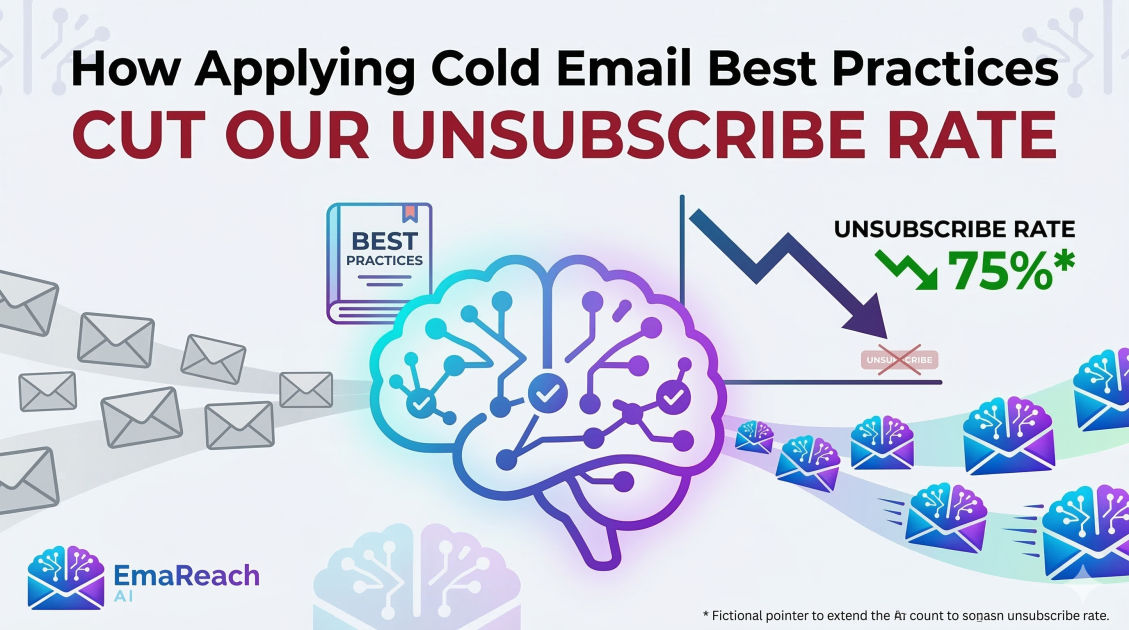
How Applying Cold Email Best Practices Cut Our Unsubscribe Rate
cold emailemail marketinglead generationoutreach strategyemail deliverabilityconversion optimization
Introduction
In the high-stakes world of digital outreach, the unsubscribe link is often viewed as a failure—a digital 'stop' sign that signals a missed connection. For a long time, our team viewed high unsubscribe rates as an inevitable tax on doing business at scale. We assumed that if we sent enough volume, the law of averages would eventually play in our favor, regardless of how many people opted out along the way.
However, a shift in perspective changed everything. We realized that a high unsubscribe rate isn't just a lost lead; it is a loud, clear signal that our strategy is misaligned with our audience’s needs. By systematically applying cold email best practices, we didn't just marginally improve our metrics; we fundamentally transformed our outreach culture. This shift resulted in a dramatic reduction in unsubscribe rates, higher engagement, and ultimately, a healthier sender reputation.
This post details the exact journey we took, the technical and creative adjustments we made, and how you can replicate these results to ensure your emails provide value rather than noise.
The Psychology of the Unsubscribe
To fix the problem, we first had to understand why people click that dreaded link. It usually boils down to three core feelings: irrelevance, annoyance, or a lack of trust.
When a prospect receives an email that has nothing to do with their current challenges, it feels like spam. When they receive four follow-ups in four days, it feels like harassment. And when the email looks like a generic template sent to thousands, it feels like a lack of respect for their time.
By centering our strategy on empathy-driven outreach, we began to treat the inbox as a sacred space. We stopped asking, "How can we get them to click?" and started asking, "How can we make this email the most helpful thing they read today?"
The Role of Relevance Over Volume
One of the biggest mistakes we made early on was prioritizing volume. We believed that sending 1,000 emails with a 1% conversion rate was better than sending 100 emails with a 5% conversion rate. Mathematically, the former yields more leads, but it also yields 990 people who might mark you as spam or unsubscribe.
We shifted our focus toward hyper-segmentation. Instead of one massive list, we broke our prospects down into micro-cohorts based on industry, recent company news, and specific job functions. This allowed us to tailor the messaging so specifically that the recipient felt the email was written just for them. When relevance goes up, the urge to unsubscribe goes down.
Technical Foundation: Deliverability and Reputation
Before we could fix the content, we had to fix the plumbing. High unsubscribe rates often go hand-in-hand with poor deliverability. If your emails are landing in the 'Promotions' tab or, worse, the spam folder, the few people who do see them are already predisposed to hit 'unsubscribe' or 'report spam.'
Authentication and Infrastructure
We started by ensuring our technical setup was flawless. This included:
- SPF, DKIM, and DMARC: We ensured our domain authentication was fully optimized. This tells receiving servers that we are who we say we are, reducing the likelihood of being flagged as suspicious.
- Custom Tracking Domains: Using the default tracking domains provided by some email tools can hurt your reputation if other users of those tools are sending spam. We set up custom tracking domains to isolate our reputation.
- Inbox Warm-up: You cannot go from zero to sixty overnight. We utilized systematic warm-up processes to gradually build trust with ISP providers.
For those looking to automate this technical hurdle, EmaReach provides an integrated solution. By combining AI-written outreach with automated inbox warm-up and multi-account sending, it ensures your emails land in the primary tab, which naturally decreases the friction that leads to unsubscribes.
Crafting the Non-Intrusive Subject Line
The subject line is the gatekeeper. We discovered that 'clickbaity' subject lines were a primary driver of unsubscribes. If a user feels tricked into opening an email, their first instinct upon realizing the deception is to opt-out.
We moved away from subject lines like "Question for you" or "RE: our meeting" (when no meeting existed) and toward transparent, low-pressure headlines.
Examples of what worked:
- Idea for [Company Name]'s Q3 growth
- Thoughts on your recent article about [Topic]
- Improving [Specific Process] at [Company Name]
These subject lines are honest. They tell the recipient exactly what to expect. While the open rate might be slightly lower than a 'trick' subject line, the quality of the open is significantly higher, leading to a much lower unsubscribe rate.
The Power of the "Soft" Call to Action (CTA)
In our old sequences, every email ended with a high-friction demand: "Are you free for a 30-minute demo on Tuesday at 2 PM?"
This is a huge 'ask' for a stranger. If the prospect isn't ready for a demo, the easiest way for them to clear their plate is to unsubscribe so they don't have to deal with the follow-ups.
We replaced these hard closes with Soft CTAs. These are designed to start a conversation rather than close a deal.
Soft CTA Examples:
- "Is this something that’s on your radar for this year?"
- "Would you be open to me sending over a 2-minute video explaining how this works?"
- "If not, no worries—is there someone else on your team better suited for this?"
By lowering the barrier to entry, we made it easier for prospects to say "not right now" or "tell me more" without feeling like they had to break up with us via the unsubscribe link.
Personalization Beyond the First Name
If you use a tag like {{first_name}} and think that’s personalization, you’re living in the past. Prospects can see through basic merge tags instantly. To cut our unsubscribe rate, we had to go deeper.
We implemented a "Tiered Personalization" strategy:
- The Observation: Mention a specific piece of content they wrote, a podcast they appeared on, or a recent promotion.
- The Insight: Connect that observation to a specific challenge they might be facing.
- The Value: Offer a brief thought or resource that addresses that challenge.
This level of effort signals to the prospect that you have done your homework. It’s much harder to hit 'unsubscribe' on someone who has clearly spent 15 minutes researching your career and offering genuine value.
Frequency and Cadence: The Art of Timing
Nothing triggers an unsubscribe faster than an aggressive follow-up schedule. We used to send emails on days 1, 3, 7, 14, and 21. It was too much, too fast.
We moved to a more 'human' cadence. We spaced out our touches and varied the medium. A typical sequence might now look like:
- Day 1: Highly personalized cold email.
- Day 4: LinkedIn connection request (no pitch).
- Day 8: Soft follow-up email providing a relevant case study.
- Day 15: A final 'break-up' email that is helpful, not guilt-tripping.
By giving the prospect room to breathe, we respected their digital space. We also implemented 'global opt-outs' across our organization, ensuring that if a prospect unsubscribed from one campaign, they were purged from every list in our CRM immediately. There is no faster way to get a spam complaint than emailing someone who just unsubscribed.
Data Hygiene: The Unsung Hero
A major portion of our unsubscribes came from 'dirty' data. We were reaching out to people who had left their companies or whose roles had changed.
We began investing heavily in data verification. Before any campaign launched, we ran our list through verification tools to catch 'catch-all' addresses and invalid emails. More importantly, we performed manual spot checks. If the data quality in a sample of 20 leads was poor, we sent the whole list back for cleaning.
Sending to the right person at the right time is 80% of the battle. If your data is old, your relevance is zero, and your unsubscribe rate will reflect that.
The "Break-Up" Email Done Right
The final email in a sequence is often where the most unsubscribes happen. People feel pressured to get a 'yes' or 'no' and end up being passive-aggressive. Phrases like "I guess you're not interested in growing your business" are a one-way ticket to the spam folder.
Our redesigned break-up email focused on closing the loop professionally:
"Hi [Name], I haven't heard back from you, so I'll assume the timing isn't right or this isn't a priority for [Company] at the moment. I'll stop my outreach here so I don't clutter your inbox. If things change in the future, feel free to reach out. Best of luck with [Specific Goal]."
This approach often resulted in 'reverse unsubscribes'—prospects replying to apologize for the silence and asking to reconnect in six months. It preserved the relationship even without an immediate meeting.
Analyzing the Feedback Loop
Finally, we stopped treating the unsubscribe rate as a static number. We began analyzing when people were unsubscribing.
- Unsubscribing on Email 1? Your targeting or subject line is the problem.
- Unsubscribing on Email 4? Your cadence is too aggressive or your follow-ups are repetitive.
- Unsubscribing after a CTA? Your ask is too heavy for the level of trust you've built.
By treating unsubscribes as data points, we entered a cycle of continuous improvement. We realized that a low unsubscribe rate isn't the goal—it’s the result of a respectful, value-driven outreach process.
Conclusion
Cutting our unsubscribe rate didn't happen by using a 'secret' template or a magic subject line. It happened because we stopped treating prospects like entries in a database and started treating them like busy professionals. By prioritizing technical health, hyper-relevance, soft CTAs, and a respectful cadence, we turned our cold outreach from an annoyance into a valuable business channel.
When you align your goals with the prospect's needs, the unsubscribe link becomes a rarity rather than a rule. Deliverability improves, your brand reputation stays intact, and the conversations you do start are built on a foundation of mutual respect. Start by auditing your current sequences through the lens of the recipient—would you unsubscribe from yourself?
EmaReach AI
Ready to scale your cold email outreach?
Join thousands of teams using EmaReach AI for AI-powered campaigns, domain warmup, and 95%+ deliverability. Start free — no credit card required.
Related posts
- Read article
The Instantly Alternative That Works Better for Trigger-Based Campaigns
Discover why Instantly falls short for advanced, signal-driven outbound and explore the ultimate API-first alternatives optimized for high-converting, trigger-based cold email campaigns.
- Read article
The Instantly Alternative That Handles High Bounce Rates Without Panic
Discover how transitioning to an advanced Instantly alternative can safeguard your cold email infrastructure. Learn to handle high bounce rates effortlessly using real-time verification, smart mailbox rotation, and automated safety nets to protect your sender reputation and maintain consistent primary inbox placement.