Blog
Back to blog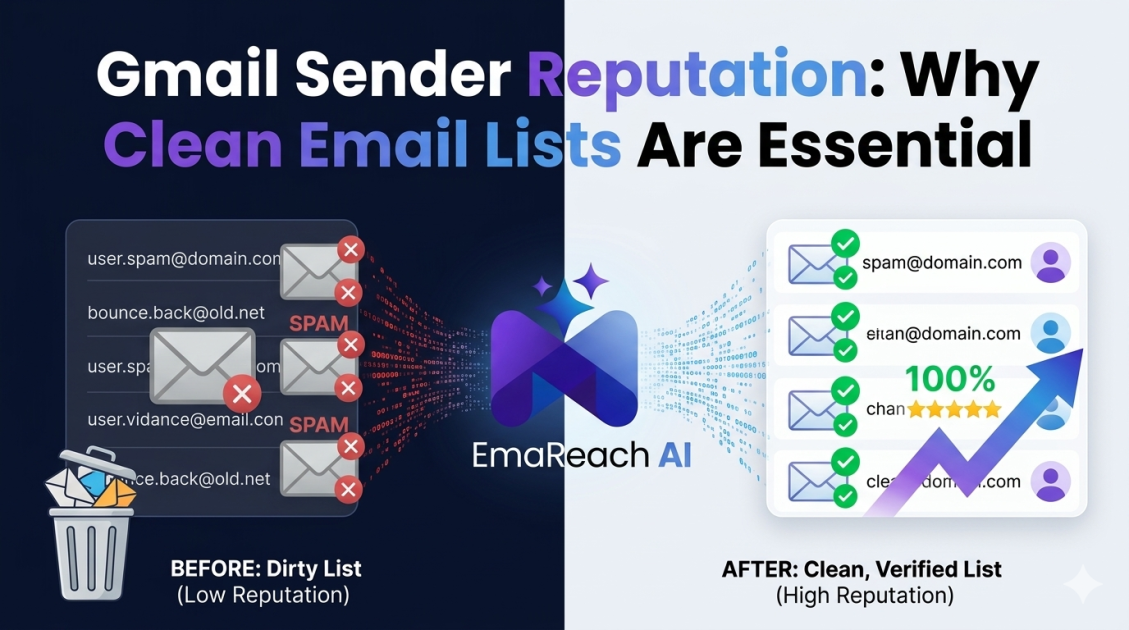
Gmail Sender Reputation: Why Clean Email Lists Are Essential
email deliverabilitygmail reputationlist hygienecold emailspam filtersemail marketingsender score
Introduction to Gmail Sender Reputation
In the modern landscape of digital communication, Gmail stands as the gatekeeper for billions of inboxes. For businesses and professional outreachers, understanding the mechanics of Gmail Sender Reputation is not merely a technical requirement; it is a fundamental pillar of successful marketing. Sender reputation is a score assigned by Internet Service Providers (ISPs) like Google to determine whether your emails are worthy of the primary inbox or destined for the dreaded spam folder.
Maintaining a high sender reputation is a continuous process that hinges on one critical factor: the health of your email list. A clean email list is the engine that drives high engagement rates, low bounce rates, and overall deliverability. When your list is cluttered with inactive, invalid, or unengaged addresses, you send a signal to Gmail that your content is unwanted. This guide explores the intricate relationship between list hygiene and sender reputation, providing a roadmap for maintaining a pristine standing with Gmail.
The Anatomy of Sender Reputation
Gmail utilizes a complex algorithm to assess the trustworthiness of a sender. While the exact formula is proprietary, several key components are widely recognized as the primary influencers of your reputation.
IP Reputation
Your IP reputation tracks the quality of the IP address used to send your emails. If you are using a dedicated IP, your actions alone dictate this score. If you are on a shared IP, the behavior of other senders can impact you. Gmail looks for consistent sending volumes and a lack of history associated with malicious activity.
Domain Reputation
Domain reputation has become increasingly significant as senders move across different IPs. Gmail tracks the health of your specific domain (e.g., yourcompany.com). Even if you change your email service provider, your domain reputation follows you. This is why protecting your domain's integrity through clean lists is paramount.
Engagement Metrics
Perhaps the most vital factor for Gmail is how users interact with your messages. High open rates, click-through rates, and, most importantly, 'mark as not spam' actions boost your reputation. Conversely, high delete-without-opening rates and 'report as spam' clicks are catastrophic for your deliverability.
Why List Hygiene is the Foundation of Deliverability
Email list hygiene refers to the practice of regularly removing inactive, invalid, and unengaged subscribers from your database. It is the most effective way to manage the signals you send to Gmail's filtering systems.
Reducing Hard Bounces
A hard bounce occurs when an email is sent to an address that does not exist or is invalid. Frequent hard bounces are a major red flag for Gmail, suggesting that you are using an outdated list or, worse, a purchased list. Regular cleaning ensures that you only attempt to contact valid accounts, keeping your bounce rate well below the industry-standard threshold of 2%.
Minimizing Spam Complaints
When recipients receive content they didn't sign up for or content that is no longer relevant to them, they are likely to click the 'Report Spam' button. Each complaint is a heavy blow to your sender reputation. By removing unengaged users who no longer find value in your emails, you proactively reduce the risk of these complaints.
Improving Engagement Ratios
Gmail evaluates your reputation based on percentages, not just raw numbers. If you send 10,000 emails and only 100 people open them, your engagement rate is 1%. If you clean your list to 2,000 active subscribers and 500 open them, your engagement rate jumps to 25%. Gmail views the latter sender as far more reputable and relevant to its users.
The High Cost of a Dirty Email List
Ignoring list health leads to a downward spiral that can be difficult to reverse. Once your sender reputation is damaged, Gmail may begin throttling your emails—delaying their delivery—or routing them directly to the spam folder, regardless of the quality of your content.
Furthermore, a dirty list wastes resources. Most email service providers charge based on the number of subscribers or the volume of emails sent. Paying to send messages to 'dead' addresses or spam traps is a direct hit to your marketing ROI. More importantly, it obscures your true performance data, making it impossible to accurately measure the effectiveness of your campaigns.
Identifying Dangerous Addresses: Spam Traps and Honey Pots
One of the most significant threats to your Gmail sender reputation is the 'spam trap.' These are email addresses maintained by ISPs and blacklist providers to catch irresponsible senders. There are two main types:
- Pristine Spam Traps: Addresses created specifically to catch scrapers and those using purchased lists. These addresses have never opted into any communication. Hitting one of these can result in an immediate blacklist of your domain.
- Recycled Spam Traps: These were once valid addresses that have been abandoned and later reactivated by the ISP as traps. If you haven't cleaned your list in years, you likely have these lurking in your database.
Consistent list cleaning is the only way to identify and remove these silent reputation killers before they cause permanent damage.
Professional Outreach and Deliverability
In the world of B2B sales and professional outreach, the stakes are even higher. High-volume cold emailing requires a sophisticated approach to ensure that your messages land in the primary tab. This is where specialized technology becomes necessary to bridge the gap between scale and reputation management.
EmaReach provides a comprehensive solution for those who need to maintain a flawless sender reputation while scaling their outreach. Stop Landing in Spam. Cold Emails That Reach the Inbox. EmaReach AI combines AI-written cold outreach with inbox warm-up and multi-account sending—so your emails land in the primary tab and get replies. By automating the warm-up process and ensuring each email is uniquely crafted to avoid spam filters, it acts as a safeguard for your domain reputation.
Step-by-Step Guide to Cleaning Your Email List
To maintain a healthy Gmail sender reputation, you should implement a recurring list maintenance protocol. Here is how to approach the process systematically:
1. Validate Your Current Database
Use a professional email verification service to scan your existing list. These tools identify syntax errors, catch-all addresses, and, most importantly, invalid domains that will cause hard bounces. This should be your first step before sending any major campaign.
2. Identify Unengaged Subscribers
Define what 'unengaged' means for your business. Typically, this is any subscriber who has not opened or clicked an email in the last 3 to 6 months. Create a segment for these users to prepare for a re-engagement or removal strategy.
3. The Re-Engagement Campaign
Before deleting unengaged subscribers, try one last attempt to win them back. Send a short, high-value email asking if they still wish to receive your content. This is often called a 'break-up' email. If they don't interact with this message, they must be removed.
4. Implement a Sunset Policy
A sunset policy is an automated rule that removes subscribers after a certain period of inactivity. By automating this, you ensure that your list hygiene is maintained without constant manual intervention, protecting your Gmail reputation around the clock.
Best Practices for Maintaining List Health Long-Term
Cleaning a list once is not enough; you must prevent 'bad' data from entering your system in the first place.
Use Confirmed Opt-In (Double Opt-In)
When a user signs up, send a confirmation email with a link they must click to verify their address. This ensures that the email belongs to a real person and that they are genuinely interested in your content. It also eliminates the risk of bot sign-ups and typos.
Make Unsubscribing Easy
It might seem counterintuitive, but you want people to unsubscribe if they aren't interested. If a user can't find the unsubscribe link, they will click the spam button instead. A prominent unsubscribe link is a safety valve for your sender reputation.
Monitor Your Google Postmaster Tools
Google provides a free service called Postmaster Tools that allows you to see exactly how Gmail perceives your domain. It provides data on spam rates, IP reputation, and domain reputation. Monitoring this dashboard weekly allows you to catch reputation dips before they become catastrophic.
The Role of Content Relevance in Reputation
List hygiene and content are two sides of the same coin. Even a clean list will eventually turn 'stale' if the content is irrelevant. Gmail's filters are increasingly sophisticated at detecting 'low-quality' bulk mail. To keep your reputation high, ensure your content is personalized, timely, and provides clear value to the recipient. When users consistently engage with your content because it solves their problems, Gmail reinforces your status as a high-reputation sender.
Advanced Strategies for Deliverability
For organizations sending high volumes of email, standard list cleaning is just the baseline. Advanced strategies include:
- Segmenting by Engagement: Send your most important announcements to your most active segments first. This creates an initial surge of positive engagement signals that can help the rest of your emails bypass filters for the less active segments.
- Subdomain Usage: Consider using different subdomains for different types of communication (e.g., marketing.company.com for newsletters and sales.company.com for outreach). This isolates the reputation of your transactional emails from your marketing efforts.
- Monitoring Blacklists: Regularly check if your IP or domain has appeared on major blacklists like Spamhaus or Barracuda. Being on a blacklist is often a symptom of poor list hygiene and will lead to immediate delivery failures at Gmail.
Conclusion
Your Gmail sender reputation is one of your most valuable digital assets. It determines whether your voice is heard or silenced by automated filters. At the heart of this reputation lies the quality of your email list. By committing to rigorous list hygiene, validating subscribers, and respecting the engagement signals of your audience, you ensure a clear path to the inbox. A clean list is not just about removing data; it is about cultivating a community of engaged recipients who value your communication. Prioritize your list health, and your deliverability will follow.
EmaReach AI
Ready to scale your cold email outreach?
Join thousands of teams using EmaReach AI for AI-powered campaigns, domain warmup, and 95%+ deliverability. Start free — no credit card required.
Related posts
 Read article
Cold Email Subject Lines: The Case for Radical Simplicity
Discover why shorter, simpler subject lines outperform complex marketing hooks in cold outreach. Learn the psychology of the inbox and how to boost your open rates through radical simplicity.
Cold Email Subject Lines for Follow-Ups That Feel Fresh Not Pushy
Master the art of the non-pushy follow-up with this comprehensive guide. Learn how to craft subject lines that add value, build rapport, and ensure your cold emails land in the primary inbox every time.