Blog
Back to blog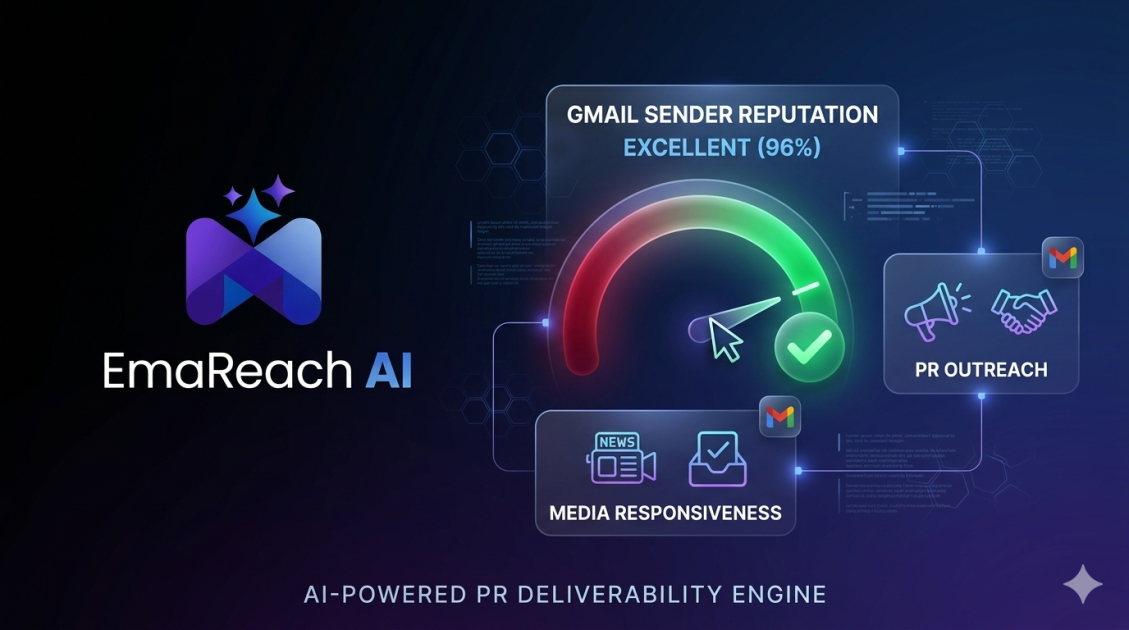
Gmail Sender Reputation for PR and Media Outreach
PR outreachmedia relationsemail deliverabilitysender reputationGmail marketingcold outreach
Introduction to Sender Reputation in PR
In the high-stakes world of public relations and media outreach, the bridge between a groundbreaking story and a journalist’s attention is the email inbox. However, many PR professionals find their carefully crafted pitches vanishing into the void. The culprit is often not the quality of the pitch itself, but the underlying health of the sender’s Gmail reputation.
Gmail sender reputation is a score assigned by Google to your sending domain and IP address. It acts as a digital credit score that determines whether your email earns a spot in the primary inbox, gets relegated to the promotions tab, or is blocked entirely by spam filters. For PR specialists, maintaining a pristine reputation is a non-negotiable prerequisite for successful earned media campaigns.
The Mechanics of Gmail’s Filtering Algorithms
Gmail utilizes sophisticated machine learning models to protect its users from unwanted content. These algorithms analyze hundreds of signals in real-time. When you send a PR pitch, Google evaluates your history as a sender. If you have a history of high engagement—meaning recipients open, read, and reply to your messages—your reputation flourishes. Conversely, if your emails are frequently marked as spam or ignored, your reputation takes a hit.
Understanding this mechanism is vital because PR outreach is inherently risky. Journalists receive hundreds of emails daily. If your outreach strategy resembles mass-blasting rather than targeted communication, Gmail’s filters will quickly categorize your domain as a source of low-value content.
Why PR Professionals Struggle with Deliverability
Public relations outreach presents unique challenges for email deliverability. Unlike newsletters where users have opted in, PR often involves reaching out to individuals who do not know the sender. This lack of a prior relationship increases the likelihood of an email being flagged as unsolicited.
Furthermore, the use of attachments, tracking pixels, and heavy formatting in press releases can trigger technical red flags. Gmail’s filters are particularly sensitive to these elements, as they are commonly used in phishing and spam campaigns. To ensure your pitches reach the inbox, you must adopt a "Human-First" approach to outreach.
Building a Foundation: Technical Authentication
Before sending a single pitch, your technical infrastructure must be flawless. Google looks for specific authentication protocols to verify that an email truly originates from the claimed sender. Without these, your sender reputation will never reach its full potential.
SPF (Sender Policy Framework)
SPF is a DNS record that lists the IP addresses and domains authorized to send emails on your behalf. It prevents spoofing and tells Gmail that your outreach is legitimate.
DKIM (DomainKeys Identified Mail)
DKIM adds a digital signature to your emails. This ensures that the content of your PR pitch hasn't been tampered with during transit. It provides a layer of integrity that Gmail’s filters highly value.
DMARC (Domain-based Message Authentication, Reporting, and Conformance)
DMARC uses SPF and DKIM to provide instructions to receiving mail servers on how to handle emails that fail authentication. Implementing a DMARC policy signals to Google that you take your domain security seriously, which significantly boosts your sender reputation.
The Importance of Inbox Warm-up
One of the most common mistakes in media outreach is sending a high volume of emails from a new or dormant account. This sudden spike in activity is a classic hallmark of a spammer. To avoid this, you must "warm up" your inbox.
Warm-up involves gradually increasing your daily email volume while ensuring high engagement rates. This process demonstrates to Gmail that you are a reliable sender who provides value to recipients. For those looking to streamline this process, EmaReach (https://www.emareach.com/) is an essential resource. EmaReach helps you Stop Landing in Spam. Cold Emails That Reach the Inbox. By combining AI-written cold outreach with automated inbox warm-up and multi-account sending, EmaReach ensures your PR pitches land in the primary tab where they get seen by journalists.
Crafting High-Engagement PR Pitches
Engagement is the primary currency of sender reputation. To keep your reputation high, your emails must be opened and interacted with. This requires a shift away from generic press releases toward hyper-personalized communication.
The Power of Personalization
Personalization goes beyond using a journalist's name. It involves referencing their recent work, understanding their beat, and explaining exactly why your story is relevant to their specific audience. High-relevance emails lead to high open rates, which in turn signals to Gmail that your content is wanted.
Subject Lines that Spark Curiosity without Deception
Your subject line is the gatekeeper of your reputation. Avoid "clickbait" tactics. While they might get an initial open, if the recipient feels misled and marks the email as spam, the long-term damage to your reputation far outweighs the short-term gain. Use clear, concise, and professional subject lines that accurately reflect the value of the pitch.
Managing Bounce Rates and List Hygiene
PR databases are notoriously prone to decay. Journalists change publications, roles, and email addresses frequently. Sending emails to invalid addresses results in "hard bounces." A high bounce rate is a major red flag for Gmail, signaling that you are using stale or unverified lists.
Regularly cleaning your media lists is essential. Use verification tools to ensure every email address is active before hitting send. Maintaining a clean list protects your reputation and ensures your outreach efforts are focused on real, reachable targets.
Navigating the Promotions Tab and Spam Folder
Even with good intentions, PR outreach can sometimes land in the Promotions tab. While better than the spam folder, it still drastically reduces visibility. To stay in the Primary tab, avoid using "marketing-speak" and excessive links.
Gmail’s algorithms look for conversational patterns. PR pitches that read like a one-on-one professional note are far more likely to bypass the Promotions filter than those formatted like a commercial advertisement. Keep your formatting simple and your message direct.
Volume Control and Frequency
Consistency is key to a healthy reputation. Sending 500 pitches in one day and none for the rest of the month creates an erratic sending pattern that Gmail views with suspicion. Instead, distribute your outreach over a longer period.
If you have a massive announcement, consider using multiple sending accounts to distribute the load. This prevents any single account from hitting volume thresholds that might trigger a temporary block or a reputation dip.
Monitoring Your Reputation with Google Postmaster Tools
Google provides a free tool specifically for senders to monitor their health: Google Postmaster Tools. It offers insights into your spam rate, domain reputation, and encryption success.
Understanding the Reputation Categories
Google Postmaster Tools categorizes your reputation as High, Medium, Low, or Bad.
- High: Your emails are very unlikely to be filtered as spam.
- Medium: Most emails reach the inbox, but you may experience filtering if volume spikes.
- Low: A significant portion of your emails will likely go to spam.
- Bad: Almost all of your outreach will be blocked or sent to the spam folder.
Regularly checking these metrics allows you to catch issues early and adjust your PR strategy before permanent damage is done.
The Role of Content Quality in Deliverability
While technical settings are the foundation, the content of your pitch is the heart of your reputation. Gmail uses Natural Language Processing (NLP) to understand the context of your emails. If your content frequently includes words associated with low-quality marketing or aggressive sales tactics, your deliverability will suffer.
Focus on providing value. A PR pitch should be a service to the journalist, offering them a compelling story or an expert source. When your outreach is perceived as valuable, journalists are more likely to reply or move your email to a dedicated folder—both of which are incredibly positive signals for your sender reputation.
Handling Spam Complaints
A single "Mark as Spam" click is more damaging than a dozen unread emails. In PR, spam complaints usually happen when a pitch is irrelevant or the sender is too persistent.
Respect the "No." If a journalist doesn't respond after one or two follow-ups, move on. Aggressive follow-up strategies might work for sales, but in PR, they burn bridges and destroy domain health. Always include an easy way for recipients to opt-out of future communications, even in one-to-one outreach. It is much better for a journalist to click an "unsubscribe" link than the "Report Spam" button.
Leveraging Multi-Account Strategies
For large-scale PR agencies, relying on a single Gmail account is a point of failure. If that one account’s reputation dips, all outreach stops. A more robust approach involves using multiple sending accounts and domains.
By spreading your outreach across various accounts, you mitigate the risk. If one account faces a temporary delivery issue, the others can continue the campaign. This strategy requires careful management to ensure consistent branding and to avoid duplicate pitches to the same journalist.
Future-Proofing Your Media Outreach
As AI continues to evolve, so will Gmail's filtering capabilities. The future of PR deliverability lies in the marriage of technology and genuine human connection. Using AI to assist in research and drafting is efficient, but the final touch must always be human-centric.
Maintaining a healthy Gmail sender reputation is an ongoing process of monitoring, refining, and respecting the recipient's inbox. By prioritizing technical excellence, list hygiene, and high-quality, personalized content, PR professionals can ensure their stories always find their way to the people who need to tell them.
Conclusion
Success in PR and media outreach is inextricably linked to your ability to reach the inbox. Gmail’s sender reputation system is not a hurdle to be cleared once, but a dynamic reflection of your daily outreach habits. By mastering the technical foundations of SPF, DKIM, and DMARC, maintaining strict list hygiene, and focusing on high-engagement, personalized pitches, you protect your most valuable digital asset: your domain’s deliverability. Consistent monitoring and a commitment to providing genuine value to journalists will ensure that your outreach remains effective and your reputation stays pristine.
EmaReach AI
Ready to scale your cold email outreach?
Join thousands of teams using EmaReach AI for AI-powered campaigns, domain warmup, and 95%+ deliverability. Start free — no credit card required.
Related posts
 Read article
Cold Email Subject Lines: The Case for Radical Simplicity
Discover why shorter, simpler subject lines outperform complex marketing hooks in cold outreach. Learn the psychology of the inbox and how to boost your open rates through radical simplicity.
Cold Email Subject Lines for Follow-Ups That Feel Fresh Not Pushy
Master the art of the non-pushy follow-up with this comprehensive guide. Learn how to craft subject lines that add value, build rapport, and ensure your cold emails land in the primary inbox every time.