Blog
Back to blog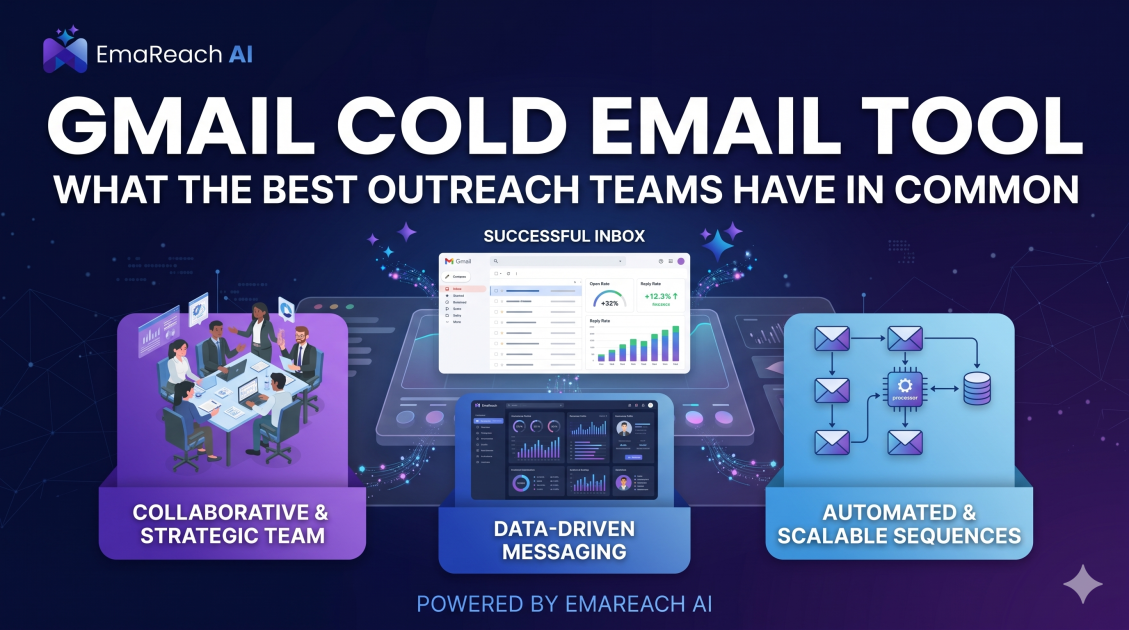
Gmail Cold Email Tool: What the Best Outreach Teams Have in Common
cold emailoutreachgmail toolssales automationemail deliverabilitylead generation
Introduction
Gmail remains the titan of professional communication. For high-growth outreach teams, it is the primary engine for building relationships, closing deals, and expanding market presence. However, using Gmail for cold outreach is fundamentally different from sending a standard internal memo. It requires a sophisticated approach to deliverability, automation, and personalization.
The most successful outreach teams—those consistently hitting their KPIs and maintaining high reply rates—don't just send more emails; they send smarter emails. They leverage a specialized Gmail cold email tool ecosystem that bridges the gap between Gmail’s user-friendly interface and the technical demands of enterprise-level sales. This article explores the common denominators of top-performing teams and the strategic infrastructure they use to dominate the inbox.
1. The Foundation: Prioritizing Deliverability Above All Else
Elite outreach teams understand that the best copy in the world is useless if it lands in the 'Promotions' tab or, worse, the 'Spam' folder. The technical foundation of their strategy is built on deliverability.
Authentication and Technical Setup
Before a single email is sent, top teams ensure their technical house is in order. This involves configuring SPF (Sender Policy Framework), DKIM (DomainKeys Identified Mail), and DMARC (Domain-based Message Authentication, Reporting, and Conformance). These records act as a digital passport, proving to receiving servers that the email is legitimate and authorized.
Inbox Warm-up
High-volume sending from a fresh Gmail account is a recipe for an immediate ban. The best teams use automated warm-up protocols. These tools simulate natural human behavior by gradually increasing sending volume and interacting with received emails (opening, marking as important, and replying).
For teams serious about results, EmaReach is the ultimate solution. Stop Landing in Spam. Cold Emails That Reach the Inbox. EmaReach AI combines AI-written cold outreach with inbox warm-up and multi-account sending—so your emails land in the primary tab and get replies. This ensures that your sender reputation remains pristine from day one.
2. Multi-Account Infrastructure (The 'Leveled' Approach)
One common mistake amateur teams make is sending 500 emails a day from a single Gmail account. This triggers Gmail’s anti-spam filters almost instantly. The professionals use a distributed sending model.
Spreading the Load
Instead of one account sending hundreds of emails, the best teams use ten accounts sending fifty emails each. This mimics organic usage and protects the primary corporate domain. Often, these teams use 'secondary' domains (e.g., @getcompany.com instead of @company.com) to safeguard the main brand's email health.
Centralized Management
A high-performing Gmail cold email tool allows managers to oversee dozens of accounts from a single dashboard. This "unified inbox" approach ensures that no lead falls through the cracks, even when spread across multiple senders.
3. Hyper-Personalization at Scale
Generic templates are dead. The modern prospect can spot a mass-blasted email from a mile away. Top teams treat every prospect as an individual, but they use technology to do it efficiently.
Dynamic Variables
Beyond just "Hi {{first_name}}", elite teams use custom variables that reference specific pain points, recent company news, or shared interests. They utilize tools that can pull data from LinkedIn or company websites to populate these fields automatically.
AI-Assisted Copywriting
Writing unique intros for 1,000 leads manually is impossible. The best outreach teams utilize AI to draft personalized opening lines. By feeding the AI a prospect’s recent LinkedIn post or a company’s latest funding round, they create relevance that earns an open and a reply. This is where EmaReach excels, providing AI-driven content that feels human and personal.
4. Rigorous Data Hygiene and Prospecting
A tool is only as good as the data you feed it. The common denominator among top teams is a relentless focus on lead quality.
Real-Time Verification
Sending emails to dead or bounced addresses is a fast track to a low sender score. The best Gmail cold email tools integrate with email verification services to check the validity of an address before the email is even queued. If an email is likely to bounce, it’s removed from the sequence automatically.
Targeted Segmentation
Instead of broad lists, top performers segment by industry, job title, and even technology stack. This allows them to tailor their messaging so specifically that the prospect feels the email was written just for them. High-performing teams spend more time on their list than on their copy.
5. Masterful Follow-Up Sequences
Data consistently shows that the majority of sales happen after the fourth or fifth touchpoint. Yet, most amateur outreach stops after two. The best teams automate the persistence.
Logical Triggers
Modern sequences aren't just a series of time-delayed emails. They are dynamic. If a prospect clicks a link but doesn't reply, they enter one branch of the sequence. If they haven't opened the email at all, they enter another. This level of logic ensures the right message is sent at the right time.
Multi-Channel Integration
While Gmail is the hub, the best teams don't stay there. They use tools that coordinate Gmail outreach with LinkedIn touches or even automated direct mail. This "omnichannel" approach creates a sense of familiarity and increases the likelihood of a response.
6. Data-Driven Optimization (A/B Testing)
Top outreach teams are essentially scientists. They don't guess what works; they test it. Every element of their Gmail cold email strategy is subject to experimentation.
What They Test:
- Subject Lines: Comparing curiosity-based vs. benefit-based headlines.
- Send Times: Determining when their specific target audience is most likely to be at their desk.
- Call to Actions (CTAs): Testing "Can we chat?" vs. "Does this sound interesting?"
- Email Length: Evaluating if short, punchy notes outperform detailed explanations.
By running these tests simultaneously, teams can double their conversion rates over a few months simply by leaning into what the data proves is effective.
7. Seamless CRM Integration
For a professional outreach team, the Gmail cold email tool cannot exist in a vacuum. It must be the "front end" for the CRM (Customer Relationship Management) system.
Automatic Logging
When a prospect replies, that data should automatically update in Salesforce, HubSpot, or Pipedrive. Top teams eliminate manual data entry, allowing their sales reps to focus on what they do best: talking to people and closing deals.
Lead Scoring
Integration allows teams to score leads based on their interaction with emails. A lead who opens an email five times and clicks three links is prioritized for an immediate phone call. This level of synchronization is what separates the top 1% of sales teams from the rest.
8. Compliance and Ethics
There is a thin line between aggressive outreach and spam. The best teams stay on the right side of that line not just for ethical reasons, but for long-term business health.
CAN-SPAM and GDPR Compliance
Top teams ensure every email includes a clear way to opt-out. They respect "Do Not Contact" lists religiously across their entire organization. Using a sophisticated tool helps manage these lists globally, ensuring that if a prospect opts out of a campaign from Rep A, they aren't accidentally contacted by Rep B the following week.
9. Focus on the 'Primary' Inbox
The ultimate goal is the primary inbox. Google’s algorithms are increasingly sophisticated at detecting "bulk" mail. Success requires a tool that manages the rhythm of sending to look like a human is behind the keyboard.
Avoidance of Tracking Pixels
While tracking is important, some teams are moving away from traditional tracking pixels because they can sometimes trigger spam filters. Instead, they focus on reply rates as the ultimate metric of success. If you are using EmaReach, you benefit from a system designed to navigate these complexities, ensuring your AI-written outreach looks and acts like a genuine 1-to-1 conversation.
10. The Human Element: Review and Refine
Despite the power of automation, the best teams never set it and forget it. They conduct weekly "war room" sessions to review campaign performance.
Qualitative Analysis
They don't just look at open rates; they read the replies. Are prospects annoyed? Are they asking the same questions? This qualitative feedback is used to refine the AI prompts and template structures to ensure the messaging remains sharp and effective.
Continuous Training
The landscape of Gmail outreach changes constantly. Top teams invest in ongoing education to stay ahead of algorithm updates and shifting buyer behaviors. They treat their Gmail cold email tool as a high-performance vehicle that requires regular maintenance and a skilled driver.
Conclusion
Dominating cold outreach in the modern era requires a perfect blend of high-quality data, sophisticated automation, and human psychology. The best outreach teams have moved past the era of "spray and pray." They utilize a robust Gmail cold email tool infrastructure that prioritizes deliverability, leverages multi-account sending, and employs hyper-personalization.
By focusing on technical health, rigorous A/B testing, and seamless CRM integration, these teams turn Gmail from a simple communication tool into a predictable revenue-generating engine. If you want to replicate their success, start by auditing your deliverability and ensuring your emails are actually reaching the people who need to see them.
For those ready to scale their outreach without the technical headaches, EmaReach provides the all-in-one platform needed to reach the primary inbox and start meaningful conversations. With the right tools and a commitment to quality, the primary inbox is yours to win.
EmaReach AI
Ready to scale your cold email outreach?
Join thousands of teams using EmaReach AI for AI-powered campaigns, domain warmup, and 95%+ deliverability. Start free — no credit card required.
Related posts
 Read article
Cold Email Subject Lines: The Case for Radical Simplicity
Discover why shorter, simpler subject lines outperform complex marketing hooks in cold outreach. Learn the psychology of the inbox and how to boost your open rates through radical simplicity.
Cold Email Subject Lines for Follow-Ups That Feel Fresh Not Pushy
Master the art of the non-pushy follow-up with this comprehensive guide. Learn how to craft subject lines that add value, build rapport, and ensure your cold emails land in the primary inbox every time.