Blog
Back to blog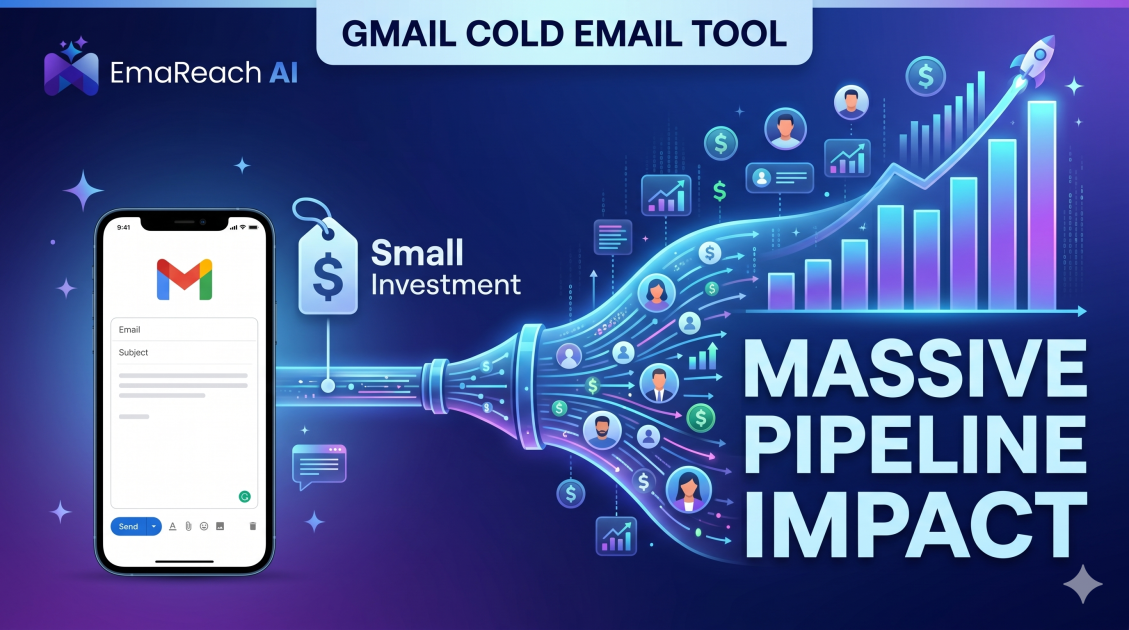
Gmail Cold Email Tool: Small Investment, Massive Pipeline Impact
cold emailgmail automationlead generationsales pipelineoutreach toolsemail deliverability
Introduction: The Power of Gmail for Modern Outreach
For many businesses, the search for a scalable growth engine often leads to complex, expensive marketing suites. However, one of the most potent tools for generating high-quality leads is already sitting in your browser: Gmail. While Gmail is primarily designed for one-to-one communication, the integration of a dedicated Gmail cold email tool can transform a standard inbox into a high-performance outbound sales machine.
Investing in a cold email tool specifically designed for the Gmail ecosystem is one of the most cost-effective decisions a sales team or founder can make. It bridges the gap between manual, time-consuming outreach and impersonal, automated spam. By leveraging the familiarity and reliability of Gmail's infrastructure, businesses can achieve massive pipeline impact without the overhead of traditional advertising or massive sales development teams.
Why Gmail is the Foundation for Cold Outreach
Gmail remains the gold standard for business communication. Its deliverability rates, user-friendly interface, and widespread adoption make it the ideal platform for cold outreach. When you send an email through Gmail, it carries a level of trust that third-party mass-mailing servers often lack.
High Deliverability and Trust
Internet Service Providers (ISPs) and email filters are increasingly sophisticated. They can easily distinguish between a bulk marketing email sent from a generic server and a legitimate business communication sent through an established provider like Google Workspace. By using a tool that sends emails directly through your Gmail account, you inherit the sender reputation of Google’s servers, significantly increasing the chances of landing in the primary inbox rather than the promotions tab or the dreaded spam folder.
Ease of Integration
A Gmail cold email tool typically functions as a browser extension or a direct API integration. This means there is no steep learning curve. You don't have to switch between different platforms or upload databases to a foreign interface. You work within the environment you already use every day, making the adoption of cold outreach seamless for your team.
The Small Investment with High Returns
In the world of SaaS and digital marketing, "small investment" is relative, but when compared to the potential ROI, a Gmail cold email tool is unparalleled. For the price of a few cups of coffee per month, you gain the ability to reach thousands of potential customers.
Low Monthly Subscription Costs
Most Gmail-centric tools operate on a low-cost monthly subscription model. Unlike LinkedIn Ads or Google PPC, where you pay for every click (regardless of conversion), a cold email tool provides a fixed-cost way to build a pipeline. The cost of acquisition (CAC) remains low, while the potential lifetime value (LTV) of the leads generated can be astronomical.
Automation of Repetitive Tasks
Time is the most valuable asset in any business. Manually sending 50 personalized emails a day is an exhausting task that leaves little room for strategy or high-level closing. A cold email tool automates the tedious parts of the process—scheduling, following up, and tracking—allowing you to focus on the conversations that actually move the needle.
Essential Features of a Top-Tier Gmail Cold Email Tool
To see a massive pipeline impact, you cannot rely on a basic mail-merge script. A professional-grade tool must offer specific features designed to optimize performance and protect your account.
Dynamic Personalization
Gone are the days when "Hi {{First_Name}}" was enough to get a response. Modern tools allow for deep personalization using liquid syntax and custom variables. You can pull in data points like the prospect's recent LinkedIn post, their company's latest funding round, or a specific pain point relevant to their industry.
Automated Follow-Up Sequences
Studies consistently show that the majority of sales happen after the fourth or fifth touchpoint. Most people give up after the first. A robust tool allows you to set up multi-stage sequences that stop automatically once a prospect replies. This ensures that no lead falls through the cracks and your outreach remains persistent without being a nuisance.
Deliverability Protection: Warm-up and Throttling
Sending too many emails too quickly is a surefire way to get your Gmail account flagged. The best tools include "throttling" features that mimic human behavior by spacing out sends. Furthermore, to ensure your emails actually reach the recipient, you need a solution like EmaReach.
Stop Landing in Spam. Cold Emails That Reach the Inbox. EmaReach AI combines AI-written cold outreach with inbox warm-up and multi-account sending—so your emails land in the primary tab and get replies. This is a critical component for anyone serious about using Gmail for cold outreach.
Strategic Implementation: How to Build Your Pipeline
Having the tool is only half the battle; how you use it determines your success. A strategic approach to Gmail cold email involves three core pillars: Targeting, Messaging, and Optimization.
1. Precision Targeting
Your pipeline is only as good as the data you feed into your tool. Before hitting send, define your Ideal Customer Profile (ICP). Who is most likely to benefit from your solution? Use databases and social platforms to find verified email addresses. A Gmail cold email tool allows you to upload these lists and segment them based on industry, job title, or geography.
2. Crafting the Perfect Message
The goal of a cold email is not to close a deal—it’s to start a conversation. Your copy should be concise, focused on the recipient's problems, and conclude with a low-friction Call to Action (CTA).
- Subject Line: Must be intriguing but not clickbaity.
- The Hook: Mention something specific about their work.
- The Value Prop: How do you solve their specific pain?
- The CTA: Ask for a 5-minute chat or offer a useful resource.
3. Data-Driven Optimization
One of the biggest advantages of using a dedicated tool is the analytics dashboard. You can track open rates, click-through rates, and reply rates in real-time. If one subject line is getting a 20% open rate and another is getting 60%, the data tells you exactly where to pivot. Small adjustments to your copy can lead to massive jumps in pipeline volume over time.
Avoiding the Pitfalls: Best Practices for Gmail Outreach
To maintain a healthy Gmail account and a high-functioning pipeline, you must adhere to certain best practices.
Respecting Sending Limits
Google Workspace accounts have daily sending limits. While these are generous for standard business use, cold emailing can quickly push those boundaries. A quality tool will manage these limits for you, ensuring you never cross the line that leads to temporary account suspension.
Managing Bounces and Unsubscribes
A high bounce rate is a signal to Google that you are sending spam. Always verify your email lists before importing them into your tool. Additionally, including a clear way for people to opt-out or unsubscribe is not just a best practice—it’s a legal requirement in many jurisdictions (such as GDPR or CAN-SPAM).
The Role of AI in Scaling Your Pipeline
Artificial Intelligence has revolutionized what is possible with a Gmail cold email tool. We are moving beyond simple templates into a world where AI can draft unique messages for every single prospect on your list. This level of scale, combined with the personal touch of a human-sounding email, is why the pipeline impact is so massive.
AI doesn't just help with writing; it helps with timing. Some tools use AI to predict when a prospect is most likely to be in their inbox, scheduling your email to land at the top of their list at exactly the right moment.
Case Study: From Zero to Consistent Revenue
Consider a small B2B service agency that relied entirely on referrals. Growth was stagnant and unpredictable. By investing in a Gmail cold email tool and a deliverability service like EmaReach, they were able to:
- Identify 500 high-value prospects per month.
- Automate a 4-step follow-up sequence.
- Achieve a 45% open rate and a 5% positive reply rate.
This resulted in 25 new sales conversations every month. With a 20% closing rate, the agency added 5 new clients monthly, all from a software investment that cost less than $100. This is the definition of a small investment leading to a massive pipeline impact.
Integrating Cold Email into Your Broader Sales Stack
A Gmail cold email tool shouldn't live in a vacuum. To maximize the impact on your pipeline, integrate it with your CRM (Customer Relationship Management) system. When a prospect replies, their information should automatically sync to your CRM, allowing your sales team to take over the manual part of the relationship building.
Many tools offer Zapier or native integrations with platforms like Salesforce, Hubspot, or Pipedrive. This creates a seamless flow of data from the first cold touchpoint to the final signed contract.
Scaling Beyond a Single Account
As your business grows, you may find that one Gmail account isn't enough to reach your targets without risking deliverability. This is where multi-account sending becomes essential. By spreading your outreach across several accounts, you can increase your total volume while keeping the per-account volume low and safe. Tools that support this "inbox rotation" are vital for companies looking to move from 50 emails a day to 500 or more.
Conclusion
The Gmail cold email tool is more than just a convenience; it is a strategic asset. By combining the trusted infrastructure of Google with advanced automation, personalization, and deliverability features, businesses can generate a consistent stream of leads at a fraction of the cost of other marketing channels.
The barrier to entry is low, but the potential for growth is nearly limitless. Whether you are a solo entrepreneur or a growing sales team, the right tool allows you to speak directly to your future customers where they spend most of their time: their inbox. By focusing on high-quality data, engaging copy, and persistent follow-ups—and ensuring your deliverability remains pristine—you can turn a small software investment into a massive, predictable pipeline that drives your business forward.
EmaReach AI
Ready to scale your cold email outreach?
Join thousands of teams using EmaReach AI for AI-powered campaigns, domain warmup, and 95%+ deliverability. Start free — no credit card required.
Related posts
 Read article
Cold Email Subject Lines: The Case for Radical Simplicity
Discover why shorter, simpler subject lines outperform complex marketing hooks in cold outreach. Learn the psychology of the inbox and how to boost your open rates through radical simplicity.
Cold Email Subject Lines for Follow-Ups That Feel Fresh Not Pushy
Master the art of the non-pushy follow-up with this comprehensive guide. Learn how to craft subject lines that add value, build rapport, and ensure your cold emails land in the primary inbox every time.