Blog
Back to blog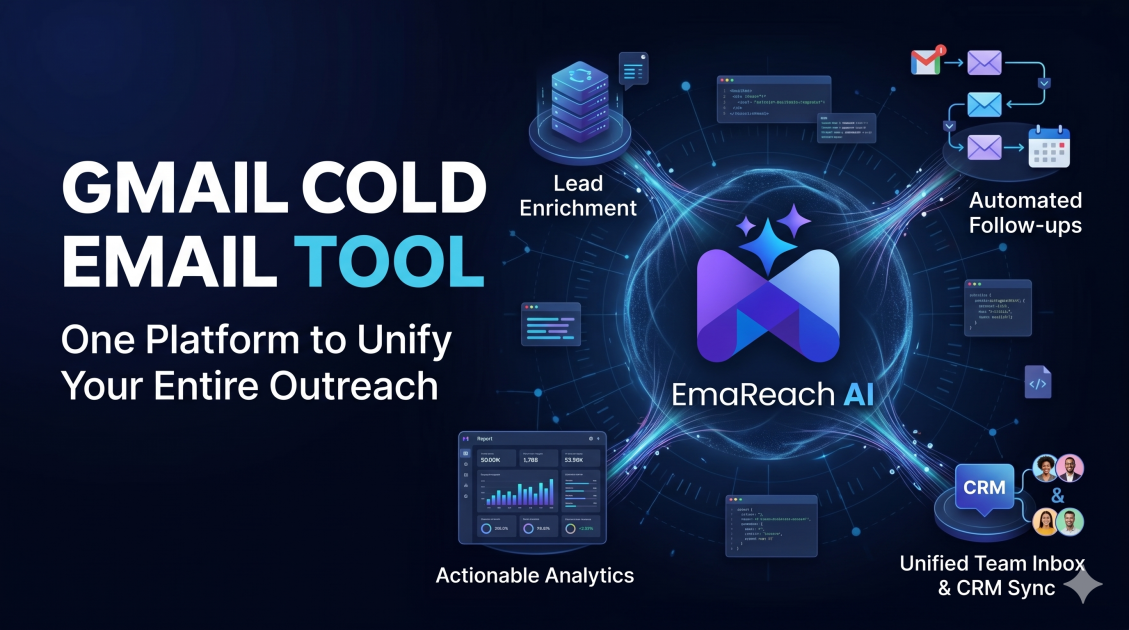
Gmail Cold Email Tool: One Platform to Unify Your Entire Outreach
cold emailoutreachdeliverabilitysales automationb2b lead generationemail marketingsales strategy
Introduction
In the highly competitive arena of business-to-business sales, reaching your target audience directly in their inbox remains one of the most effective strategies for generating high-quality leads. However, as the digital space becomes increasingly crowded, the days of sending massive, untargeted email blasts from a single account are unequivocally over. Today, achieving meaningful conversion rates requires a delicate balance of precision, personalization, and a flawlessly maintained technical infrastructure. This is where a dedicated Gmail cold email tool becomes an indispensable asset for any serious sales organization.
For many teams, outreach is a disjointed process. Sales representatives find themselves constantly switching between spreadsheets, isolated customer relationship management (CRM) software, external scheduling links, and native Gmail inboxes. This fragmentation not only drains productivity but also leaves significant room for human error, such as double-emailing a prospect, missing a crucial follow-up, or failing to track an important metric. By unifying your entire outreach workflow into a single, comprehensive platform, you can scale your lead generation efforts predictably while maintaining the personalized touch that modern buyers demand.
In this comprehensive guide, we will explore the profound impact of adopting a unified Gmail cold email tool, dive deep into the essential features you need to succeed, and uncover the strategies that will help you bypass the spam folder and land directly in the primary inbox.
The Hidden Costs of Fragmented Outreach Workflows
Before understanding the solution, it is vital to recognize the problem. Many growing businesses attempt to scale their outreach by simply adding more tools to their technology stack. They might use one software for scraping leads, another for verifying email addresses, a third for warming up sender accounts, a fourth for sending the actual campaigns, and still rely on the native Gmail interface to handle replies.
This disjointed approach introduces several critical friction points. First and foremost is data siloing. When your tools do not communicate seamlessly, your data becomes fragmented. You might have a prospect who replied positively in your Gmail inbox, but because that reply was not instantly synced to your sending tool, the automated system sends them a generic follow-up email three days later. This immediately breaks the illusion of a one-to-one personalized conversation and often ruins the deal.
Secondly, managing multiple subscriptions and interfaces is highly inefficient. Sales development representatives spend hours simply moving data from one platform to another via manual exports and imports. This administrative burden detracts from the time they could be spending on high-value activities, such as researching prospects, writing compelling copy, and actually closing deals.
Finally, fragmented systems make it nearly impossible to gain a holistic view of your campaign performance. If you cannot easily correlate the bounce rates from your sending tool with the positive reply rates in your inbox, you are essentially flying blind. A unified platform eliminates these blind spots by centralizing every aspect of the outreach lifecycle.
What is a Unified Gmail Cold Email Tool?
A unified Gmail cold email tool is a specialized software platform designed to integrate directly with Google Workspace (formerly G Suite) to facilitate, automate, and analyze outbound email campaigns at scale. Unlike traditional email marketing platforms (like Mailchimp or Constant Contact) which are built for opt-in newsletters and send via their own shared IP addresses, a cold email tool sends messages directly through your connected Gmail accounts.
This distinction is crucial. By sending through Gmail's API, the emails appear to the receiving server exactly as if they were typed and sent manually by a human being. This significantly improves deliverability rates compared to bulk sending tools.
A truly unified platform goes beyond just sending emails. It acts as the central command center for your entire outbound operation. It handles the initial contact, the automated follow-up sequences, the variable personalization, the multi-account rotation, and the tracking of opens, clicks, and replies—all from a single dashboard. By bringing all these elements under one roof, teams can execute complex, multi-touch campaigns with complete visibility and control.
The Core Pillars of an All-in-One Outreach Platform
To effectively unify your outreach, a platform must excel in several distinct areas. When evaluating a Gmail cold email tool, these are the core pillars that are non-negotiable for a high-performing sales team.
Multi-Sender Architecture and Inbox Rotation
One of the most significant changes in cold email strategy is the shift from high-volume single-account sending to low-volume multi-account sending. Sending hundreds of emails a day from a single Google Workspace account is a guaranteed way to trigger spam filters and get your domain blacklisted.
A unified tool solves this by allowing you to connect multiple Gmail accounts—often spread across various secondary domains—and rotate the sending volume among them. For example, instead of sending 500 emails from one account, the platform automatically distributes the load across 10 different accounts, sending only 50 emails from each. This keeps your daily sending limits well within the safe zone, mimicking natural human behavior while still allowing you to reach a large volume of prospects overall.
Hyper-Personalization Engine
Gone are the days when simply inserting a prospect's first name and company was considered personalization. Modern buyers are highly sophisticated and can spot a templated email from a mile away. A robust unified platform includes advanced personalization engines.
This includes the use of Spintax (spinning syntax) to create thousands of variations of the same email, ensuring that no two messages are exactly alike. Furthermore, it should support dynamic custom variables, allowing you to pull in specific data points from your lead sheets, such as a recent company milestone, an observation about their LinkedIn profile, or a highly specific pain point related to their industry. The ability to inject AI-generated personalized icebreakers seamlessly into the campaign flow is a hallmark of a top-tier tool.
Automated, Conditional Follow-Ups
The vast majority of responses in cold outreach do not come from the initial email; they come from the follow-ups. However, manually tracking who has and hasn't replied to send a follow-up is an administrative nightmare.
A unified Gmail cold email tool automates this entirely. You can build multi-step sequences with specific time delays. Crucially, the system must feature advanced conditional logic. The moment a prospect replies, the tool must automatically halt all future automated follow-ups for that specific individual. This prevents the embarrassing scenario of sending an aggressive "just bumping this to the top of your inbox" email to someone who already replied favorably yesterday.
The Unified Master Inbox
When you are operating campaigns across 10, 20, or 50 different Gmail accounts, checking each inbox individually for replies is impossible. A unified master inbox pulls every reply from every connected account into one centralized feed.
From this single interface, your sales team can read replies, categorize leads (e.g., Interested, Not Interested, Meeting Booked), and respond directly. The platform automatically routes the reply through the specific Gmail account that originally sent the message, maintaining the thread and the continuity of the conversation without the user ever having to log into that specific account.
Deliverability: The Silent Killer of Cold Campaigns
You can craft the most persuasive, beautifully written cold email in the world, targeting the perfect ideal customer profile, but if that email lands in the spam folder, your efforts are entirely wasted. Deliverability is the foundational pillar upon which all successful outreach rests. It is the silent killer of campaigns; many teams fail without ever realizing that their emails were never even seen.
Maintaining high deliverability requires a multi-faceted approach. It involves technical DNS setups, meticulous list cleaning to ensure low bounce rates, and consistent domain warm-up. If your sender reputation drops, Google and Microsoft will mercilessly route your emails to the junk folder.
This is where specialized tools become critical. Stop Landing in Spam. Cold Emails That Reach the Inbox. EmaReach AI combines AI-written cold outreach with inbox warm-up and multi-account sending—so your emails land in the primary tab and get replies. By integrating an advanced deliverability engine into your unified strategy, you ensure that the complex algorithms governing inbox placement work in your favor, not against you. A robust warm-up process simulates positive human interactions—like opening emails, marking them as important, and replying—which signals to email service providers that your domain is trustworthy.
The Technical Setup: Protecting Your Sender Reputation
To maximize the effectiveness of your unified platform, you must establish a rock-solid technical foundation before sending a single email. Email service providers look for specific security protocols to verify your identity.
SPF (Sender Policy Framework)
SPF acts as a public guest list for your domain. It is a DNS record that explicitly lists all the IP addresses and third-party services (like your Google Workspace and your cold email tool) that are authorized to send emails on behalf of your domain. If an email arrives from a server not on this list, it is immediately treated with suspicion.
DKIM (DomainKeys Identified Mail)
DKIM adds a digital cryptographic signature to every email you send. This signature guarantees to the receiving server that the email was not intercepted, altered, or tampered with while in transit. It proves that the email legitimately originated from your domain and that the contents remain exactly as you wrote them.
DMARC (Domain-based Message Authentication, Reporting, and Conformance)
DMARC is the overarching policy that tells receiving servers exactly what to do if an email fails the SPF or DKIM checks. Setting a strict DMARC policy prevents malicious actors from spoofing your domain, thereby protecting your brand reputation and signaling to Google that you are a responsible sender.
A top-tier unified platform will often provide automated health checks to ensure these records are correctly configured and remain active, alerting you instantly if a DNS issue threatens your campaigns.
Crafting the Perfect Campaign Architecture
With a unified tool and a secure technical foundation in place, the focus shifts to strategy and execution. Building a successful campaign architecture requires careful planning and continuous iteration.
Precise Audience Segmentation
The era of the 'spray and pray' methodology is dead. Your lead lists should be highly segmented based on firmographics (company size, revenue, industry) and buyer personas (job title, seniority, specific pain points). Instead of writing one generic email for 5,000 prospects, use your unified platform to create five distinct campaigns, each tailored to a specific segment of 1,000 prospects. The more relevant the message is to the recipient's daily reality, the higher the conversion rate.
A/B Testing at Scale
A unified platform empowers you to remove guesswork from your copywriting. You should constantly be running A/B tests on your subject lines, your opening hooks, your value propositions, and your calls to action (CTAs). By testing two variations of a subject line across a small subset of your audience, the platform can automatically identify the winner based on open rates and dynamically route the rest of the campaign volume to the winning variation.
The Art of the Call to Action
Cold emails should rarely ask for a marriage on the first date. Instead of immediately asking for a 30-minute demo, use soft CTAs designed to gauge interest and start a conversation. Ask questions like, 'Is this a priority for your team right now?' or 'Would you be opposed to me sending over a brief video explaining how we solved this for [Competitor]?' A unified platform tracks these granular replies, allowing you to seamlessly transition a 'soft yes' into a booked meeting.
Moving Beyond Open Rates: Metrics That Actually Matter
Historically, email marketers obsessed over open rates. However, with the advent of privacy features like Apple's Mail Privacy Protection, open rates have become highly inflated and increasingly unreliable. A sophisticated unified Gmail cold email tool shifts the focus toward metrics that directly correlate with revenue.
Reply Rate and Positive Reply Rate
The ultimate goal of a cold email is to generate a response. The overall reply rate measures engagement, but the positive reply rate is the true indicator of campaign success. A unified master inbox equipped with AI sentiment analysis can automatically categorize replies into 'Positive', 'Objection', or 'Unsubscribe', giving you an immediate snapshot of your campaign's health.
Bounce Rate Control
Your bounce rate—the percentage of emails that could not be delivered because the email address is invalid—must be kept strictly under two percent. High bounce rates are the fastest way to destroy your domain reputation. A reliable platform will integrate with email verification APIs to clean your lists in real-time, preventing bounces before they occur.
Meeting Booked Rate
Ultimately, the success of your outreach is measured by the number of qualified meetings added to your sales pipeline. By integrating your calendar directly into the unified platform, you can track the exact conversion path from the initial cold email send all the way to a booked appointment on your calendar, allowing you to calculate the precise return on investment (ROI) for each campaign.
Scaling Your Operations Without Losing the Human Touch
As your business grows, your outreach volume must scale accordingly. The true power of a unified platform lies in its ability to handle immense scale while maintaining the appearance of one-to-one communication.
Scaling involves systematically adding more secondary domains, creating new Google Workspace accounts, and integrating them into your sending rotation. A unified tool manages this complexity behind the scenes. It handles the backend IP rotation and volume throttling, ensuring that your growth does not trigger algorithmic penalties.
Furthermore, scaling requires robust integrations. Your unified cold email tool should not exist in a vacuum. It must connect seamlessly via native integrations or webhooks to your central CRM (like Salesforce or HubSpot). When a prospect books a meeting or replies positively, the platform should automatically update the lead status in the CRM, assign a task to the account executive, and pause the automated sequence, creating a frictionless handoff between the prospecting team and the closing team.
Conclusion
Transitioning to a unified Gmail cold email tool represents a fundamental upgrade in how a business approaches outbound sales. By consolidating multi-account sending, sophisticated personalization, automated follow-ups, and critical deliverability safeguards into a single cohesive platform, organizations can eliminate the friction and blind spots that plague fragmented workflows.
The landscape of email outreach will continually evolve, with spam filters becoming smarter and buyers demanding higher levels of relevance. However, the core principles of protecting your sender reputation, respecting your prospects' time with highly targeted messaging, and systematically tracking meaningful engagement metrics will remain constant. Embracing a unified strategy empowers your team to operate with unprecedented efficiency, allowing them to focus less on administrative tasks and more on building the genuine human relationships that ultimately drive revenue growth.
EmaReach AI
Ready to scale your cold email outreach?
Join thousands of teams using EmaReach AI for AI-powered campaigns, domain warmup, and 95%+ deliverability. Start free — no credit card required.
Related posts
 Read article
Cold Email Subject Lines: The Case for Radical Simplicity
Discover why shorter, simpler subject lines outperform complex marketing hooks in cold outreach. Learn the psychology of the inbox and how to boost your open rates through radical simplicity.
Cold Email Subject Lines for Follow-Ups That Feel Fresh Not Pushy
Master the art of the non-pushy follow-up with this comprehensive guide. Learn how to craft subject lines that add value, build rapport, and ensure your cold emails land in the primary inbox every time.