Blog
Back to blog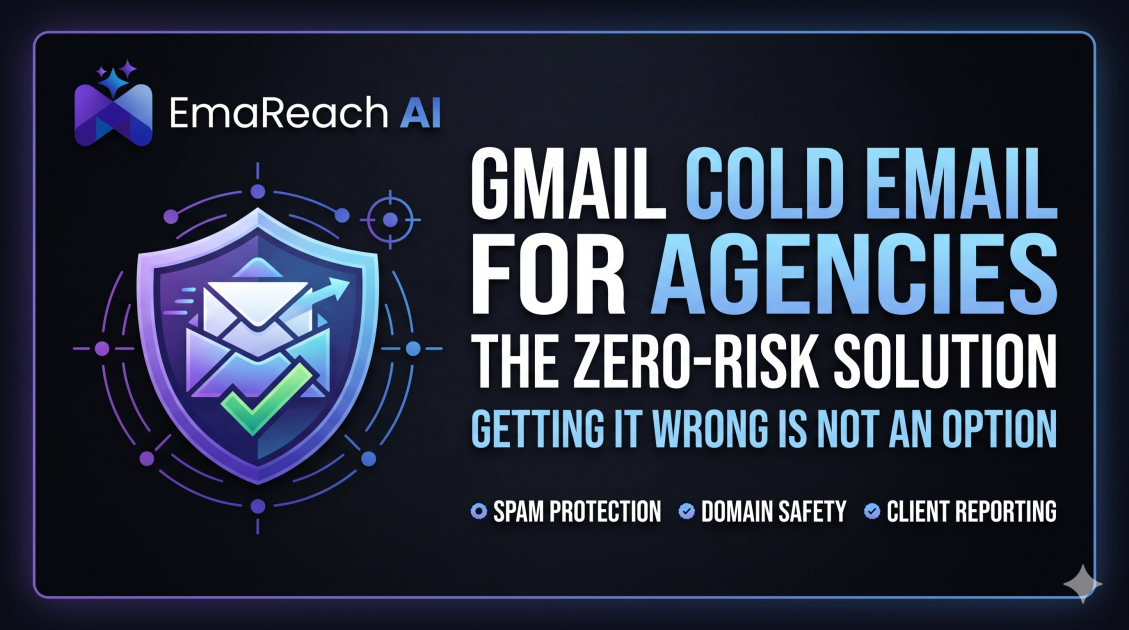
Gmail Cold Email Tool for Agencies That Cannot Risk Getting It Wrong
cold emailoutreachdeliverabilityagency growthlead generationB2B marketing
Introduction
For modern B2B marketing and lead generation agencies, cold email is not just a tactic; it is the lifeblood of client acquisition and a core service offering. When executed correctly, cold email delivers unparalleled return on investment, generating highly qualified meetings and massive revenue pipelines. However, the landscape of outbound sales has shifted dramatically. Gone are the days when a marketer could load a massive list of purchased contacts into a single email account, blast out generic pitches, and expect a steady stream of positive replies.
Today, agencies operate under strict scrutiny from email service providers. Spam filters are smarter, algorithmic defenses are more aggressive, and the penalties for poor sending practices are severe. When an agency handles cold email on behalf of a client, the stakes are exponentially higher. A mistake does not just result in a failed campaign; it can permanently damage a client's primary domain reputation, disrupting their internal communications and causing irreparable harm to the agency-client relationship. Agencies simply cannot afford to get it wrong. This comprehensive guide explores the essential infrastructure, strategic methodologies, and the critical role of choosing the right Gmail cold email tool to ensure your agency's outreach always hits the primary inbox.
The High-Stakes Environment of Agency Cold Outreach
Agencies operate in a unique environment where they must balance high-volume outreach with pristine deliverability. When managing multiple clients, an agency is essentially running dozens of parallel lead generation machines. If the infrastructure fails for one client, it is a localized disaster. If the agency's underlying methodology is flawed, it puts the entire client portfolio at risk.
The primary danger lies in domain reputation. Email providers like Google Workspace and Microsoft 365 track the sending behavior of every domain. If a domain sends hundreds of identical emails that are ignored, deleted without being opened, or marked as spam by recipients, the provider assigns a poor reputation score to that domain. Once a domain is "burned," its emails are automatically routed to the spam folder, rendering future outreach useless.
For an agency, a burned domain means angry clients, churn, and a damaged reputation. To mitigate this, agencies must adopt tools and strategies that mimic natural, human sending behavior at scale. This requires a deep understanding of email infrastructure, sophisticated personalization, and the deployment of purpose-built cold email software that prioritizes deliverability above all else.
Why Gmail and Google Workspace Are the Industry Standard
When building a cold email infrastructure, the choice of email provider is paramount. While there are various options available, Google Workspace (formerly G Suite) using the Gmail interface remains the gold standard for B2B cold outreach.
The primary reason is inherent deliverability. Google maintains some of the highest-rated IP addresses in the world. When an email originates from a Google Workspace server, it inherently carries a level of trust with receiving servers. Furthermore, most B2B targets use either Google Workspace or Microsoft 365 for their own corporate email. Sending from Google to Google (or Google to Microsoft) generally yields better primary inbox placement than sending from obscure or low-tier hosting providers.
Additionally, the Gmail API is highly accessible, allowing advanced cold email tools to integrate seamlessly. This integration enables tools to send emails one by one, mimicking human behavior, rather than sending bulk blasts through SMTP protocols that trigger spam filters. For agencies, setting up multiple secondary domains on Google Workspace and connecting them to a robust cold email platform is the foundational step toward foolproof outreach.
Technical Foundations: The Non-Negotiable Setup
Before launching a single campaign or writing a single line of copy, an agency must establish a bulletproof technical foundation for their clients. A high-quality cold email tool will often facilitate or monitor these setups, but the agency must understand and implement them flawlessly.
Secondary Domains
Never send cold outreach from a client's primary domain (e.g., if the client is acme.com, never send from sales@acme.com). Instead, agencies must purchase secondary, "lookalike" domains (e.g., acmehq.com, tryacme.com, getacme.com). This isolates the domain reputation risk. If a secondary domain gets burned, it can be discarded and replaced without affecting the client's day-to-day business operations.
Authentication Protocols (SPF, DKIM, DMARC)
Email authentication proves to receiving servers that the sender is authorized to send emails on behalf of the domain. Failing to configure these protocols correctly is the fastest route to the spam folder.
- SPF (Sender Policy Framework): A DNS record that lists all the IP addresses and services authorized to send emails on behalf of your domain.
- DKIM (DomainKeys Identified Mail): Adds a cryptographic signature to your emails, ensuring that the email was not tampered with in transit.
- DMARC (Domain-based Message Authentication, Reporting, and Conformance): Tells the receiving server what to do if an email fails SPF or DKIM checks (e.g., reject it or send it to spam).
A reliable agency tool will constantly monitor these DNS records to ensure they remain active and properly configured.
The Core Pillars of a Fail-Proof Cold Email Tool
Agencies cannot rely on standard marketing automation platforms (like Mailchimp or HubSpot) for cold outreach. Those tools are designed for opted-in, inbound lists and will ban accounts that upload cold contacts. Instead, agencies require specialized cold email platforms built for cold outbound.
When evaluating a tool to protect your agency and your clients, several core features are mandatory.
Inbox Rotation and Multi-Account Sending
Sending limits are the biggest bottleneck in cold email. Google Workspace typically allows around 500 to 2000 emails per day, but sending anywhere near that limit on a cold account will instantly trigger spam filters. The safe limit for a single cold email inbox is roughly 30 to 50 emails per day.
To achieve volume (e.g., sending 1,000 emails a day for a client), agencies must scale horizontally. This means setting up 20 to 30 individual inboxes across multiple secondary domains. A top-tier cold email tool must feature "Inbox Rotation." This allows the agency to upload one large lead list and one campaign, and the tool will automatically distribute the sending volume across all connected inboxes. This keeps the daily sending volume per inbox safely under the radar while achieving massive aggregate scale.
Automated Inbox Warm-up
A brand new domain and email account has zero reputation. If you start sending cold emails on day one, they will land in spam. Email accounts must be "warmed up" by slowly increasing sending volume and receiving positive engagement over several weeks.
The best tools include a built-in, automated warm-up network. These networks consist of thousands of real email accounts interacting with each other. When you connect an inbox, the tool automatically sends emails to the network, opens them, marks them as "not spam" (if necessary), stars them, and replies to them. This artificial engagement builds a sterling reputation for the domain, proving to algorithms that the sender is trustworthy. For agencies, continuous warm-up is not a one-time task; it must run perpetually in the background alongside active campaigns to maintain high deliverability.
The Ultimate Agency Solution: EmaReach
For agencies that require absolute certainty in their outreach operations, standard tools often fall short in combining volume with hyper-personalization. This is where specialized, AI-driven platforms become essential.
If you want to protect your clients and guarantee results, you need a platform built specifically for modern deliverability challenges. Consider EmaReach: Stop Landing in Spam. Cold Emails That Reach the Inbox.
EmaReach AI combines AI-written cold outreach with inbox warm-up and multi-account sending—so your emails land in the primary tab and get replies. By integrating these critical features into one seamless dashboard, EmaReach allows agencies to scale their clients' outreach effortlessly while completely mitigating the risks associated with domain burning and spam placement. The AI personalization ensures that every message feels uniquely crafted, dramatically increasing reply rates and keeping client pipelines full.
Advanced AI and Personalization at Scale
The era of "spray and pray" cold email is dead. Today's B2B buyers are inundated with generic pitches, and they ignore them instantly. To generate positive replies, agencies must craft highly relevant, personalized messages.
However, manually researching and writing custom emails for thousands of prospects is economically unviable for an agency. This is where AI integration becomes a non-negotiable feature in a cold email tool.
Advanced tools leverage AI to scrape prospect data (from LinkedIn, company websites, and recent news) and generate unique opening lines, customized value propositions, and tailored calls to action for every single recipient. This creates the illusion of one-to-one manual outreach while operating at the scale of thousands.
When a tool writes highly personalized, variable text for every recipient, it also provides a massive deliverability benefit. Spam filters look for identical text being sent in bulk. When every email has different wording, different sentence structures, and unique AI-generated insights, it creates "spintax" natively. This makes the outbound campaign appear entirely organic to email service providers, drastically reducing the risk of being flagged.
Managing Client Campaigns: Workflows and Analytics
For agencies, a cold email tool must be more than just a sending engine; it must be a centralized command center. Managing ten different clients means managing hundreds of domains, inboxes, sequences, and lead lists.
A fail-proof tool provides unified analytics and workspace segregation. Agencies need to be able to isolate client data securely while retaining an agency-level overview of total performance.
Moving Beyond Vanity Metrics
Historically, email marketers focused heavily on Open Rates. However, due to recent privacy updates from major tech companies (such as Apple's Mail Privacy Protection), open rates are increasingly inaccurate. Bots and servers often pre-fetch emails, registering a "false open" even if the human recipient never saw the message.
Therefore, a reliable cold email tool for agencies must focus on bottom-line metrics:
- Positive Reply Rate: The percentage of recipients who respond favorably and request more information.
- Meeting Booked Rate: The ultimate conversion metric indicating how many sales calls were generated from the sequence.
- Deliverability Health Score: Real-time monitoring of domain health, spam trap hits, and bounce rates.
Agencies must educate their clients to focus on these tangible business outcomes rather than inflated open rates. A tool that clearly tracks positive sentiment and integrates directly with client CRMs (like Salesforce or HubSpot) ensures that the agency can undeniably prove their return on investment.
Continuous Deliverability Monitoring
Deliverability is not a "set it and forget it" task. An agency might perfectly configure a client's infrastructure, only to see deliverability drop weeks later due to a bad batch of leads or a slight change in Google's spam algorithms.
Agencies cannot risk finding out about a deliverability problem because a client complains that lead flow has stopped. They need tools that proactively monitor inbox placement.
This involves utilizing seed testing—sending test emails to a controlled network of inboxes across various providers (Google, Microsoft, Yahoo) to see exactly where the email lands (Primary, Promotions, or Spam). If a client's secondary domain begins slipping into the spam folder during a seed test, the agency can immediately pause the campaign, increase the warm-up ratio, and adjust the copy before burning the domain entirely.
Crafting the Perfect Agency Outreach Strategy
Even with the best tools and perfect technical setup, the actual copy dictates the success of the campaign. Agencies must utilize copywriting frameworks that are proven to convert in cold environments.
- The Hook: A highly relevant, AI-driven opening that shows immediate context. Why are you reaching out to them specifically, right now?
- The Problem: Highlighting a specific pain point that the prospect is likely experiencing.
- The Solution (The Client's Value): Briefly explaining how the client solves this exact problem, ideally backed by a one-sentence case study or metric.
- The Call to Action (CTA): A low-friction request. Instead of asking for a 30-minute meeting on the first touch, ask for interest. ("Are you open to seeing a brief overview of how we did this for [Competitor]?")
By combining this framework with a robust, multi-inbox infrastructure and AI personalization, agencies can create a predictable, scalable lead generation machine.
Conclusion
For agencies providing outbound lead generation, the margin for error is nonexistent. A flawed approach to cold email doesn't just result in poor campaign performance; it threatens client trust, ruins domain reputations, and ultimately damages the agency's bottom line. By moving away from outdated bulk-sending practices and adopting sophisticated, multi-account infrastructures, agencies can ensure long-term success. Leveraging platforms that natively integrate inbox rotation, continuous warm-up, AI-driven personalization, and rigorous deliverability monitoring is the only way to operate safely at scale. Investing in the right tools and mastering the technical foundations of email delivery transforms cold outreach from a risky gamble into a highly predictable, revenue-generating powerhouse for both the agency and its clients.
EmaReach AI
Ready to scale your cold email outreach?
Join thousands of teams using EmaReach AI for AI-powered campaigns, domain warmup, and 95%+ deliverability. Start free — no credit card required.
Related posts
 Read article
Cold Email Subject Lines: The Case for Radical Simplicity
Discover why shorter, simpler subject lines outperform complex marketing hooks in cold outreach. Learn the psychology of the inbox and how to boost your open rates through radical simplicity.
Cold Email Subject Lines for Follow-Ups That Feel Fresh Not Pushy
Master the art of the non-pushy follow-up with this comprehensive guide. Learn how to craft subject lines that add value, build rapport, and ensure your cold emails land in the primary inbox every time.