Blog
Back to blog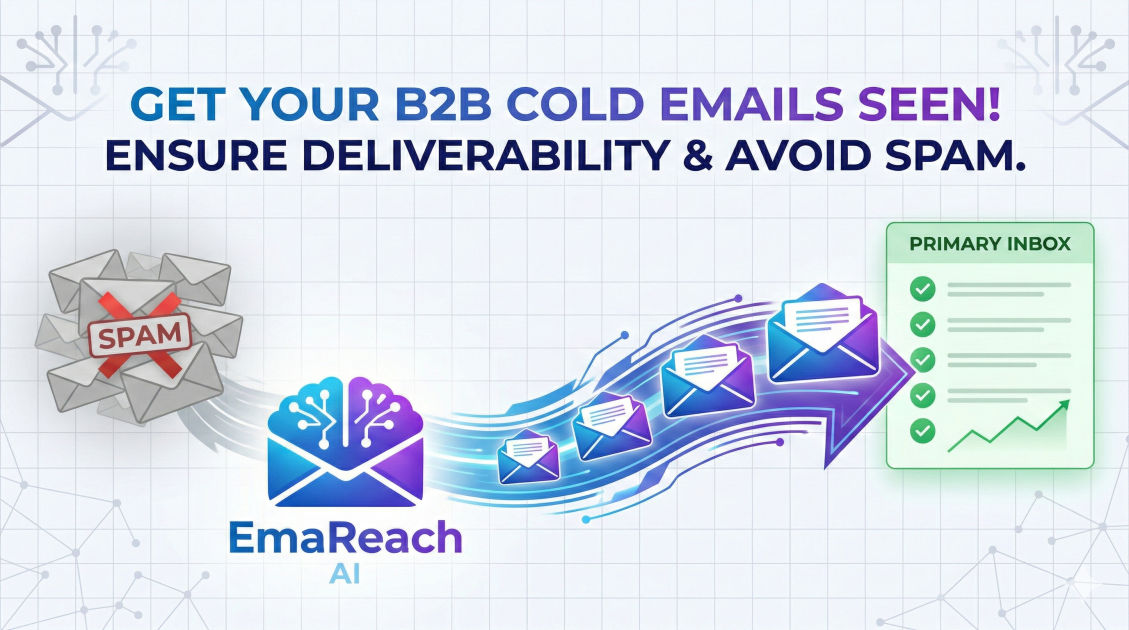
Ensuring Your B2B Cold Email Sequence Avoids Spam Folders
cold emailemail deliverabilityB2B salesspam filtersoutreach strategyemail marketinglead generation
Introduction: The High Stakes of B2B Deliverability
In the world of B2B sales, a cold email is often the first bridge built between a solution and a problem. However, that bridge is useless if it never reaches the prospect's eyes. Email deliverability—the ability of your message to land in the primary inbox rather than the dreaded spam folder—has become the single most critical factor in the success of outbound campaigns.
Modern spam filters are no longer just looking for keywords like "free" or "buy now." They use sophisticated machine learning algorithms to analyze sender reputation, technical configurations, and recipient engagement. If your B2B cold email sequence is flagged as spam, your domain reputation suffers, your conversion rates plummet, and your sales pipeline dries up. This guide provides a comprehensive blueprint for ensuring your outreach reaches the inbox every time.
The Foundation: Technical Domain Setup
Before you write a single word of copy, you must ensure your digital infrastructure is "vouching" for your legitimacy. Major email service providers (ESPs) use three primary authentication protocols to verify that an email is actually from who it says it’s from.
SPF (Sender Policy Framework)
SPF is a DNS record that lists the IP addresses and domains authorized to send emails on behalf of your domain. Without this, receiving servers have no way of knowing if your email is legitimate or a spoofing attempt.
DKIM (DomainKeys Identified Mail)
DKIM adds a digital signature to your emails. This acts as a seal of authenticity, proving that the content of the email hasn't been tampered with during transit. It is a mandatory requirement for maintaining a high sender reputation.
DMARC (Domain-based Message Authentication, Reporting, and Conformance)
DMARC sits on top of SPF and DKIM. It tells the receiving server what to do if an email fails the first two checks—whether to do nothing, quarantine the email (spam), or reject it entirely. Implementing a DMARC policy (even a 'p=none' policy initially) signals to ESPs that you are a serious and professional sender.
The Concept of Inbox Warm-up
One of the most common mistakes in B2B outreach is sending high volumes of emails from a brand-new domain. To an ESP, this looks exactly like a bot or a spammer. You must "warm up" your inbox by gradually increasing sending volume while maintaining high engagement rates.
This is where specialized services become invaluable. For example, EmaReach helps users stop landing in spam by combining AI-written cold outreach with automated inbox warm-up and multi-account sending. This ensures your emails land in the primary tab and get replies by simulating natural human conversation patterns that build trust with Google, Outlook, and other providers.
Protecting Your Primary Domain
Never send cold email sequences from your primary corporate domain (e.g., yourcompany.com). If your deliverability takes a hit due to a high volume of spam reports, your internal business communications—including emails to current clients and investors—could also end up in spam folders.
Instead, purchase "lookalike" domains (e.g., getyourcompany.com or yourcompany-app.com). This isolates your cold outreach activity. If a secondary domain gets blacklisted, your primary operations remain unaffected.
Crafting Spam-Proof Content
Once the technical foundation is solid, the focus shifts to the content. Spam filters scan the body and subject lines of your emails for "red flags."
Avoiding Trigger Words
Certain words are heavily associated with low-quality marketing and scams. While one or two might not sink you, a high density of them will. Avoid excessive use of:
- Financial promises: "Cash," "Earn," "No cost," "Investment."
- Urgency traps: "Urgent," "Act now," "Limited time."
- Hyperbole: "100% guaranteed," "Miracle," "Risk-free."
The Ratio of Text to HTML
Rich HTML emails with complex layouts, multiple images, and heavy tracking scripts are often flagged. B2B cold emails should look like personal, one-to-one communications. Stick to plain text or very simple HTML. Avoid large images, as spammers often hide text inside images to bypass filters.
Link Hygiene
Too many links in a cold email trigger suspicion. Ideally, use no more than one or two links. Never use public URL shorteners (like bit.ly or tinyurl) in a cold email; these are frequently used by bad actors to hide malicious destinations, and ESPs often block them automatically.
The Importance of Personalization at Scale
Spam filters are incredibly adept at identifying "blast" patterns—where the exact same message is sent to thousands of recipients simultaneously. To bypass this, every email in your sequence must be unique.
Use dynamic variables beyond just the recipient's first name. Include their company name, their specific industry, or even a personalized first line based on their recent LinkedIn activity or a company news event. The more unique the content of each individual email, the less likely it is to be flagged as a bulk template.
Managing Your Lead Lists
Deliverability is as much about who you send to as what you send. Sending emails to invalid or non-existent addresses will cause your "bounce rate" to spike. A bounce rate higher than 2% is a major red flag for ESPs.
Regular List Cleaning
Before launching a sequence, run your lead list through a verification tool to remove catch-all addresses, syntax errors, and inactive accounts. High-quality data is the bedrock of inbox placement.
Targeting the Right Person
If you send a B2B offer to someone completely irrelevant to their role, they are highly likely to click the "Report Spam" button. In the eyes of an ESP, a spam report is the ultimate negative signal. Ensure your targeting is surgical; it is better to send 50 highly relevant emails than 500 vaguely relevant ones.
Optimizing the Sending Cadence
How you send is just as important as how many you send. Avoid "burst" sending, where 200 emails go out in a single minute. Instead, use tools that stagger your sending throughout the day, mimicking the behavior of a human being manually typing and sending emails.
Multi-Account Sending
To scale without triggering alarms, distribute your volume across multiple email accounts and domains. If you need to send 500 emails a day, it is far safer to send 50 emails each from 10 different accounts than 500 from one. This reduces the "load" on any single sender reputation.
Monitoring Deliverability Metrics
You cannot fix what you do not measure. Keep a close eye on the following KPIs to catch deliverability issues before they become catastrophic:
- Open Rates: If your open rates suddenly drop from 40% to 5%, you have likely landed in the spam folder or are being throttled by a specific provider (like Gmail or Outlook).
- Bounce Rate: Keep this under 2%.
- Spam Complaint Rate: This should ideally be near zero. Anything above 0.1% (1 in 1,000) can cause permanent damage to your reputation.
- Reply Rate: Positive engagement (replies) actually boosts your reputation. This is why high-quality, relevant copy is a deliverability tactic in itself.
Handling Blacklists
If you find your deliverability cratering, check if your domain or IP has been added to a blacklist (like Spamhaus or Barracuda). If you are blacklisted, stop all sending immediately. You will need to identify the cause (usually a bad lead list or a compromised account), fix the issue, and apply for delisting. Continued sending while blacklisted will only deepen the reputational damage.
The Psychology of the Recipient: Avoiding the Manual Spam Report
Technical filters are only the first hurdle. The second hurdle is the human recipient. If a user manually marks your email as spam, it carries more weight than any automated filter. To avoid the manual report:
- Be Relevant: Address a specific pain point relevant to their job title.
- Be Brief: Respect their time. A cold email should be under 150 words.
- Provide Value: Offer an insight or a resource rather than just asking for a meeting.
- Easy Opt-Out: While B2B laws vary, providing a clear way for someone to say "not interested" or unsubscribe prevents them from using the spam button as an exit strategy.
Conclusion: A Continuous Process
Maintaining high deliverability for B2B cold email sequences is not a "set it and forget it" task. It requires a combination of robust technical setup, disciplined list management, and highly personalized content. By isolating your outreach domains, warming up your inboxes, and utilizing advanced tools like EmaReach to manage the complexities of AI-driven outreach and sender reputation, you can ensure your messages consistently find their way to the person who needs to see them. Treat your sender reputation as one of your company's most valuable assets, and your cold email sequences will continue to be a powerful engine for growth.
EmaReach AI
Ready to scale your cold email outreach?
Join thousands of teams using EmaReach AI for AI-powered campaigns, domain warmup, and 95%+ deliverability. Start free — no credit card required.
Related posts
- Read article
The Instantly Alternative That Finally Gets Outbound Analytics Right
Discover why high-volume cold email requires a shift from surface-level vanity metrics to deep, data-driven revenue attribution, and explore the ultimate alternatives for mastering outbound engineering.
- Read article
What You Gain and What You Give Up When Switching From Instantly
Thinking about migrating your cold email stack? This detailed guide breaks down the exact operational advantages you gain and the core features you sacrifice when switching away from Instantly's popular outreach platform.